Tag

Gravitational Interaction

All articles tagged with #gravitational interaction

space1 year ago

"NASA's Hubble Telescope Witnesses Intergalactic Tug of War"

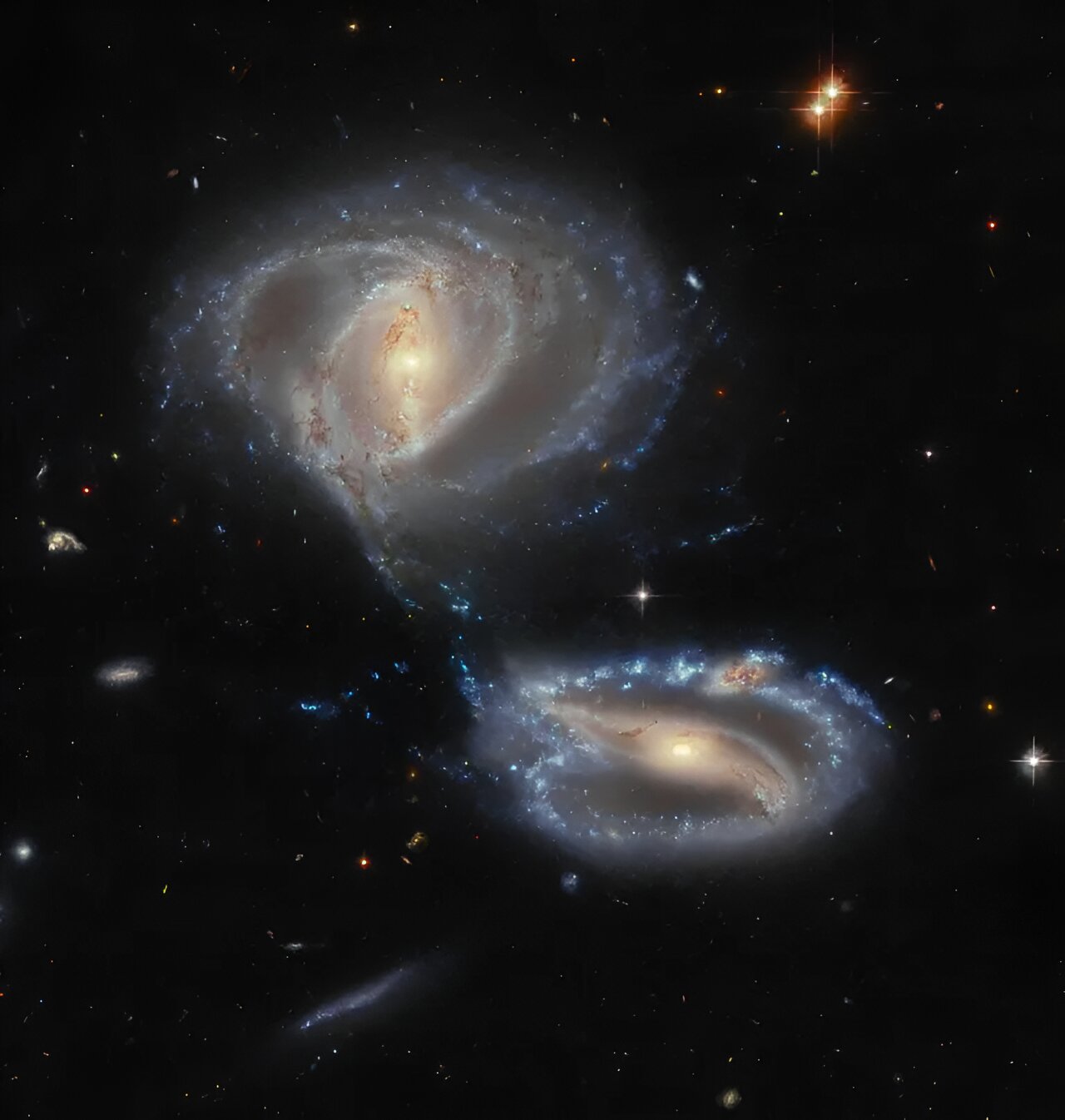
NASA's Hubble Space Telescope has captured an image of the spiral galaxy NGC 5427 engaged in a gravitational tug-of-war with its companion galaxy NGC 5426, forming the pairing Arp 271. This interaction, which will last for millions of years, may lead to the merging of the two galaxies. The gravitational forces are causing gas to be shared between the galaxies, triggering the formation of new stars. Studying such interactions provides insights into the future collision of the Milky Way and Andromeda galaxies, which is expected to occur in about 4.5 billion years, potentially affecting the fate of the solar system.

astronomy1 year ago

"The Sun's Movement in the Solar System: Unraveling Space Mysteries"

The sun does move within the solar system, orbiting the center of the Milky Way and exhibiting a small wobble due to gravitational interactions with the planets. This wobble, detectable through the Doppler effect, allows scientists to infer the presence and properties of exoplanets in distant star systems. While the sun's apparent daily and yearly movements are due to Earth's rotation and orbit, respectively, the sun and each planet orbit a point of mutual gravity called a "barycenter," with the sun's massive size resulting in these barycenters being located deep within the sun.

science2 years ago

Unveiling Limits on Ultralight Dark Matter in the Milky Way

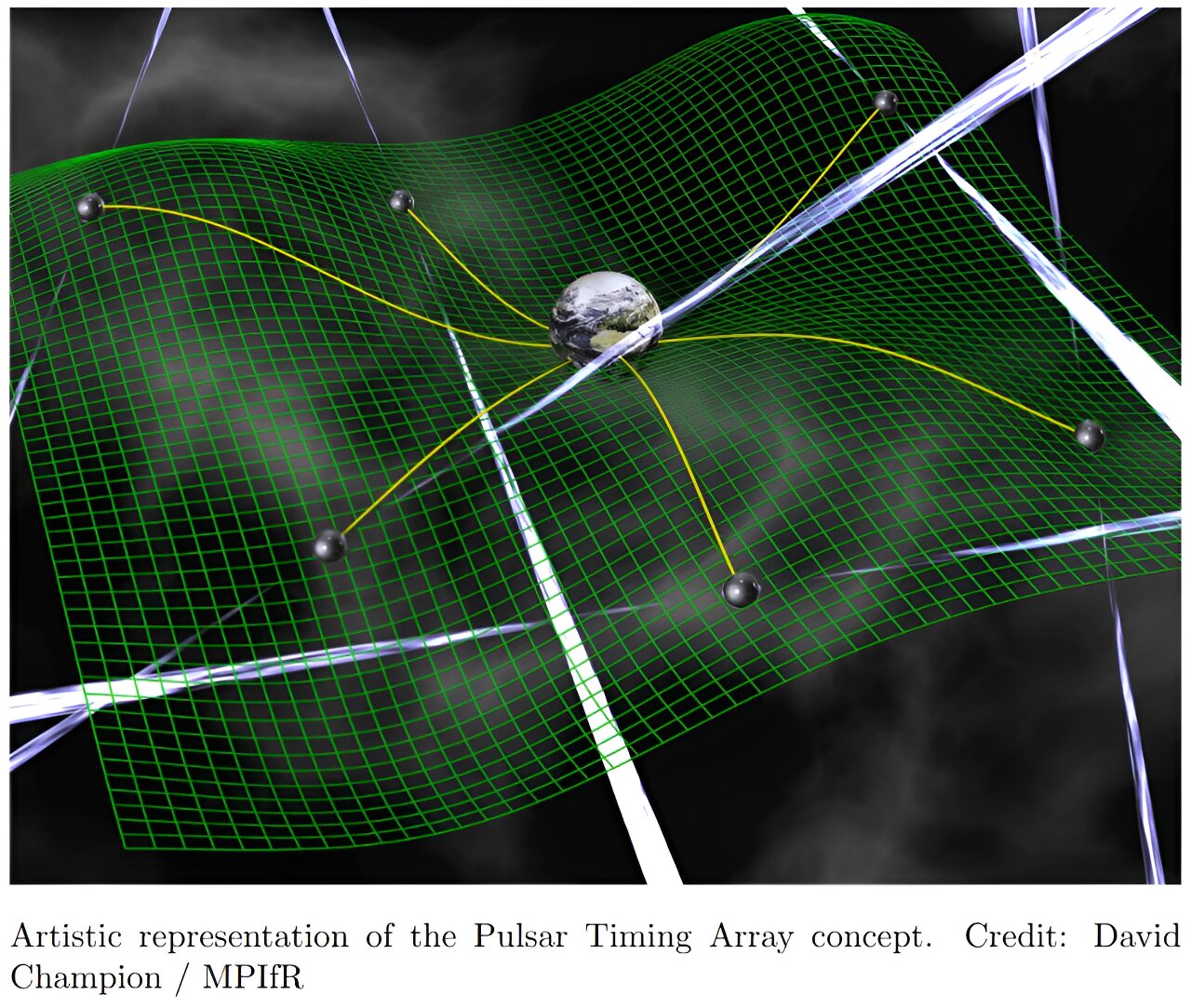
The European Pulsar Timing Array has released new data that sets more stringent constraints on the presence of ultralight dark matter in the Milky Way. By assuming that dark matter only interacts with ordinary matter through gravitational effects, the study excludes the possibility that ultralight particles within a specific mass range can constitute the full amount of dark matter. These findings provide valuable insights for future research and searches for this elusive dark matter candidate.

astronomy2 years ago

"Hubble's Spectacular Snapshot: A Mesmerizing Galactic Dance Unveiled"

The Hubble Space Telescope has captured an image of the interacting galaxy pair known as Arp-Madore 2339-661. This peculiar group actually consists of three galaxies, with NGC 7733N being a separate entity. The galaxies are gravitationally interacting with each other and are located roughly 500 million light-years away in the constellation Tucana. They are referred to as a "merging group" and will eventually become a single entity.

astronomy2 years ago

Cosmic Collision: Andromeda and the Milky Way on a Collision Course

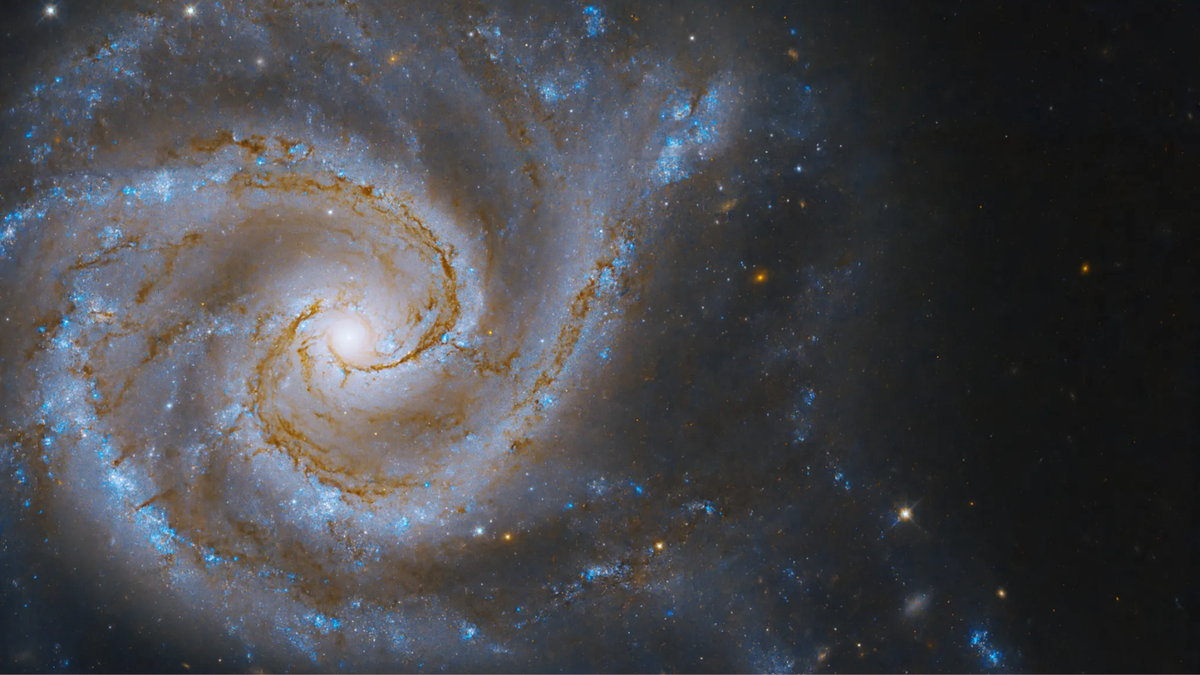
Astronomers predict that the Andromeda Galaxy (M31) and the Milky Way will collide in about 4 billion years, resulting in a wave of star formation and the creation of new emission nebulae and open clusters. The collision will distort the skies above Earth, with streams of stars being flung outward and the spiral structures of both galaxies gradually being erased. Eventually, the merger will form an elliptical supergalaxy known as Milkomeda.

astronomy2 years ago

Giant Tidal Waves Threaten Earth as They Crash on Distant Star

Astronomers have discovered massive waves on a heartbeat star, MACHO 80.7443.1718, reaching a height of three suns stacked on top of each other. This is the first time such large waves have been observed on a heartbeat star. The waves are caused by the gravitational interaction between the two stars in the system, resulting in tides on the larger star. These waves behave like tidal waves on Earth, starting as smaller swells and eventually breaking. The waves also cause the star's surface to spin faster, leading to the ejection of large amounts of stellar gas and the formation of a rotating atmosphere around the star. The researchers believe there may be more heartbeat stars with similar phenomena and are planning to search for them.