
Unveiling the Mysteries of Colliding Primordial Black Holes and Dark Matter Using Gravitational Waves
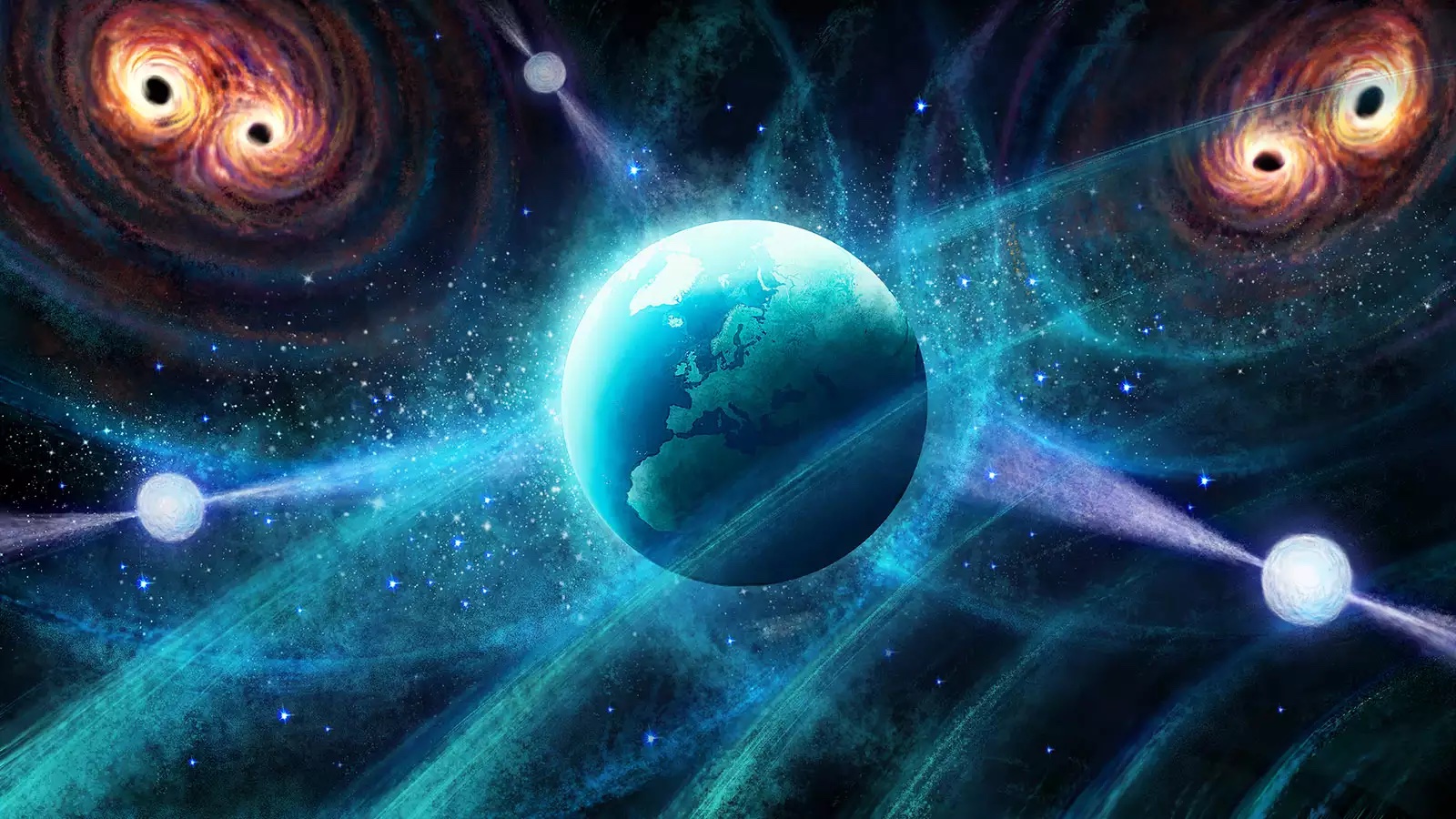
The North American Nanohertz Observatory for Gravitational Waves (NANOGrav) has detected long wavelength gravitational waves using pulsar timing arrays, suggesting the presence of supermassive black hole mergers. However, a new study explores the possibility that these waves could also be caused by primordial black holes. The authors find that if primordial black holes were evenly distributed, the observed waves are too strong to be attributed to their mergers. However, if the primordial black holes were clustered, they could be the source. Further data is needed to distinguish between the two sources and determine the true cause of the observed gravitational waves.
Reading Insights
0
4
2 min
vs 3 min read
82%
558 → 101 words
Want the full story? Read the original article
Read on Universe Today