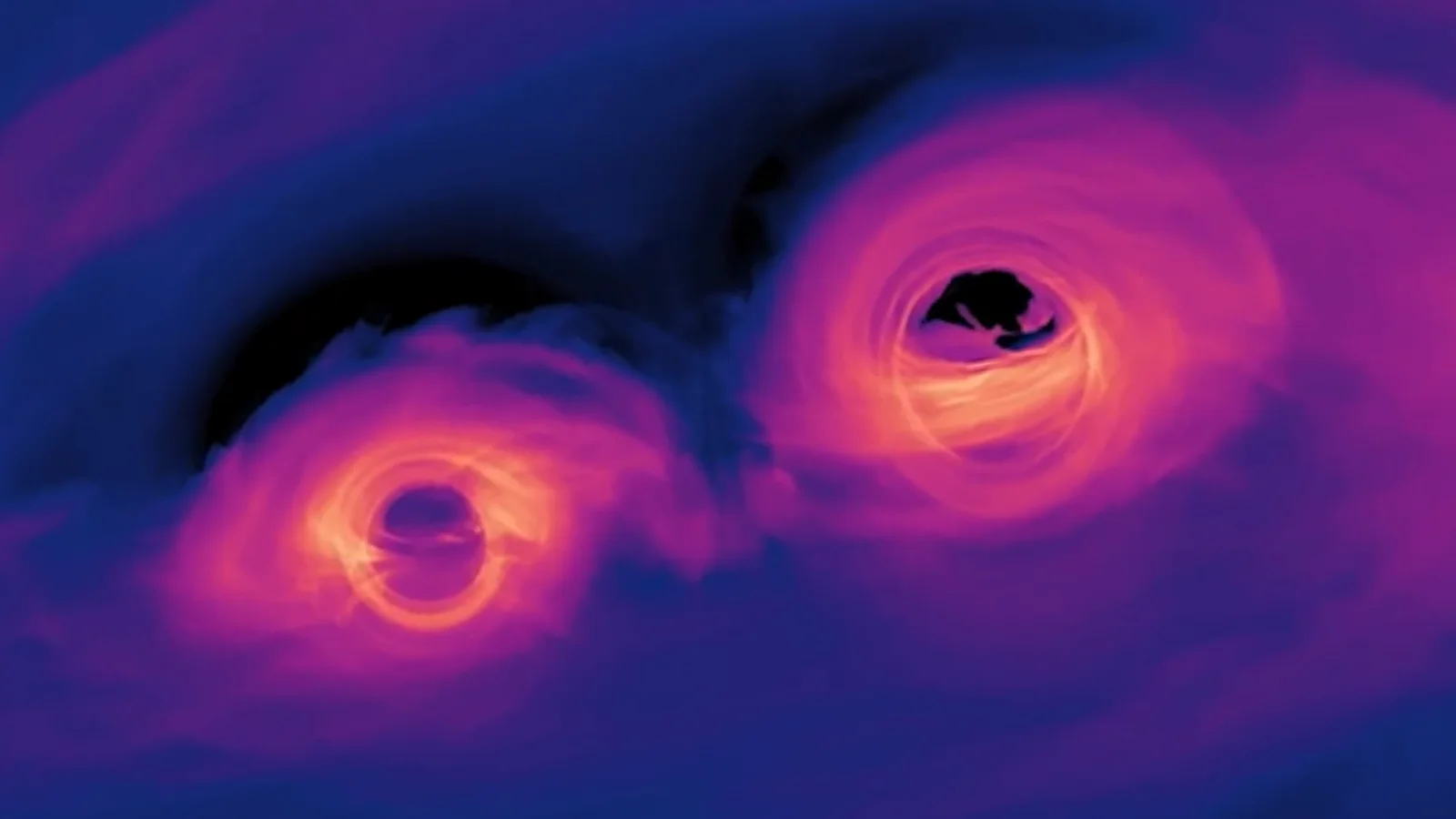
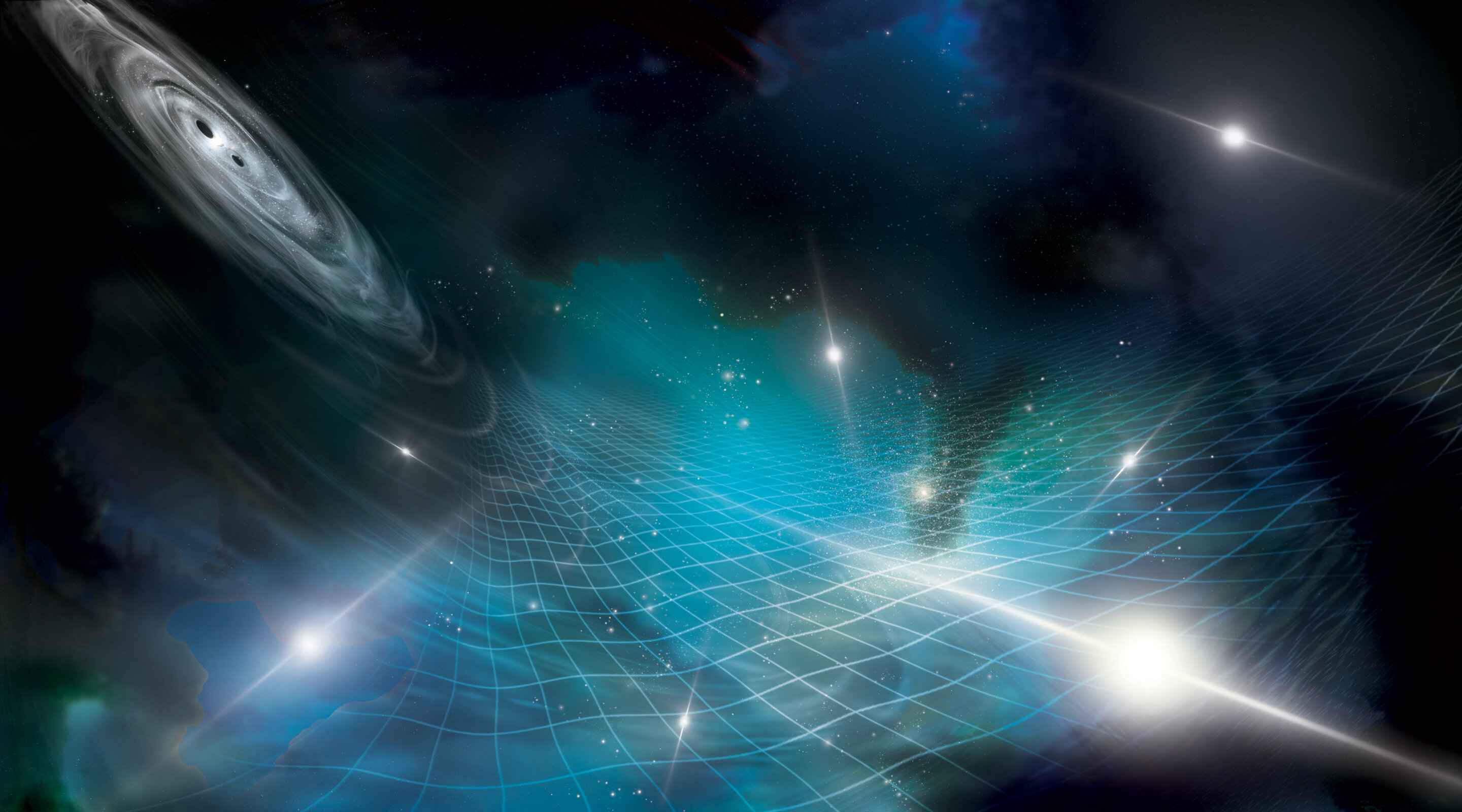
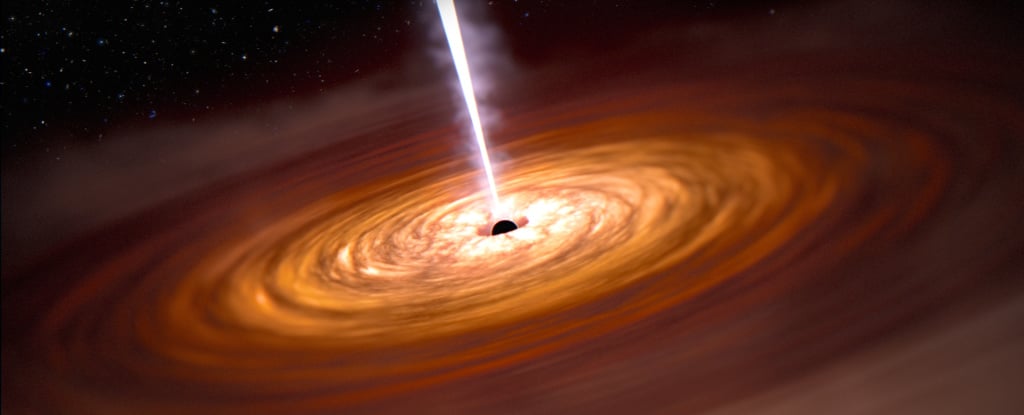
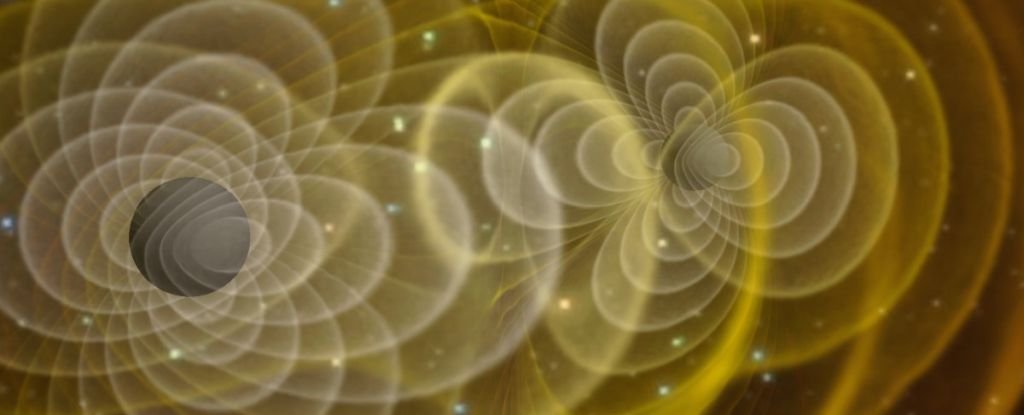
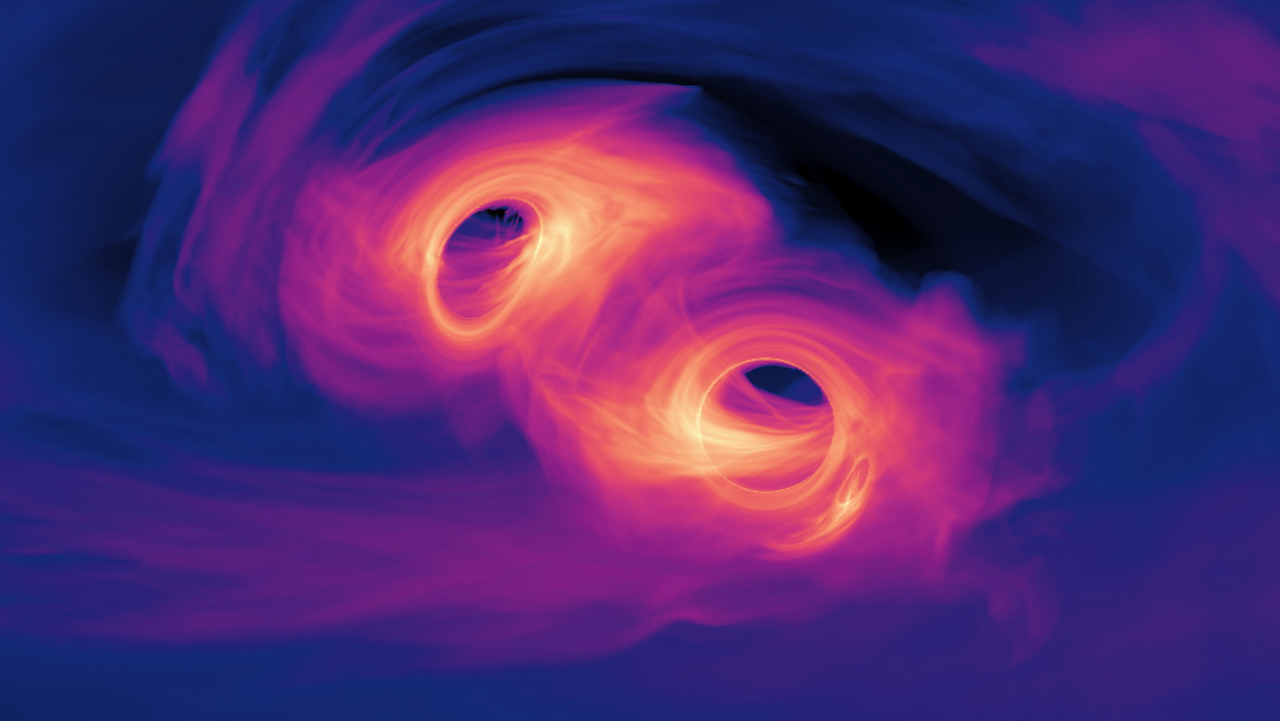
Space researchers nicknamed two merging supermassive black holes Gondor and Rohan after Lord of the Rings locations, using a new detection approach that combines gravitational‑wave background data with quasar observations to locate continuous gravitational-wave sources and map galaxy mergers.
Astronomers from the NANOGrav collaboration are investigating the origins of faint gravitational waves detected in the Milky Way, which may be from merging supermassive black hole binaries or exotic cosmological processes from the early universe, such as cosmic strings, phase transitions, or domain walls. These findings could provide insights into the universe's infancy and the ongoing search for dark matter and dark energy. The complexity of the signals and the limitations of current detectors like LIGO pose challenges, but upcoming missions like LISA and AEDGE are expected to enhance gravitational wave detection capabilities. The research has been accepted for publication in the journal Physical Review D.
In 2023, significant advancements in space exploration have been made, including the detection of cosmic hum by the NANOGrav Observatory, which could aid in the search for dark matter. The James Webb Space Telescope is providing groundbreaking images and data, reshaping our understanding of the universe, from stellar nurseries to the smallest brown dwarfs. The OSIRIS-REx mission has gathered crucial information from the asteroid Bennu, which poses a potential threat to Earth. SpaceX's unique contract with NASA has allowed for rapid innovation and a high launch tempo. However, as space launch activities increase, concerns about their environmental impact are growing, prompting discussions on more sustainable space travel methods.
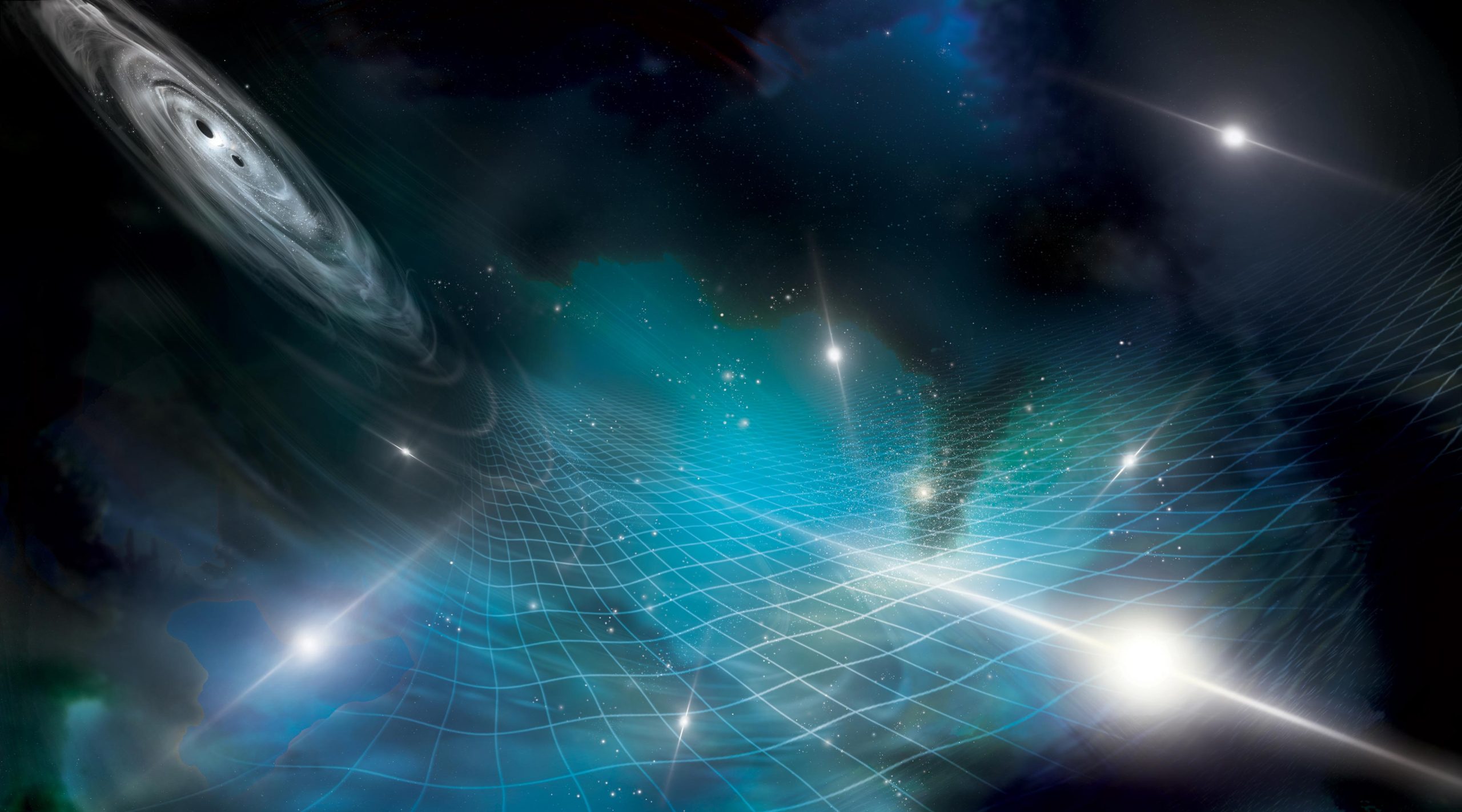
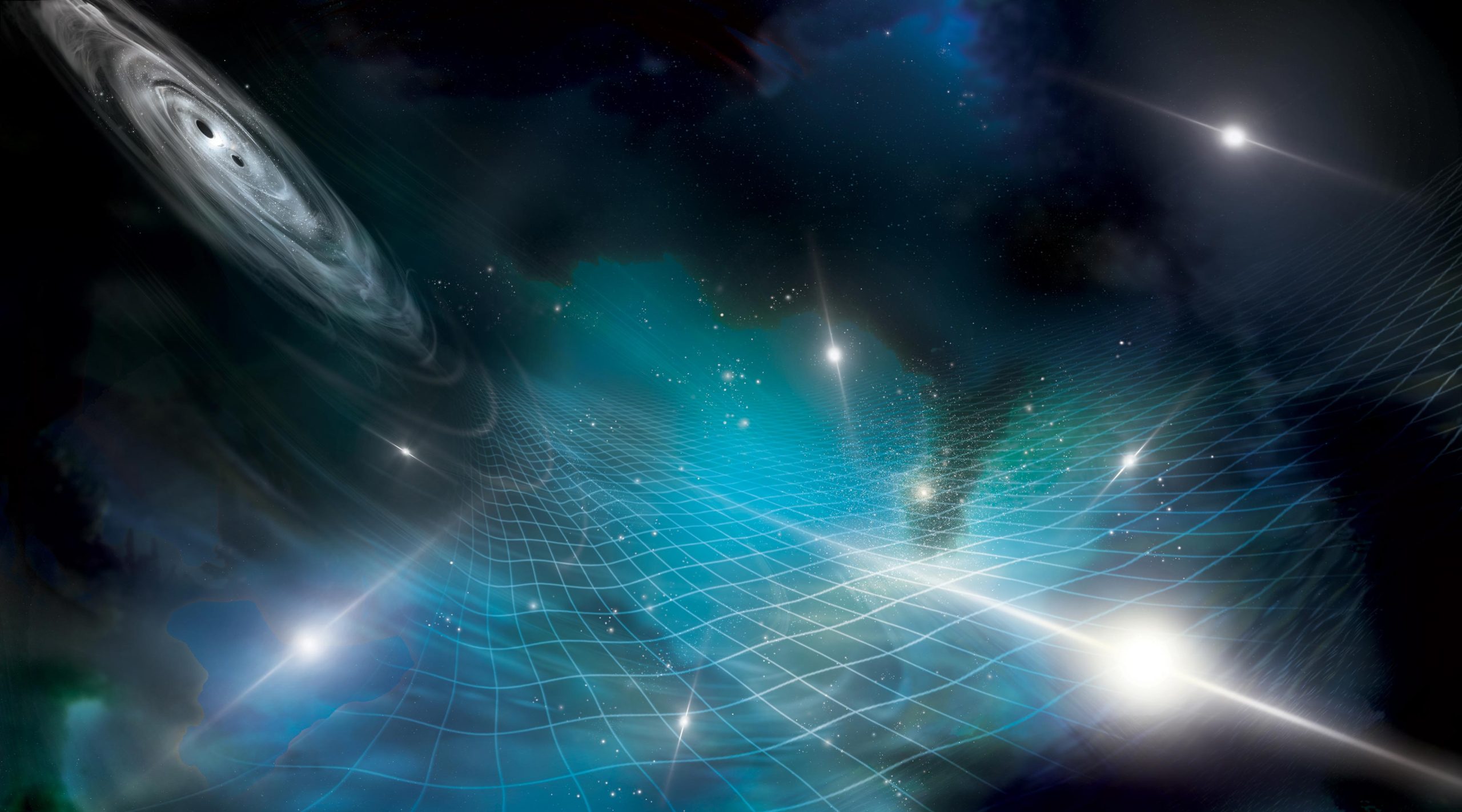
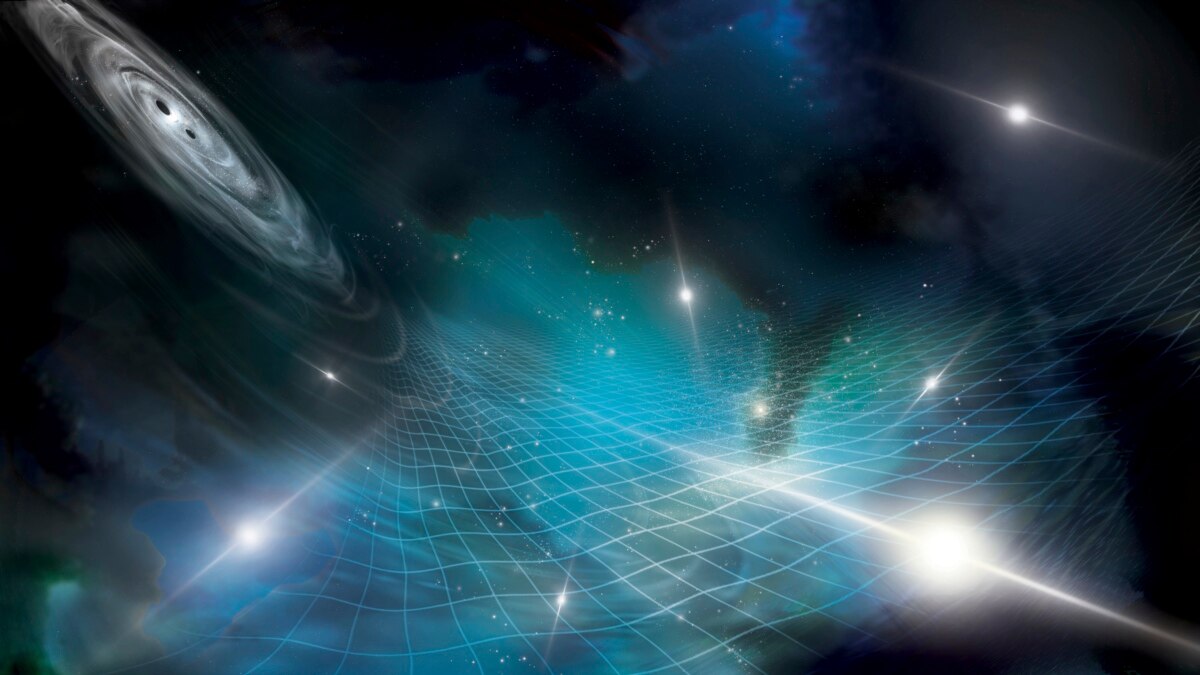
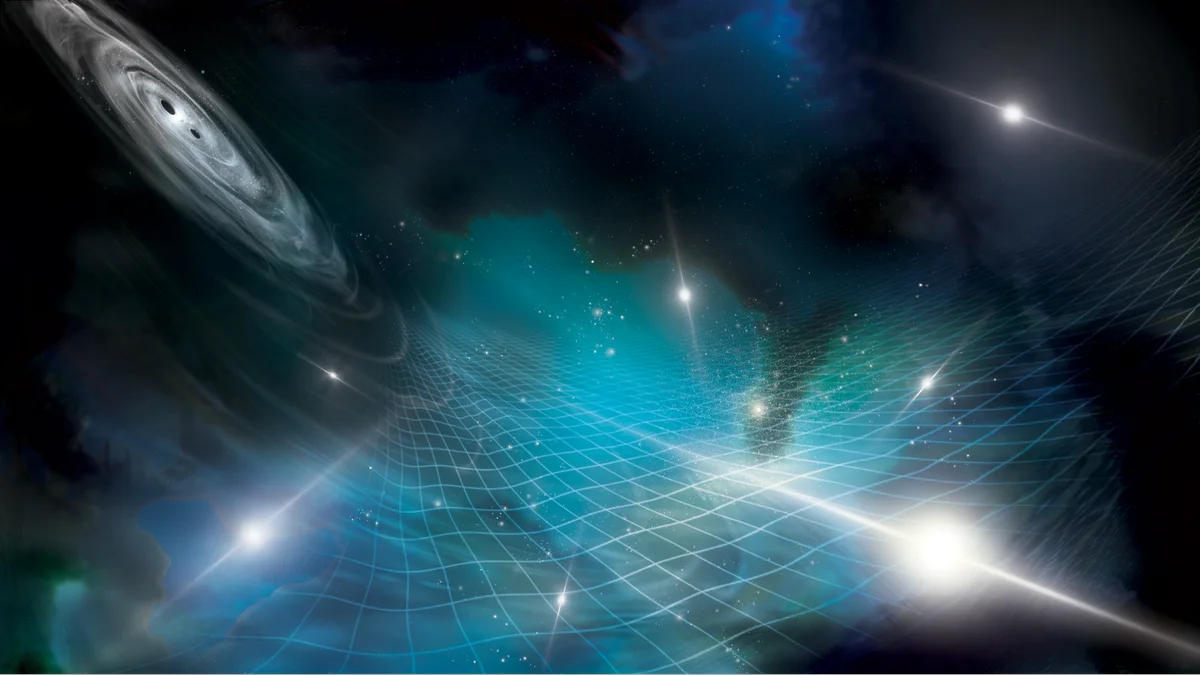
Scientists from the North American Nanohertz Observatory for Gravitational Waves (NANOGrav) have reported the first evidence of a background of gravitational waves enveloping Earth and the universe. The waves, originating from pairs of supermassive black holes slowly spiraling together, were detected through 15 years of meticulous observations using radio telescopes. NANOGrav's network of pulsars acted as buoys on a slow-rolling sea of gravitational waves, with the waves causing minute changes in the timing of the pulsars' flashes of light. This groundbreaking discovery opens up new possibilities for understanding the nature of merging supermassive black holes and their prevalence in the universe.
Scientists from the NANOGrav Physics Frontiers Center have detected the universe's gravitational wave background by analyzing radio telescope observations of millisecond pulsars. The team found variations in the pulsars' ticking rates, which are caused by low-frequency gravitational waves distorting spacetime. This is the first evidence of gravitational waves at these frequencies, providing insights into galaxy evolution and the growth of supermassive black holes. The findings suggest that pairs of ultra-massive black holes may be widespread across the universe, and the NANOGrav team aims to identify specific black hole pairs and trace gravitational waves from the early universe.
Scientists have observed gravitational waves caused by black holes and other massive celestial objects for the first time. Using radio telescopes in multiple countries, researchers detected low-frequency gravitational waves by studying the signals emitted by pulsars. This discovery suggests that there may be more instances of black holes merging in space than previously thought and raises questions about the formation of the universe. Further research on low-frequency gravitational waves could provide insights into the early expansion of the universe and the mysteries of dark matter.
Astronomers from the NANOGrav research team have detected a constant hum of gravitational waves throughout the universe, potentially caused by pairs of supermassive black holes merging together. This discovery, made by linking dead stars to create a giant gravitational wave detector, confirms Einstein's predictions and provides insights into the evolution of massive objects in the universe. The gravitational waves were detected using 67 pulsars, which showed fluctuations and oscillations in their regular beat. The origin of these waves is still unknown, but scientists suggest that supermassive black holes at the center of merging galaxies may be responsible.
Astronomers have detected a constant hum of gravitational waves throughout the universe, possibly caused by pairs of supermassive black holes merging together. Using 67 pulsars, the NANOGrav research team discovered these gravitational waves, which fluctuate and may take years or decades to oscillate. The waves confirm Einstein's predictions and provide insights into the evolution of massive objects in the universe.
Scientists have made a historic breakthrough by detecting low-frequency gravitational waves, marking the first detection of this type. The waves are believed to originate from supermassive black hole binaries in the early universe. This discovery opens up a new window for studying how galaxies and their central black holes merge and grow over time. The detection was made possible by the North American Nanohertz Observatory for Gravitational Waves (NANOGrav), which used a pulsar timing array consisting of 68 pulsars within the Milky Way. The findings provide insights into the growth of supermassive black holes and the evolution of the universe.
Scientists with the North American Nanohertz Observatory for Gravitational Waves (NANOGrav) have detected the perpetual chorus of gravitational waves rippling through the universe for the first time. These gravitational waves, produced by pairs of supermassive black holes spiraling towards cataclysmic collisions, are the most powerful ever measured, carrying roughly a million times more energy than bursts from black hole and neutron star mergers. The discovery opens a new window of observation on the universe and provides insights into the fate of supermassive black hole pairs and the frequency of galaxy mergers. The gravitational wave background is about twice as loud as expected, suggesting the presence of heavier and more abundant supermassive black holes or the possibility of alternative explanations for the universe's birth.
Multiple international teams of scientists have independently discovered evidence for long-theorized space-time waves, known as the "gravitational wave background." This discovery affirms an implication of Albert Einstein's general theory of relativity, revealing that space is not empty and time does not march smoothly forward. Instead, the fabric of space and time is constantly being churned and rumpled by the gravitational interactions of massive objects, including supermassive black holes. The findings, published in five papers by the NANOGrav team and other teams across the globe, provide potential insight into the physical reality of the universe and open up a new window for gravitational wave astronomy.
Two major press conferences about the Universe are scheduled for Thursday, June 29th. The first announcement, by the North American Nanohertz Observatory for Gravitational Waves (NANOGrav), is expected to shed light on the detection of the gravitational wave background, which could revolutionize our understanding of the early Universe. The second announcement, by the IceCube Neutrino Observatory, will involve intriguing neutrino detection and has no connection to gravitational waves. Both discoveries have the potential to significantly advance our knowledge of the Universe.
The North American Nanohertz Observatory for Gravitational Waves (NANOGrav) is set to make a major announcement on June 29, 2023, regarding research conducted by the International Pulsar Timing Array. The announcement is expected to shed light on the search for the gravitational wave background, a random or 'stochastic' buzz of gravitational waves produced by the hum of many weak, independent, and unresolved astrophysical sources. The detection of the gravitational wave background could provide a wealth of information about astrophysical source populations and processes in the very early Universe, which are not accessible by any other means.
The NANOGrav project has proposed a new method to observe the mergers of supermassive black holes by studying the radio pulses of millisecond pulsars. By observing the overall statistical shifts of lots of pulsars, they can detect the large-scale effect of the gravitational waves from merging supermassive black holes. Although the idea is not without its challenges, the study puts some upper constraints on gravitational wave observations and shows that there has not been any billion-solar-mass black hole merger within 300 million light years. With further observations, they will be able to observe million-solar-mass black hole mergers in that range, or billion-solar-mass ones at greater distances.