Tag

Primordial Black Holes

All articles tagged with #primordial black holes

Hawking’s Tiny 1974 Paper: Black Holes That Could Explode
science4 days ago

Hawking’s Tiny 1974 Paper: Black Holes That Could Explode

In 1974 Stephen Hawking published a short Nature paper proposing that tiny primordial black holes, formed in the early universe, could evaporate and explode via Hawking radiation, flipping the view that black holes only grow. The idea, which connects quantum mechanics to gravity, later sparked the black hole information paradox as it suggested information might be lost; Hawking and collaborators’ later work proposed mechanisms for information escape, including wormholes, though direct evidence remains elusive. Ongoing research, including gravitational waves and James Webb observations, continues to investigate primordial black holes and their potential cosmological signatures.
Dark-Charge Black Holes May Explain Ultra-High-Energy Neutrino Burst
space27 days ago

Dark-Charge Black Holes May Explain Ultra-High-Energy Neutrino Burst

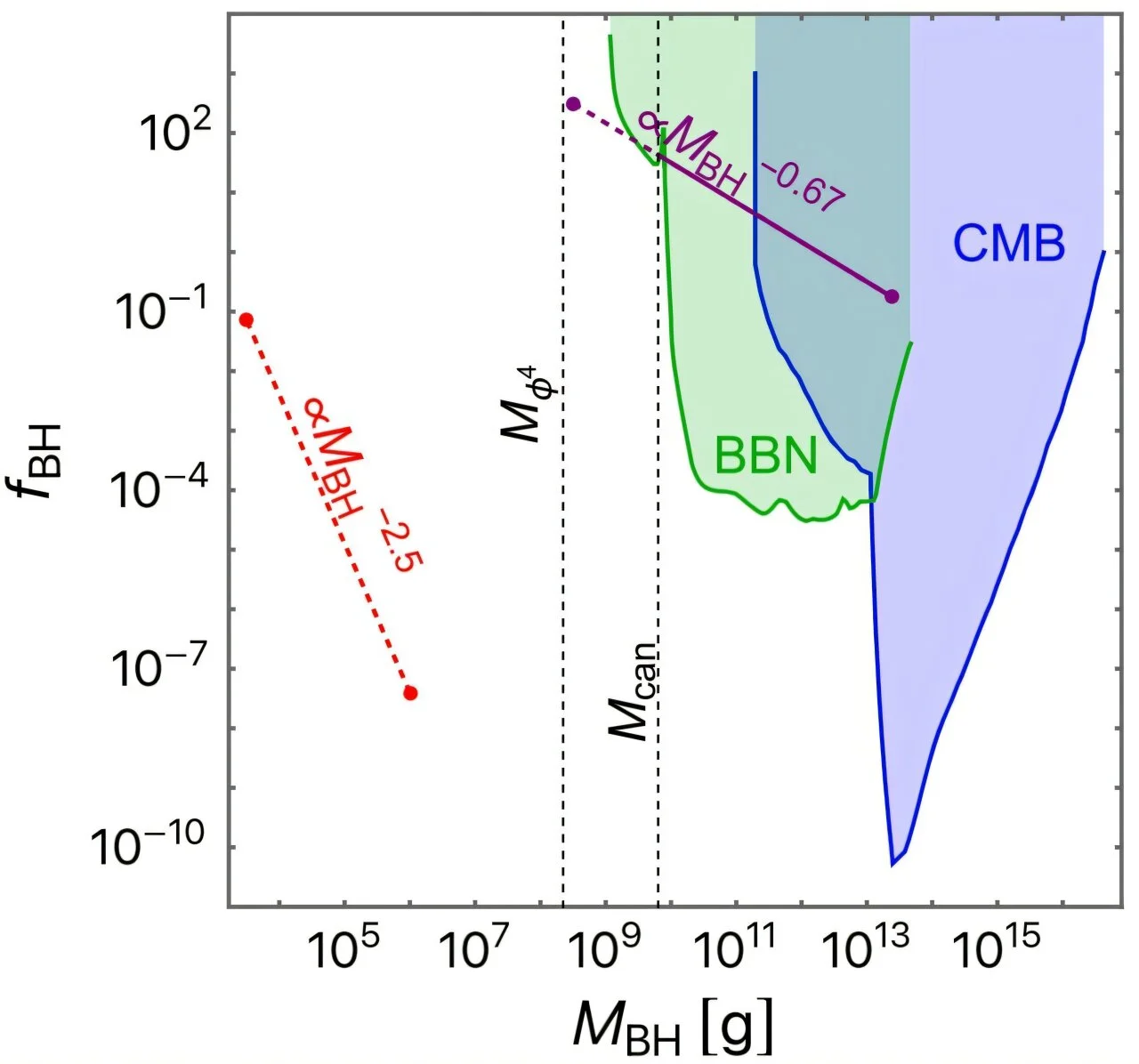
KM3NeT detected a 100 PeV neutrino (KM3-230213A) with no known source. A Physical Review Letters study proposes exploding quasi-extremal primordial black holes with a dark charge as a possible origin, invoking Hawking radiation that heavier, lighter PBHs would emit high-energy particles in a final burst. IceCube has not observed a comparable event, possibly due to its different energy window. If correct, such PBH evaporations could occur roughly every decade, linking ultra-high-energy neutrinos to PBH physics.

Ultra‑Energy Neutrino Sparks Dark-Electron Black Hole Theory
science27 days ago

Ultra‑Energy Neutrino Sparks Dark-Electron Black Hole Theory

A rare, ultrahigh-energy neutrino detected by KM3NeT in 2023 prompts a bold hypothesis: a quasi-extremal primordial black hole dumping dark electrons, triggering a rapid explosion that emits a narrow band of neutrinos; the idea, outlined in a Physical Review Letters preprint and set for formal publication, could explain why KM3NeT saw the event while IceCube did not, but it remains speculative pending more data and analysis.

Ultra-Powerful Neutrino Sparks Dark Matter Clue From Ancient Black Hole
science28 days ago

Ultra-Powerful Neutrino Sparks Dark Matter Clue From Ancient Black Hole

A 220 PeV neutrino detected by KM3NeT's ARCA detector in February 2023 far exceeds energies from any accelerator and challenges existing models; a University of Massachusetts Amherst team suggests it came from a primordial black hole evaporating via Hawking radiation, offering a potential link to dark matter and a window into new physics beyond the Standard Model.

Ultra-energetic neutrino hints at exploding primordial black holes and dark matter link
space29 days ago

Ultra-energetic neutrino hints at exploding primordial black holes and dark matter link

A 2023 ultra-high-energy neutrino detected by KM3NeT is proposed to be debris from an exploding primordial black hole, potentially evidencing Hawking radiation and primordial black holes as dark matter candidates, though IceCube’s non-detection and a proposed dark-charge model for quasi-extremal black holes add complexity to the interpretation.

Primordial Black Hole Bursts May Explain Ultra-Energetic Neutrinos
science29 days ago

Primordial Black Hole Bursts May Explain Ultra-Energetic Neutrinos

After a 2023 ultra-high-energy neutrino puzzled scientists, a UMass Amherst team proposes it originated from a primordial black hole explosion driven by Hawking radiation; their 'dark-charge' (quasi-extremal PBH) model could connect PBHs to dark matter and suggest these explosions may occur more often than thought, guiding future astrophysical searches.

Dark-Charged Black Holes May Explain Ultra-Energetic Neutrino
science29 days ago

Dark-Charged Black Holes May Explain Ultra-Energetic Neutrino

A 2023 KM3NeT detection of a ~220 PeV neutrino challenges standard sources; researchers propose it came from a quasi-extremal primordial black hole carrying dark charge that evaporates via a dark Schwinger effect, discharging explosively and emitting high-energy neutrinos while spending most of its life dormant. If correct, such black holes could explain the IceCube–KM3NeT mismatch and potentially account for dark matter.

JWST rewrites how the first supermassive black holes formed in the early universe
space1 month ago

JWST rewrites how the first supermassive black holes formed in the early universe

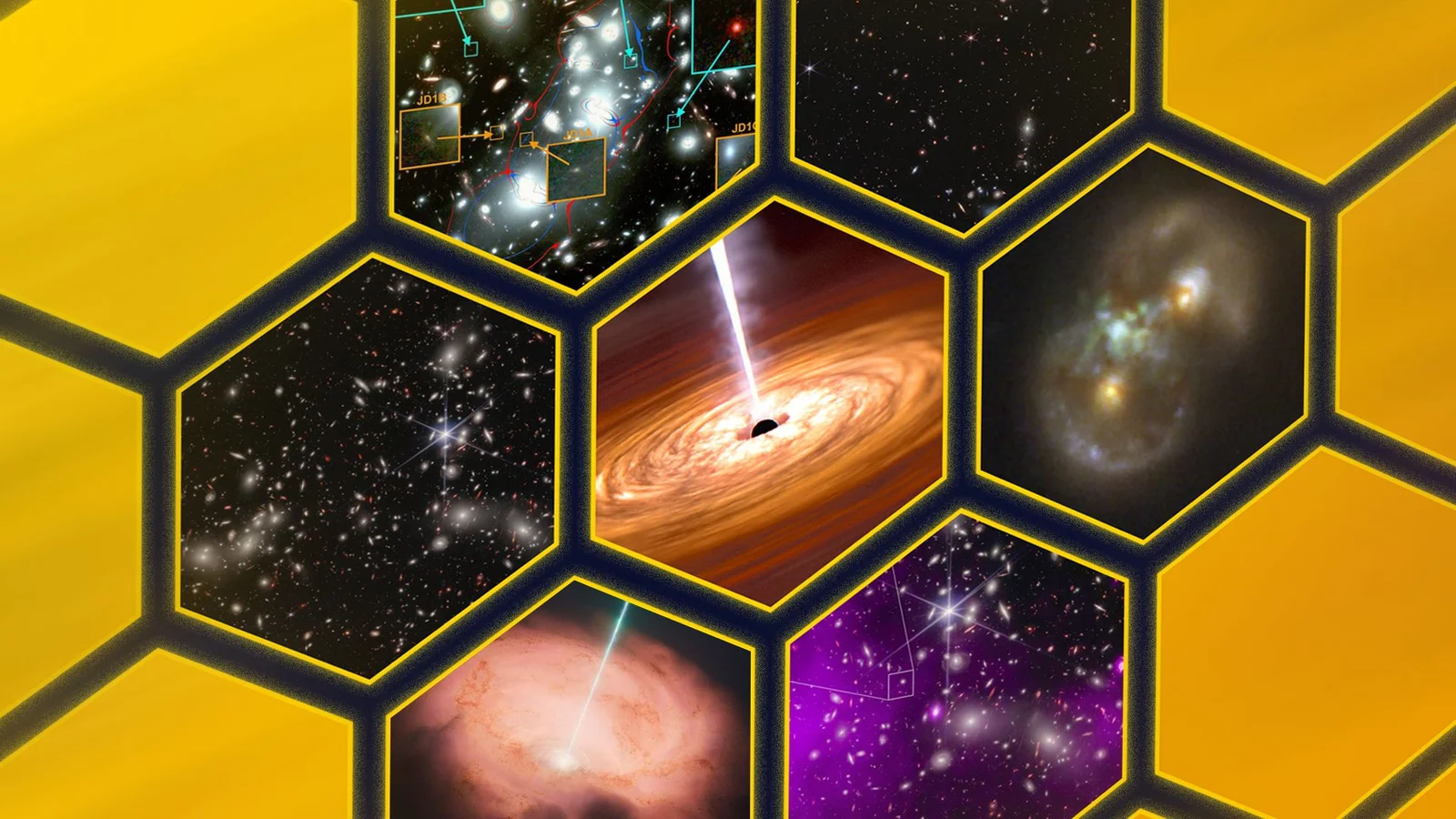
NASA’s James Webb Space Telescope is uncovering enormous black holes in the early universe that don’t fit traditional growth models, including a 40-million-solar-mass black hole in the galaxy UHZ1 when the cosmos was only ~470 million years old. JWST also reveals compact “little red dots” that may be black holes with no visible host galaxies, pointing to multiple formation channels—direct-collapse scenarios and possibly primordial black holes—leading many researchers to favor a blended origin for supermassive black holes. Future missions like Euclid and the Roman Space Telescope will help distinguish which pathways are most common.

Ultra-energetic Neutrino Sparks Primordial Black Hole Hypothesis
science1 month ago

Ultra-energetic Neutrino Sparks Primordial Black Hole Hypothesis

A record-energy neutrino detected by the KM3NET underwater telescope could originate from the explosive end of a primordial black hole, a provocative link to dark matter. Kaiser and Klipfel model a scenario where a small asteroid-mass PBH exploded about 2,000 AU away to produce the neutrino, estimating roughly an 8% chance. While intriguing, the idea remains unproven and controversial among scientists.

Ancient Black Hole Predates Stars and Galaxies, Challenging Cosmic Origins
science2 months ago

Ancient Black Hole Predates Stars and Galaxies, Challenging Cosmic Origins

Astronomers using the James Webb Space Telescope discovered a massive black hole in a young galaxy from just 700 million years after the Big Bang, challenging traditional theories of galaxy and black hole formation. The black hole's size and the lack of surrounding stars suggest it may have originated as a primordial black hole, formed directly from density fluctuations in the early universe, rather than from star collapse. This finding opens new possibilities about the origins of supermassive black holes and the early universe, though further research is needed to confirm these theories.

James Webb Telescope Unveils New Insights into Early Black Holes and Cosmic Mysteries
science4 months ago

James Webb Telescope Unveils New Insights into Early Black Holes and Cosmic Mysteries

Recent observations by the James Webb Space Telescope suggest that some black holes in the early universe may have formed from primordial collapse before galaxies, challenging traditional models of galaxy and black hole co-evolution and indicating that black holes could have grown rapidly or even predated their host galaxies.