
JWST rewrites how the first supermassive black holes formed in the early universe
TL;DR Summary
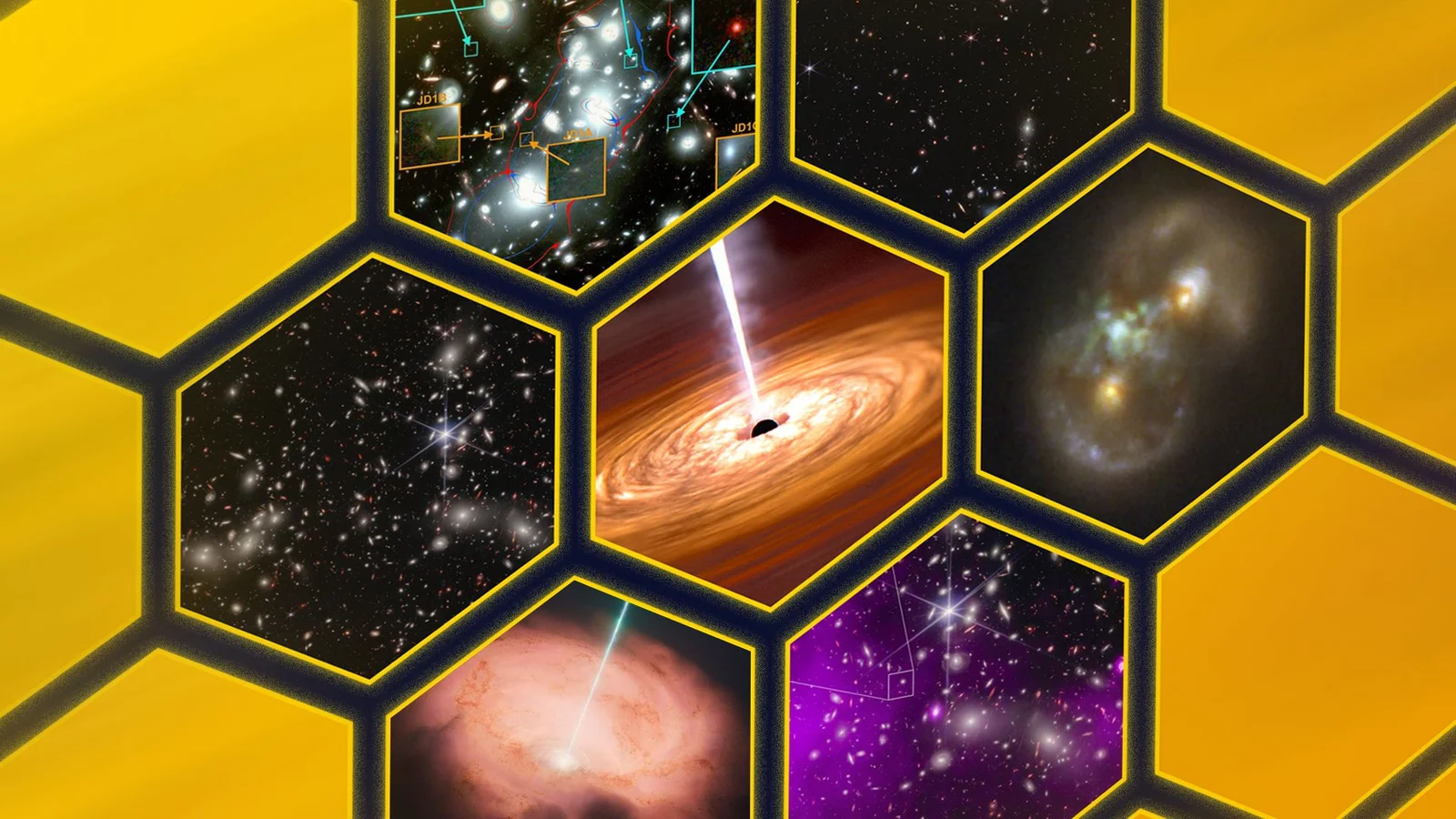
NASA’s James Webb Space Telescope is uncovering enormous black holes in the early universe that don’t fit traditional growth models, including a 40-million-solar-mass black hole in the galaxy UHZ1 when the cosmos was only ~470 million years old. JWST also reveals compact “little red dots” that may be black holes with no visible host galaxies, pointing to multiple formation channels—direct-collapse scenarios and possibly primordial black holes—leading many researchers to favor a blended origin for supermassive black holes. Future missions like Euclid and the Roman Space Telescope will help distinguish which pathways are most common.
Topics:science#black-holes#direct-collapse-black-holes#early-universe#james-webb-space-telescope#primordial-black-holes#space
- 'A real revolution': The James Webb telescope is upending our understanding of the biggest, oldest black holes in the universe Live Science
- Astronomers Solve the Mystery of How Black Holes Got Big So Fast SciTechDaily
- The growth of light seed black holes in the early Universe Nature
- Rule-breaking supermassive black hole discovered in the early universe Phys.org
- Astronomers found a black hole growing way too fast ScienceDaily
Reading Insights
Total Reads
1
Unique Readers
10
Time Saved
63 min
vs 64 min read
Condensed
99%
12,609 → 94 words
Want the full story? Read the original article
Read on Live Science