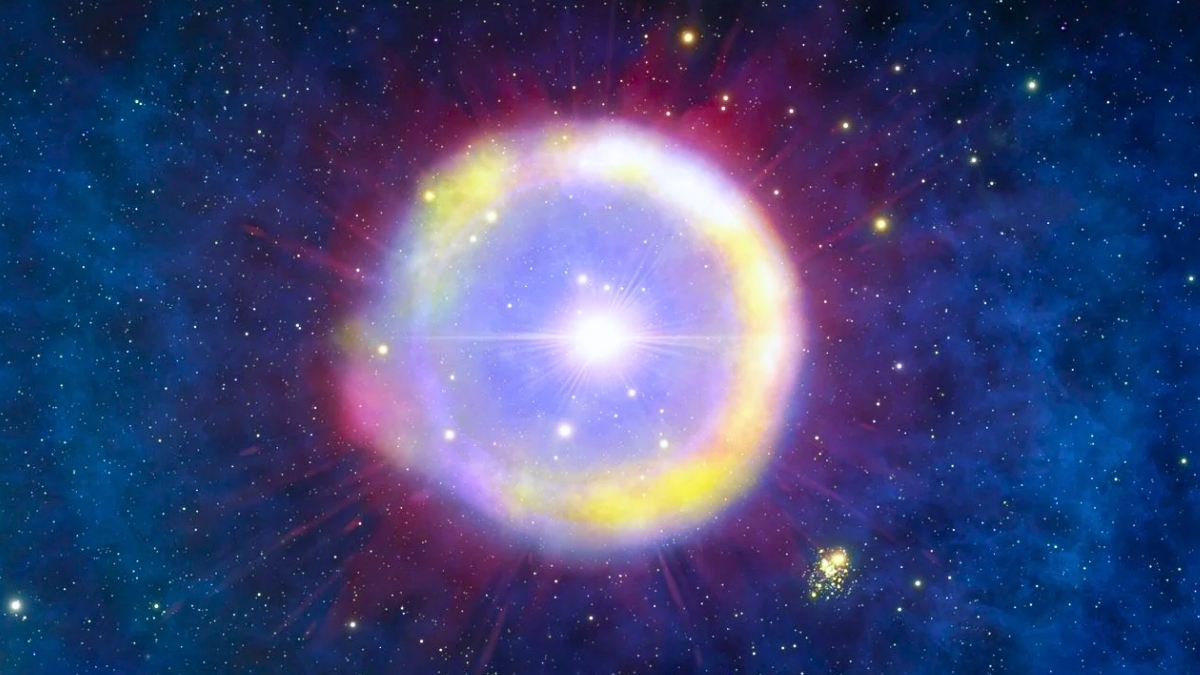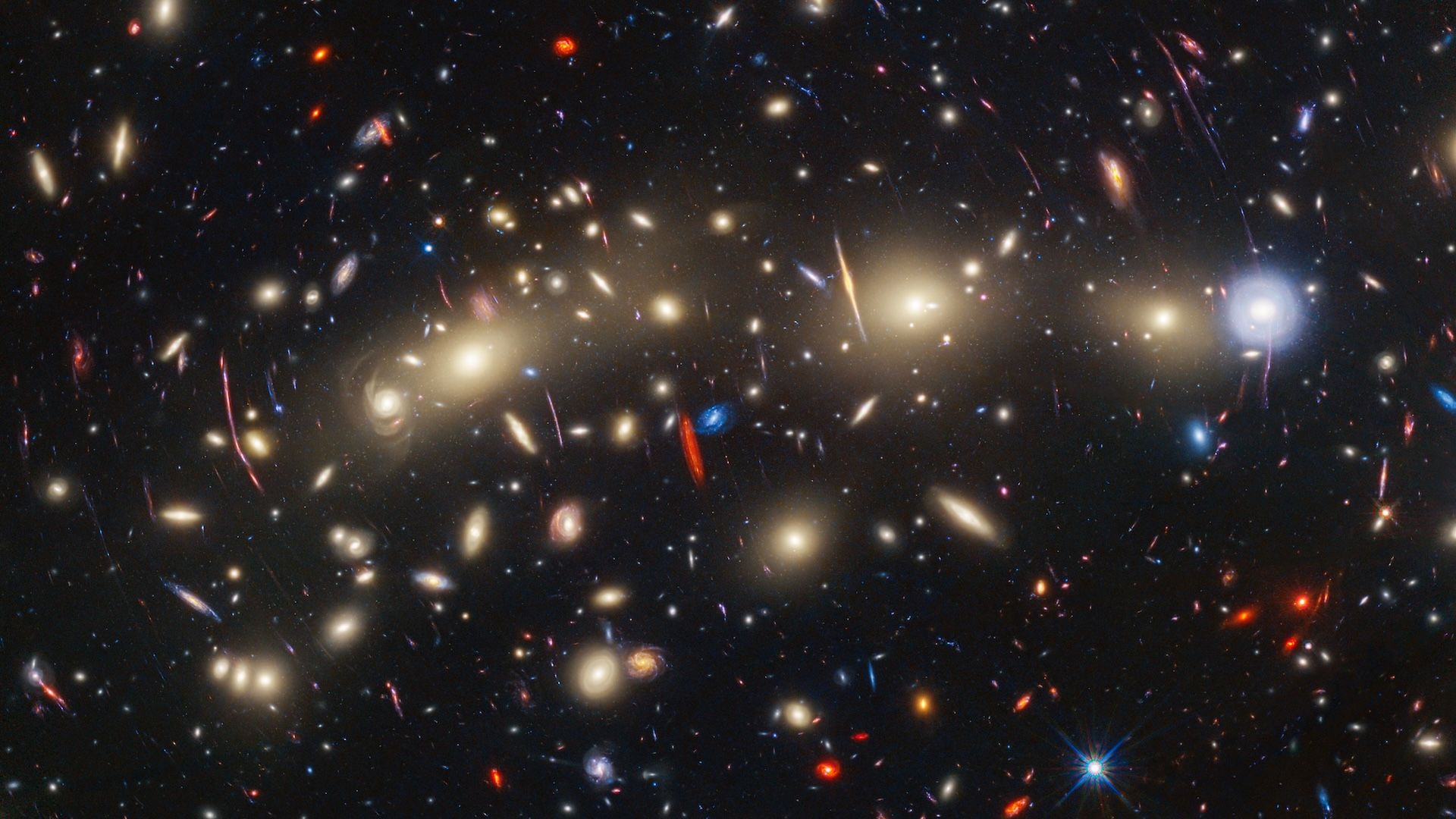
Using the JWST, scientists found evidence supporting the existence of 'monster stars' in the early universe, which could have been the seeds for supermassive black holes, by analyzing chemical signatures in a distant galaxy that indicate the presence of extremely massive primordial stars.
Astronomers using the James Webb Space Telescope have potentially identified some of the universe's first stars, known as Population III stars, in a distant galaxy cluster, providing insights into early galaxy formation and the conditions of the universe shortly after the Big Bang.
Astronomers may have identified the first observed system of Population III stars, the primordial stars formed shortly after the Big Bang, based on detailed analysis of JWST data of galaxy LAP1-B, which matches key theoretical predictions, though further confirmation is needed.
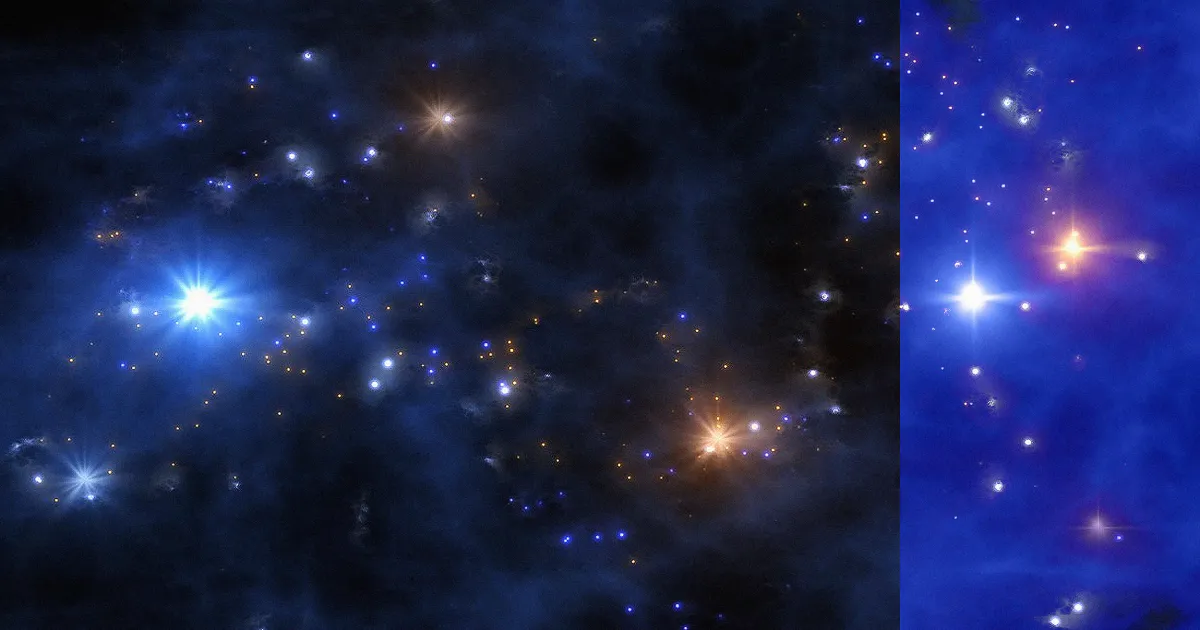
Astronomers may have identified the most pristine star to date, likely formed from gas originating from the universe's first stars, Population III, which are theorized to be massive, hot, and metal-free. The star, SDSS J0715-7334, is the most metal-poor star observed in our galaxy, providing insights into the early universe, although it is not a direct detection of Population III stars. The search for these primordial stars continues with advanced telescopes like James Webb.
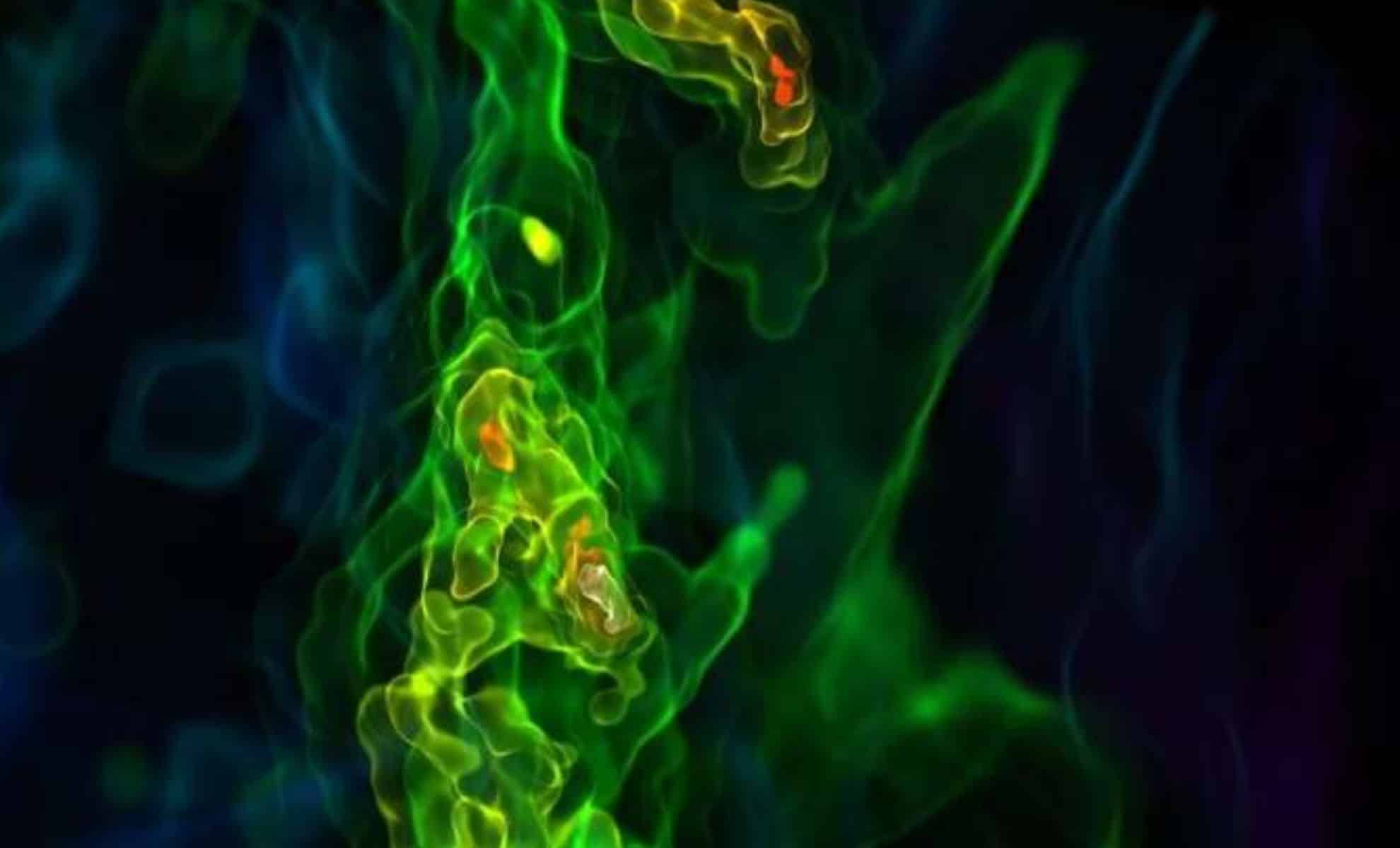
New supercomputer simulations reveal that turbulence in primordial gas clouds played a crucial role in the formation of the universe's first stars, challenging previous ideas about their size and distribution and shedding light on the cosmic dawn.
Astronomers using the James Webb Space Telescope discovered a nearly pristine galaxy, AMORE6, with no heavy elements, providing strong evidence supporting the Big Bang theory and the existence of the first generation of stars, known as Population III stars, in the early universe.
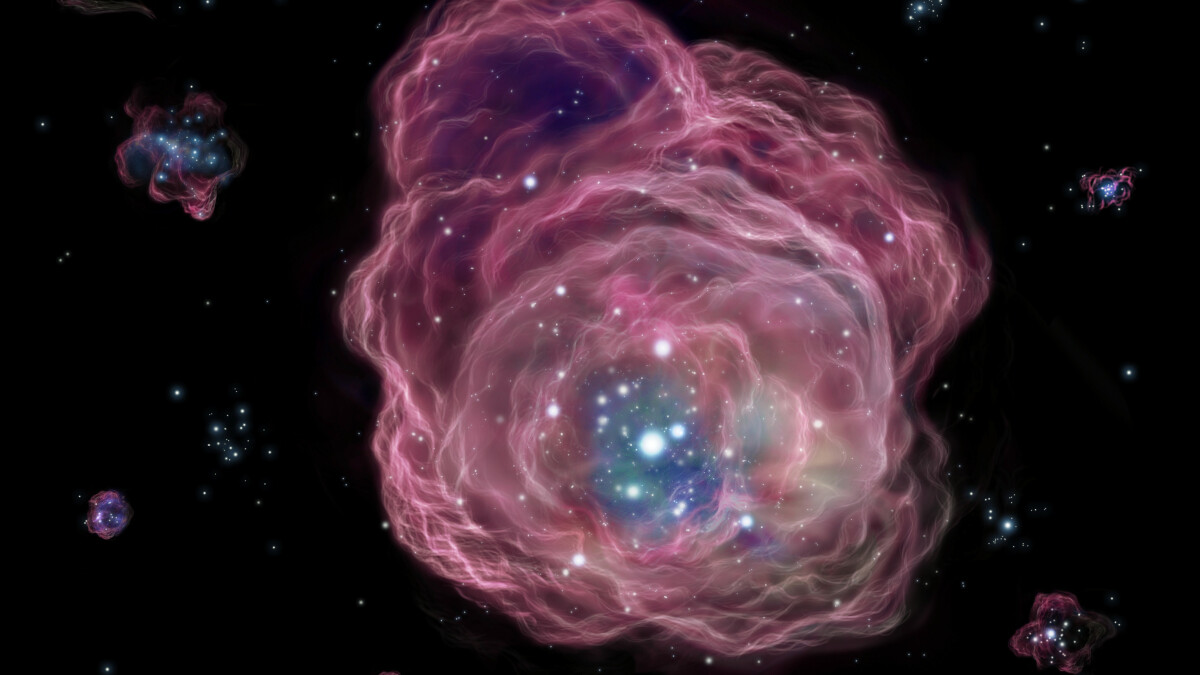
The article explains that the 'first stars' in the universe, known as Population III stars, formed from pristine hydrogen and helium shortly after the Big Bang, around 50-100 million years later, and were much larger and shorter-lived than stars today. Despite advanced telescopes like JWST, these first stars have not yet been observed directly, but their formation is predicted by simulations based on cosmic evolution models.
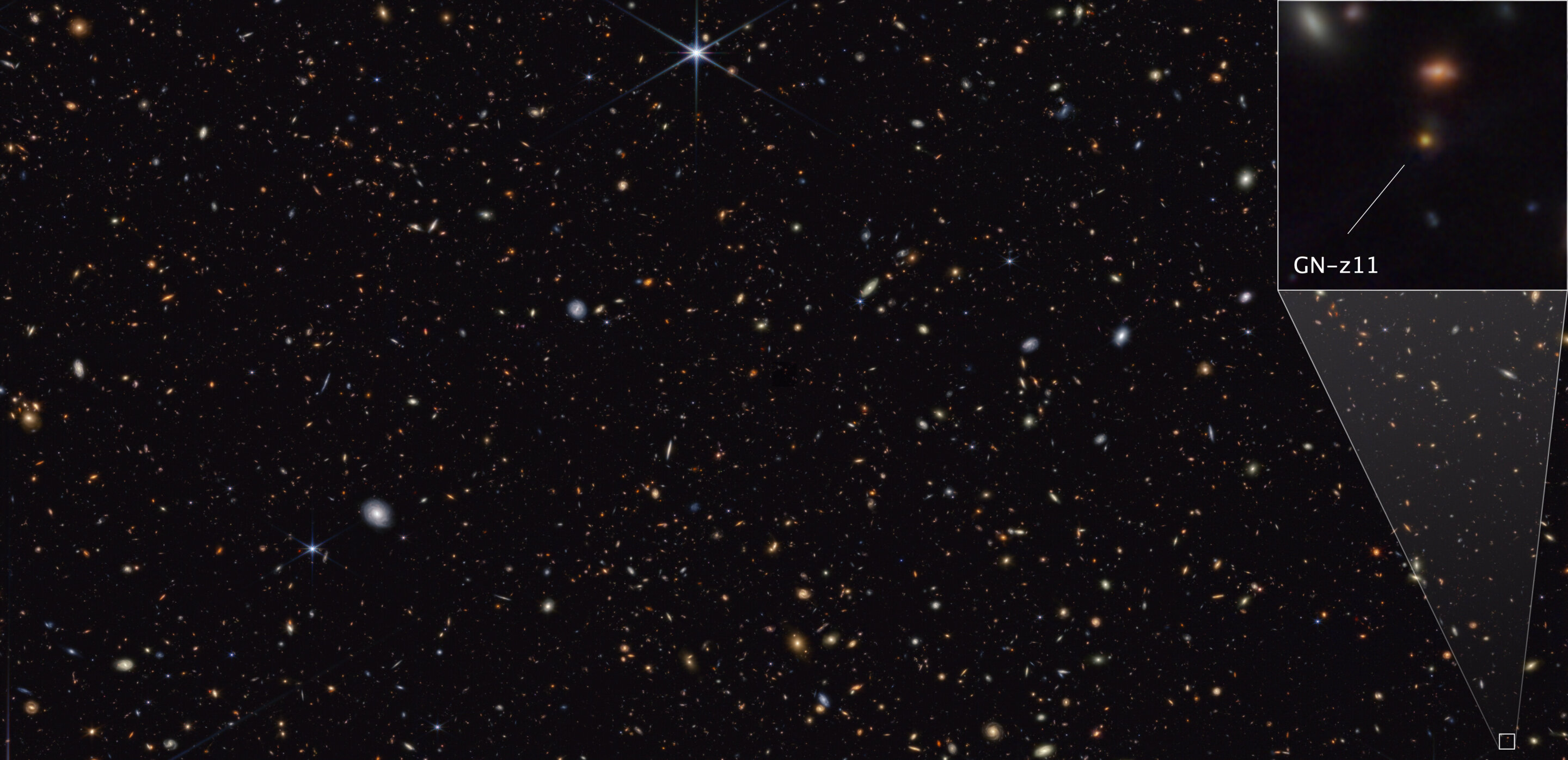
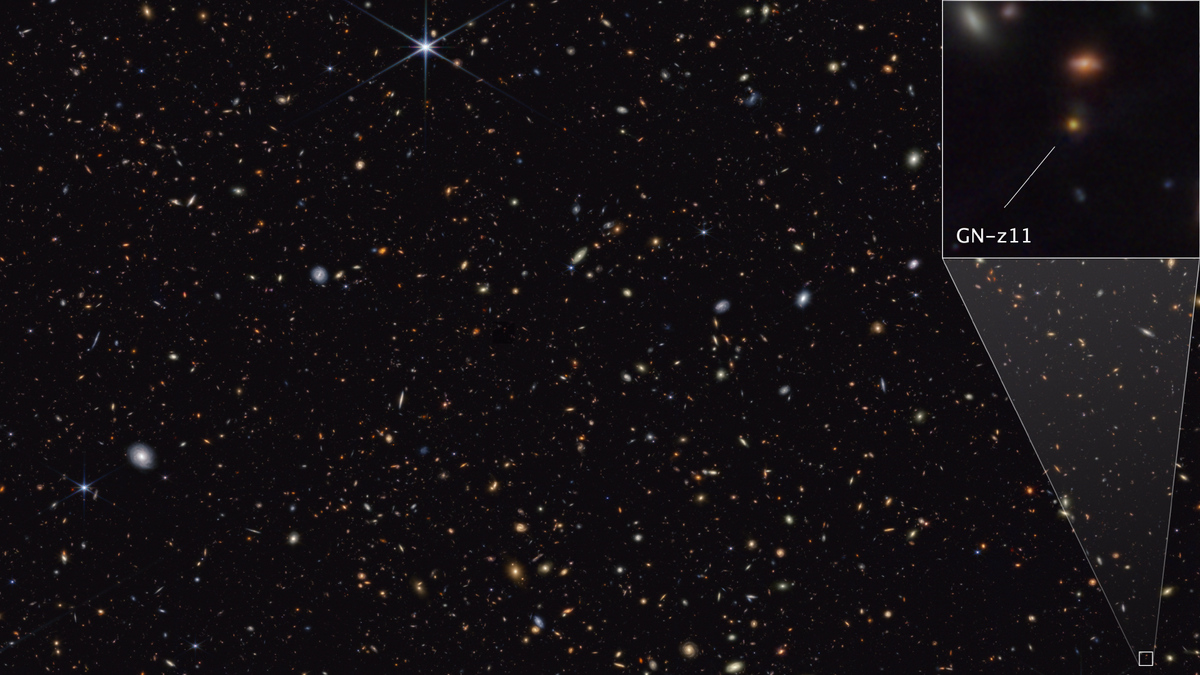
Using the James Webb Space Telescope, researchers have made groundbreaking discoveries in galaxy GN-z11, identifying a supermassive black hole responsible for the galaxy’s brightness and finding a pristine gas clump that may lead to the discovery of the universe’s first stars, providing significant insights into cosmic evolution. This discovery marks the farthest active supermassive black hole ever found and offers tantalizing evidence for the existence of Population III stars, shedding light on the early universe's evolution.
The James Webb Space Telescope has provided new insights into the exceptionally luminous galaxy GN-z11, which existed when the universe was only about 430 million years old. Researchers using Webb have found evidence of a central, supermassive black hole rapidly accreting matter within GN-z11, making it the most distant active supermassive black hole observed to date. Additionally, indications of ionized chemical elements near the black hole and the discovery of a gaseous clump of helium in the galaxy's halo suggest the potential formation of Population III stars, marking a fundamental shift in cosmic history.
The James Webb Space Telescope has potentially discovered evidence of the first generation of stars, known as Population III stars, in the distant galaxy GN-z11. This discovery also includes evidence of a supermassive black hole at the heart of GN-z11, shedding light on how galaxies in the early universe were able to grow. The findings suggest that distant galaxies like GN-z11 were more adept at forming massive stars than galaxies in the modern universe, and the research has been accepted for publication in the journal Astronomy & Astrophysics and Nature.
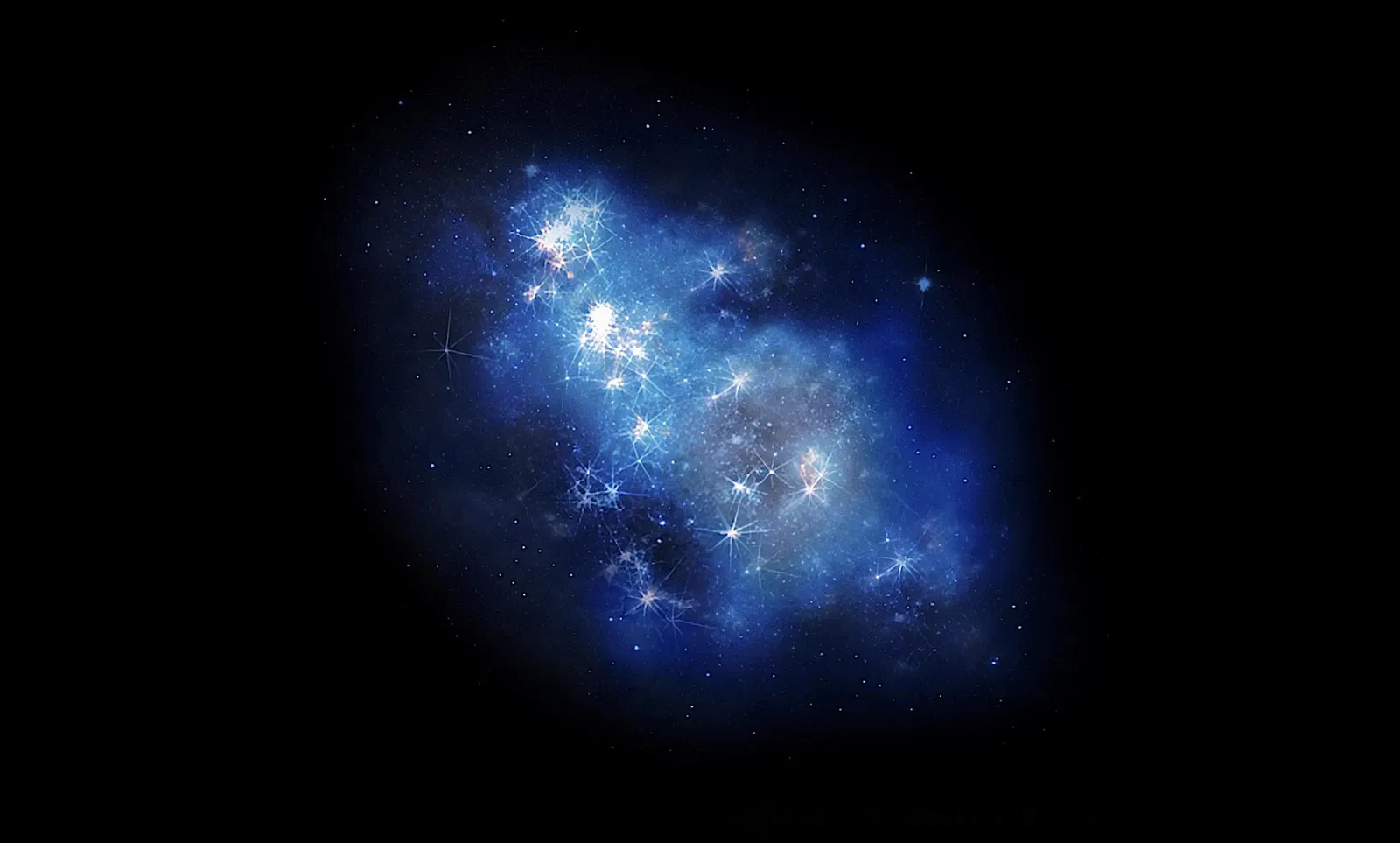
The James Webb Space Telescope has potentially discovered evidence of the first stars in the universe by detecting a clump of helium in the halo of galaxy GN-z11, which existed when the universe was only about 430 million years old. This finding supports the theory of Population III stars, which are believed to have formed from pristine pockets of gas before the existence of metals. The telescope's ability to observe infrared wavelengths allows it to study the early cosmos and potentially witness the universe's first stars and galaxies.
The James Webb Space Telescope has detected a supermassive black hole in the galaxy GN-z11, one of the farthest known galaxies. This discovery is significant as it could help astronomers understand the extreme luminosity of the galaxy and potentially reveal the presence of Population III stars, which are among the earliest to have formed in the universe. The findings, published in the journal Nature, provide valuable insights into the early stages of the universe and mark a key area of research for astrophysicists.
NASA's James Webb Space Telescope has provided new insights into the exceptionally luminous galaxy GN-z11, one of the youngest and most distant ever observed, revealing the presence of a central, supermassive black hole rapidly accreting matter, making it the farthest active supermassive black hole spotted to date. Additionally, evidence of ionized chemical elements and a powerful wind expelled by the galaxy suggests it hosts a 2-million-solar-mass supermassive black hole in a very active phase of consuming matter. Another team found a gaseous clump of helium in the halo surrounding GN-z11, indicating the potential formation of never-before-seen Population III stars, marking a fundamental shift in cosmic history.
The James Webb Space Telescope has provided new insights into the Universe's first galaxies, shedding light on the impact of Population III stars and their supernovae. Research suggests that these early stars, through their explosions, injected metals into the surrounding gas, leading to faster formation of subsequent Pop II stars with lower masses. This challenges the notion that the first galaxies were filled with extremely metal-poor stars, providing a clearer understanding of the early Universe.
The James Webb Space Telescope (JWST) has discovered a surprising amount of metal in a galaxy only 350 million years after the Big Bang. This challenges our understanding of the Universe's first metals and the existence of metal-free Population III stars. The detection of carbon in the ancient galaxy suggests it may be the result of the first generation of supernovae or associated with a supermassive black hole. The JWST's findings shed light on the early metallicity of the Universe and the formation of rocky planets and life. Further research and larger sample sizes are needed to provide a more definitive explanation for this discovery.