Tag

Polymer

All articles tagged with #polymer

Innovative Lightweight Polymer Films for Enhanced Corrosion Protection

Originally Published 2 months ago — by Nature

Featured image for Innovative Lightweight Polymer Films for Enhanced Corrosion Protection
Source: Nature

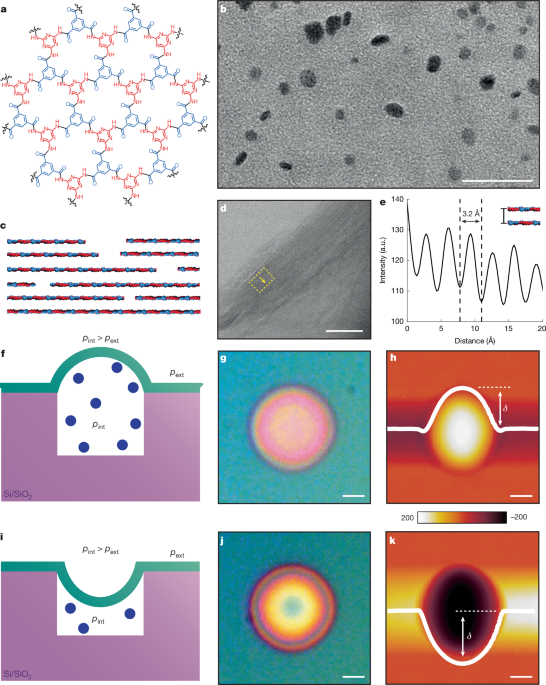
Researchers developed a highly impermeable, molecularly stable polymer from two-dimensional polyaramids, characterized by advanced microscopy, spectroscopy, and gas adsorption techniques, demonstrating its potential for barrier applications due to its robust amide bonds and ordered structure.

Quantum Physics Breakthrough Sparks Tech Revolution

Originally Published 3 months ago — by Rude Baguette

Featured image for Quantum Physics Breakthrough Sparks Tech Revolution
Source: Rude Baguette

Scientists have developed a novel polymer capable of maintaining quantum states at room temperature, potentially revolutionizing quantum devices by eliminating the need for ultra-cold environments, with applications in sensors, electronics, and quantum computing, though further optimization is needed.

Unveiling the Secrets of Dissolving Polymeric Materials with Machine Learning

Originally Published 2 years ago — by Phys.org

Featured image for Unveiling the Secrets of Dissolving Polymeric Materials with Machine Learning
Source: Phys.org

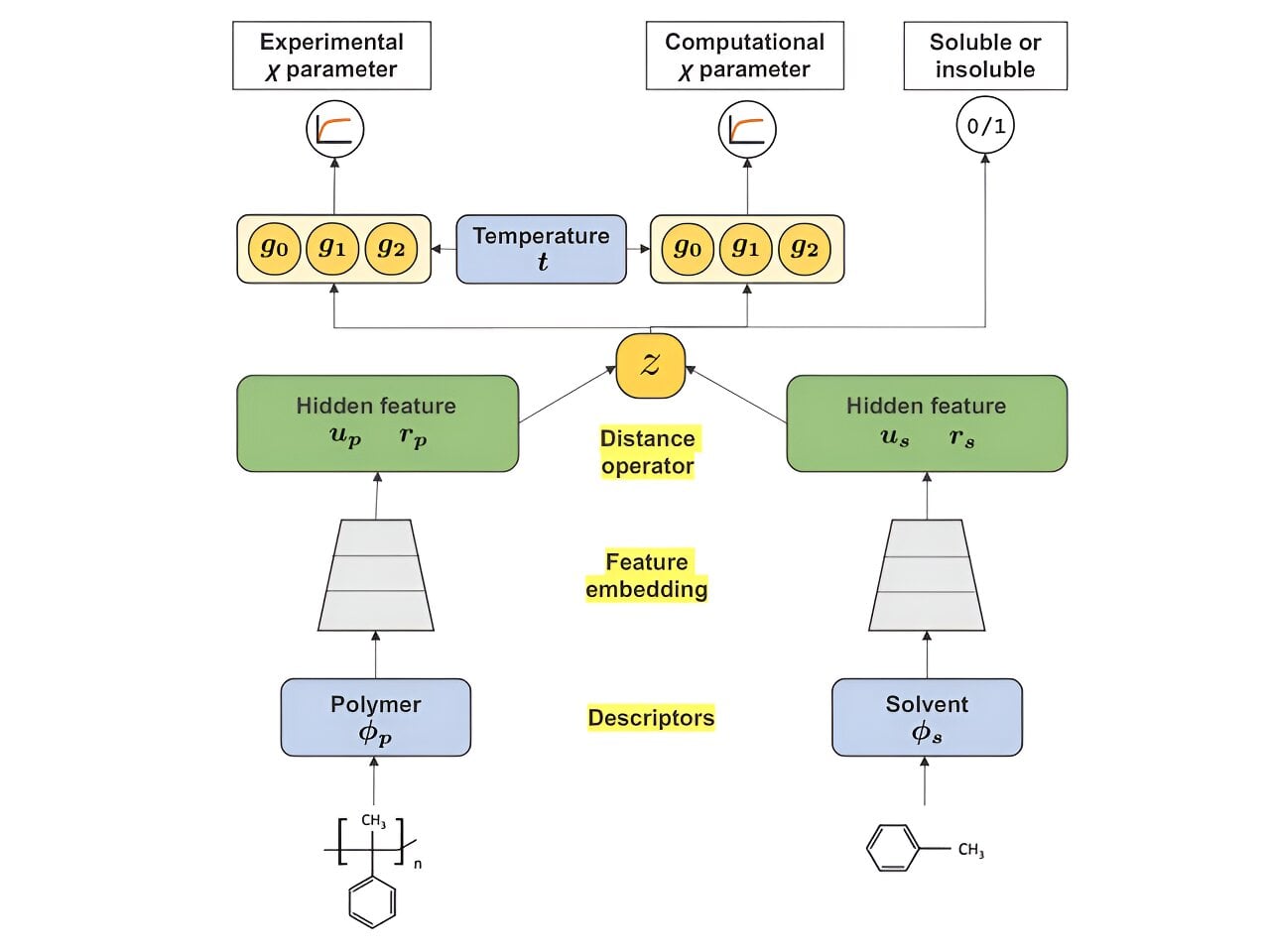
Scientists have developed a machine learning system that can predict the miscibility of polymers with organic solvents, a crucial step in recycling plastic waste. By integrating data from quantum chemistry calculations and real experiments, the model can accurately determine the compatibility of different polymer-solvent mixtures. This enables the selection and design of solvents for separating specific types of plastics in recycling processes. The model is about 40 times faster than conventional calculations and has the potential to streamline materials development and improve recycling rates. The researchers have made part of the source code and data available to the public to encourage open innovation and crowd-sourcing of data for further improvements.

"Revolutionary Polymer Adapts to Extreme Temperatures, Paving the Way for New Applications"

Originally Published 2 years ago — by Phys.org

Featured image for "Revolutionary Polymer Adapts to Extreme Temperatures, Paving the Way for New Applications"
Source: Phys.org

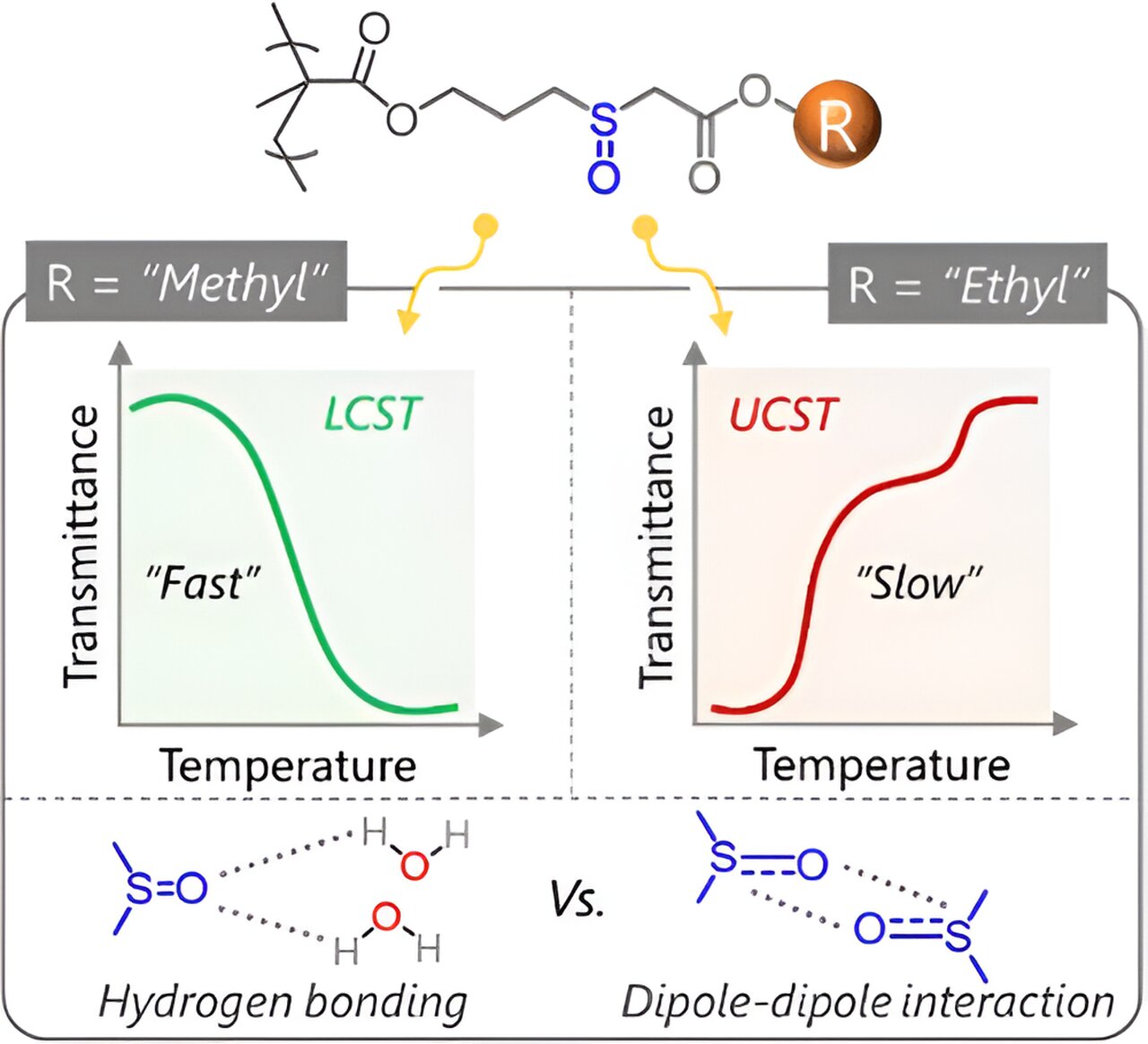
Researchers at FAMU-FSU College of Engineering have developed a polymer pair that can adapt to high and low temperature extremes. The polymers, made with sulfoxide, exhibit different behaviors based on a small structural variation. One polymer becomes insoluble at higher temperatures while the other becomes insoluble at lower temperatures. This discovery opens up possibilities for applications in medicine, protein synthesis, protective coatings, and more. The researchers also found a new mechanism that governs the critical temperature threshold and observed a two-stage thermal behavior in the polymer.

Continuous Dosing with One-Shot Drug

Originally Published 2 years ago — by Ars Technica

Featured image for Continuous Dosing with One-Shot Drug
Source: Ars Technica

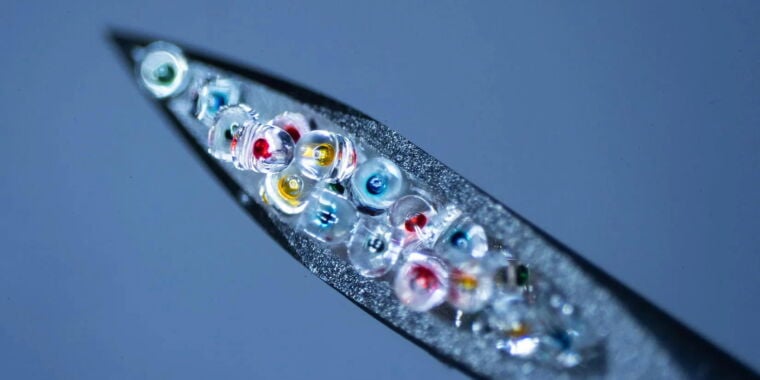
Researchers at Rice University have developed a drug-delivery system that uses microparticles to release medication in timed delays that can span days or even weeks. The system involves an injection containing hundreds of tiny microplastic particles, each encapsulating a small dose of a drug. By adjusting the molecular weight of the polymer used for each capsule, the scientists can control how fast they erode and release medication. The technology could help patients with chronic illnesses who struggle with dosing adherence and could be particularly useful for elderly patients who are dependent on family members for transportation and may skip appointments.

Weaker Bonds Can Boost Polymer Tear Resistance, MIT Study Finds.

Originally Published 2 years ago — by Phys.org

Featured image for Weaker Bonds Can Boost Polymer Tear Resistance, MIT Study Finds.
Source: Phys.org

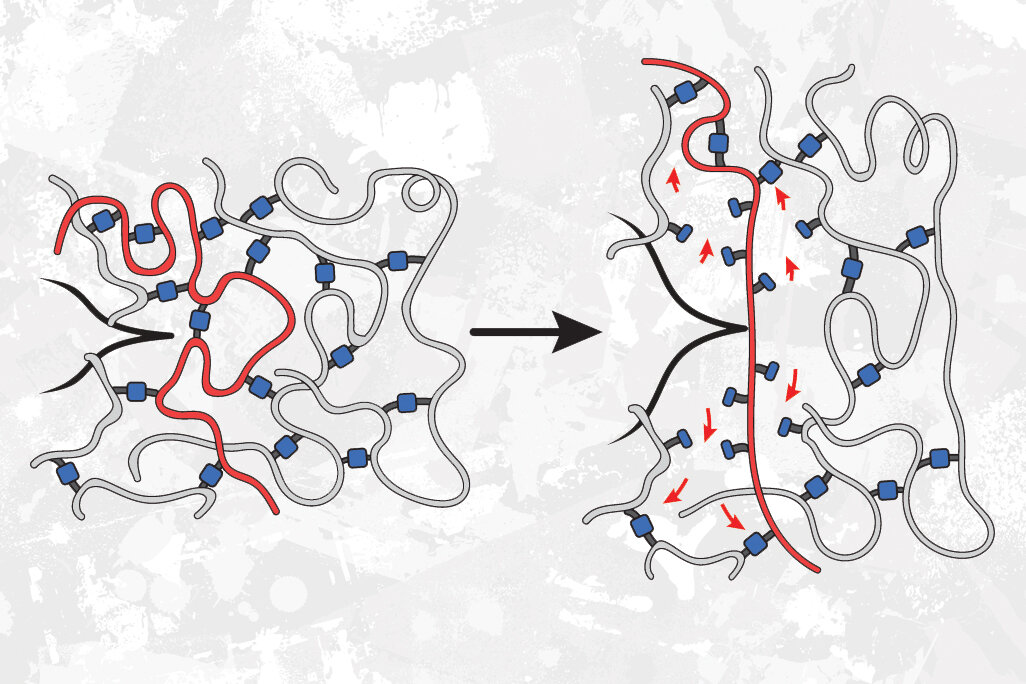
Chemists from MIT and Duke University have discovered that adding weaker bonds to polymers can make them stronger. By using a weaker type of crosslinker to join some of the polymer building blocks, the researchers found that they could increase the materials' resistance to tearing up to tenfold. This approach could be used to improve the toughness of other materials, including rubber. The significant advantage of this approach is that it doesn't appear to alter any of the other physical properties of the polymers.