Tag

Gravitational Force

All articles tagged with #gravitational force

science1 year ago

"The Weight of Earth: Unveiling the Planet's Mass"

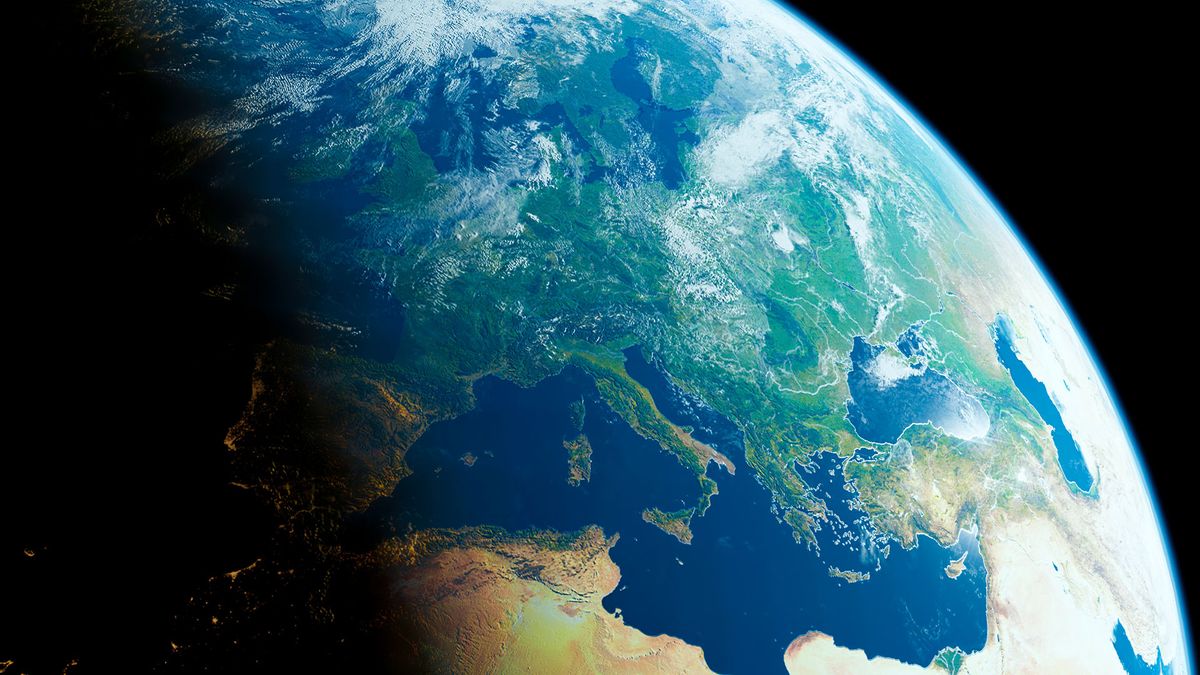
Earth's weight fluctuates due to gravitational force, but its mass is approximately 5.9722×10^24 kilograms, or around 13.1 septillion pounds, equivalent to 13 quadrillion pyramid of Khafre in Egypt. Determining Earth's mass involved measuring gravitational force using Newton's law of universal gravitation and the gravitational constant (G), which was determined through Henry Cavendish's "Cavendish experiments." Despite slight discrepancies in G measurements, scientists continue to use this method to calculate Earth's mass, viewing the discrepancies as opportunities for scientific understanding.
physics1 year ago

"Breakthrough: Physicists Measure Quantum Gravity at Microscopic Level"

Physicists in England and Europe have successfully measured a tiny gravitational pull on the smallest mass ever recorded, using a 0.000015 ounce mass in a cryostat cooled to just over absolute zero. This breakthrough could help bridge the gap between quantum mechanics and Newtonian gravity, shedding light on mysteries such as the origins of the universe, black holes, and unifying all forces into one theory. Understanding gravity at its extremes has implications for phenomena like black holes, neutron stars, and dark matter, and this new technique may pave the way for measuring quantum gravity and unlocking more secrets about the universe's fabric.

science-and-technology2 years ago

Harnessing the Power of Tiny Black Holes for Nuclear Energy

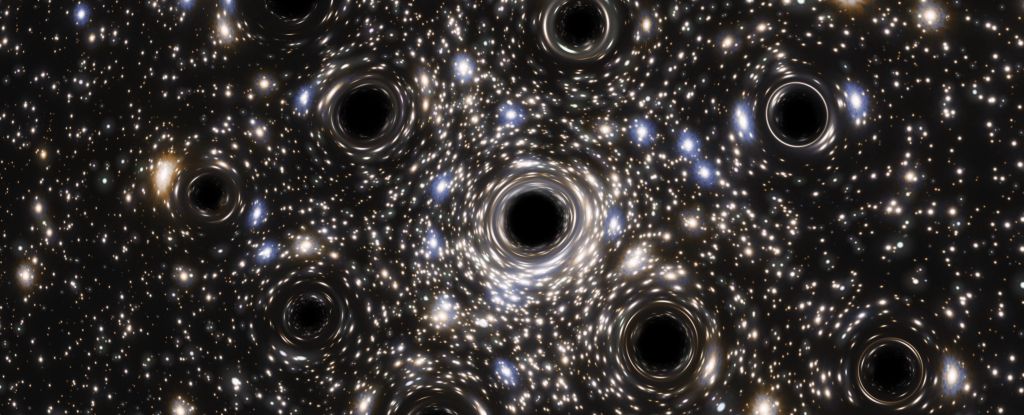
Physicists have proposed that tiny black holes, specifically primordial black holes, could potentially be used as a source of power. These ultradense objects could function as rechargeable batteries and nuclear reactors, extracting energy from the strong gravitational force just outside the black hole. Although the existence of primordial black holes is still uncertain, if they do exist, they could offer possibilities for dark matter and energy production. The researchers calculated that a black hole within a certain mass range could convert up to 25 percent of input mass into energy, comparable to the efficiency of nuclear reactors. While this concept is not currently testable, it presents intriguing prospects for future energy solutions.

astronomy2 years ago

Unraveling the Mystery of the Big Bang's Survival Against Black Hole Collapse.

The early universe didn't collapse into a black hole because there was nothing to collapse into. To make a black hole, you need a difference in density from place to place. Even though the early universe was incredibly dense, it was also incredibly uniform. The expansion of the universe in its early days prevented all the matter from collapsing.