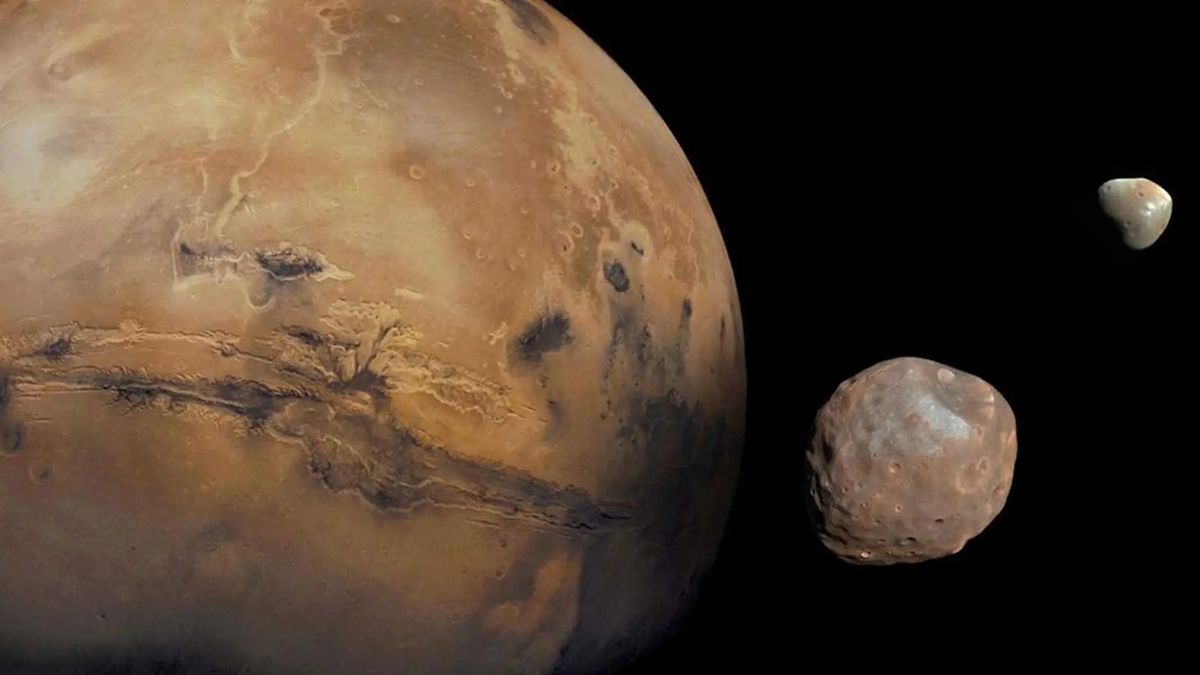
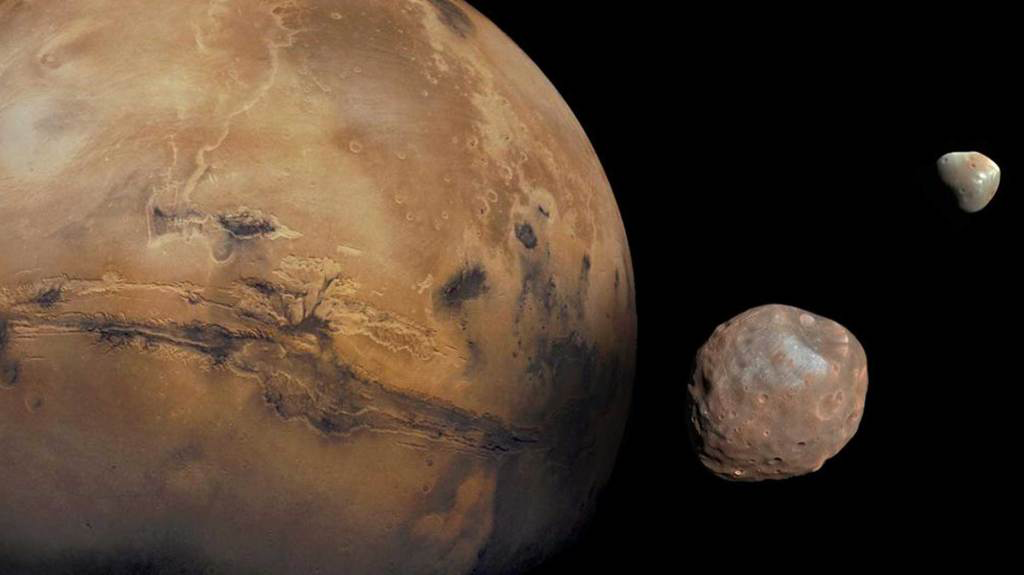
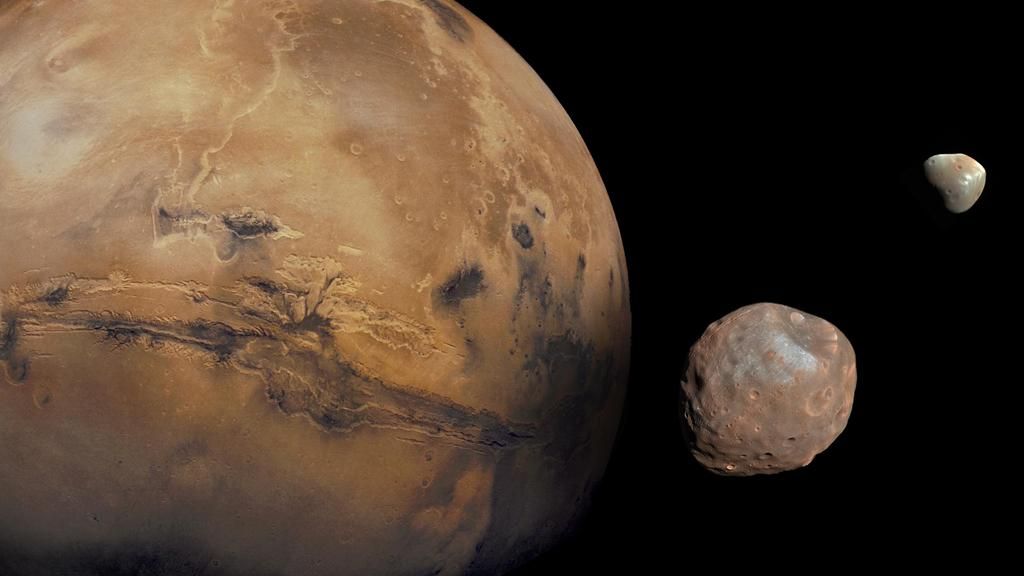
Mars has two small moons, Phobos and Deimos, whose origins are still debated; they may be captured asteroids or formed from debris after a collision with Mars. Upcoming JAXA missions aim to analyze samples from Phobos to better understand their formation and possibly early Mars conditions.
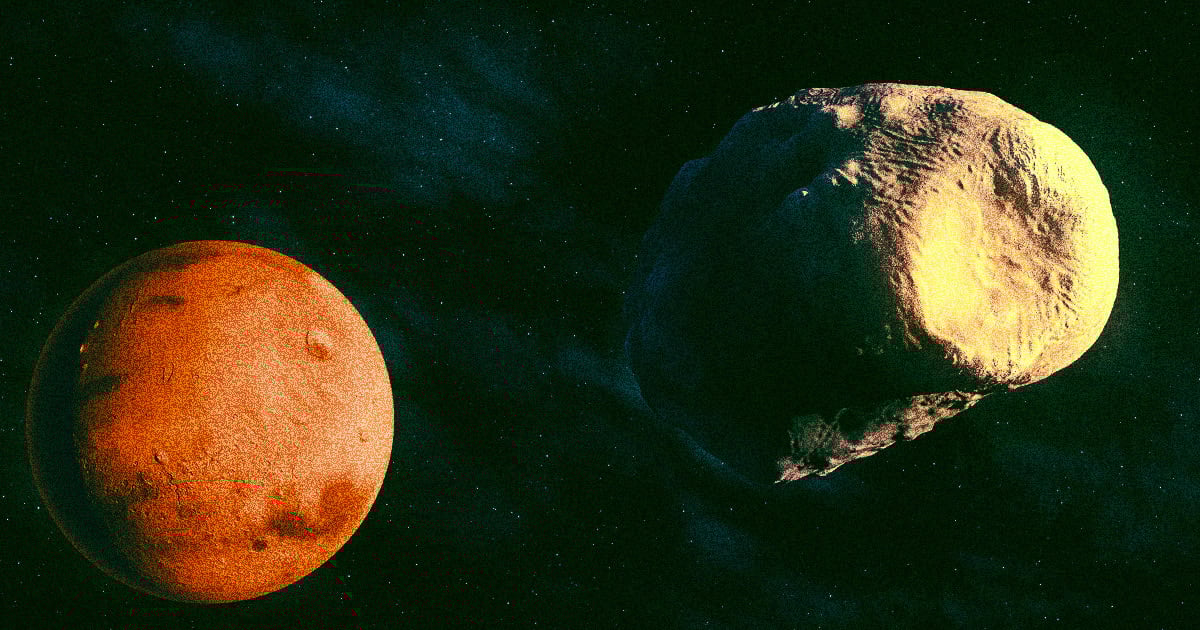
New computer simulations suggest that Mars' moons, Phobos and Deimos, may have formed from debris when a large asteroid was torn apart by Mars' gravity. This model explains their circular orbits and differing distances from Mars, challenging previous theories of their origin. The hypothesis will be tested by the upcoming Martian Moons eXploration mission, which aims to return samples from Phobos to Earth for analysis.
A new study by NASA scientists using supercomputer simulations suggests that Mars' moons, Phobos and Deimos, may have formed from the debris of a disrupted asteroid that passed too close to Mars. This theory, which differs from previous hypotheses, accounts for the moons' unique shapes and Deimos' large orbital radius. The study's findings could be further explored by the upcoming Martian Moons Exploration (MMX) mission, which aims to collect samples from Phobos and Deimos to better understand their origins.
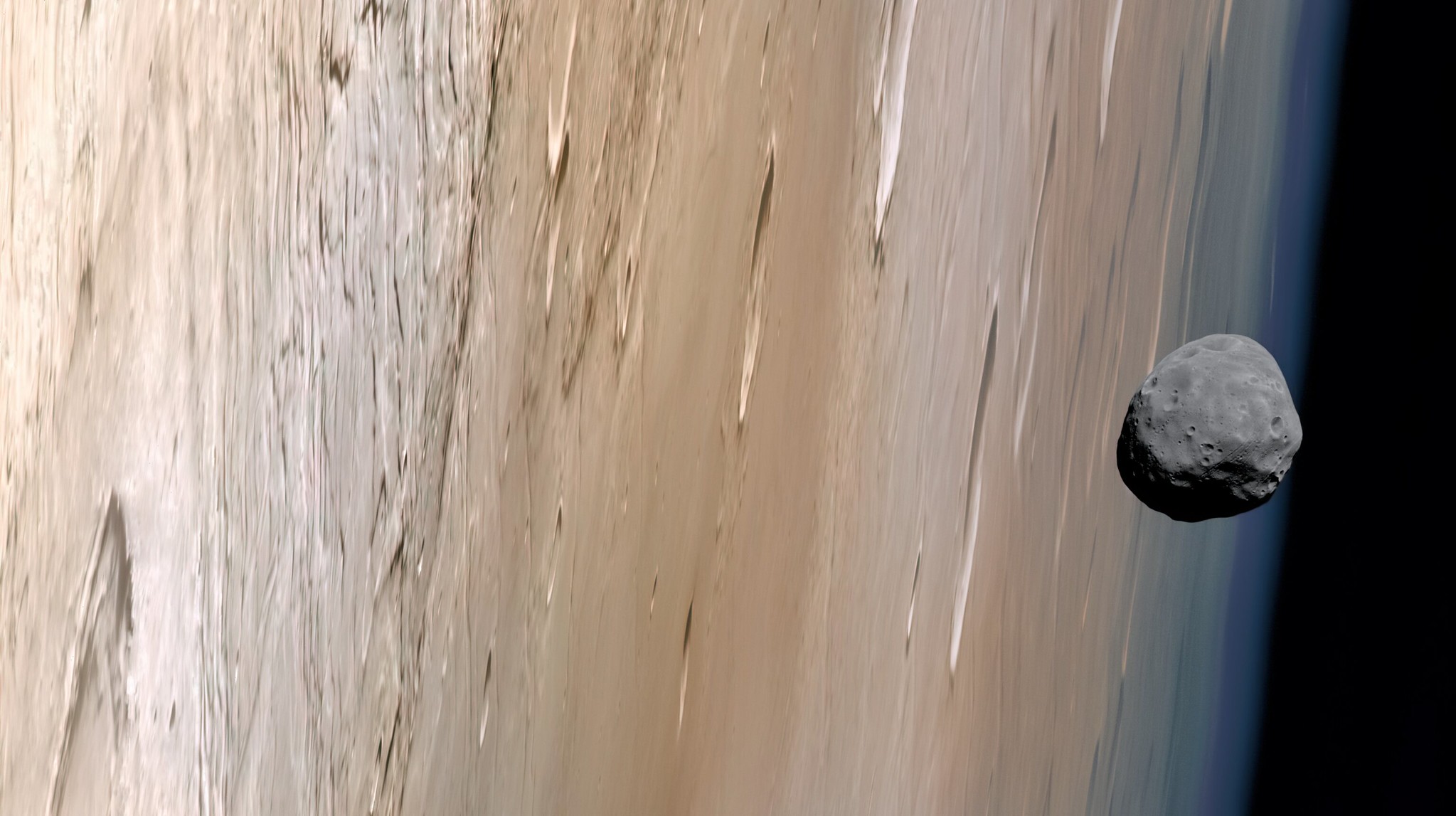
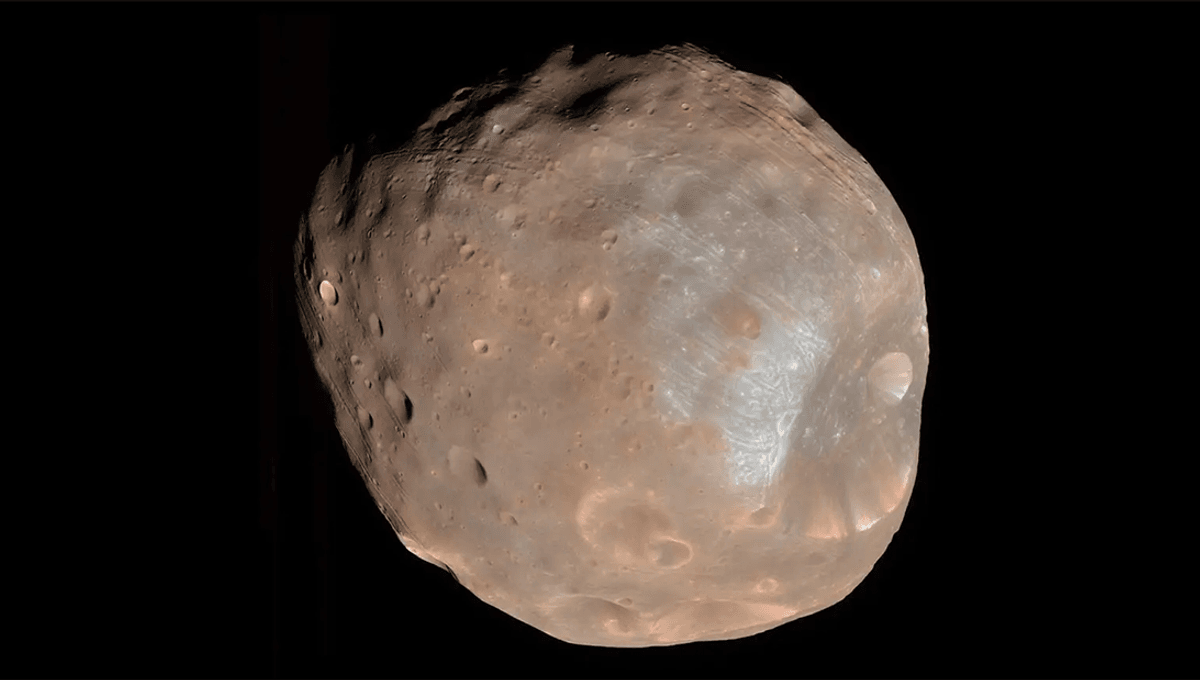
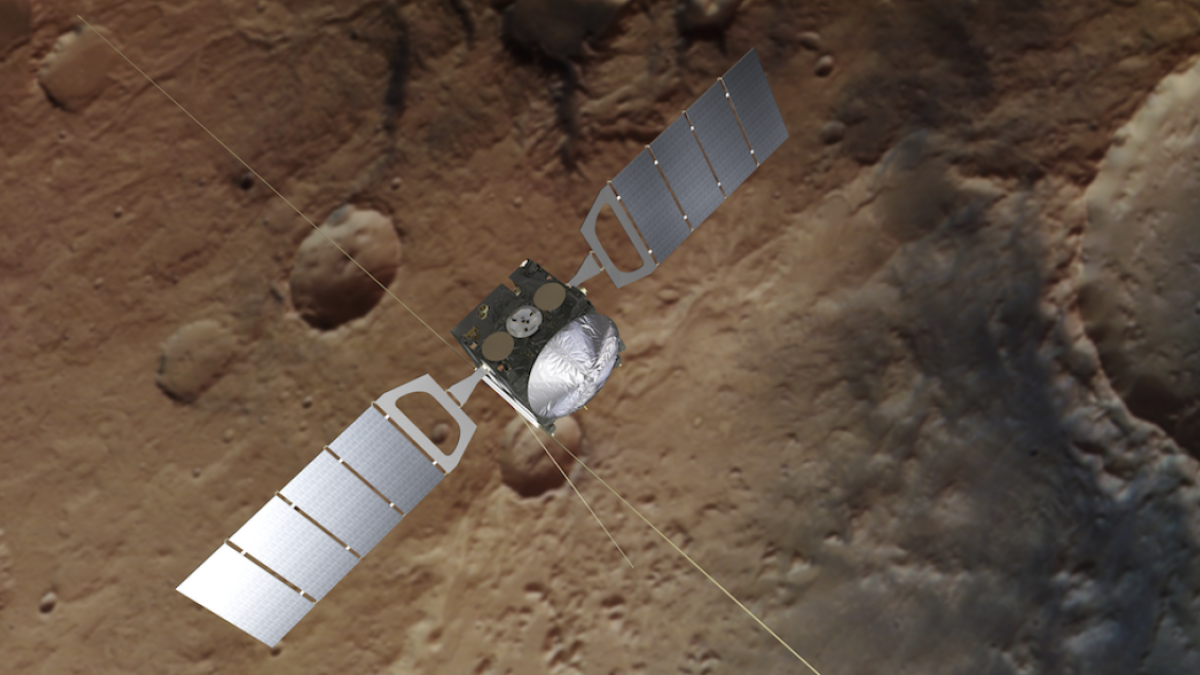
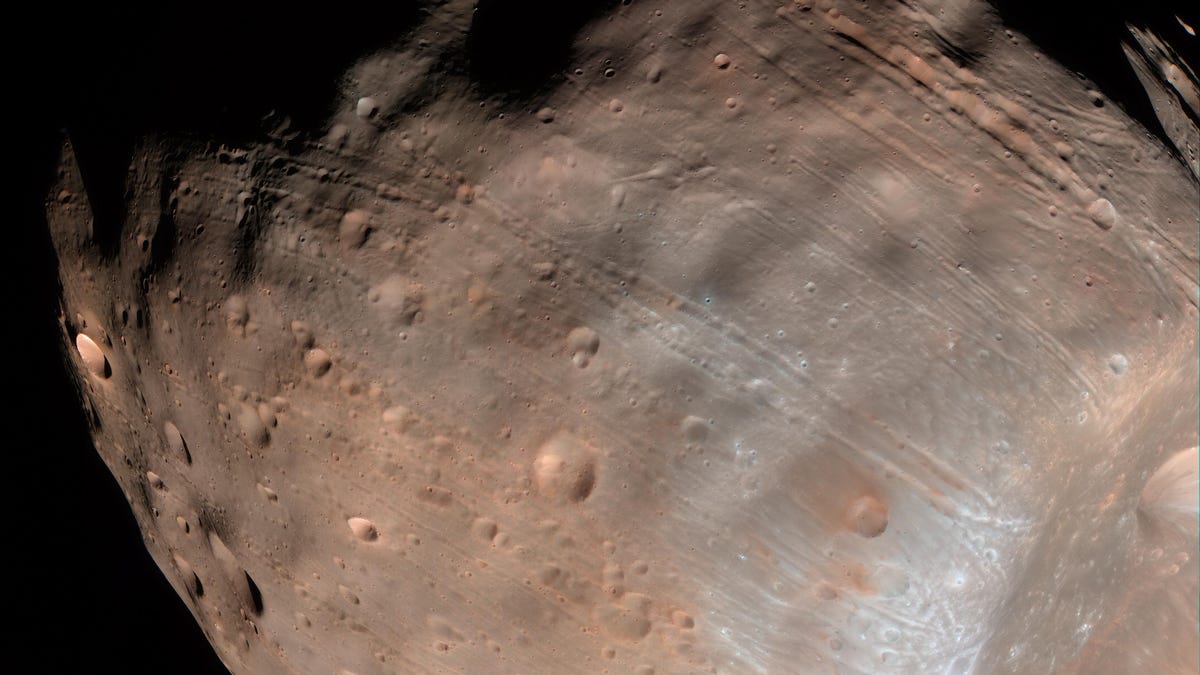
Mars' moon Phobos, despite its small size and unclear origins, captivates scientists and enthusiasts alike. High-resolution images from ESA's Mars Express Orbiter have provided detailed views of Phobos, including its largest crater, Stickney, and surface grooves. These images have advanced our understanding but haven't resolved all mysteries. The upcoming JAXA MMX mission, set to launch in 2026, aims to further explore Phobos and Deimos, potentially returning samples by 2031 to shed light on their origins.
Researchers analyzing unpublished photos of Mars's moon Phobos have found that its properties resemble those of comets, suggesting it might be a bilobated or binary comet. This challenges existing theories about its origin, which include formation from a debris disk or capture of an asteroid. The upcoming JAXA Martian Moons eXploration mission aims to return samples from Phobos, potentially providing more definitive answers.
Scientists from France and Germany propose that Mars' moon Phobos may have originated from a comet, challenging previous theories about its formation. This hypothesis is based on data from the Mars Express spacecraft, which shows Phobos has properties similar to comets. The upcoming Martian Moons eXploration (MMX) mission by Japan aims to study Phobos and Deimos further, potentially uncovering their true origins.
New research based on previously unpublished photos suggests that Mars' moon Phobos may be a captured comet, or part of one, rather than an asteroid or a fragment from a giant impact. The study, which analyzed photometric properties of Phobos, found similarities with Jupiter-family comets, indicating that Phobos and its twin moon Deimos might have once been a single bilobed comet. The Japan Aerospace Exploration Agency's upcoming MMX mission aims to further investigate these findings by sampling Phobos directly.
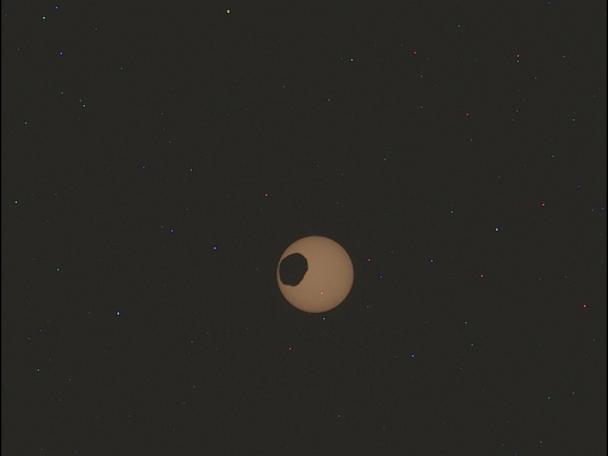
NASA shared timelapse photos of Mars' moons, Phobos and Deimos, transiting the sun in preparation for today's North American total solar eclipse. The Perseverance rover captured images of Phobos passing in front of the sun, while Deimos had its own transit in January. These events provide insight into the moons' orbits and the eventual collision of Phobos with Mars. The visuals offer a glimpse of what a solar eclipse looks like from the perspective of the Red Planet.
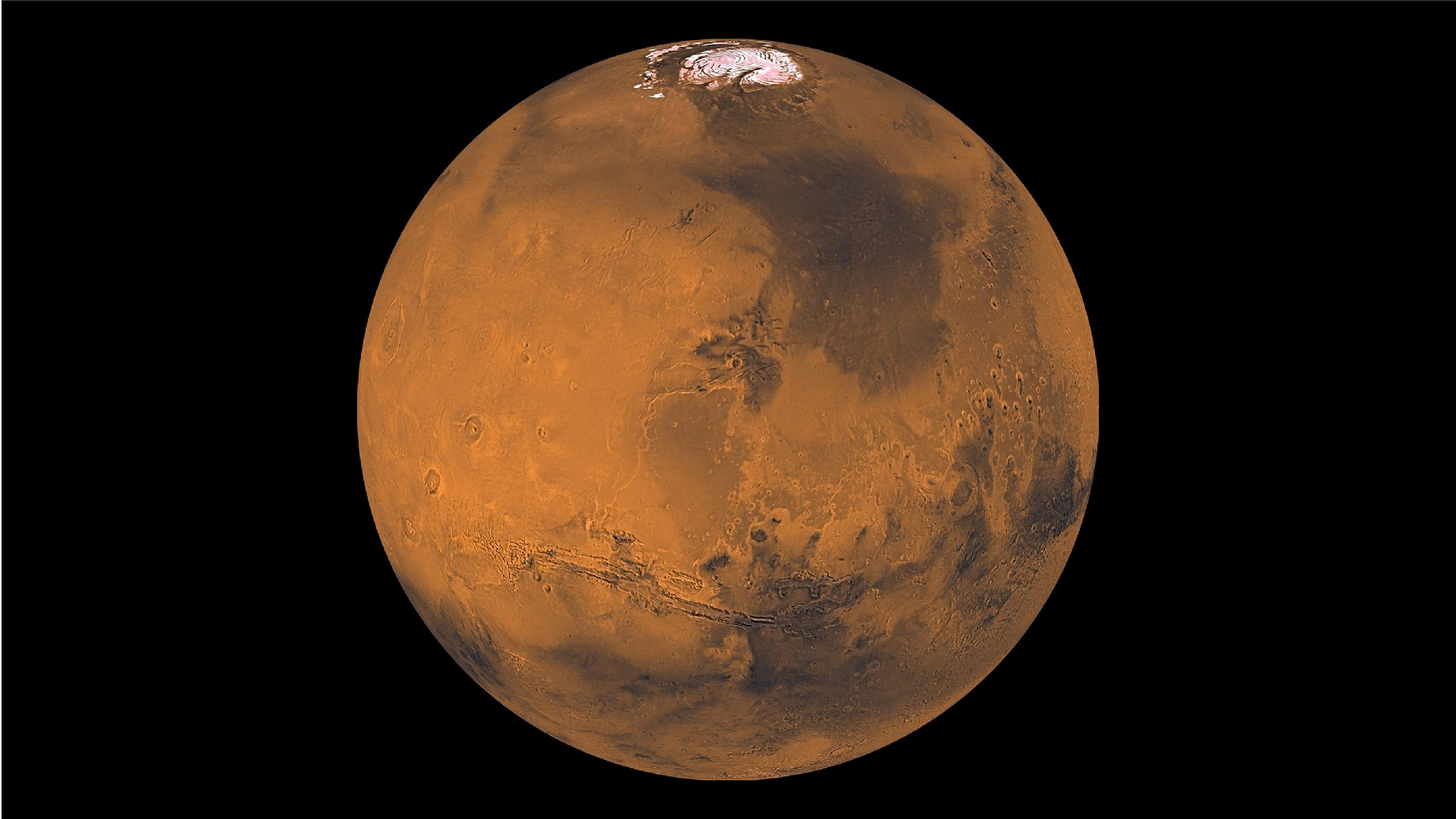
The European Space Agency's Mars Express Orbiter captured a detailed image of Mars, revealing giant volcanoes, valleys, craters, clouds, and the moon Phobos. The image showcases Olympus Mons, the largest volcano in the solar system, along with three other colossal shield volcanoes. Mars is covered in craters due to its proximity to the asteroid belt, and clouds made of water and carbon-dioxide ice can be seen at the poles. The planet's atmosphere has largely dissipated, leaving it intensely dry, but it was once a wet planet that could have supported primitive life.
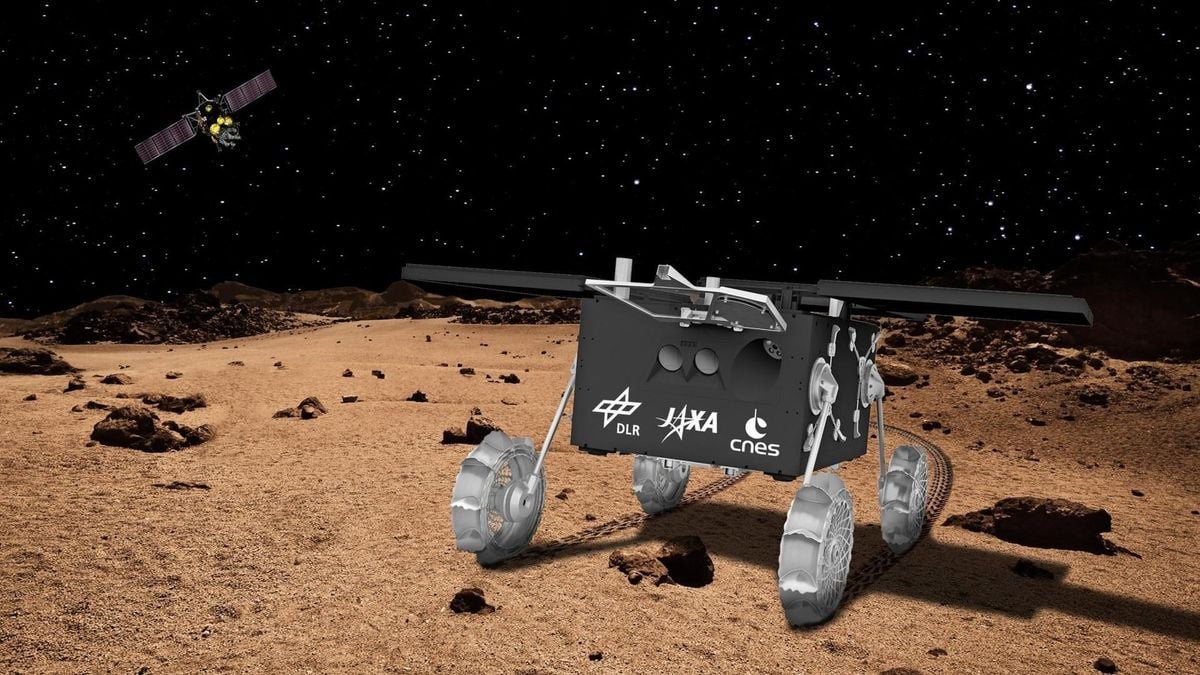
A small European-built rover named IDEFIX has arrived in Japan to be part of the Japan Aerospace Exploration Agency's (JAXA) Martian Moon Exploration (MMX) probe, which aims to collect samples of Mars' moon, Phobos. The rover, developed by the German Aerospace Center and the French space agency, will play a crucial role in gathering information and preparing for the landing of the main spacecraft, which is scheduled to grab Phobos' material in 2029 and send it towards Earth for arrival in 2031. The mission was originally set to launch in 2024 but has been delayed to the next Mars launch window in 2026 due to concerns over the readiness of the new Japanese H3 rocket.
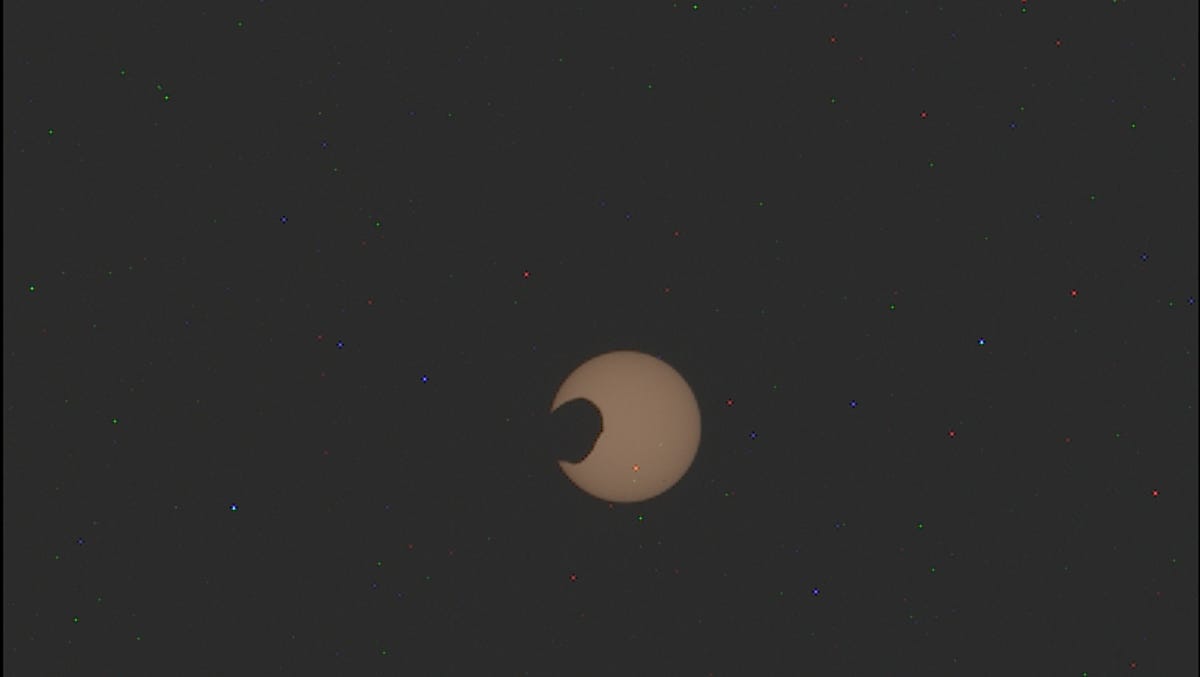
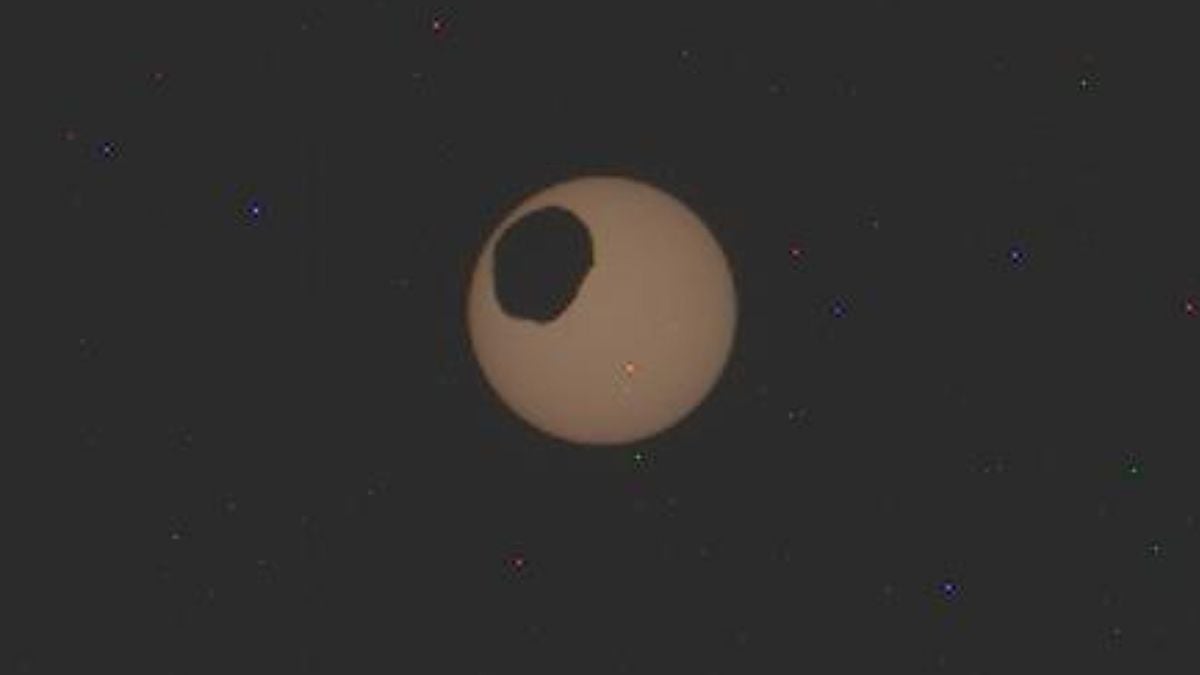
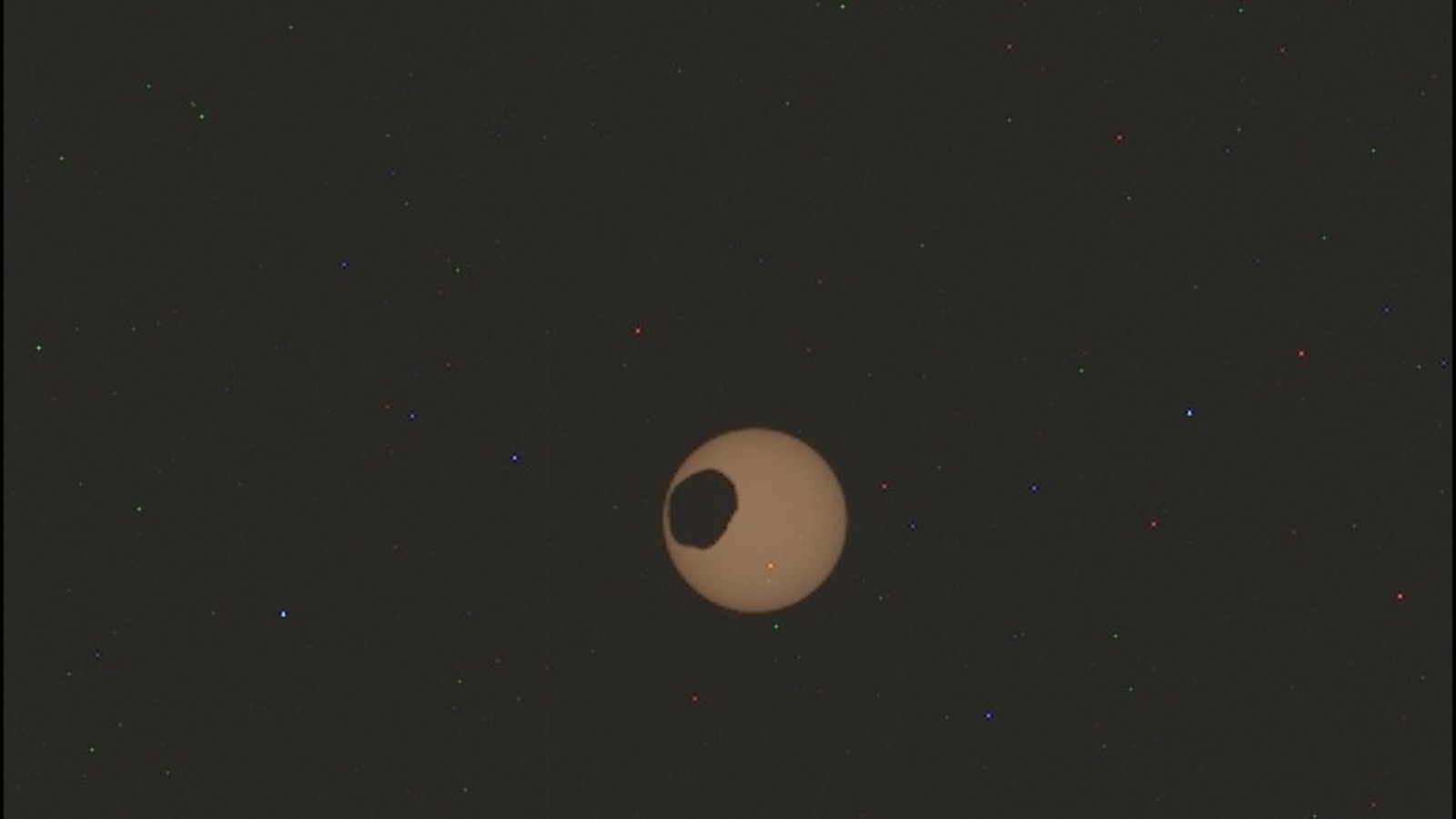
The Perseverance rover on Mars captured footage of the potato-shaped moon Phobos crossing in front of the Sun, creating an eclipse that amusingly resembled googly eyes. The images, taken with the rover's Mastcam-Z camera, will help scientists study Phobos and its orbit. Phobos is on a collision course with Mars, and the data collected will provide insights into its future. This lighthearted cosmic event has sparked amusement and is a unique addition to the ongoing exploration of Mars.
NASA's Perseverance rover captured footage of the Mars moon Phobos passing in front of the sun, providing a rare glimpse of a solar eclipse on the Red Planet. The footage, taken on Feb. 8, 2024, shows the potato-shaped moon in front of the sun from the rover's location in Jezero Crater. Phobos, along with the other Mars moon Deimos, has an enigmatic formation history, and the Japan Aerospace Exploration Agency plans to send a mission to Phobos in 2026 to collect dust samples for return to Earth. Additionally, NASA and the European Space Agency are planning a Mars Sample Return mission to pick up samples collected by Perseverance in the 2030s, although budgetary issues have led to layoffs at NASA's Jet Propulsion Laboratory.
NASA's Perseverance rover captured images of a partial solar eclipse on Mars as its moon, Phobos, passed in front of the sun, casting a shadow on the planet's surface. The images, taken on Feb. 8, show Phobos' irregular silhouette moving across Mars, providing scientists with valuable data on the moon's orbit and its effects on the planet. The rover, which landed on Mars in 2021, used its cameras to capture the eclipse as part of its mission to study the Red Planet and search for signs of ancient life.
NASA's Perseverance rover captured images of a partial solar eclipse on Mars as its moon, Phobos, passed in front of the sun, casting a shadow on the planet's surface. The images will help scientists measure subtle shifts in Phobos' orbit and study Mars' crust and mantle. The rover also captured a similar eclipse caused by Mars' smaller moon, Deimos. The Perseverance rover landed on Mars in 2021 and is on a mission to seek signs of ancient life and collect rock and soil samples. Meanwhile, North America is gearing up for a rare total solar eclipse on April 8.
NASA's Perseverance rover captured a timelapse of Mars' moon Phobos passing in front of the sun, creating a solar eclipse. The images were taken from Mars' Jezero Crater and uploaded by engineers from NASA's Jet Propulsion Laboratory. Unlike Earth's upcoming total solar eclipse, Phobos is too small to completely cover the sun's disk. Observing these eclipses helps scientists measure subtle shifts in Phobos' orbit, providing insights into Mars' interior. Phobos is on a collision course with Mars and is expected to either crash into the planet or break up into a planetary ring within the next 50 million years.