Tag

Periodic Table

All articles tagged with #periodic table

science2 months ago

Experimental Confirmation of Atomic Decay Pathway Enhances Nuclear Periodic Table

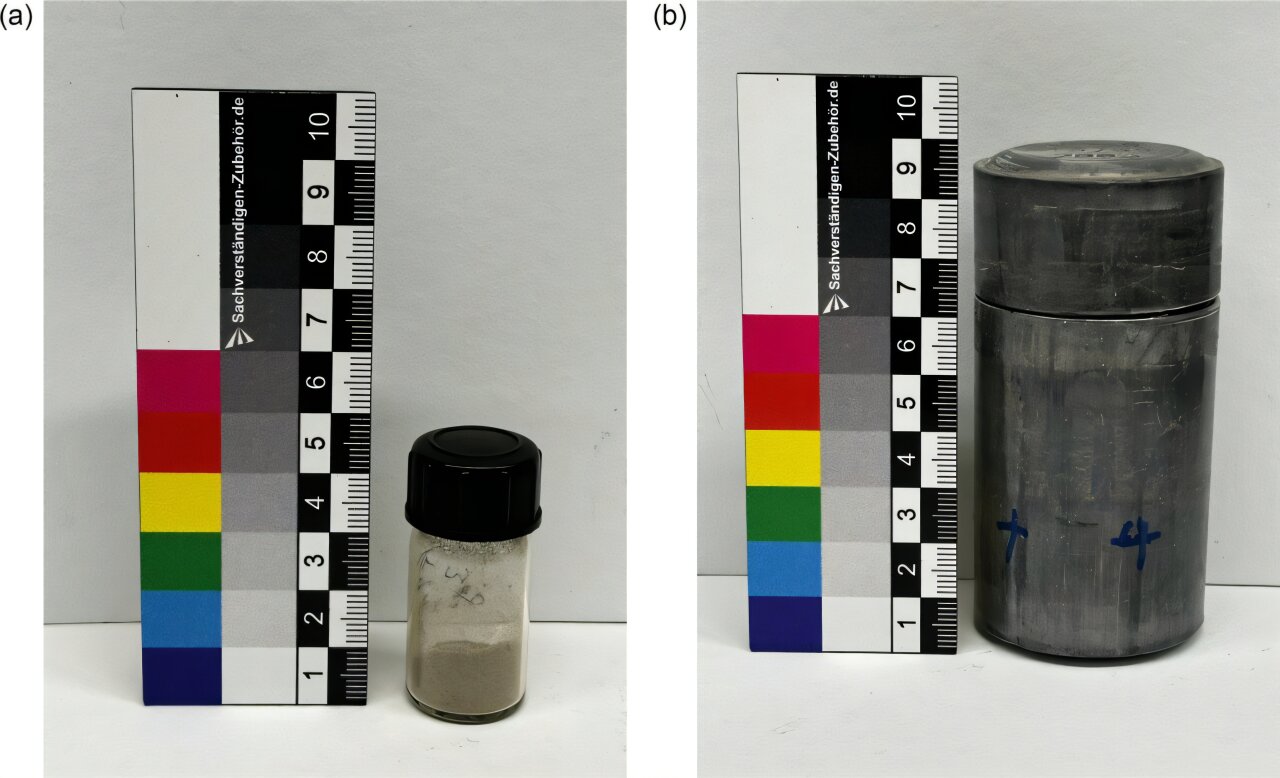
A research team from the University of Cologne has experimentally confirmed the electron capture decay of technetium-98, a process previously only theorized, by detecting rare decay events using advanced shielding and measurement techniques, thereby enriching the understanding of nuclear decay pathways and updating the nuclear periodic table.

science1 year ago

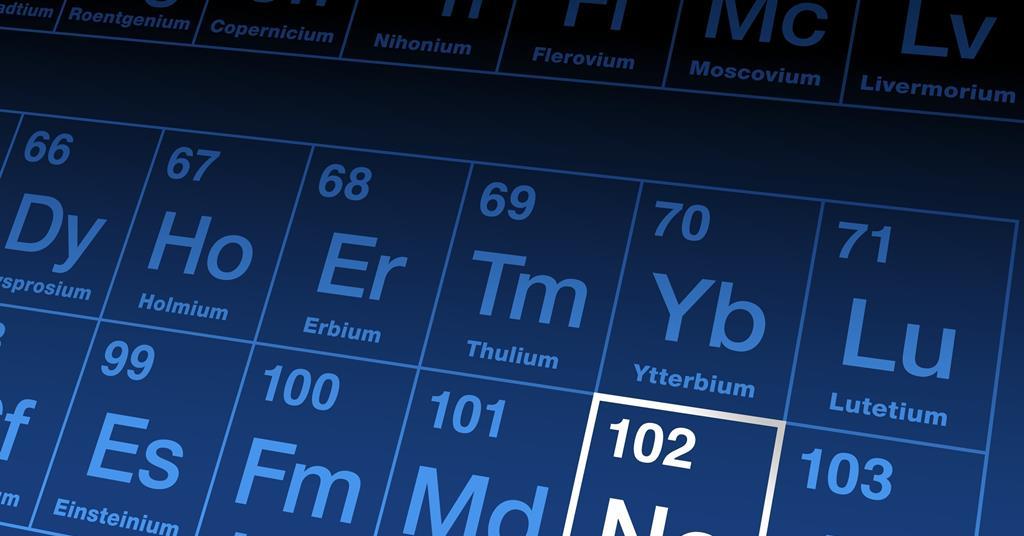
Unveiling Moscovium: The Heaviest Element's Secrets Revealed

Scientists have successfully studied the chemical properties of the superheavy elements moscovium and nihonium, revealing they are more reactive than flerovium due to relativistic effects. This research, conducted by an international team, marks moscovium as the heaviest element ever chemically analyzed. The findings enhance our understanding of superheavy elements and their potential applications, while also demonstrating the influence of Einstein's relativity theory on the periodic table.

science1 year ago

Unveiling the Secrets of Superheavy Elements and the Periodic Table's Limits

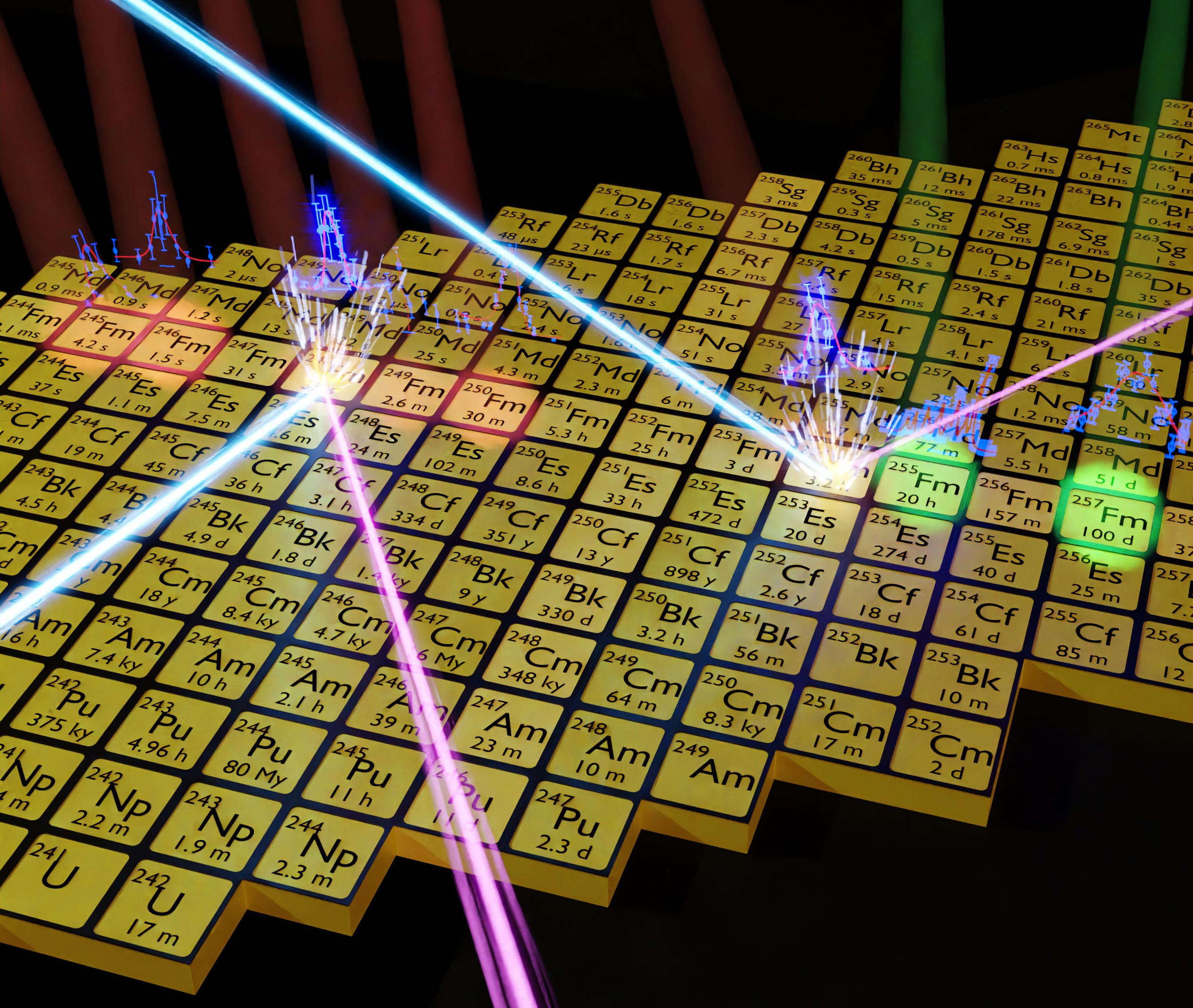
An international research team has used laser spectroscopy to study fermium isotopes, providing insights into the nuclear structure of superheavy elements. Their findings, published in Nature, reveal that nuclear shell effects diminish as nuclear mass increases, with macroscopic properties becoming more dominant. This research enhances understanding of the stabilization processes in heavy elements and supports theoretical predictions about the reduced influence of local shell effects in heavier nuclei.

science1 year ago

Breakthroughs Edge Scientists Closer to New Superheavy Elements

Researchers have developed a new technique that could potentially lead to the creation of element 120, known as unbinilium, which would add a new row to the periodic table. This technique, demonstrated by creating livermorium, involves bombarding isotopes with titanium ions. Although creating unbinilium is expected to take significantly longer, its potential stability could revolutionize the study of superheavy elements.

science1 year ago

"Challenging Theory: The Quest for "Superheavy" Elements"

Scientists from global institutions are delving into the realm of superheavy elements, aiming to understand their properties and behavior to expand the periodic table and challenge the concept of the "island of stability." Recent research, featured in prestigious scientific publications, explores the theoretical and experimental aspects of superheavy elements, with a focus on their electronic structure and predicted behaviors. The quest for superheavy elements involves building new experimental facilities and employing advanced theoretical models, with potential implications for nuclear and atomic physics, astrophysics, and chemistry.

science1 year ago

"Exploring Superheavy Elements: Pushing the Periodic Table's Limits"

Scientists from Massey University, University of Mainz, Sorbonne University, and FRIB are exploring the limit of the periodic table and the concept of the "island of stability" with recent advances in superheavy element research, aiming to expand the borders of the Periodic Table of the Elements and the Chart of the Nuclides. New experimental facilities are being built to uncover properties of superheavy nuclei, and progress in atomic structure theory is focusing on their predicted electronic ground state configurations. This research will impact nuclear and atomic physics, astrophysics, and chemistry.

science1 year ago

"Unveiling the Ultimate Element: Exploring the Outer Limits of the Periodic Table"

Researchers are exploring the limits of the periodic table with the discovery of six new superheavy elements, raising questions about the existence and characteristics of an "island of enhanced stability." Recent review articles in Nature Review Physics summarize the challenges and offer fresh perspectives on the quest for superheavy elements and the limit of the periodic table. While elements up to oganesson (element 118) have been produced, they are highly unstable, with their lifetimes increasing towards the magic neutron number 184. The research program at GSI Darmstadt, supported by infrastructure and expertise at HIM and Johannes Gutenberg University Mainz, continues to play a crucial role in the investigation of superheavy elements, with the potential for more efficient studies in the future.

astronomy2 years ago

"JWST Observes Rare Kilonova Explosion, Unveiling Universe's Heavy Element Formation"

NASA's James Webb Space Telescope (JWST) has confirmed the presence of heavy elements, including tellurium and possibly iodine, in the ejected material of a kilonova produced by a gamma-ray burst (GRB). GRB 230307A, the second-brightest GRB ever detected, was observed by JWST and ground-based telescopes. Kilonovas, resulting from the merging of neutron stars, are rare and difficult to detect. JWST's infrared detection provides valuable insights into the formation of heavy elements and opens the door for further discoveries in understanding the universe.

science-and-technology2 years ago

Unprecedented Discovery: Asteroid Holds Exotic Elements Defying Periodic Table

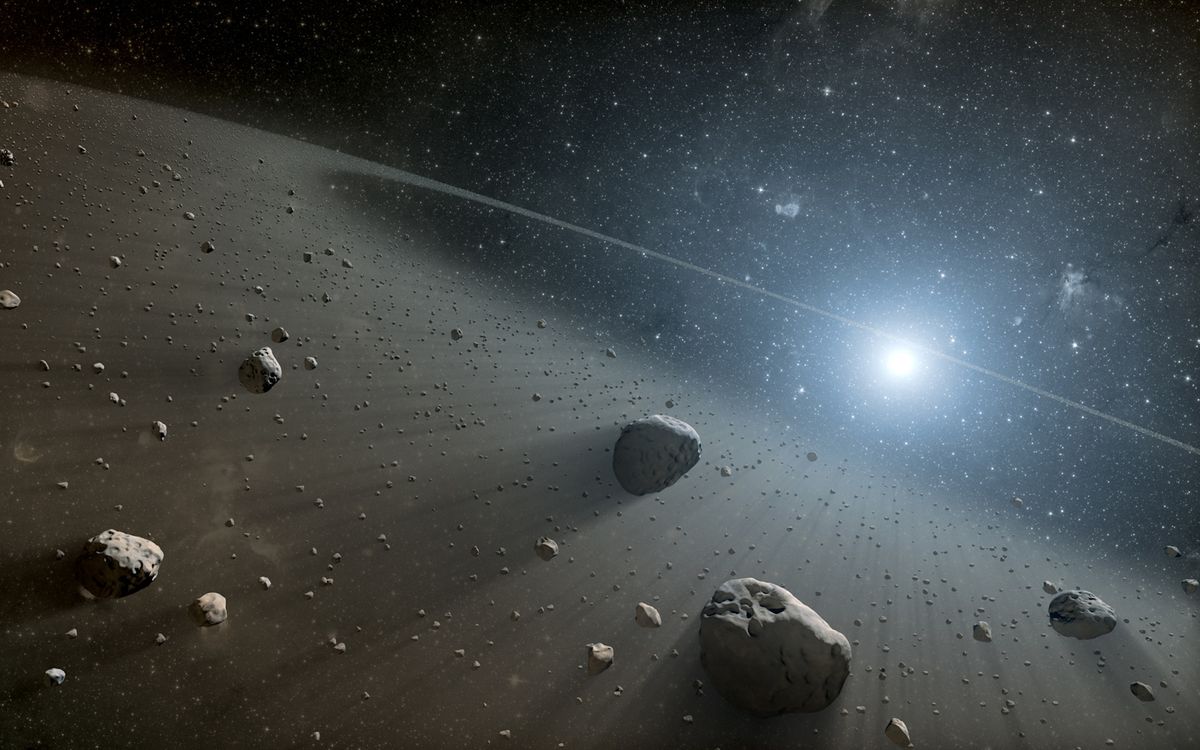
A new study suggests that certain asteroids in our solar system may be composed of naturally occurring "superheavy elements" that are beyond those listed in the periodic table. These asteroids, known as compact ultra dense objects (CUDOs), are denser than any element found on Earth. Previous research proposed that the density of CUDOs could be explained by the presence of dark matter particles, but the new study mathematically demonstrates that unknown classes of chemical elements beyond the periodic table could account for their density. These superheavy elements, if they exist, could shed light on how they were formed and why they have not been discovered outside of asteroids. The study also supports the theoretical existence of a region of stable superheavy elements around atomic number 164, known as the "island of stability."

science2 years ago

"Uncharted Territory: Study Reveals Mysterious Elements Hiding in Asteroids' Core"

Some asteroids in our solar system may be composed of naturally occurring "superheavy elements" that are denser than any element on Earth, according to a new study. These asteroids, known as compact ultra dense objects (CUDOs), have densities that cannot be explained by known elements in the periodic table. Previous research suggested that dark matter particles could account for their density, but the new study proposes the existence of unknown classes of chemical elements beyond the periodic table. These superheavy elements, if they exist, could explain the density of CUDOs like the asteroid 33 Polyhymnia. The study also supports the theoretical concept of an "island of stability" for superheavy elements, where they could be stable and exist for short periods of time.

science2 years ago

"Dense Asteroid Unveils Unprecedented Elements"

Asteroid 33 Polyhymnia in the solar system's asteroid belt is believed to be so dense that it may contain elements never before seen on Earth, potentially reaching a threshold of 164 protons per atomic nucleus. The density of this hypothetical element matches the density already measured for the asteroid, suggesting it could be a compact ultradense object (CUDO) containing undiscovered elements. If confirmed, this discovery would challenge the current understanding of the Periodic Table and open up new possibilities for scientific exploration within our solar system.

science2 years ago

Unveiling Hidden Elements: Superheavy Elements Found in Ultradense Asteroids

Scientists speculate that there may be naturally occurring, stable elements beyond the periodic table, even beyond the unstable superheavy elements. Theoretical work suggests an island of stability around atomic number 164, where these elements could exist. Researchers from the University of Arizona used the Thomas-Fermi model to explore the atomic structure of hypothetical superheavy elements and found that their density range aligns with the high density measurement of the asteroid 33 Polyhymnia. This suggests that extreme mass density in compact ultradense objects like asteroids could be explained without invoking strange or dark matter. The study demonstrates the utility of the Thomas-Fermi model for investigating the properties of hypothetical superheavy elements.

education2 years ago

Indian Science Curriculum Removes Key Topics from Textbooks

India's National Council of Educational Research and Training (NCERT) has removed evolution, the periodic table, sources of energy, and material about air and water pollution from most secondary school science classes. The changes affect some 134 million 11-18-year-olds in India's schools. NCERT did not get input from parents or teachers, and the changes may be permanent. Science educators are particularly concerned about the removal of evolution, which is essential to understanding human diversity and "our place in the world."

science-and-technology2 years ago

"Musical Periodic Table Transforms Chemical Elements into Unique Sounds"

Graduate student W. Walker Smith has created an interactive periodic table that turns the visible spectra of the elements of the periodic table into sound. Smith used an instrument called the Light Soundinator 3000 to translate the different frequencies of light into different pitches or musical notes, scaling down those frequencies to be within the range of human hearing. Smith is collaborating with the Wonder Lab Museum in Bloomington, Indiana, to develop a museum exhibit that would enable visitors to interact with the periodic table, listen to the laments, and make their own musical compositions from the various sounds.