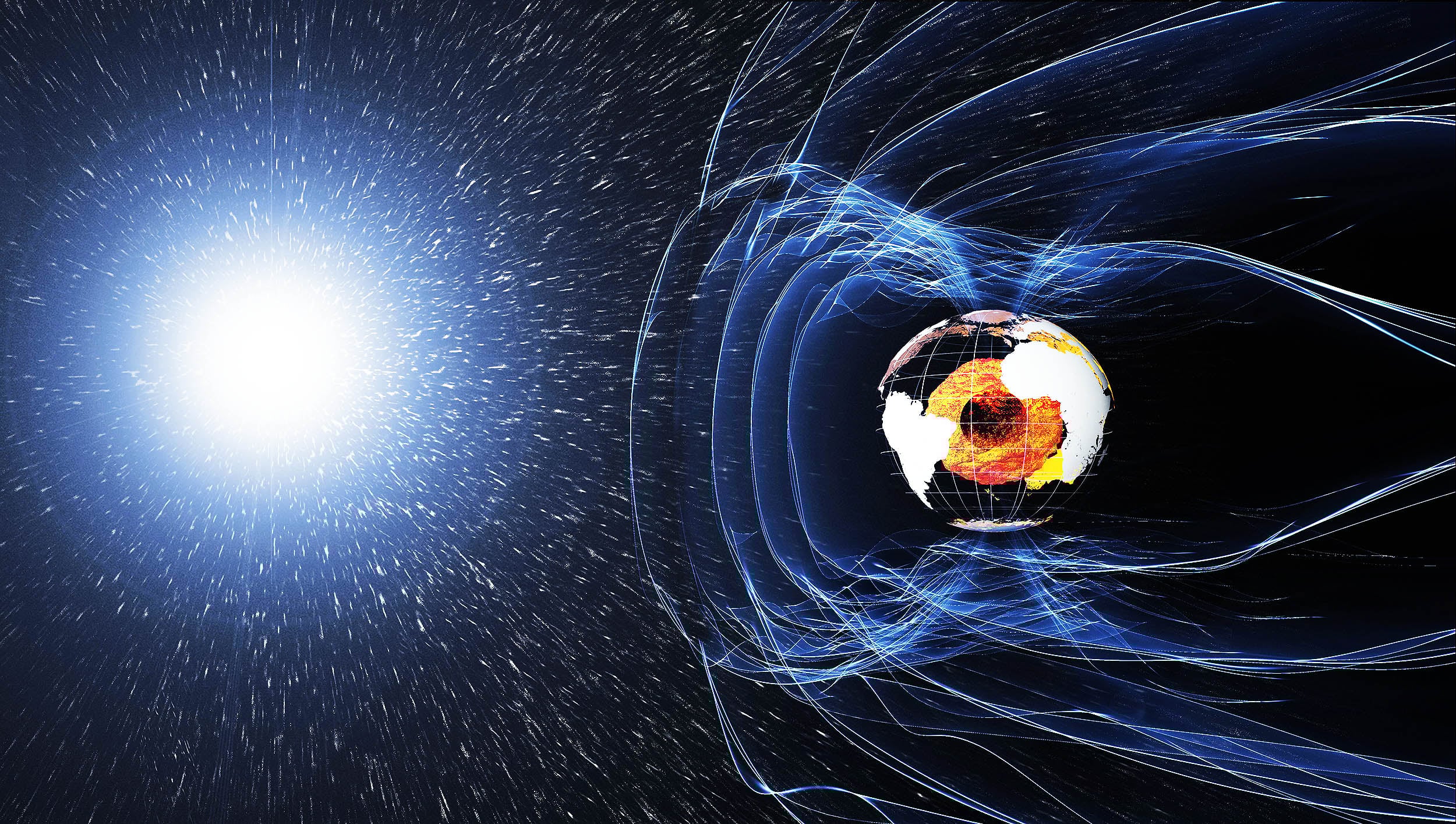
Scientists have transformed data from Earth's past magnetic field collapse 41,000 years ago into an immersive sound installation, revealing the planet's vulnerability during geomagnetic reversals and emphasizing the importance of monitoring Earth's magnetic health to understand potential future impacts.
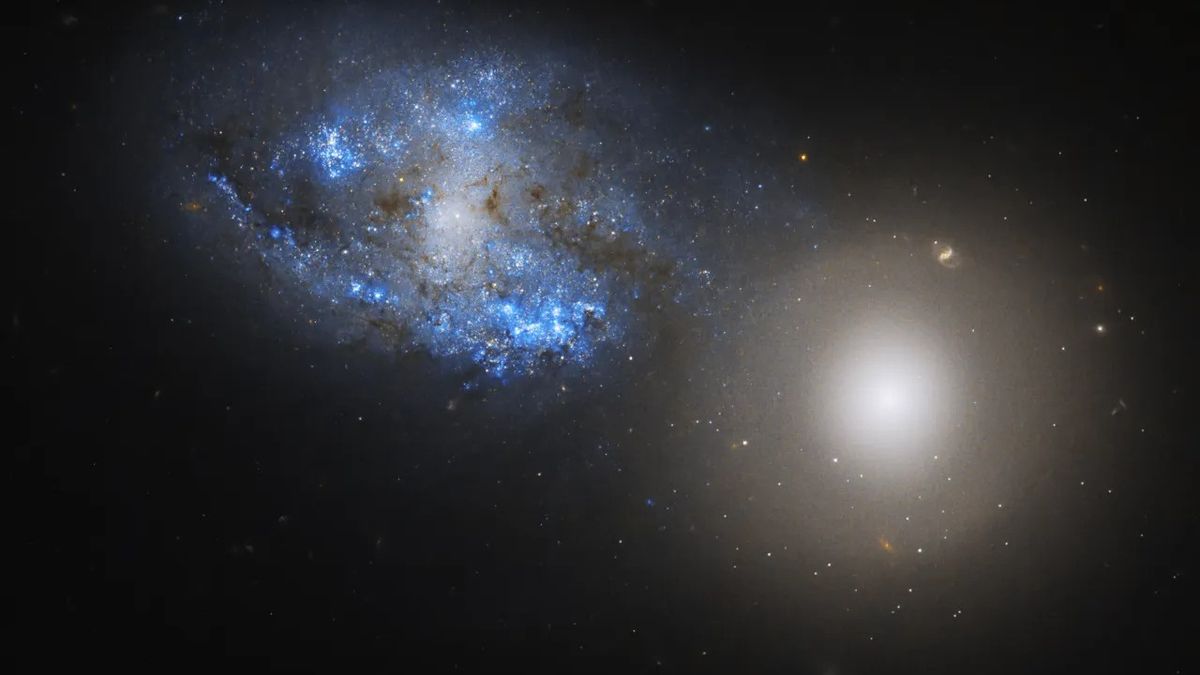
NASA has transformed the Hubble Space Telescope's new image of the merging galaxies NGC 274 and NGC 275 into a beautiful melody using data sonification, where colors are assigned pitches. The higher tones represent the blue light from NGC 275, emitted by newly formed stars due to the galactic collision, while the lower tones represent the older stars of NGC 274. The image captures the intricate structures of the galaxies, with NGC 274 being a lenticular galaxy and NGC 275 being a barred spiral galaxy.
Astronomers are using "data sonification" to convert observational data into audible tones, allowing them to explore the invisible universe through sound. By associating sounds with data, researchers can analyze complex variables and parameters that are difficult to visualize. Data sonification not only opens new avenues for research and knowledge creation but also provides access to astronomy for people with visual impairments. Examples include the sonification of gravitational waves from colliding black holes and the creation of sound from electromagnetic "light echoes" around a black hole.
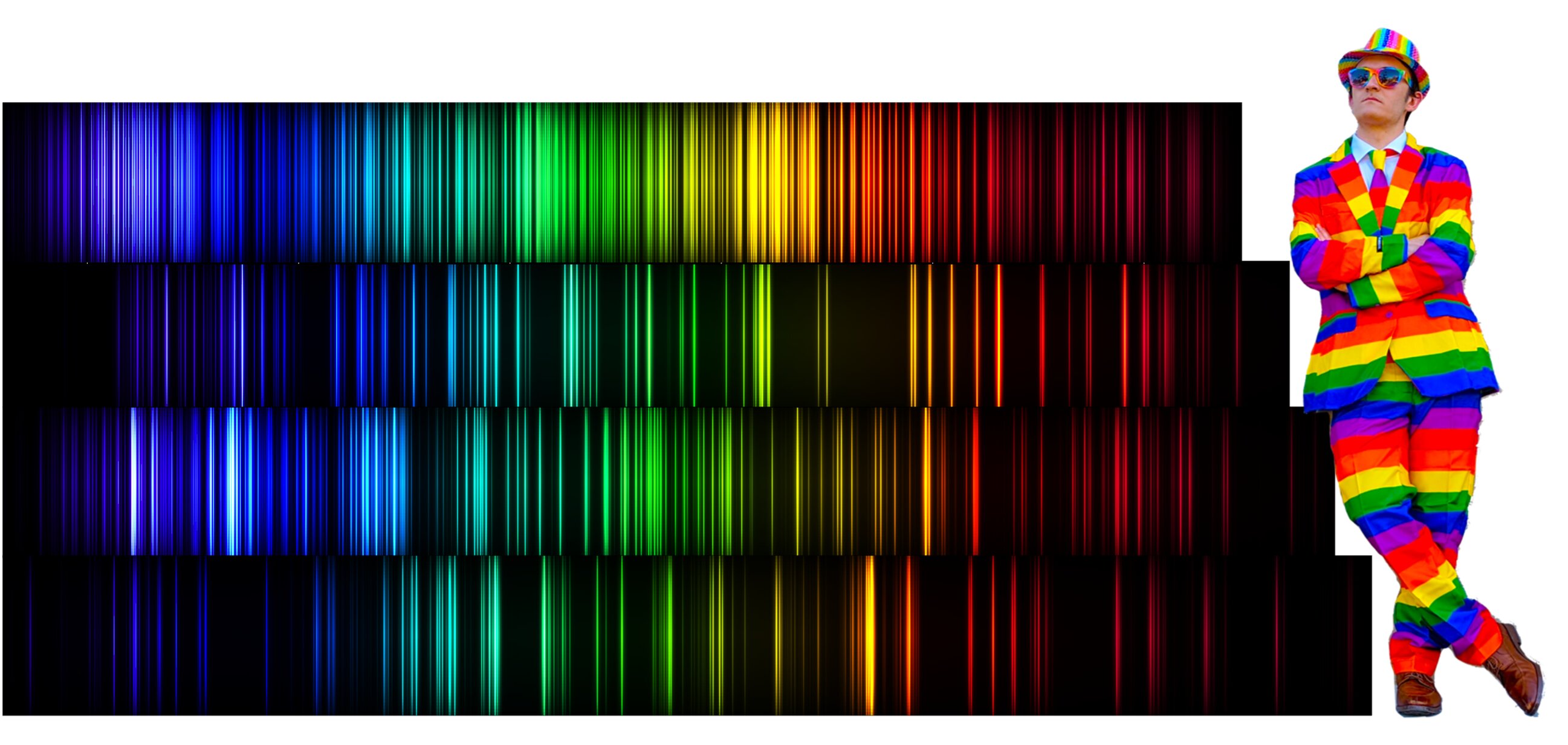
Graduate student W. Walker Smith has created an interactive periodic table that turns the visible spectra of the elements of the periodic table into sound. Smith used an instrument called the Light Soundinator 3000 to translate the different frequencies of light into different pitches or musical notes, scaling down those frequencies to be within the range of human hearing. Smith is collaborating with the Wonder Lab Museum in Bloomington, Indiana, to develop a museum exhibit that would enable visitors to interact with the periodic table, listen to the laments, and make their own musical compositions from the various sounds.
A recent college graduate has used data sonification to convert the visible light given off by the elements into audio, creating unique, complex sounds for each one. The researcher aims to create an interactive, real-time musical periodic table, which allows both children and adults to select an element and see a display of its visible light spectrum and hear it at the same time. This sound-based approach has potential value as an alternative teaching method in chemistry classrooms, because it's inclusive to people with visual impairments and different learning styles.