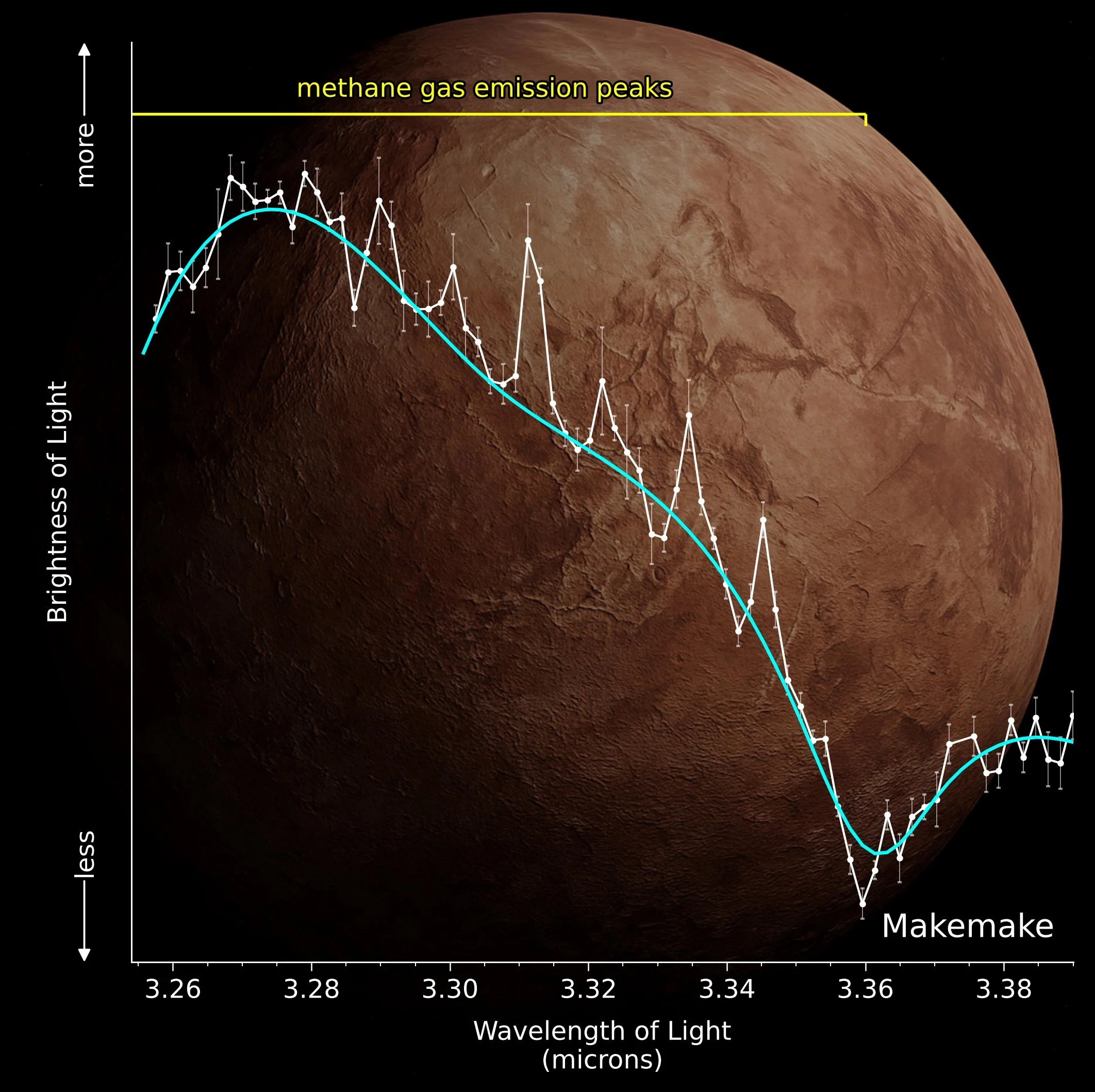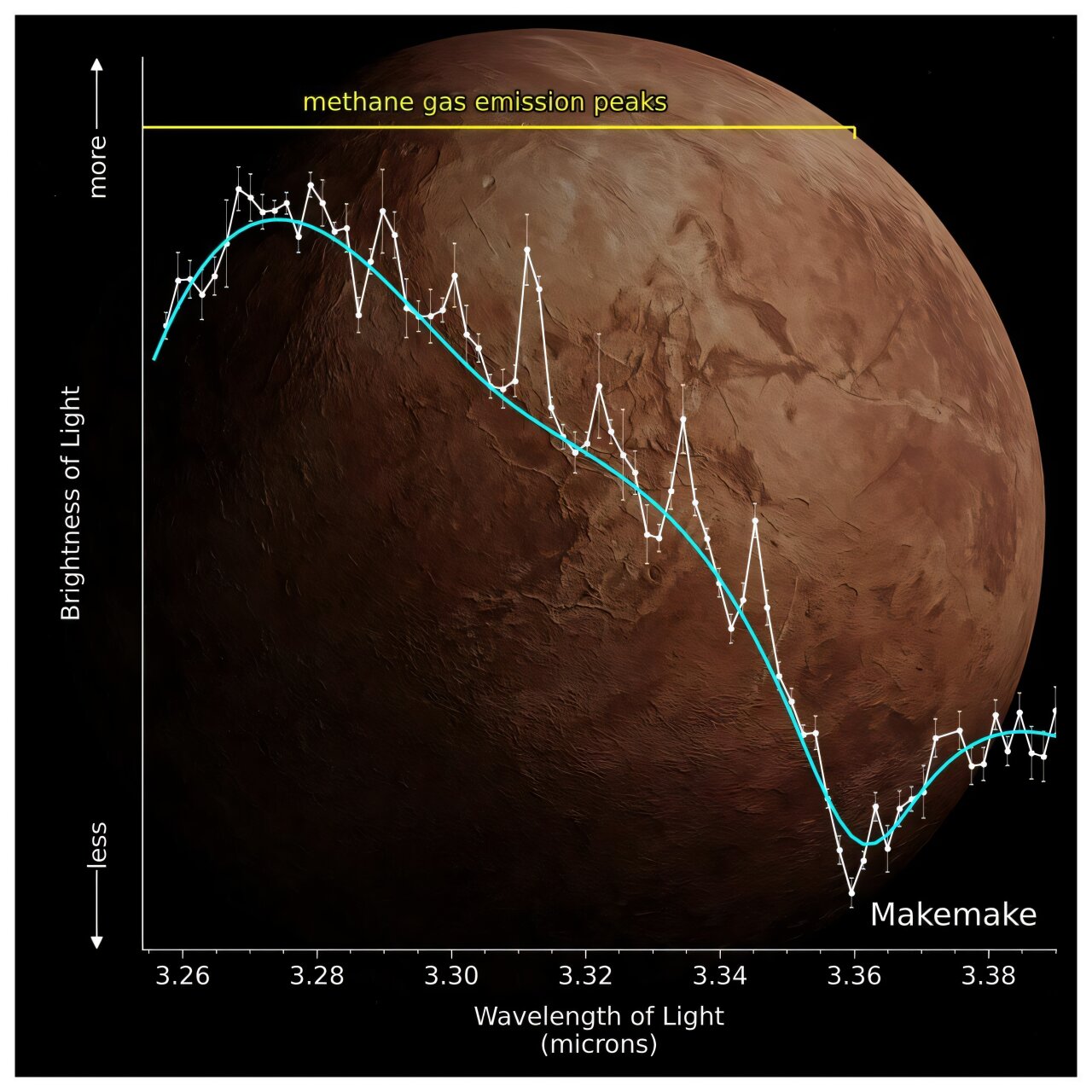
Scientists using the James Webb Space Telescope have detected faint traces of fluorescent methane gas around the dwarf planet Makemake, suggesting it is more active than previously thought and challenging the idea of it being a dormant icy body in the outer solar system.
Scientists using NASA's James Webb Space Telescope have detected methane gas on the dwarf planet Makemake, indicating it is a dynamic icy world with possible transient activity or a thin atmosphere, making it only the second trans-Neptunian object after Pluto to have confirmed gas presence.
NASA's James Webb Space Telescope has detected methane gas on the dwarf planet Makemake, suggesting the presence of a thin atmosphere or geological activity, making it only the second trans-Neptunian object after Pluto with confirmed gas. Future observations are needed to determine the exact mechanism behind this volatile activity.
Using NASA's James Webb Space Telescope, scientists have detected methane gas above the surface of Makemake, a dwarf planet beyond Neptune, indicating it may have a thin, Pluto-like atmosphere or localized outgassing, challenging previous beliefs that it was a completely frozen, inactive world.
A team using the James Webb Space Telescope has detected methane gas on the dwarf planet Makemake, suggesting it may have a tenuous, active atmosphere or transient outgassing, making it only the second trans-Neptunian object after Pluto with confirmed gas presence.