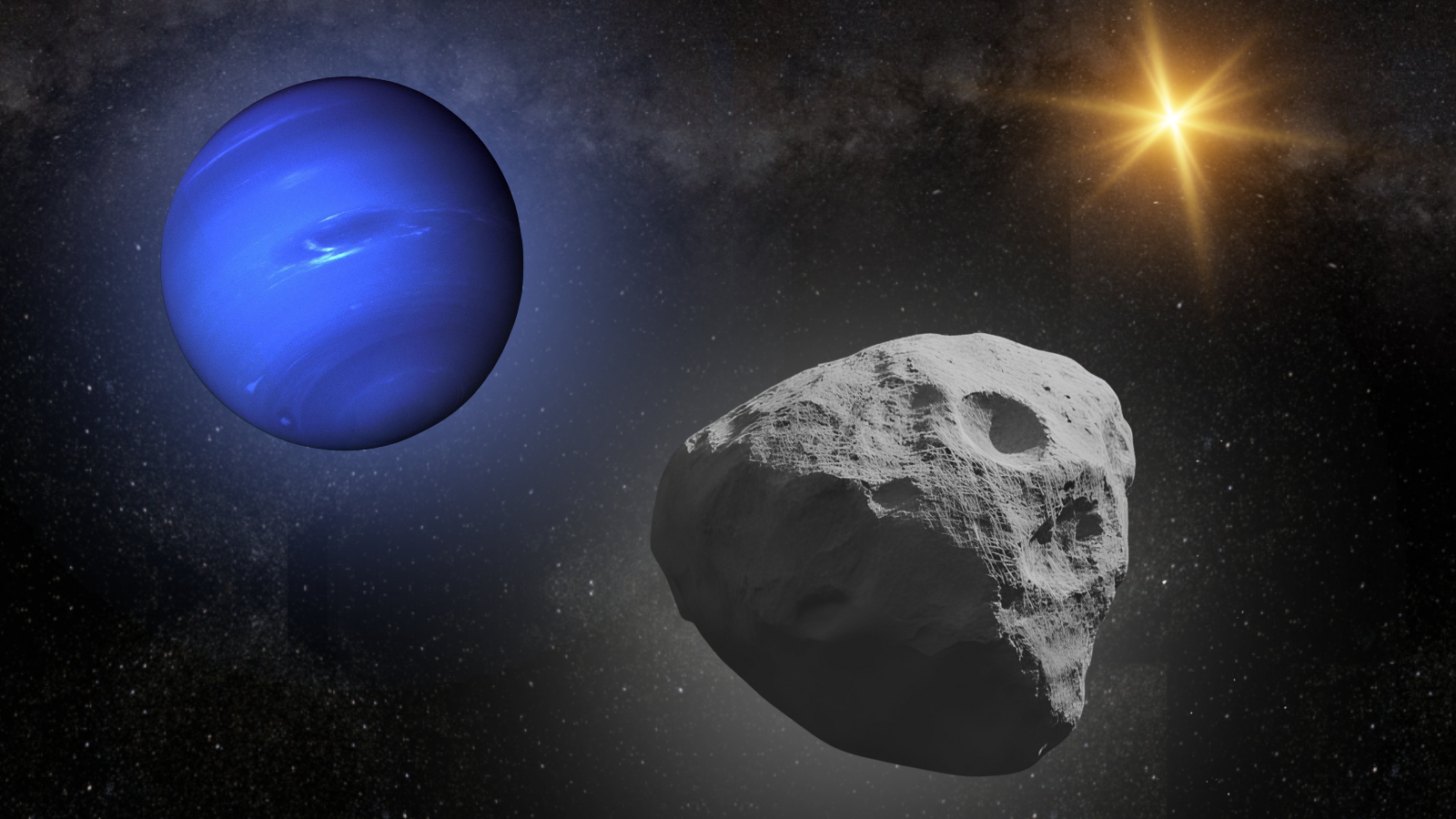
Astronomers have discovered a rare, highly tilted trans-Neptunian object called 2020 VN40 that orbits the Sun once for every ten Neptune orbits, revealing a unique gravitational resonance and offering new insights into the dynamics and evolution of the outer solar system.
Astronomers have discovered a trans-Neptunian object, 2020 VN40, that is in a unique rhythmic orbit with Neptune, orbiting the sun once every 1,648 years, which may provide new insights into the dynamics of the outer solar system and its evolution.
Astronomers have discovered a distant solar system body, 2020 VN40, that is rhythmically synchronized with Neptune's orbit, providing new insights into the dynamics of the outer solar system and its evolution.
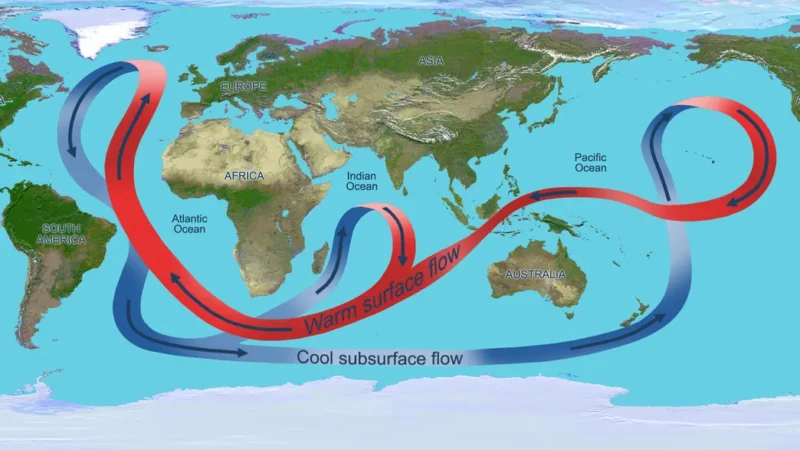
Researchers have discovered a 2.4-million-year orbital resonance between Earth and Mars that influences Earth's climate and deep-ocean currents. This finding, based on ancient deep-sea sediment cores, shows that the gravitational interaction between the two planets affects Earth's climate cycles, leading to warmer periods and more vigorous ocean circulation. The study, published in Nature Communications, highlights the long-term impact of planetary interactions on Earth's climate, independent of current human-induced climate change.
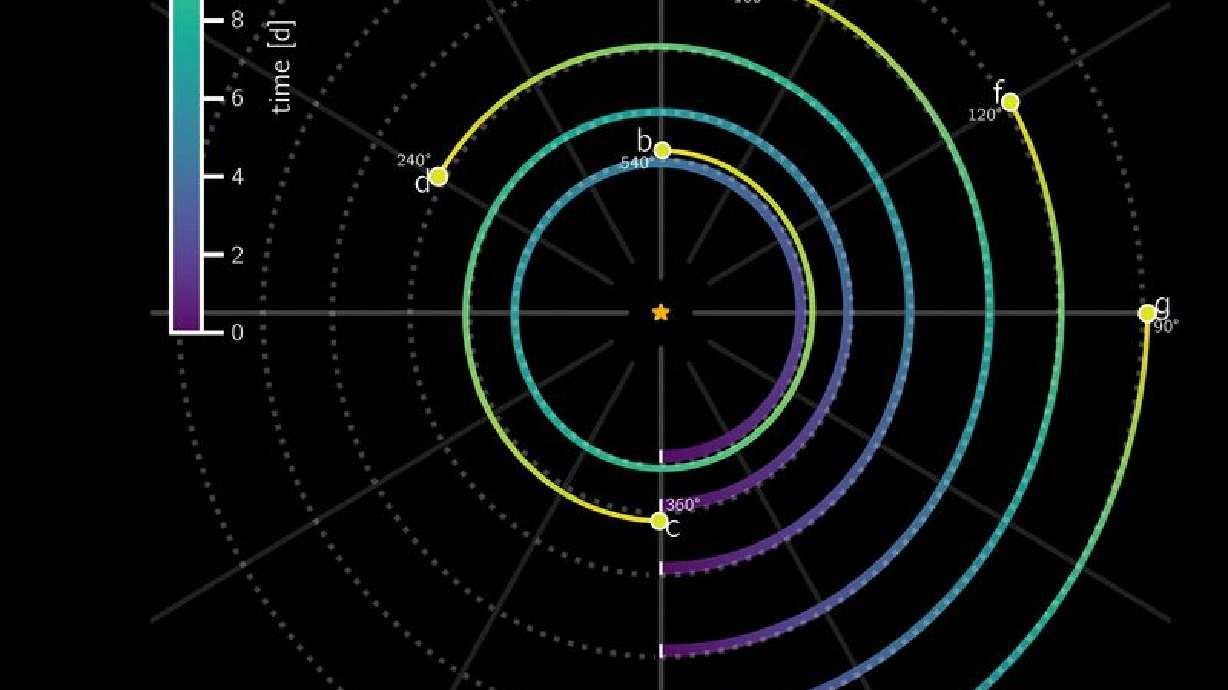
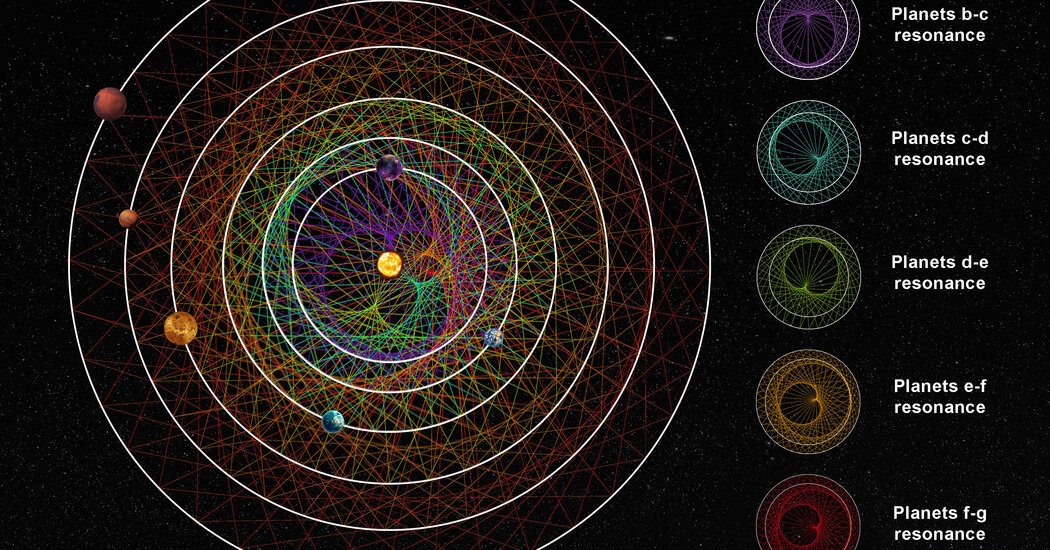
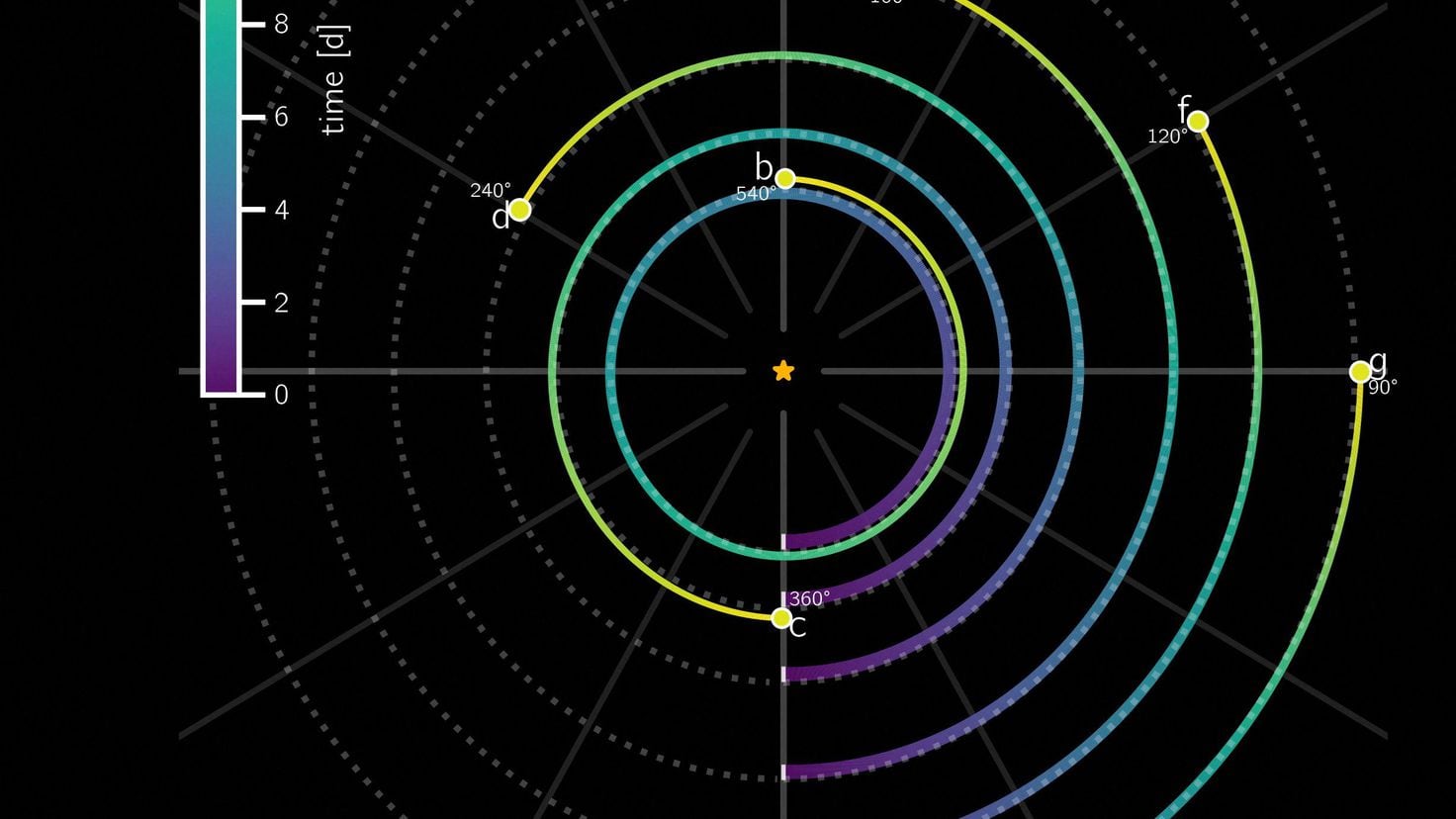
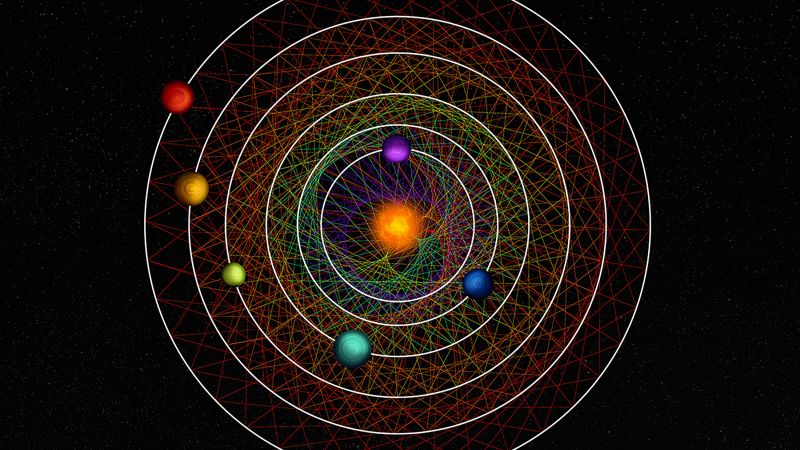
Orbital resonance occurs when planets align in such a way that their orbits create a gravitational push and pull on each other, resembling a harmony between distant planets. This phenomenon, observed in only 5% of planetary systems, can lead to stable or disrupted orbits. Exoplanets also exhibit resonance, with some systems displaying resonant chains involving three or more objects. Astronomers have used sonification to translate the mathematical relationships of exoplanet orbits into sound, offering a new way to appreciate and understand these celestial phenomena.
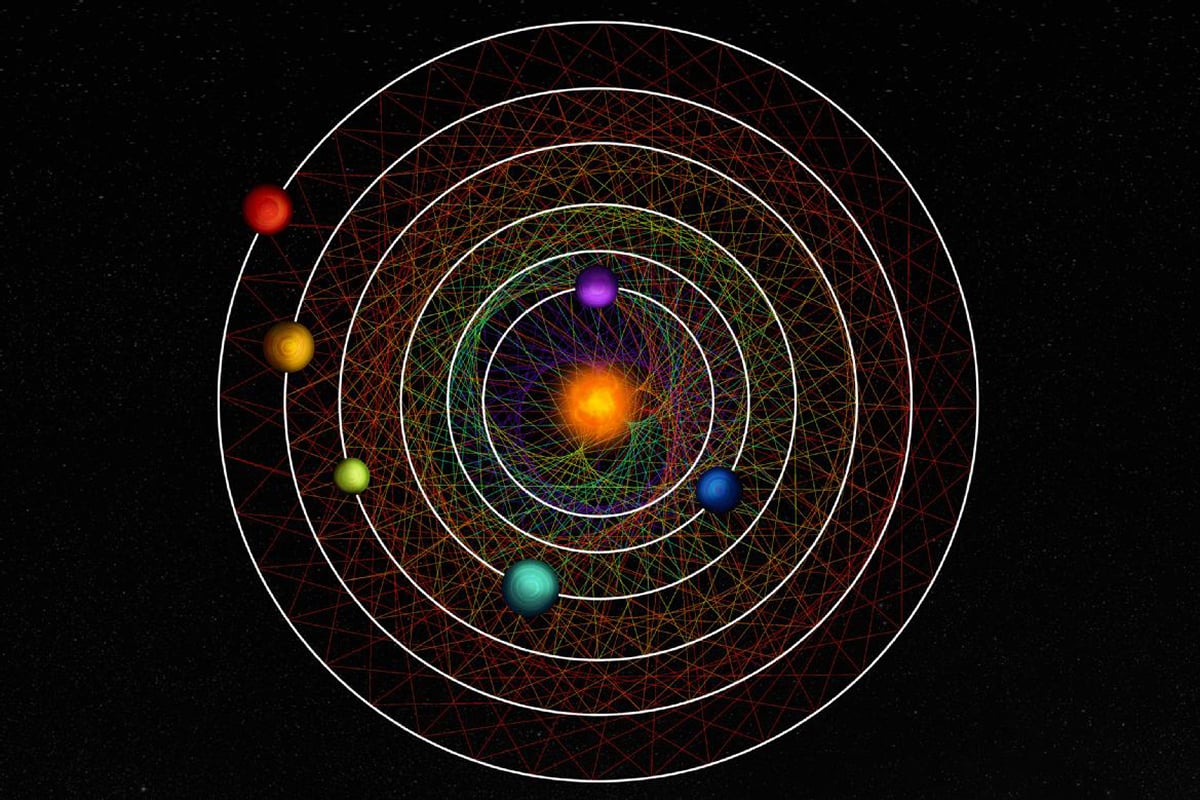
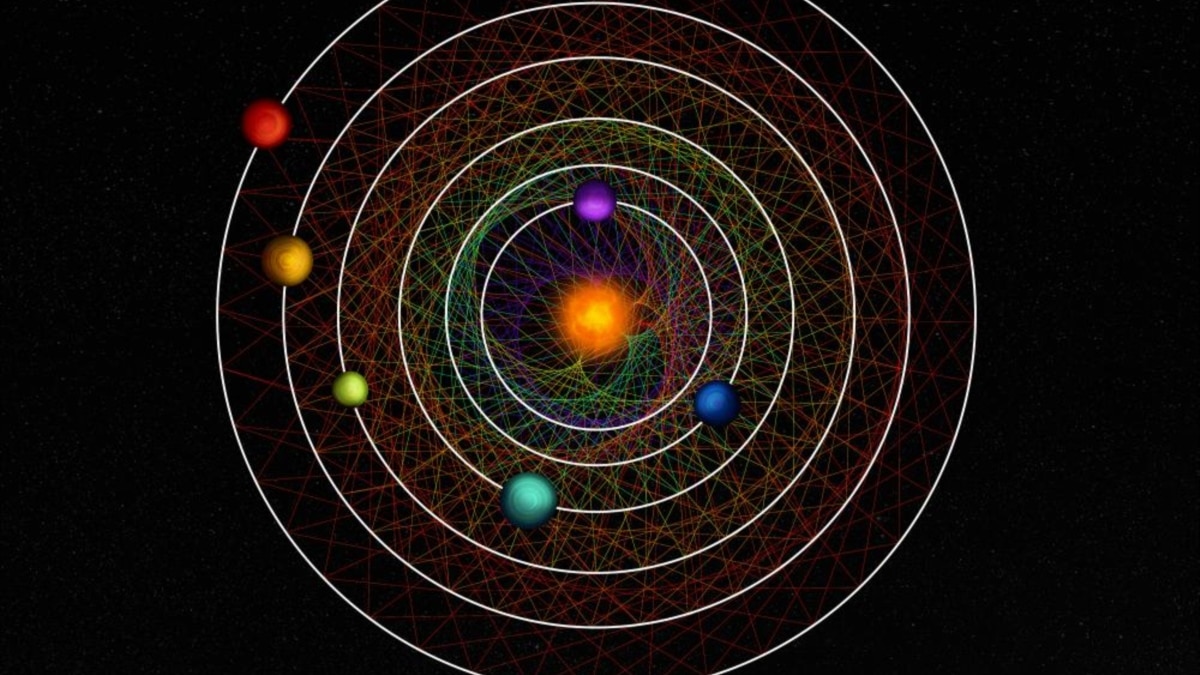
Astronomers have discovered a rare system of six planets orbiting the star HD110067, all in perfect balance and in what's known as an orbital resonance. The planets, with sub-Neptune masses, have large atmospheres similar to Uranus or Neptune, making them ideal for observation with the James Webb Space Telescope (JWST). This unique system, just 100 lightyears away, provides a pristine configuration of a planetary system that has survived untouched, offering valuable insights into planetary formation and evolution.
Orbital resonance, a gravitational phenomenon where planets align and exert a gravitational push and pull on each other during their orbits, has been observed in various planetary systems, including our own solar system and exoplanetary systems. This phenomenon, reminiscent of the harmony of the spheres proposed by Pythagoras and Johannes Kepler, occurs when planets or moons have orbital periods that are ratios of whole numbers. While resonant chains are rare and only seen in 1% of planetary systems, they offer insights into the formation and stability of planetary systems. Astronomers have even used sonification to translate the mathematical relationships of planetary orbits into sound, creating "music of the spheres" for various planetary systems.
Scientists have discovered a rare solar system consisting of six planets in perfect orbital resonance, meaning they are synchronized in a gravitational formation. The system, located about 100 light-years from Earth, is considered untouched since its formation billions of years ago. The planets, known as sub-Neptunes, are larger than Earth but smaller than Neptune and have densities similar to gas giants. The discovery provides valuable insights into the formation and development of solar systems, and astronomers believe it could unlock the secrets of these mysterious planets.
Astronomers have discovered six sub-Neptune planets in synchronized orbits around a star, offering insights into these mysterious planets that are absent from our solar system. The planets, ranging from 1.9 to 2.9 times Earth's diameter, have remained in orbital resonance since their formation about 4 billion years ago, indicating no chaotic events have perturbed their orbits. Scientists hope that studying these sub-Neptunes, which possess large atmospheres, will shed light on their composition and nature. The James Webb Space Telescope is expected to provide further insights into these planets and their potential habitability.
Astronomers have discovered a star system located 100 light-years away with six planets that orbit in perfect resonance, offering a unique opportunity to study the evolution of these worlds from their formation. Only 1 percent of planetary systems in the Milky Way exhibit this kind of orbital symmetry. The discovery could provide insights into the formation of our own solar system and expand our understanding of conditions on potentially habitable planets. Continuous monitoring of the system will allow astronomers to gather more data and learn about the planets' masses, sizes, compositions, and atmospheres.
Scientists have discovered an exceptional solar system, located over 100 light years away, with a star known as HD110067 and six orbiting planets. What makes this system unique is that the planets have resonant orbits, meaning they maintain a precise rhythm and pattern, indicating that the system has remained unchanged since its formation around one billion years ago. This rare phenomenon provides valuable insights into planetary formation and evolution. The system's relative brightness and the planets' transits in front of the star make it an ideal laboratory for studying its history and composition. While the planets are too close to the star to be in the habitable zone, the possibility of water on them has not been ruled out. Further research, including data from the James Webb space telescope, will shed more light on their atmospheres and composition.
Astronomers have discovered a rare family of six exoplanets in the Coma Berenices constellation, located about 100 light-years from Earth. These sub-Neptunes, labeled b through g, orbit a star called HD110067 in a rhythmic celestial dance known as orbital resonance. The discovery, made possible by the combined observations of NASA's TESS and the European Space Agency's Cheops satellites, could provide insights into planet formation and the origin of sub-Neptunes in our galaxy. The system's stability over 1 billion years makes it a valuable "rare fossil" for studying planetary systems. The James Webb Space Telescope may be used to further investigate the composition of these planets' atmospheres.