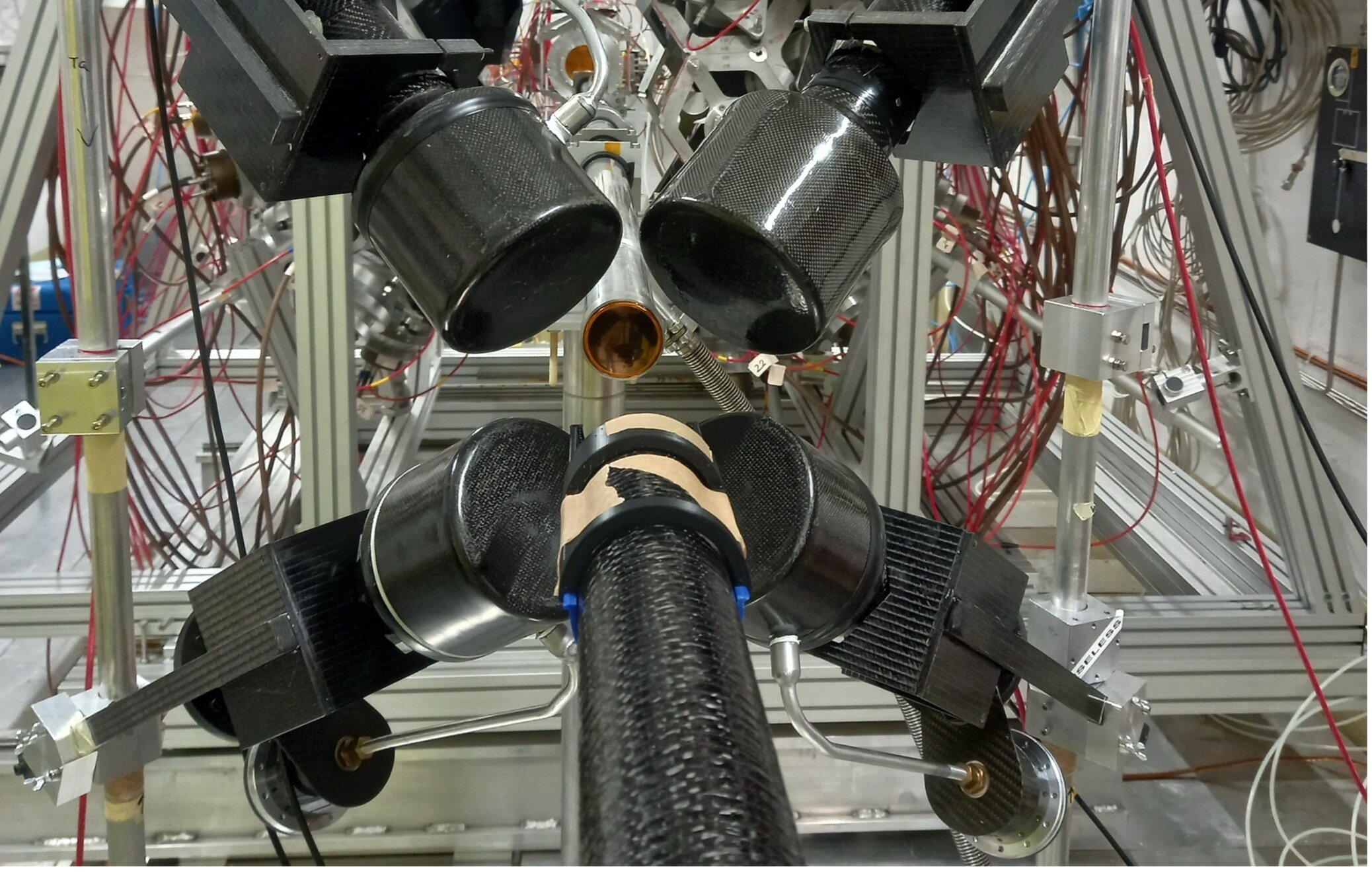
Scientists at CERN's Neutron Time-of-Flight facility have conducted a study to investigate the production of cerium in stars. Their findings, published in Physical Review Letters, reveal discrepancies between theoretical models and observational data, indicating a need to revise the mechanisms responsible for cerium production in the universe. The study's results have significant astrophysical implications, suggesting a 20% reduction in the contribution of certain processes to the abundance of cerium in the universe and requiring a paradigm shift in the theory of cerium nucleosynthesis.

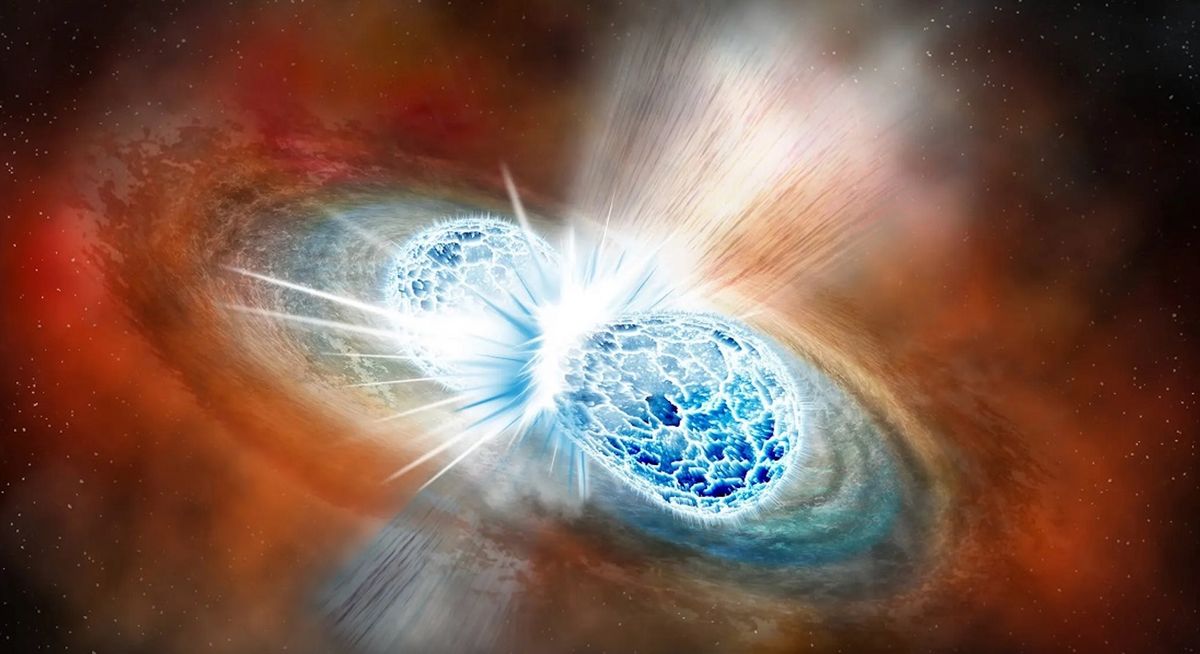
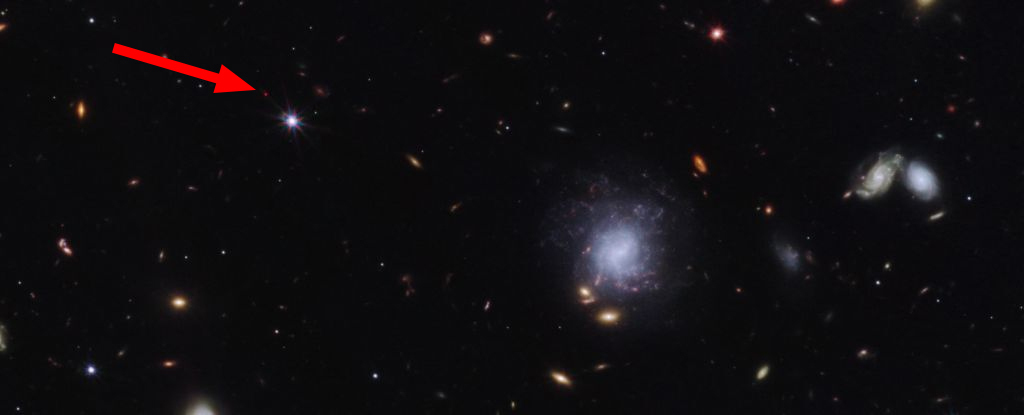
The James Webb Space Telescope and Hubble have observed a super-long gamma-ray burst resulting from the collision of two dense neutron stars, producing pure gold and other heavy elements. This discovery challenges conventional understanding of gamma-ray bursts and sheds light on the formation of heavy elements in the universe, providing valuable insights into nucleosynthesis and the origins of the cosmos.
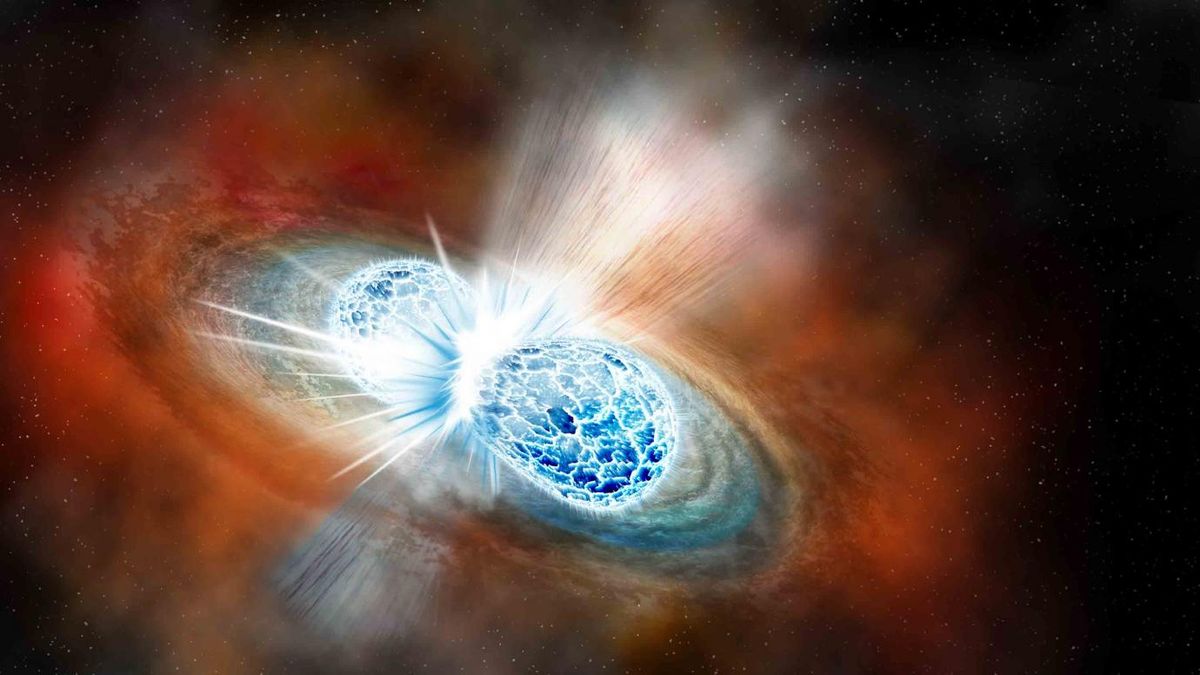
The James Webb Space Telescope and Hubble Space Telescope observed a gamma-ray burst (GRB) originating from the collision of two neutron stars, confirming that these mergers create elements like gold. This discovery challenges previous theories about the origins of long GRBs and sheds light on the process of nucleosynthesis, where heavier elements are forged. The research, published in Nature, provides new insights into the cosmic alchemy of neutron star mergers and the creation of heavy elements in the universe.
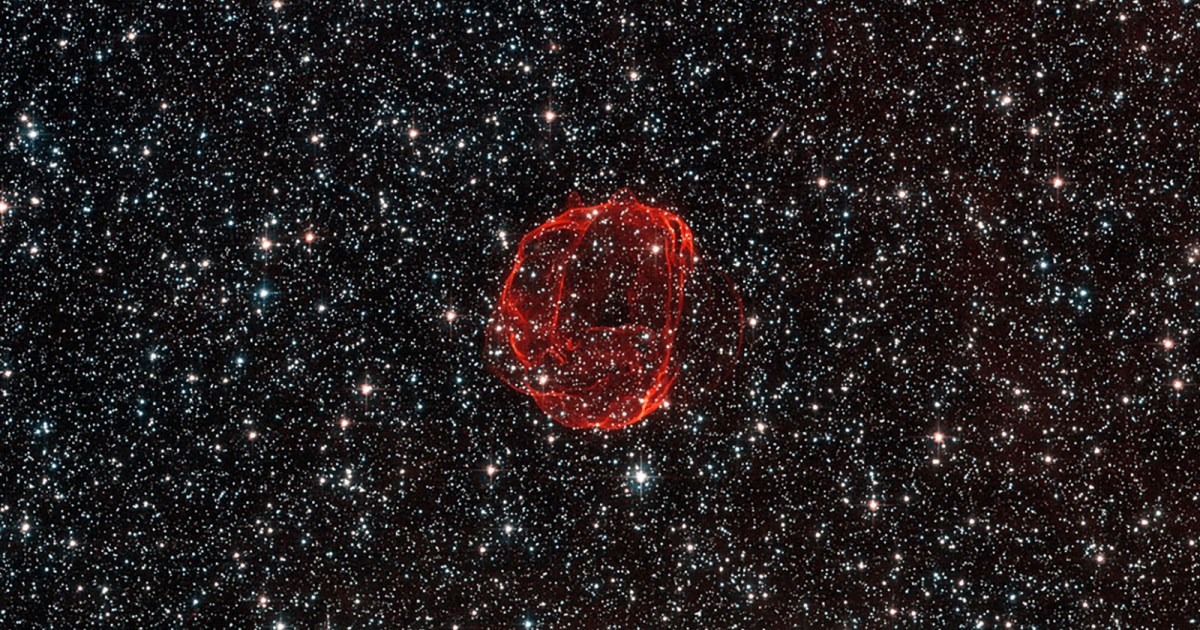
Astronomers have discovered a strange star in the Milky Way, J0931+0038, with a chemical composition indicating it was formed from the remnants of a massive star that exploded billions of years ago. This contradicts existing theories, as such a massive star should have collapsed into a black hole rather than exploding. The star's composition is rich in elements close to iron, but low in odd-numbered elements, and the abundances of elements heavier than iron are unusually high. This discovery challenges current models of element formation and raises questions about the processes that led to the star's formation.
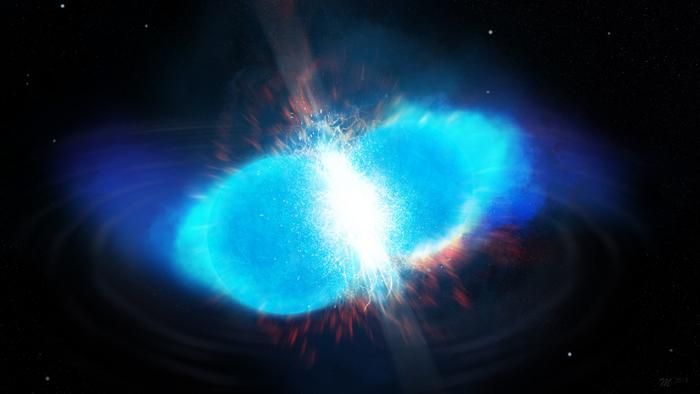
Scientists have discovered the first evidence of nuclear fission occurring among the stars, supporting the theory that when neutron stars collide, they create "superheavy" elements that then undergo nuclear fission to produce elements like gold. This discovery provides insight into the origin of heavy elements in the universe and confirms a theory proposed several years ago. The research also suggests that elements with atomic masses greater than 260 may exist around neutron star collisions.
Scientists have discovered the first evidence of nuclear fission occurring among the stars, supporting the theory that when neutron stars collide, they create superheavy elements that then undergo nuclear fission to produce elements like gold. This discovery provides insight into the origin of heavy elements in the universe. The research team found a correlation between light precision metals and rare earth nuclei in stars, confirming the occurrence of nuclear fission. The study suggests that elements with atomic masses greater than 260 may exist around neutron star mergers. This finding confirms a theory proposed several years ago and sheds light on the process of nucleosynthesis in extreme stellar environments.
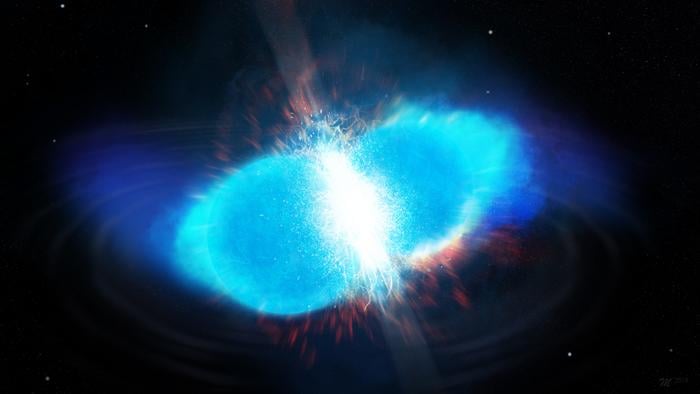
Scientists have discovered the first evidence of nuclear fission occurring among the stars, supporting the theory that when neutron stars collide, they create superheavy elements that then undergo nuclear fission to produce elements like gold. This discovery provides insight into the origin of heavy elements in the universe. The research team found a correlation between light precision metals and rare earth nuclei in stars, confirming the occurrence of nuclear fission. The study suggests that elements with atomic masses greater than 260 may exist around neutron star mergers. This finding confirms a theory proposed several years ago and sheds light on the process of heavy element formation in the cosmos.
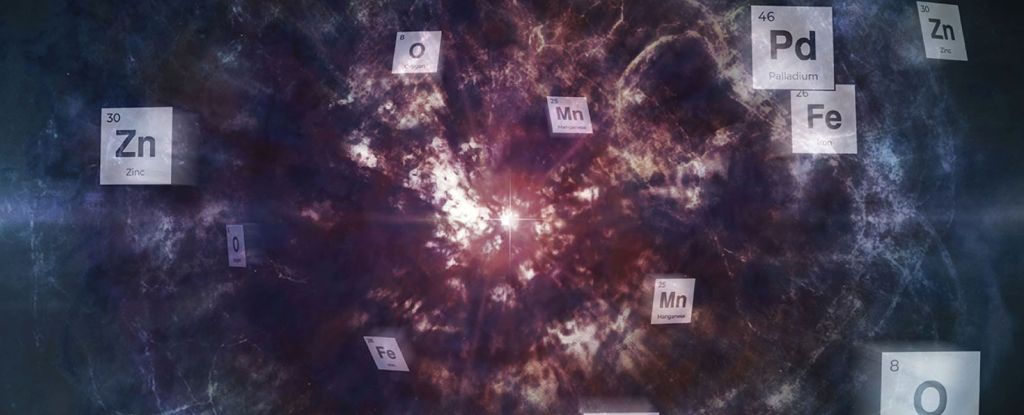
The James Webb Space Telescope (JWST) has observed the aftermath of a kilonova explosion resulting from the collision of two neutron stars, revealing evidence of rare heavy elements such as tellurium, tungsten, and selenium. This discovery confirms that neutron star mergers are a source of heavy elements in the universe. The explosion occurred in intergalactic space, 120,000 light-years from the nearest galaxy, suggesting that the neutron stars were kicked out of their original galaxy by previous supernova explosions. The findings provide valuable insights into the formation of elements and the workings of our universe.
The James Webb Space Telescope (JWST) has detected a bright gamma-ray burst (GRB) originating from a violent collision between two neutron stars, known as a kilonova. This is the first time JWST has observed emissions from such an event and has detected the creation of heavy elements, including tellurium and lanthanides. The GRB, designated GRB 230307A, is the second-brightest ever seen and lasted around 34 seconds. The team believes the kilonova occurred in a galaxy located 8.3 million light-years away from Earth. The discovery is currently undergoing peer review.
The Big Bang model of cosmology was inspired by the cosmic quantum egg idea, which suggested that the Universe emerged from a single entity that burst and decayed into fragments, creating space and time. The model was developed by George Gamow and his collaborators, who used nuclear physics and relativistic cosmology to predict the abundance of light nuclei in the early Universe. They also predicted the existence of a cosmic bath of photons with a blackbody spectrum, which was discovered in 1965 and confirmed the Big Bang model.