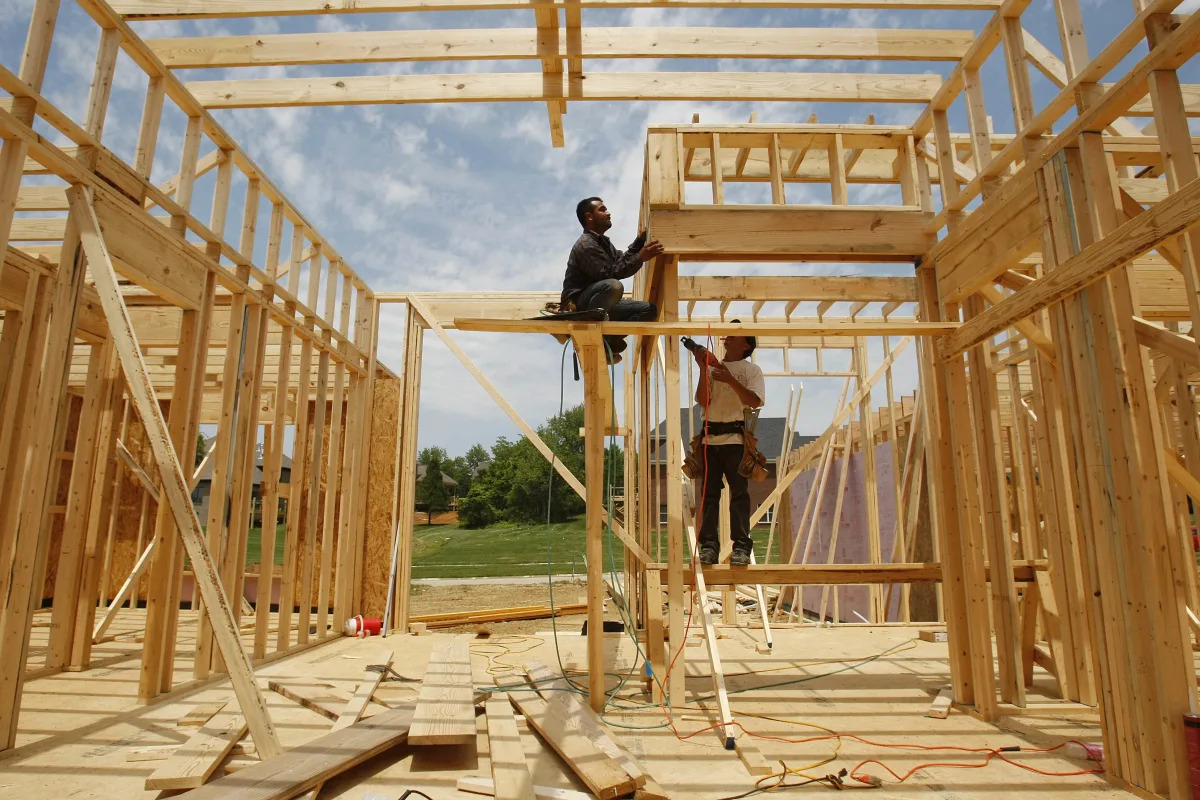
Labor shortages, tariffs, and rising costs are significantly impacting the homebuilding industry, leading to a projected decline in single-family housing starts and increased construction expenses, while multifamily construction remains strong.
US new-home sales unexpectedly surged by 20.5% in August to the fastest pace since early 2022, driven by aggressive price cuts and sales incentives from builders, reducing inventory and boosting median prices, despite ongoing affordability concerns and a volatile monthly data trend.
Top economist Mark Zandi warns that the weakening housing market, characterized by declining home sales, falling home prices, and reduced homebuilding activity, is becoming a significant drag on the overall economy, with high mortgage rates and increased supply contributing to the downturn.
Homebuilders are reducing prices at the highest rate in three years due to weakening demand and affordability issues, despite slight improvements in builder confidence driven by recent tax relief measures. The NAHB index remains below 50, indicating negative sentiment, with 38% of builders cutting prices and buyer traffic at a two-year low, signaling ongoing challenges in the housing market.
Home-builder confidence slightly increased in July amid ongoing weak demand, high interest rates, and economic uncertainty. Builders are offering significant incentives and price cuts—up to 5% on average—to attract buyers, with 38% reducing prices, the highest since 2022. Despite some optimism about current sales and future expectations, traffic from prospective buyers remains low, indicating a sluggish housing market that could impact home construction for the rest of 2025.
The US housing market is experiencing a significant oversupply of new single-family homes, with inventory levels reaching their highest since 2007, while sales continue to decline. Homebuilders are reducing prices and increasing incentives, such as mortgage-rate buydowns, to stimulate sales amid a challenging market characterized by falling profit margins and regional disparities. The surge in inventory, especially in the South, combined with lower sales and price adjustments, indicates a tough environment for homebuilders and homeowners alike.
Home-builder confidence has dropped to a two-year low as high interest rates and elevated home prices deter buyers, leading builders to slash prices and offer more incentives, with 37% reducing prices in June—the highest since 2022—while housing inventory increases and demand remains weak, suggesting a challenging period ahead for the housing market.
Tuesday's stock market session is set to be influenced by key earnings reports from Walmart and Lowe's, both of which have seen significant stock gains in 2024. Homebuilder stocks are under pressure due to rising lumber prices, with notable declines in companies like Pultegroup and D.R. Horton. Meanwhile, Electronic Arts and Take-Two Interactive have reached new highs, and SpaceX's upcoming Starship launch is a significant event for investors, particularly those in Cathie Wood's ARK Venture Fund.
Homebuilders are increasingly renting out new homes instead of selling them due to a surplus of unsold inventory and challenging market conditions. Despite a high supply of newly completed homes, builders are reluctant to cut prices amid rising mortgage rates and affordability issues for buyers. Instead, they are turning to the rental market, converting homes to rentals or selling them to investors specializing in single-family rentals. This strategy provides builders with an alternative revenue stream and helps manage inventory, as the demand for rentals remains strong.
Following Donald Trump's presidential victory, U.S. mortgage rates have surged, with the 30-year fixed mortgage rate reaching 7.13%, the highest since July. This rise is linked to an increase in the U.S. 10-year Treasury yield, which mortgage rates tend to follow. Consequently, housing stocks, including major builders like Lennar and D.R. Horton, have fallen sharply. The National Association of Home Builders expressed optimism about working with the new administration to address housing supply and affordability issues. Despite rising rates, existing home sales have increased due to higher inventory levels.
Homebuilder sentiment has dropped to its lowest level since December due to persistently high mortgage rates, with the NAHB/Wells Fargo Housing Market Index falling to 42 in July. High borrowing costs have deterred both buyers and sellers, leading to a six-month low in new-home sales. However, easing inflation may prompt the Federal Reserve to cut interest rates by the end of the year, potentially improving conditions for home buyers and builders. Despite the challenges, sales expectations for the next six months have slightly improved.
Homebuilder stocks fell as the NAHB/Wells Fargo Housing Market Index remained flat in April, indicating potential demand growth but hesitancy due to uncertainty about interest rates. The higher-than-expected inflation print last week led investors to scale back rate cut expectations, with mortgage rates rising to 6.88%. Builders pulled back slightly on cutting home prices, and the use of sales incentives ticked down to 57% in April from 60% in March.
Homebuilder stocks fell as the NAHB/Wells Fargo Housing Market Index remained flat in April, indicating potential demand growth but hesitance from buyers due to uncertainty over interest rates. The flat confidence level among builders reflects how prospective buyers and sellers are staying put amid high home prices and limited housing stock. Higher-than-expected inflation last week led investors to scale back rate cut expectations, while mortgage rates have risen, reaching 6.88% for the 30-year fixed rate. Builders have slightly reduced home prices and sales incentives, anticipating future rate cuts and moderation in mortgage rates in the second half of the year.
The S&P 500 erased earlier gains as bond yields climbed, with homebuilder stocks falling after the NAHB/Wells Fargo Housing Market Index remained flat in April, indicating potential demand growth but hesitancy due to uncertainty about interest rates. Lennar, Pulte, and Toll Brothers saw declines, reflecting how prospective buyers and sellers are staying put amid high home prices and limited housing stock. The recent inflation print has led investors to scale back rate cut expectations, while mortgage rates have risen, impacting the spring homebuying season. Builders have slightly reduced home prices and sales incentives in April.
Homebuilder stocks fell as the NAHB/Wells Fargo Housing Market Index remained flat in April, indicating potential demand growth but buyer hesitation due to uncertainty over interest rates. The flat confidence level reflects high home prices and limited housing stock, exacerbated by slightly higher mortgage rates, with the average 30-year fixed rate rising to 6.88%. Builders also pulled back on cutting home prices, while the use of sales incentives ticked down in April. This comes as investors adjust to higher rates following an inflation print, prompting a scaling back of projected rate cuts, although the Federal Reserve is still expected to announce future cuts later this year.