Tag

Neurodegenerative Condition

All articles tagged with #neurodegenerative condition

health1 year ago

"Uncovering a Century-Old Clue to the Root Cause of Alzheimer's"

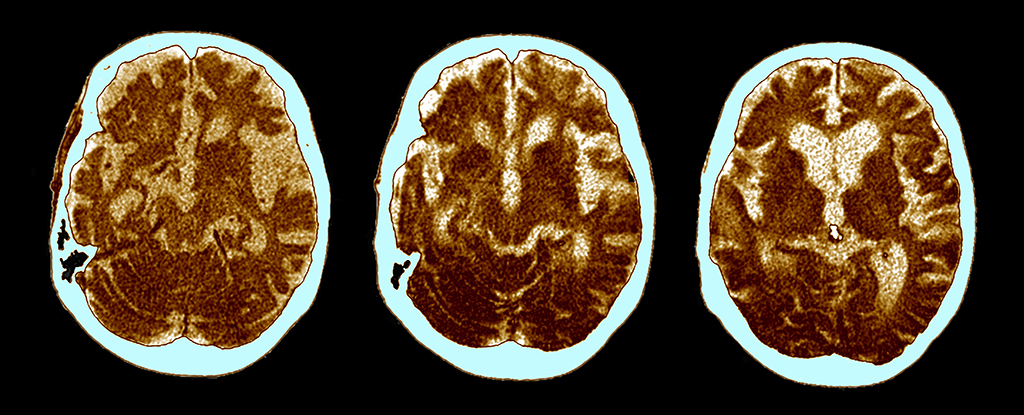
A study led by researchers from Stanford University School of Medicine revisited observations made by Alois Alzheimer in the early 20th century, focusing on lipid deposits in the brain. They found that the APOE4 gene variant is linked to increased fat accumulation in non-neuronal brain cells, potentially shedding light on a new pathway for Alzheimer's development. This research provides valuable insights into the disease and may open up new avenues for treatment.
health-and-medicine2 years ago

"Uncovering Five Variants of Alzheimer's Disease: A Potential Breakthrough in Treatment"

Researchers have identified five variants of Alzheimer's disease based on proteins found in the cerebrospinal fluid, potentially explaining the high failure rate of treatments. Each variant exhibits distinct molecular causes and genetic profiles, suggesting the need for tailored treatments. The study's findings could lead to the development of targeted drugs for each subtype, offering promising new strategies for treating the disease.

health2 years ago

Early Detection of Parkinson's Disease: Groundbreaking Australian Research Reveals Pre-symptomatic Indicators

Australian researchers have developed a method to detect signs of Parkinson's disease years before physical symptoms appear. By injecting patients with a synthetic compound that binds to a protein in the brain associated with Parkinson's, researchers were able to conduct PET scans to identify areas of neuronal loss. The study suggests that this imaging biomarker may be able to detect Parkinson's disease up to 30 years before symptoms manifest, potentially allowing for earlier treatment and prevention of irreversible damage. The findings highlight the need for incorporating biomarkers in Parkinson's research and diagnosis.

health2 years ago

"Link Found Between Memory Problems in MS and Brain Lesions in 'Memory Circuit'"

Lesions in the brain's memory circuit, similar to those seen in stroke patients, are associated with memory problems in individuals with multiple sclerosis (MS), according to a study. The findings could help identify which lesions are likely to cause memory issues in MS patients, a challenge in previous research. The study suggests that MS lesions causing memory dysfunction connect to a memory circuit, centered on the hippocampus, which extends to other brain regions involved in memory. Patients with more damage to the memory circuit tended to have poorer memory test scores, and those with higher overall lesion volume were more likely to have memory problems. The study may provide insight into the relationship between lesion burden and memory dysfunction in MS.

health2 years ago

Pesticides and Chemicals Linked to Parkinson's Disease

A new study has found that 10 commonly used pesticides are directly linked to Parkinson's disease and damage to dopaminergic neurons. Parkinson's disease is a neurodegenerative condition characterized by motor symptoms, including tremor and rigidity, and nonmotor symptoms such as cognitive impairment and sleep disorders. The study highlights the need for further research to confirm the results and suggests that pesticide regulation, agricultural practices, and worker safety may need to be changed. Reducing pesticides in foods may be an important measure in minimizing the potential risks to health that may come with some of these chemicals.

health2 years ago

The Link Between Viral Infection and Multiple Sclerosis Explained by Misdirected Antibodies.

A new study published in Science Advances has found that certain antibodies against the Epstein-Barr virus (EBV) can mistakenly target the brain and spinal cord, causing damage and leading to the development of multiple sclerosis (MS). The study analyzed blood samples from over 700 MS patients and found that some of these antibodies, aimed at a protein in the EBV called EBNA1, can accidentally bind to a similar protein called CRYAB, which is found in the human brain and spinal cord. The researchers also found that T cells can likely cross-react to both EBNA1 and CRYAB, contributing to disease progression.

health2 years ago

Exploring Early Detection of Parkinson's Disease with AI and Time Travel

Researchers at Cardiff University are using skin cell samples to understand the earliest causes of Parkinson's disease, a neurodegenerative condition that affects over 8.5 million individuals globally. By developing the cells into neurons, they hope to listen in on the communication between brain cells and identify differences between Parkinson's and non-Parkinson's cells. Understanding the early cause of the disease can help medical treatment reach individuals faster and at a stage where there is a higher chance of successful treatment. The cause of Parkinson's disease is thought to arise from a complex interaction between genetic and environmental factors.

health2 years ago

Uncovering Early Signs of Parkinson's Disease with Research Tools and Machine Learning

Researchers at Cardiff University are using skin cell samples to understand the earliest causes of Parkinson's disease, a neurodegenerative condition that affects over 8.5 million individuals globally. By developing the cells into neurons, they hope to listen in on the communication between brain cells and identify differences between Parkinson's and non-Parkinson's cells. Understanding the early cause of the disease can help medical treatment reach individuals faster and at a stage where there is a higher chance of successful treatment. The cause of Parkinson's disease is thought to arise from a complex interaction between genetic and environmental factors.

health2 years ago

"DrTalks Summit: Enhancing Daily Life in July"

DrTalks, an online platform, is hosting a free virtual summit from July 5-11 aimed at helping multiple sclerosis (MS) patients and their caregivers better manage daily life with the progressive neurodegenerative condition. The summit will provide practical tips and strategies for coping with various MS symptoms, including cognitive decline, vision problems, and bowel and bladder incontinence. The event has more than four dozen speakers lined up, including MS expert Terry Wahls, who will share her experience with research-based insights aimed at empowering patients to better manage their lives.

health2 years ago

Apathy as a Warning Sign for Alzheimer's.

A new study published in the Journal of Alzheimer’s Disease found that apathy may be a predictor of Alzheimer's disease in people with mild cognitive impairment (MCI). The study, which included a diverse population, found that those with apathy were 2.4 times more likely to convert to Alzheimer's disease and had a faster progression than those without apathy. Apathy, defined as a loss of interest and reduction in goal-directed behaviors, can be a "red flag" for a neurodegenerative condition and should be brought to the attention of a healthcare professional. However, apathy is only one of many factors that influence the rate of progression from MCI to Alzheimer's dementia.