Tag

Apoe Gene

All articles tagged with #apoe gene

health-and-science1 year ago

"Rare Gene Mutation Found to Delay Alzheimer's Onset"

Researchers have discovered that a rare version of the APOE gene, known as the Christchurch variant, can delay the onset of Alzheimer's disease. This finding, initially observed in a Colombian woman, has been confirmed in 27 other family members, suggesting that drugs mimicking this gene could offer new treatments for Alzheimer's.

health1 year ago

"Uncovering a Century-Old Clue to the Root Cause of Alzheimer's"

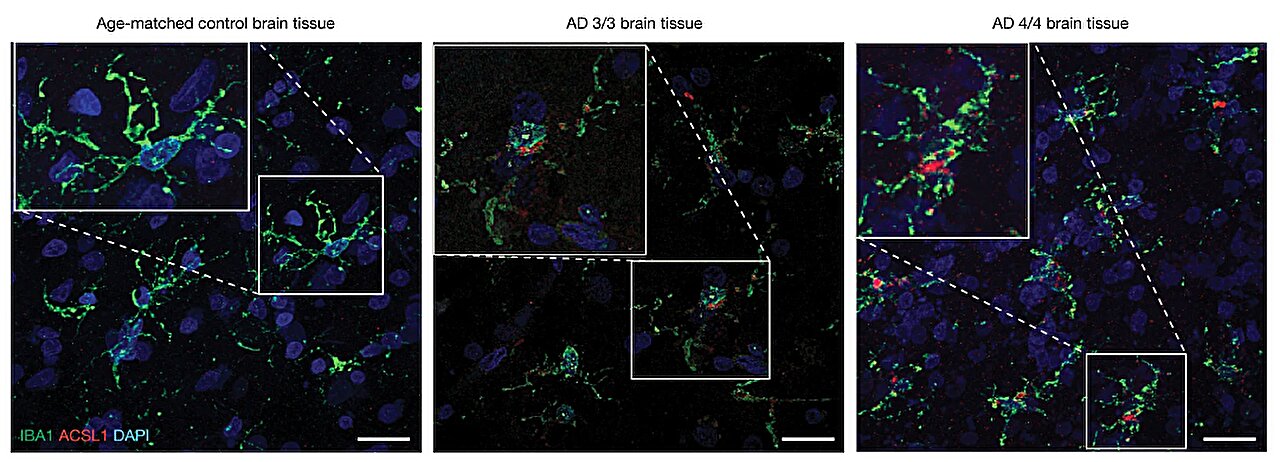
A study led by researchers from Stanford University School of Medicine revisited observations made by Alois Alzheimer in the early 20th century, focusing on lipid deposits in the brain. They found that the APOE4 gene variant is linked to increased fat accumulation in non-neuronal brain cells, potentially shedding light on a new pathway for Alzheimer's development. This research provides valuable insights into the disease and may open up new avenues for treatment.

health1 year ago

"Link Between Fat Buildup in Brain Cells and Alzheimer's Uncovered"

A study published in Nature suggests that the root cause of Alzheimer's disease may be fat buildup in brain cells, particularly linked to the APOE4 gene variant, which carries the most fat into brain cells. The research indicates that the buildup of amyloid in the brain triggers the movement of fat into brain cells, potentially leading to the development of Alzheimer's disease. This finding challenges the prevailing belief that the disease is primarily caused by the buildup of beta-amyloid plaques and tau protein, opening new avenues for understanding and potentially treating Alzheimer's.

health-science1 year ago

"Link Found Between Fat Build-Up in Brain Cells and Alzheimer's Risk"

A new study suggests that fat droplets within brain cells may be a key factor in causing Alzheimer's disease, potentially opening up a new avenue for therapeutic development. Researchers found that the APOE4 gene variant, a major risk factor for Alzheimer's, is associated with increased fat storage in immune brain cells, which could lead to tau tangles in neurons and subsequent memory loss. This finding challenges the long-held belief that protein culprits are solely responsible for the disease and highlights the potential impact of targeting fat metabolism in developing more effective treatments.

health2 years ago

"Rare Gene Mutation Holds Clues to Alzheimer's Cure, Woman Offers Hope"

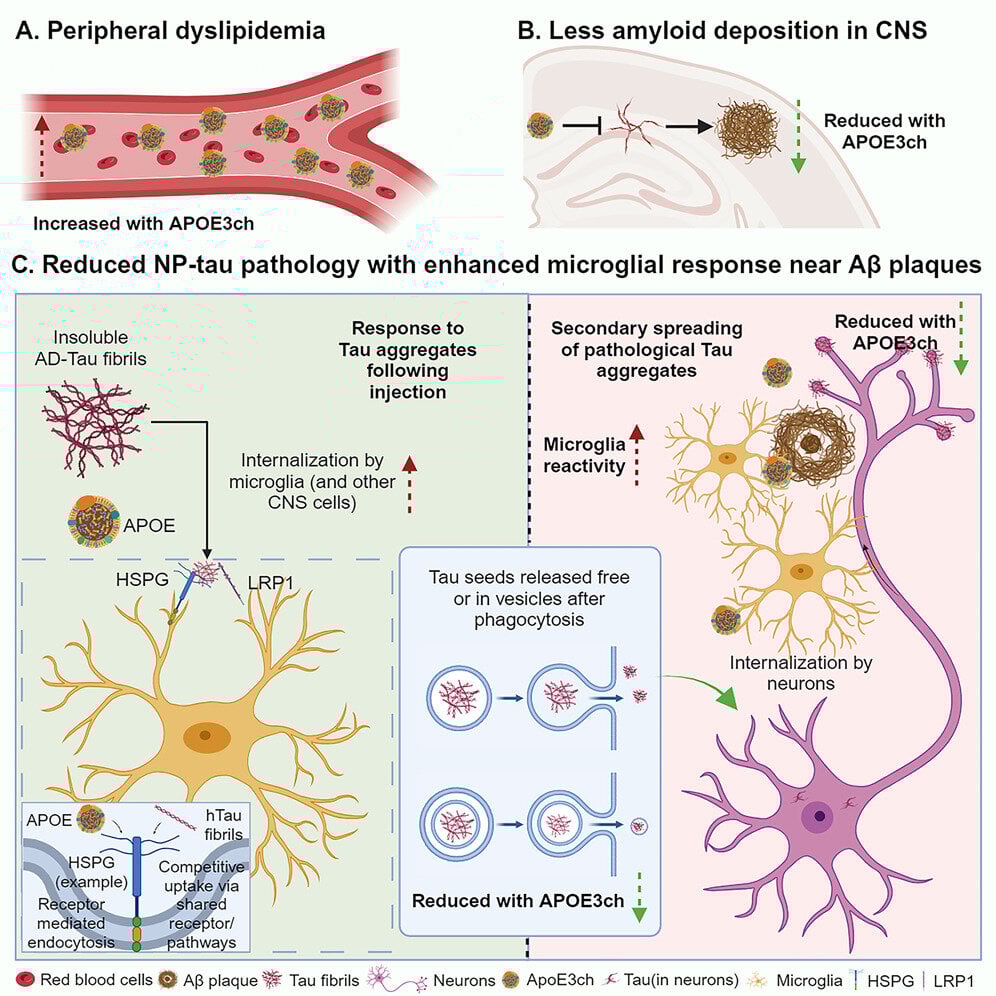
A Colombian woman in her late 70s who carries a rare variant of the APOE gene, known as the Christchurch mutation, has remained immune to Alzheimer's disease despite it affecting most of her family. Researchers at Washington University in St Louis used genetically altered mice to study the effects of the mutation and found that it enhances the brain's waste disposal cells, making them more efficient at getting rid of tau tangles, a key factor in the progression of Alzheimer's. This discovery may provide new insights into the development of treatments that mimic the effects of the mutation and prevent cognitive decline in individuals at risk of Alzheimer's.

health2 years ago

"Uncommon Gene Mutation Provides Alzheimer's Protection for Woman"

A Colombian woman who carried a genetic defect for Alzheimer's disease remained cognitively healthy into her 70s due to possessing two copies of a rare gene mutation known as the Christchurch mutation in the APOE gene. Researchers replicated this mutation in a mouse study and found that it breaks the link between amyloid beta accumulation and cognitive decline, preventing the accumulation of tau protein. This discovery could lead to new methods for preventing Alzheimer's dementia by mimicking the effects of this mutation to halt the disease's progression.

health2 years ago

"Breakthrough: Woman Uncovers Clues to Alzheimer's Cure, Defying Family History"

A woman in Colombia who has evaded Alzheimer's disease despite her family's history of the condition may hold clues to preventing it. Researchers discovered that she had two copies of a gene called APOE, known as the Christchurch mutation, which they believe could help prevent Alzheimer's from progressing. By mimicking the effects of this mutation, scientists hope to stop the progression of the disease in individuals already on the path to Alzheimer's dementia. The study also found that mice with high amounts of amyloid, a protein associated with Alzheimer's, and the Christchurch mutation did not experience the same spread of the tau protein, which is linked to brain degeneration and cognitive problems.

health2 years ago

Genetic anomaly reveals potential Alzheimer's prevention clues

A woman from a Colombian family with a history of early-onset Alzheimer's disease managed to evade the disease despite carrying the genetic defect. Researchers have discovered that she carried a rare variant of the APOE gene known as the Christchurch mutation, which severed the link between the early phase of Alzheimer's (amyloid beta buildup) and the late phase (tau protein accumulation). This finding suggests a new approach to preventing Alzheimer's dementia by mimicking the effects of the APOE Christchurch mutation to halt the progression of the disease.

health2 years ago

Unveiling Genetic Markers for Alzheimer's Disease Risk

Researchers have discovered 15 new gene variations, including in the APOE gene, that are linked to the risk of developing Alzheimer's disease. These findings could potentially lead to the development of predictive blood tests for the disease. Low plasma ApoE levels have been associated with an increased risk of Alzheimer's, cognitive impairment, and dementia. While further research is needed, these new genetic markers provide valuable insights into the complex factors contributing to Alzheimer's and could aid in early diagnosis.

health2 years ago

Stone Age genes may impact lifespan.

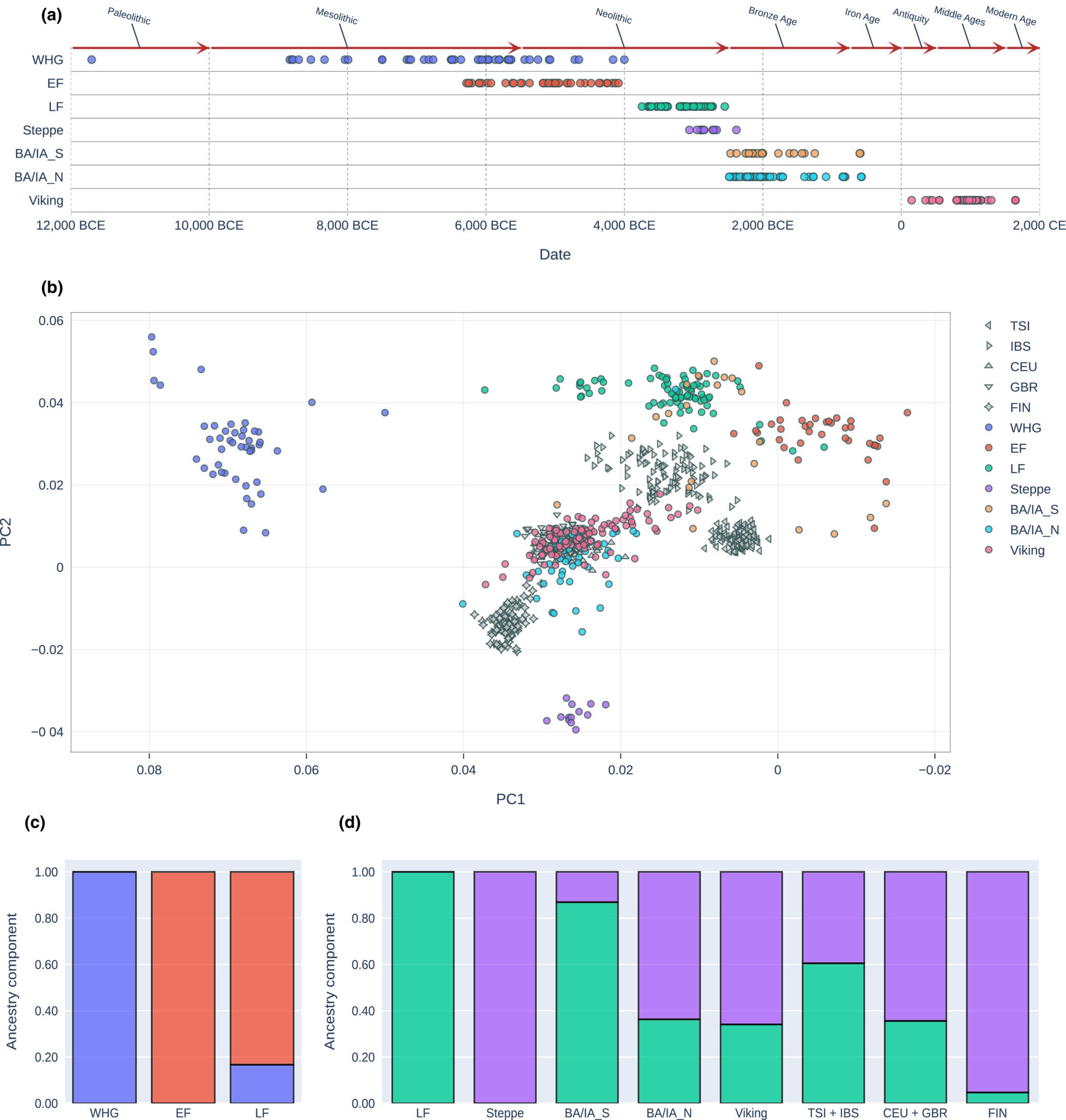
The distribution of APOE gene variants in Europe, which have the highest genetic contribution to longevity, can be explained by two major immigrations 7,500 and 4,800 years ago, and subsequent mixing of population groups, according to a study using paleogenetics. The Stone Age hunter-gatherers had a high frequency of the ε4 variant, which is associated with a very high risk of Alzheimer's disease, while the first sedentary farmers had a very low ε4 frequency and a high ε3 frequency, which probably arose as adaptations to the specific diets and lifestyles of the two groups. An active lifestyle may compensate for an unfavorable genetic predisposition, which is particularly relevant for the aging population of today.

health2 years ago

"Chris Hemsworth's Health Concerns Lead to Fewer Acting Roles"

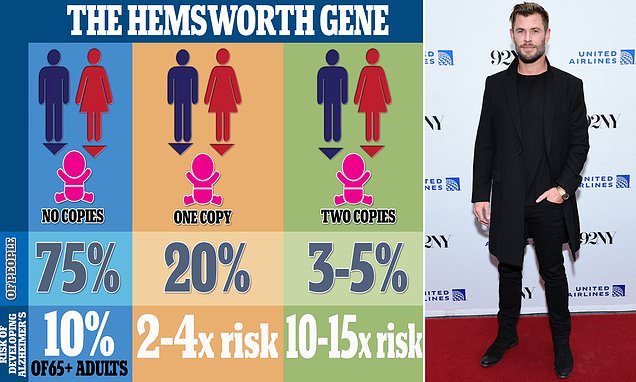
Actor Chris Hemsworth discovered he has two copies of the APOE4 gene, which is linked to an increased risk of Alzheimer's disease. Alzheimer's affects around 850,000 people in the UK and 5.8 million in the US, but charities fear rates will soar across the world in the coming decades as populations age. Genetic testing kits for the APOE gene are available from companies such as 23andMe, but experts are divided on whether testing for the gene is helpful for most people. Other potential ways of spotting Alzheimer's include hearing tests, eye examinations, blood tests, and behavioral change risk factors.