Tag

Nerve Cells

All articles tagged with #nerve cells

science1 year ago

"Parasitic DNA's Crucial Role in Nerve Cell Protein Production"

Researchers have discovered that an RNA derived from a domesticated virus, RNLTR12-int, plays a crucial role in regulating the gene that encodes myelin, a key nerve protein. By inhibiting RNLTR12-int, the production of myelin was significantly reduced in rats, zebrafish, and frogs, leading to simpler structures in the cells that produce myelin. This finding sheds light on the evolutionary history of myelin and its impact on the development and function of vertebrate brains.


health1 year ago

"Linking Nerve Overgrowth to Lingering Pain After Recurrent UTIs"

Duke Health researchers have discovered that an overgrowth of nerve cells in the bladder is likely the cause of persistent pain and urinary frequency experienced by individuals with recurring urinary tract infections (UTIs), even after antibiotics have cleared the bacteria. The study, published in Science Immunology, suggests that the overgrowth of sensory nerves, prompted by unique conditions in the bladder during infections, leads to chronic pelvic pain and urinary urgency. The findings provide a potential new approach to managing symptoms of recurrent UTIs and reducing unnecessary antibiotic usage by targeting the underlying cause of the lingering symptoms.

neuroscience2 years ago

"Unlocking the Secrets of Nerve Growth: How Skin Directs Sensation"

Researchers at Harvard Medical School have discovered that the skin, rather than pre-existing genetic programming, instructs nerve cells on how to mature for specific sensory tasks. The study found that skin cues determine whether nerve endings develop to detect sensations in hairy or hairless skin. This finding could potentially lead to therapies for damaged nerves and a better understanding of congenital neuropathies. The research highlights the significant role of the skin in neural development.

neuroscience2 years ago

"Discovery: Brain's Nerve Cells Control All Body Movement, Including Breathing"

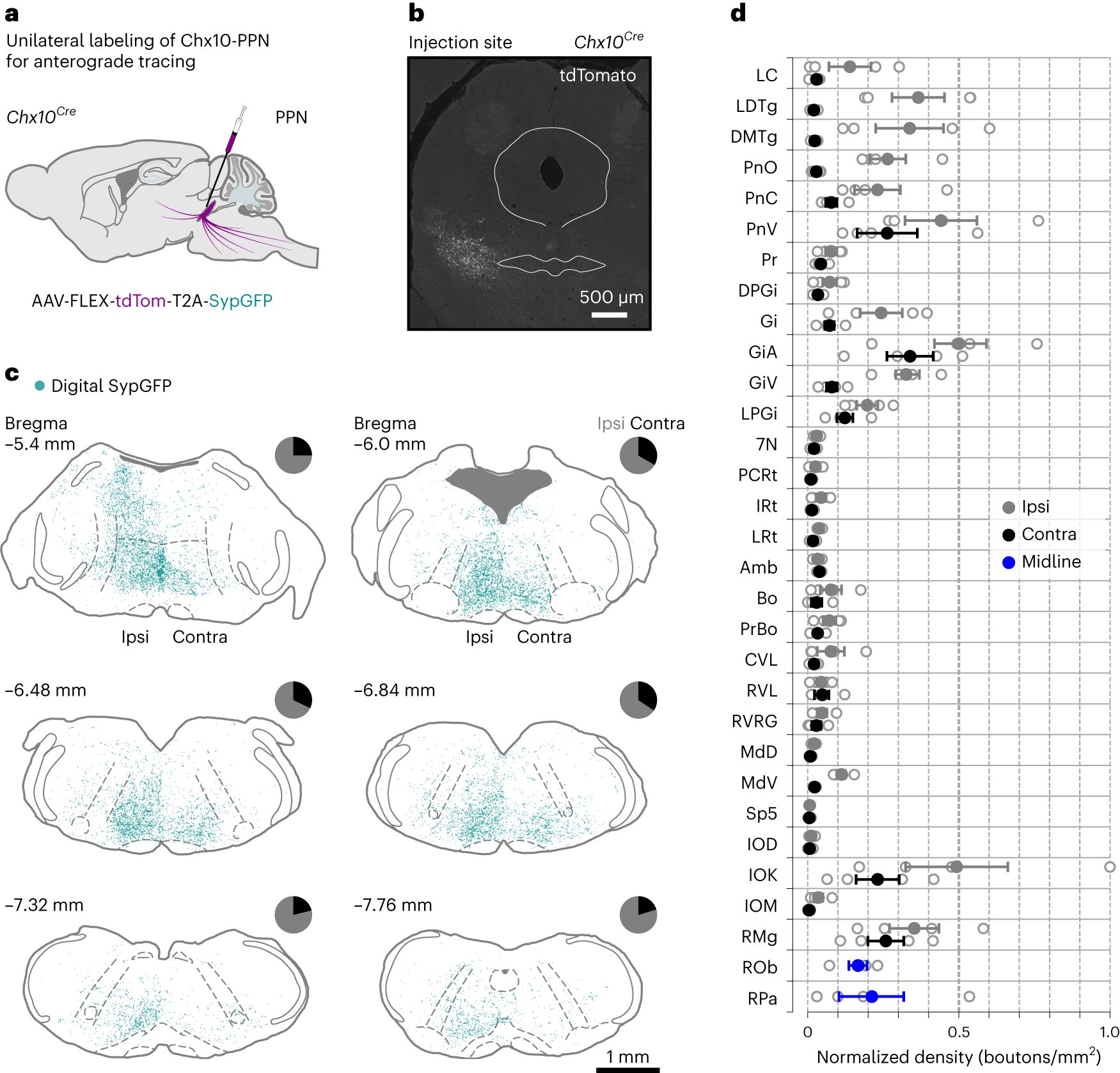
Researchers have discovered a group of nerve cells in the midbrain that, when stimulated, can halt all forms of movement, including breathing and heart rate. These cells, found in the pedunculopontine nucleus (PPN), express a specific molecular marker called Chx10 and are believed to be involved in focused attention rather than fear. The study's findings may contribute to understanding the motor symptoms of Parkinson's disease, as motor arrest or slow movement is a characteristic feature of the condition. The researchers used optogenetics to stimulate these nerve cells in mice and observe their effects on motor function.

neuroscience2 years ago

Discovery of Paralyzing Nerve Cells Sheds Light on Movement Control

Scientists have discovered a group of nerve cells in the midbrain, specifically in the pedunculopontine nucleus (PPN), that can halt all movement when stimulated. These cells, identified by the marker Chx10, impact various forms of motor activity, including breathing and heart rate. The unique "pause-and-play pattern" observed in these cells may be related to a state of alertness or focused attention, rather than fear. Understanding these cells could provide insights into the motor symptoms seen in Parkinson's disease.

health2 years ago

Rapid Development of Genetic Defects in Autistic Children's Nerve Cells

A study conducted at the University of Haifa has found that children with autism spectrum disorders (ASD) resulting from genetic mutations experience an accelerated development of cortical neurons during the fetal stage, followed by a rapid deterioration in the nerve cells. This deterioration leads to low connectivity and other abnormalities. The study observed this phenomenon in children with autism originating from four different types of genetic mutations. The findings suggest that the accelerated development of neurons may contribute to the development of autism, and researchers are now exploring ways to slow down this rapid development to protect the neurons.

health2 years ago

Uncovering the Cellular Origins of Chronic Pain: Groundbreaking Research Reveals Insights

A team of doctors in Boston is using novel technology to study the origins of chronic pain. By examining individual cells and cataloging their components, the researchers aim to identify the features associated with pain. Unlike previous pain research that relied on animal studies, this team is studying human tissue obtained from surgeries and autopsies. With an estimated 51.6 million US adults suffering from chronic pain, finding better medications is a key goal. By understanding the mechanisms behind pain, the researchers hope to develop new drug targets for conditions such as neuroma pain and migraines.

neuroscience2 years ago

Womb Inflammation Impairs Brain Development.

Inflammation in the womb can hinder the maturation of nerve cells, leading to reduced electrical activity and affecting a baby’s brain development. This condition can potentially lead to a wide range of developmental issues in babies, especially those born preterm, including cerebral palsy, emotional problems, language and cognitive delays, and more. The impairments in nerve cell maturation caused by inflammation can be detected using electroencephalography, a widely used clinical tool.

health2 years ago

Researchers develop screening system to identify neurotoxic pesticides linked to Parkinson's.

Researchers have identified certain pesticides used in agricultural settings that were linked to Parkinson’s disease risk among people living in California — and that were toxic to nerve cells in laboratory studies. Particularly, a pesticide called trifluralin was a significant driver of nerve cell toxicity, an effect that was stronger when the chemical was combined with other pesticides. The scientists believe their approach of evaluating pesticides from both a field- and lab-based perspective “may prove useful to mechanistically dissect pesticide exposures implicated in [Parkinson’s] risk and guide agricultural policy.”