Tag

Brain Evolution

All articles tagged with #brain evolution

Gut Microbes: The Hidden Link to Human Intelligence and Brain Evolution

Originally Published 6 days ago — by ScienceDaily

Featured image for Gut Microbes: The Hidden Link to Human Intelligence and Brain Evolution
Source: ScienceDaily

A study from Northwestern University demonstrates that gut microbes from primates with different brain sizes can influence brain activity and gene expression in mice, suggesting a significant role of the microbiome in brain evolution and potential links to neurodevelopmental disorders like autism and ADHD.

Ancient Lead Exposure and Its Role in Human Brain Evolution

Originally Published 2 months ago — by The Times

Featured image for Ancient Lead Exposure and Its Role in Human Brain Evolution
Source: The Times

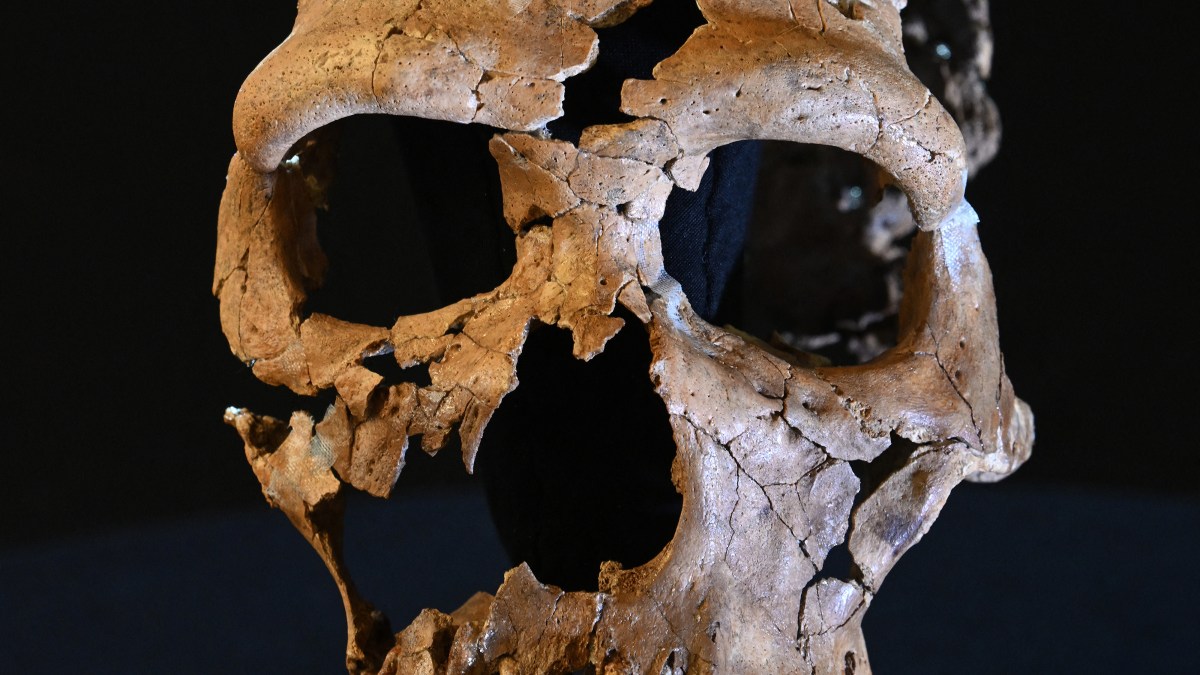
Lab-grown mini-brains with Neanderthal and modern human genes suggest that intermittent lead exposure may have influenced brain development and survival differences between the species, potentially impacting language and social cohesion. The study highlights how environmental factors like lead pollution, present in ancient times, could have played a role in human evolution.

Jim Al-Khalili Unveils 600 Million Years of Brain Evolution

Originally Published 3 months ago — by Live Science

Featured image for Jim Al-Khalili Unveils 600 Million Years of Brain Evolution
Source: Live Science

Jim Al-Khalili's 'Secrets of the Brain' explores 600 million years of brain evolution, highlighting the similarities between human and animal brains, and questioning what truly separates humans from other primates, emphasizing the importance of social complexity and consciousness.

Human Brain Evolution and Its Link to Autism Prevalence

Originally Published 4 months ago — by ZME Science

Featured image for Human Brain Evolution and Its Link to Autism Prevalence
Source: ZME Science

A study suggests that the unique wiring of the human brain, especially fast-evolving neurons linked to language and abstract thought, may explain the high prevalence of autism, as these genetic changes that made us human also increased neurodiversity and susceptibility to conditions like ASD and schizophrenia.

Genetic Factors Underpinning Human Brain Uniqueness

Originally Published 5 months ago — by Neuroscience News

Featured image for Genetic Factors Underpinning Human Brain Uniqueness
Source: Neuroscience News

Researchers at UC San Diego identified the genetic region HAR123, a transcriptional enhancer that influences neural development and may explain human-specific cognitive traits like flexibility, with implications for understanding brain evolution and disorders such as autism.

Gut Microbes: The Secret to Human Brain Evolution

Originally Published 1 year ago — by Livescience.com

Featured image for Gut Microbes: The Secret to Human Brain Evolution
Source: Livescience.com

A new study suggests that the gut microbiome may have played a crucial role in the evolution of larger brains in primates, including humans. Researchers found that gut microbes from larger-brained primates, such as humans and squirrel monkeys, helped convert food into energy for the brain more efficiently than those from smaller-brained primates. This process may have driven hosts to consume more food, channeling excess energy to the brain. However, the study, conducted on mice, requires further research to confirm these findings and understand the exact mechanisms involved.

Gut Microbes: The Secret to Human Brain Evolution

Originally Published 1 year ago — by Neuroscience News

Featured image for Gut Microbes: The Secret to Human Brain Evolution
Source: Neuroscience News

A study by Northwestern University suggests that gut microbes may have played a crucial role in the evolution of larger brains in primates by influencing energy production and usage. Researchers found that gut microbes from larger-brained primates like humans and squirrel monkeys enhanced energy production in mice, while those from smaller-brained primates like macaques favored fat storage. This indicates that gut microbiota differences evolved to meet the higher energy demands of larger brains, offering new insights into human evolution and the role of gut microbes in shaping metabolic traits.

"New Insights Reveal Why Humans Evolved Larger Brains"

Originally Published 1 year ago — by ScienceAlert

Featured image for "New Insights Reveal Why Humans Evolved Larger Brains"
Source: ScienceAlert

A new study in Nature Ecology and Evolution challenges the long-held assumption that brain and body mass in animals follow a simple power law relationship. Instead, researchers found a log-curvilinear relationship, best described by a second-order polynomial equation. This model better fits the data and explains variations across species, offering new insights into cerebral evolution and the rate at which different animals develop larger brains.

Big Brains in Primates: Not the Key to Superior Foraging

Originally Published 1 year ago — by ScienceAlert

Featured image for Big Brains in Primates: Not the Key to Superior Foraging
Source: ScienceAlert

A new study challenges the fruit-diet hypothesis for brain evolution in primates, finding that larger-brained primates like spider monkeys and capuchins do not have more efficient foraging routes compared to smaller-brained animals. This suggests that factors other than foraging efficiency, such as memory, tool use, or social complexity, may have driven the evolution of large brains in some species.

"Primates' Big Brains Evolved for More Than Just Foraging, Study Finds"

Originally Published 1 year ago — by The Conversation Indonesia

Featured image for "Primates' Big Brains Evolved for More Than Just Foraging, Study Finds"
Source: The Conversation Indonesia

A new study challenges the leading hypothesis that primates evolved large brains to find food more efficiently. By tracking the foraging routes of large-brained primates and smaller-brained non-primates in Panama, researchers found no significant difference in foraging efficiency, suggesting that other factors like memory, tool use, or social complexities may have driven brain size evolution.

"Unraveling the 1.6 Million-Year-Old Mystery of Human Language Evolution"

Originally Published 1 year ago — by The Independent

Featured image for "Unraveling the 1.6 Million-Year-Old Mystery of Human Language Evolution"
Source: The Independent

New research by British archaeologist Steven Mithen suggests that early humans likely developed rudimentary language around 1.6 million years ago in eastern or southern Africa, challenging the previous belief that humans only started speaking around 200,000 years ago. The analysis is based on a comprehensive study of archaeological, genetic, neurological, and linguistic evidence, indicating that the birth of language was part of a suite of human evolution and other developments between two and 1.5 million years ago. The emergence of language was linked to improvements in working memory and was crucial for facilitating group planning and coordination abilities, particularly in hunting and survival. This new research also suggests that some aspects of the first linguistic development 1.6 million years ago may still survive in modern languages today.

"Revised Timeline: Humans' 1.6 Million-Year-Old Language Origins"

Originally Published 1 year ago — by The Independent

Featured image for "Revised Timeline: Humans' 1.6 Million-Year-Old Language Origins"
Source: The Independent

New research by British archaeologist Steven Mithen suggests that early humans likely developed rudimentary language around 1.6 million years ago in eastern or southern Africa, challenging the previous belief that humans only started speaking around 200,000 years ago. The analysis is based on a comprehensive study of archaeological, genetic, neurological, and linguistic evidence, indicating that the emergence of language was part of a suite of human evolution and other developments between two and 1.5 million years ago. This birth of language represented the beginning of linguistic development, with language gradually becoming more complex over hundreds of thousands of years.

"Revised Timeline: Human Speech Origins Date Back Further Than Previously Believed"

Originally Published 1 year ago — by The Independent

Featured image for "Revised Timeline: Human Speech Origins Date Back Further Than Previously Believed"
Source: The Independent

New research by British archaeologist Steven Mithen suggests that humans likely began developing rudimentary language around 1.6 million years ago in eastern or southern Africa, challenging the previous belief that language only emerged around 200,000 years ago. The emergence of language was a crucial factor in human physical and cultural evolution, as it enabled greater group planning and coordination abilities, improved working memory, and facilitated the transmission of complex knowledge and skills. The appearance of Broca’s area in the brain, associated with language production and comprehension, was linked to improvements in working memory and sentence formation. This new research also suggests that some aspects of the first linguistic development 1.6 million years ago may still survive in modern languages today.