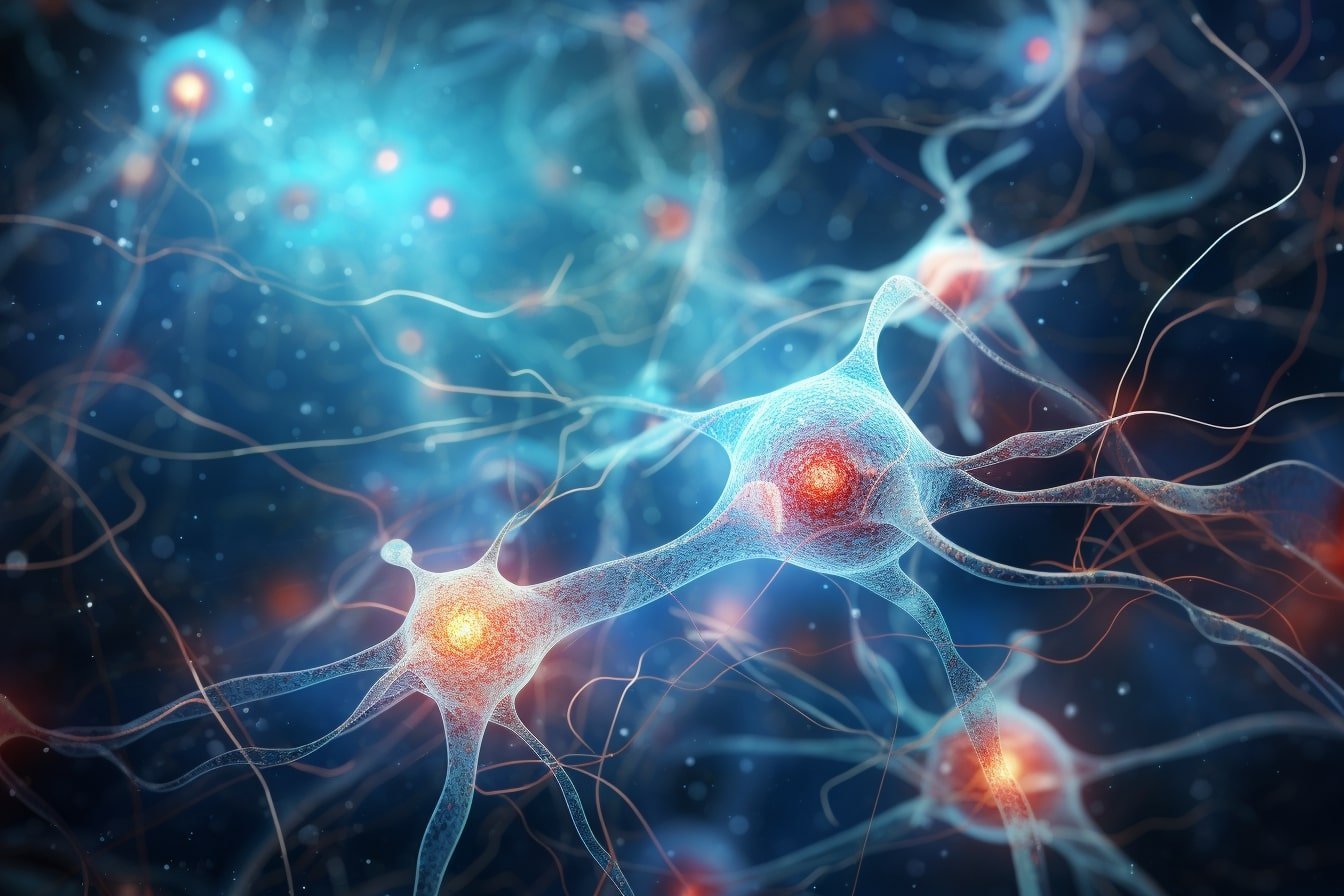
New research shows that neurons in the basal ganglia act like traffic lights, dynamically switching between activating and inhibiting movements with high precision, which could lead to improved treatments for movement disorders like Parkinson's disease.
Neuroscientists have discovered a new group of neurons in the brainstem that control left-right movements, shedding light on the intricate brain mechanisms involved in movement control. This finding could have implications for Parkinson's disease treatment, as it reveals the connection between the brainstem and basal ganglia in regulating voluntary movements. The study, conducted in mice, suggests that stimulating these neurons could potentially alleviate turning difficulties associated with Parkinson's disease, offering hope for future therapeutic interventions.
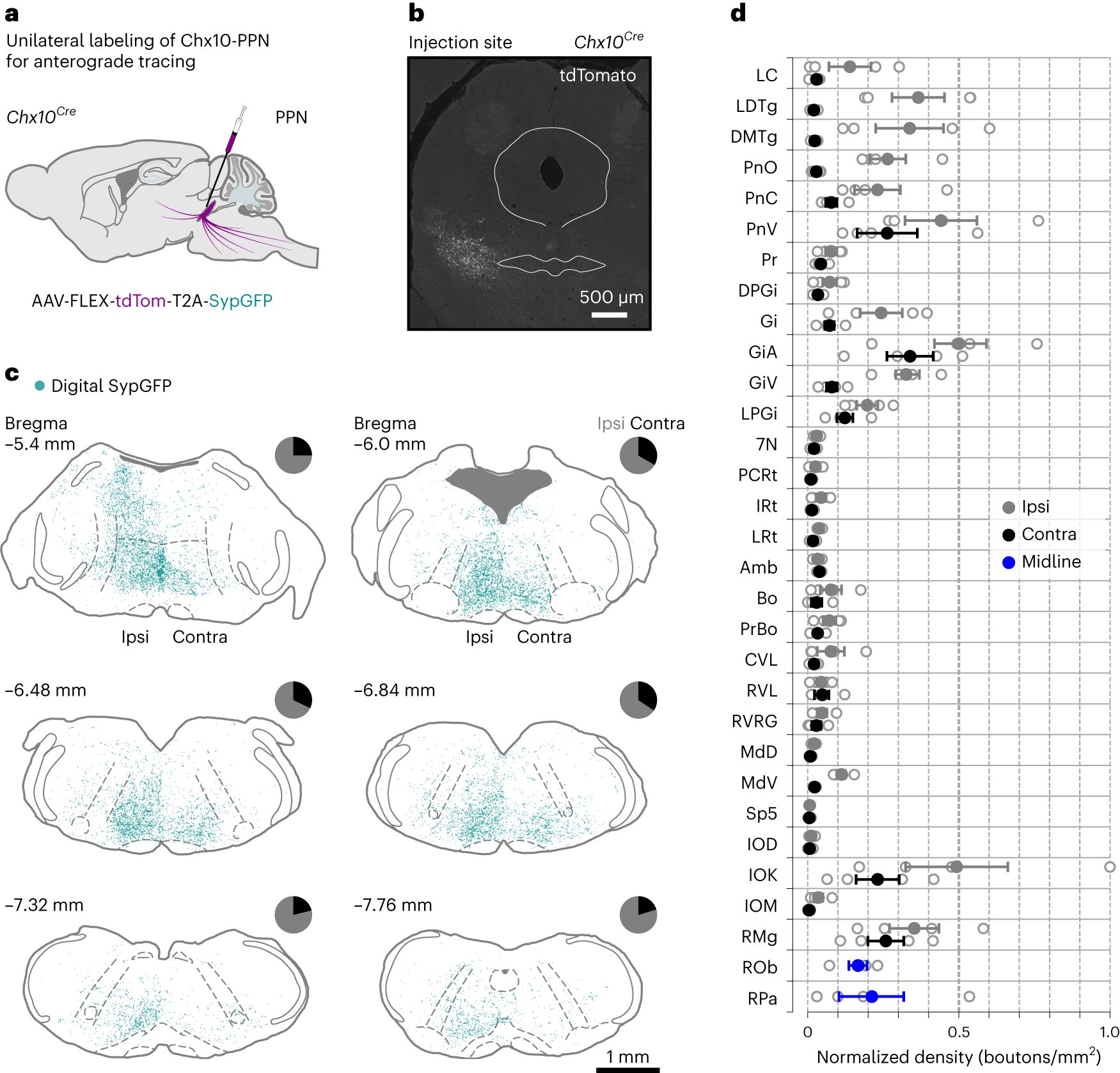
Scientists have discovered a unique group of nerve cells in the midbrain that can pause all movement, resembling a 'pause-and-play' pattern, and restart precisely where it ceased. This finding, unrelated to fear but potentially associated with attention, contributes to our understanding of how the nervous system controls movement. The researchers believe that these nerve cells, found in an area called the pedunculopontine nucleus (PPN), may be over-activated in Parkinson's disease, shedding light on the motor symptoms of the condition. Further research is needed to confirm the role of these cells in attention and their implications for Parkinson's disease.
Researchers have discovered a group of nerve cells in the midbrain that, when stimulated, can halt all forms of movement, including breathing and heart rate. These cells, found in the pedunculopontine nucleus (PPN), express a specific molecular marker called Chx10 and are believed to be involved in focused attention rather than fear. The study's findings may contribute to understanding the motor symptoms of Parkinson's disease, as motor arrest or slow movement is a characteristic feature of the condition. The researchers used optogenetics to stimulate these nerve cells in mice and observe their effects on motor function.
Scientists have discovered a group of nerve cells in the midbrain, specifically in the pedunculopontine nucleus (PPN), that can halt all movement when stimulated. These cells, identified by the marker Chx10, impact various forms of motor activity, including breathing and heart rate. The unique "pause-and-play pattern" observed in these cells may be related to a state of alertness or focused attention, rather than fear. Understanding these cells could provide insights into the motor symptoms seen in Parkinson's disease.