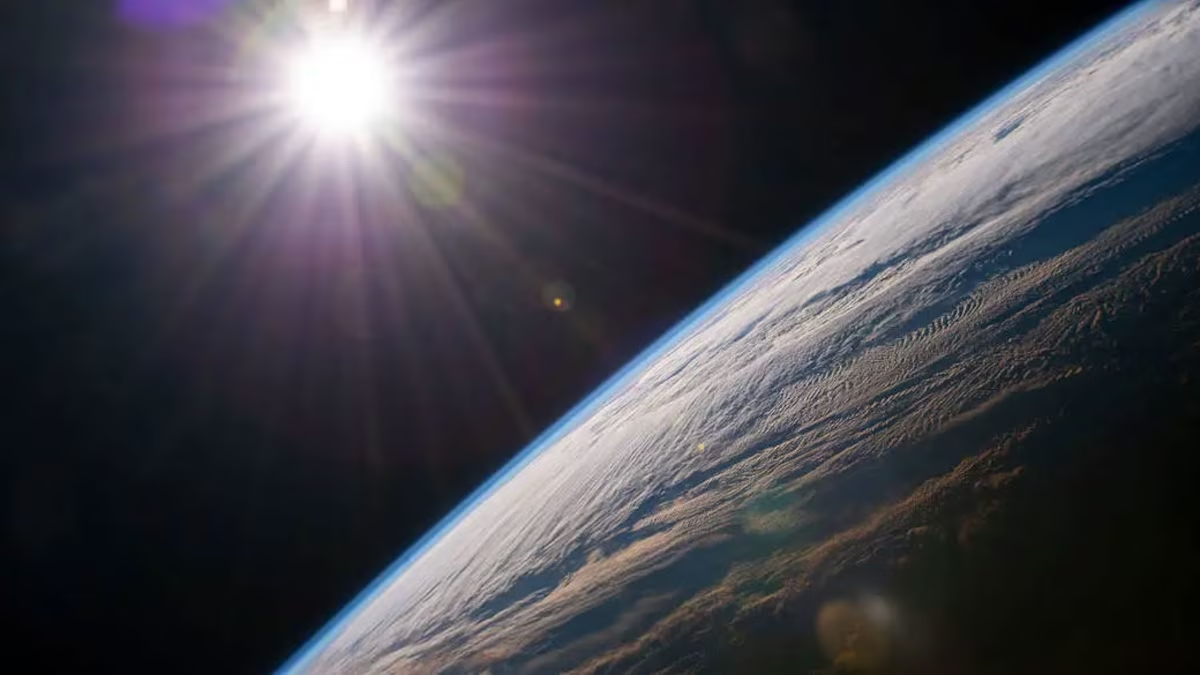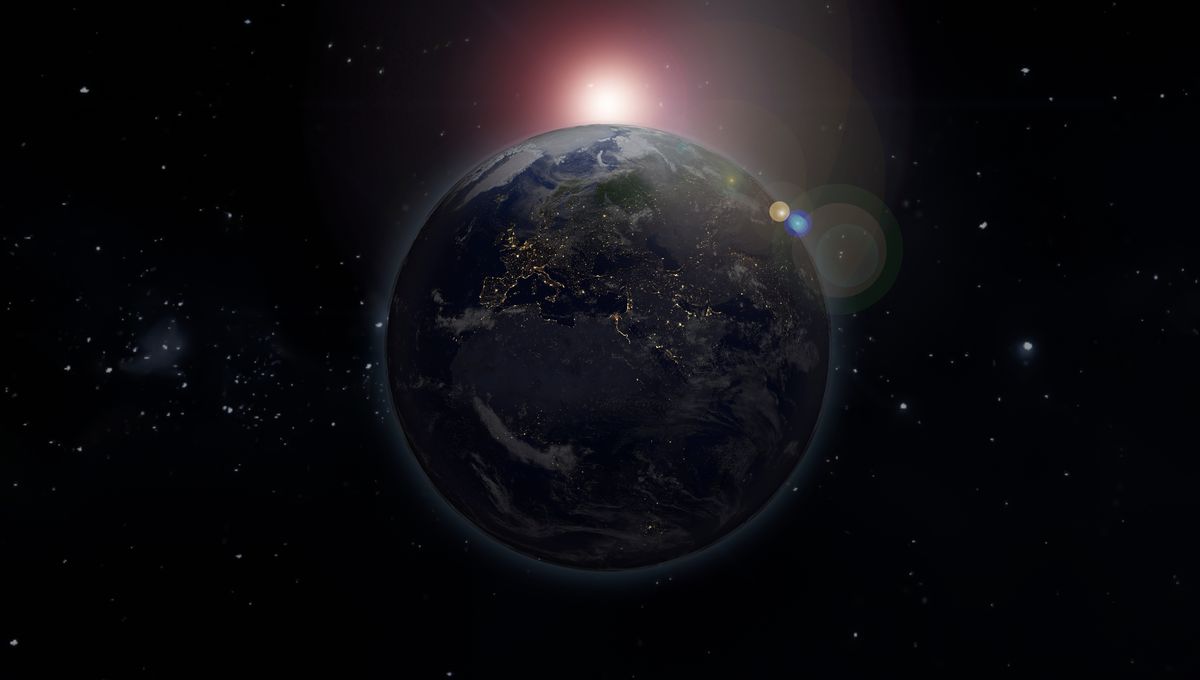
Earth reaches perihelion, its closest point to the sun, on January 3, 2026, but this event has minimal impact on seasons, which are primarily driven by Earth's axial tilt. Perihelion slightly increases solar energy and affects Earth's orbital speed, influencing season length and climate trends over long timescales, but does not cause significant weather changes.
The next ice age is unlikely to begin for at least 50,000 years, with natural climate cycles and human-induced greenhouse gas emissions delaying its onset significantly, potentially up to 500,000 years in the future.
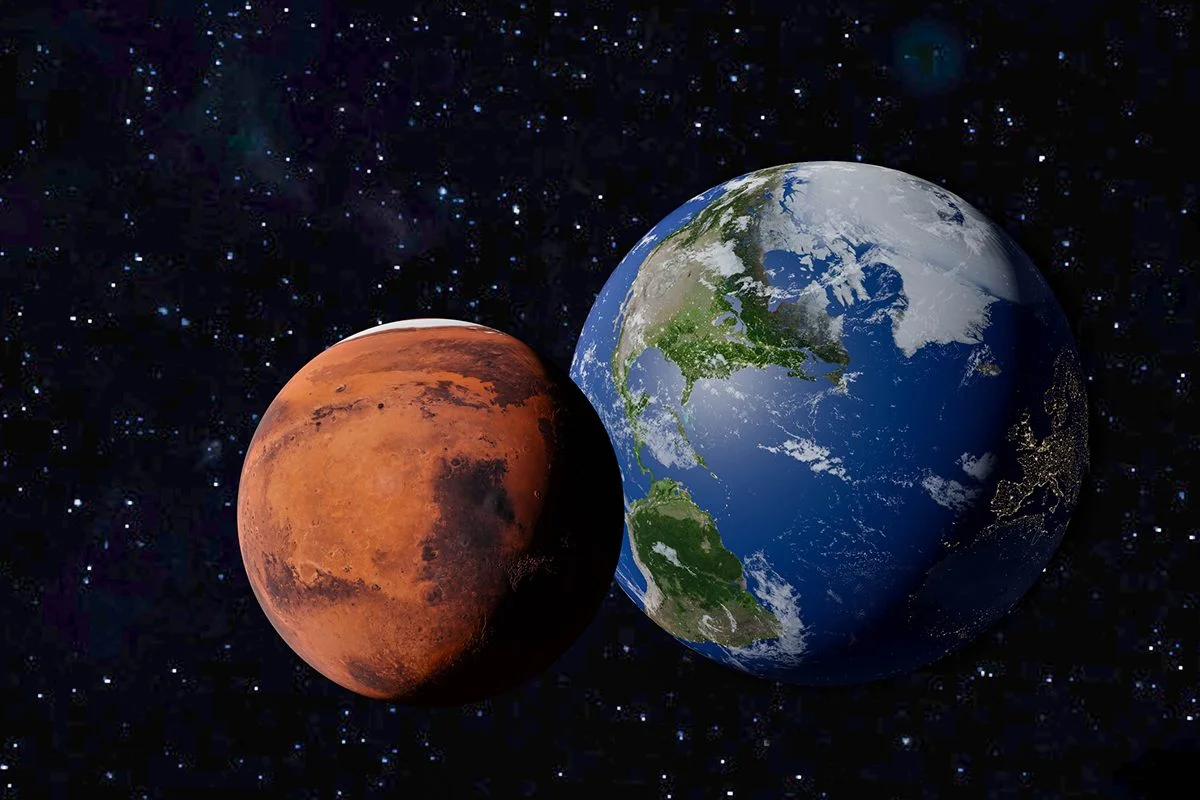
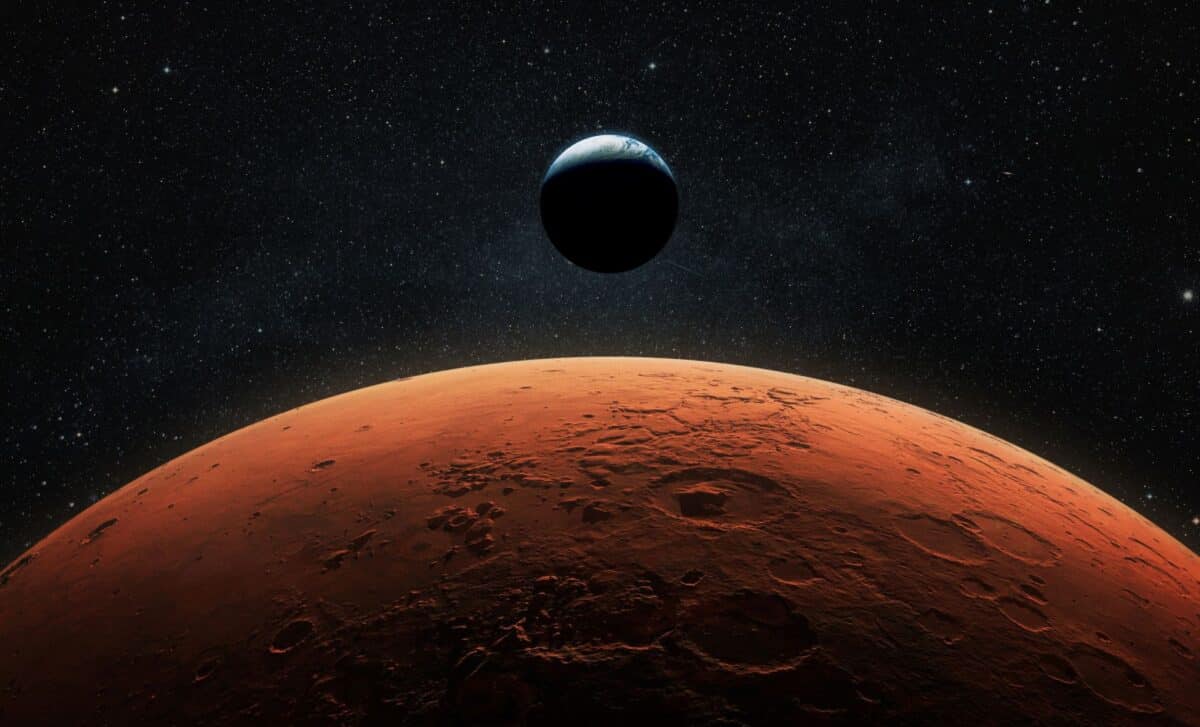
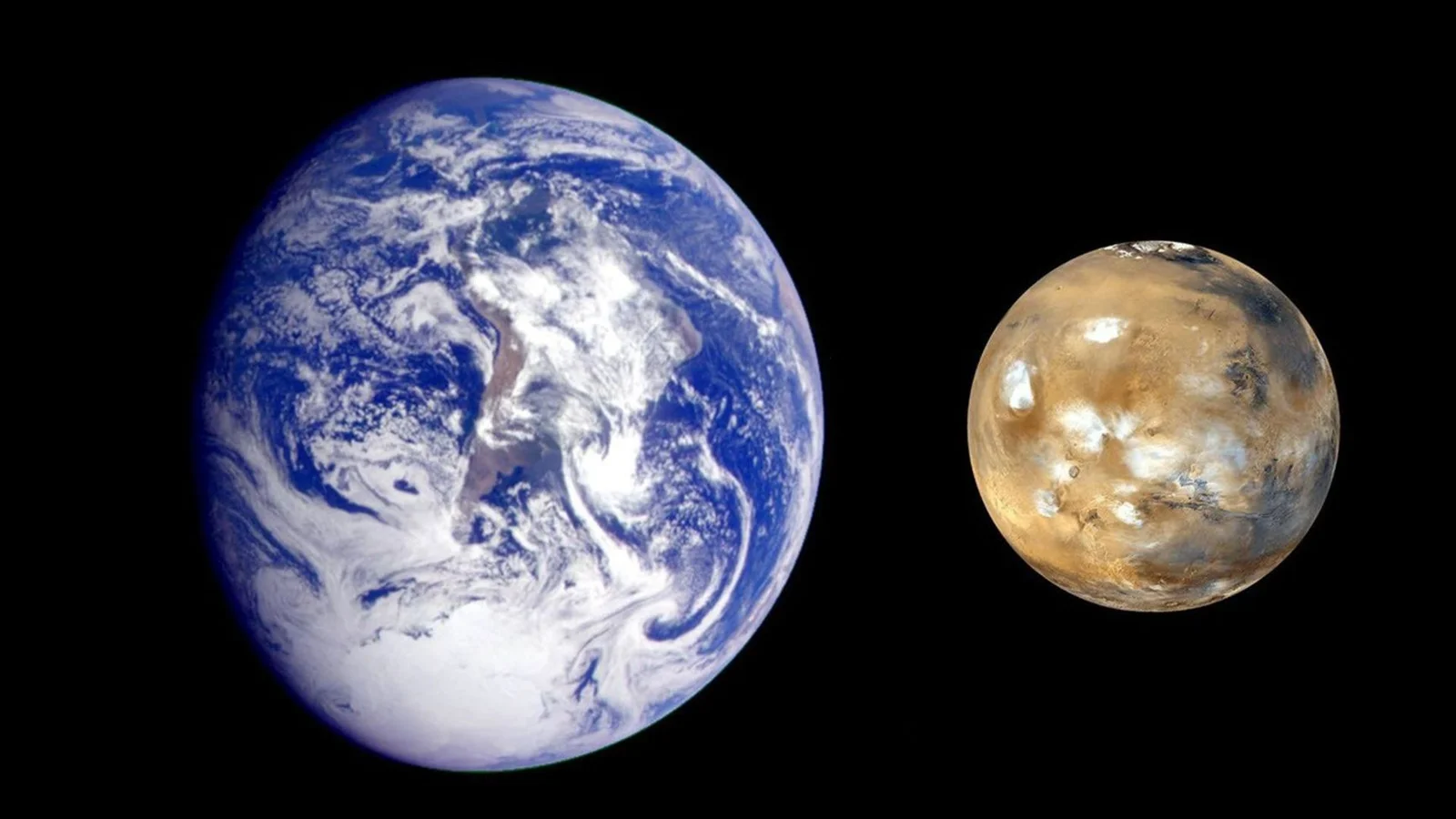
Recent research suggests that Mars influences Earth's climate through its gravitational pull, affecting climate cycles, ice ages, and seasonal variations, highlighting a more interconnected planetary relationship than previously understood.
On July 3, 2025, Earth will reach its farthest point from the Sun, called aphelion, at about 152 million kilometers away, but this distance does not determine seasons, which are caused by Earth's axial tilt. The Earth's orbit is elliptical and influenced by gravitational forces from planets like Jupiter and Saturn, causing cyclical changes over thousands of years. Currently, Earth's orbit is nearly circular, affecting the length of seasons, with summer in the Northern Hemisphere being slightly longer than winter.
Scientists have discovered a previously undetected 2.4-million-year cycle in deep sea currents, linked to global warming and cooling driven by the gravitational interaction between Earth and Mars. This cycle affects the amount of sunlight Earth receives and has an impact on climate. By analyzing sedimentary sequences from over 200 drill sites, researchers identified hiatus cycles over the past 65 million years, showing that the vigor of deep-sea currents fluctuates in 2.4 million year cycles coinciding with changes in the shape of Earth's orbit. The findings suggest that more intense deep-ocean eddies may counteract potential ocean stagnation in a warming world, and the interaction between Earth-Mars astronomical influence and human-driven global warming will depend on future greenhouse gas emissions.
The relationship between the sun and Earth plays a major role in our planet's climate. The Maunder minimum, a period of low sunspot activity, coincided with the Little Ice Age, suggesting a connection. Earth's position relative to the sun, influenced by cycles known as the Milankovitch cycles, affects the length and magnitude of seasons. Ice core samples reveal a tight connection between glaciation periods and reduced sunlight in the northern latitudes. However, human carbon emissions have overridden the natural cooling period predicted by the Milankovitch cycles.
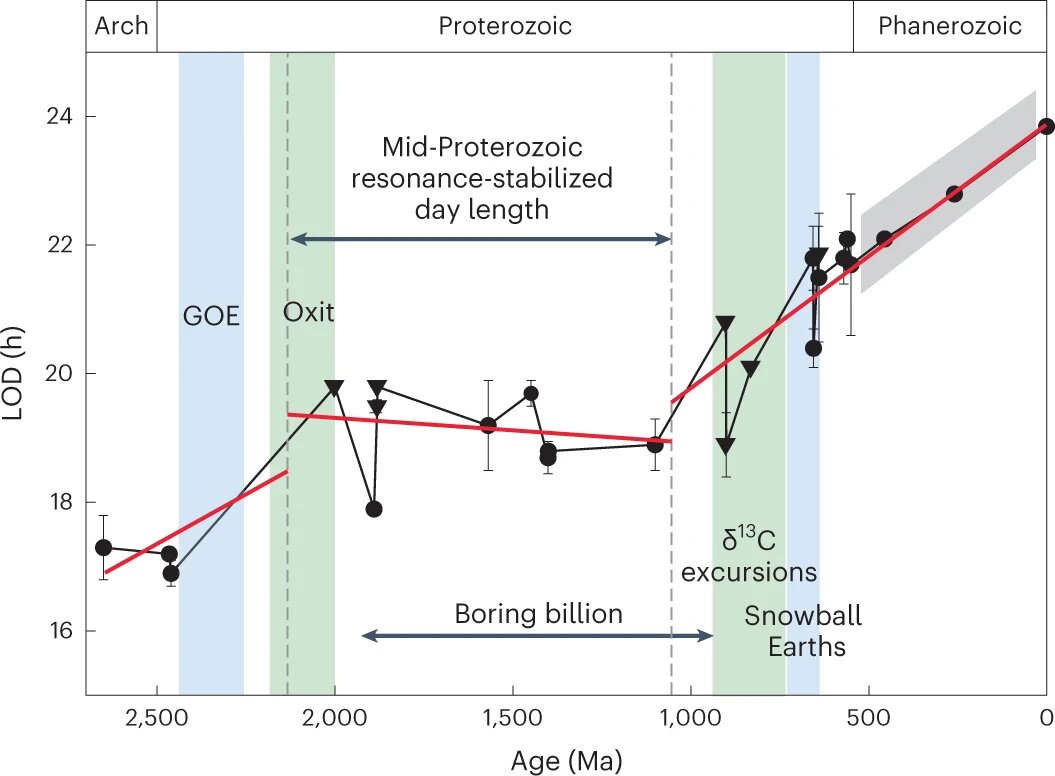
Earth's day length may have stalled at about 19 hours for about a billion years, according to a study published in Nature Geoscience. This period of stable day length intriguingly coincides with two significant rises in atmospheric oxygen, suggesting Earth's rotation may have affected its atmospheric composition. The study supports the idea that Earth's rise to modern oxygen levels had to wait for longer days for photosynthetic bacteria to generate more oxygen each day.
A new study published in Nature Geoscience reveals that Earth's day length stalled at about 19 hours roughly between two to one billion years ago, commonly referred to as the "boring" billion. The timing of the stalling intriguingly lies between the two largest rises in oxygen, suggesting that the evolution of Earth's rotation could have affected the evolving composition of the atmosphere. The study supports the idea that Earth's rise to modern oxygen levels had to wait for longer days for photosynthetic bacteria to generate more oxygen each day.
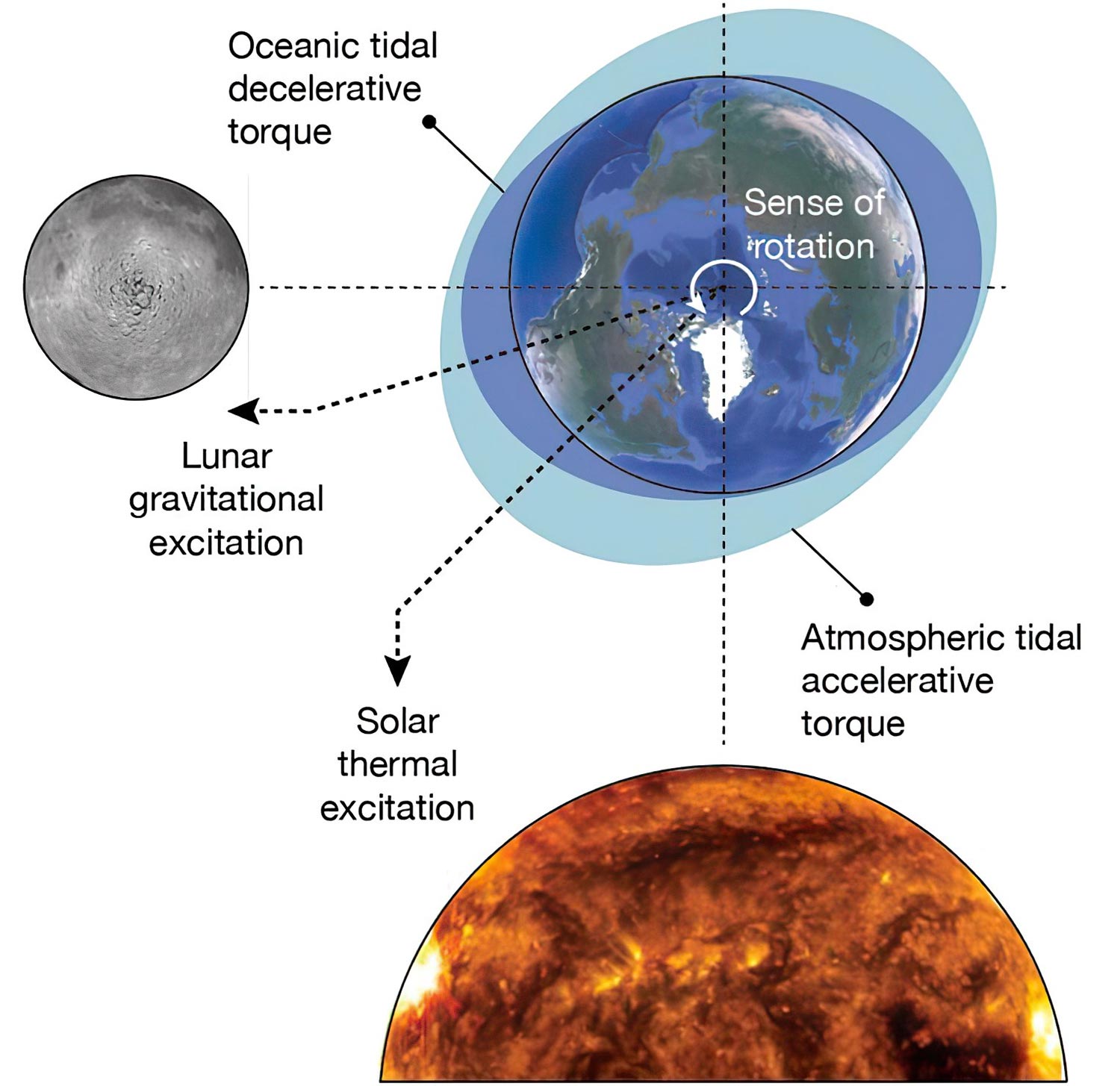
The length of the Earth's day may have stopped getting longer for a billion-year period starting two billion years ago, due to changes in the atmosphere affecting the Sun's tides. The Moon's force may have been so small that the Sun completely canceled it out, and this would have required a more powerful solar influence, which the authors attribute to the composition of the atmosphere at the time, when oxygen levels were low but ozone was high. The study used 600-million-year-old sedimentary rock preserving Milankovitch cycles to detect the length of the Earth's ancient day.