Tag

Day Length

All articles tagged with #day length

scienceenvironment1 year ago

Climate Change Slows Earth's Spin, Lengthens Days

A new study reveals that human-caused climate change is melting polar ice, altering Earth's rotation, and lengthening days by milliseconds. This change, driven by the redistribution of meltwater from poles to the equator, is expected to accelerate, impacting technologies like GPS. The study highlights the profound influence of climate change on Earth's natural processes, potentially surpassing the moon's effect on day length.

science2 years ago

Moon's Drift Causes Longer Days, Study Reveals

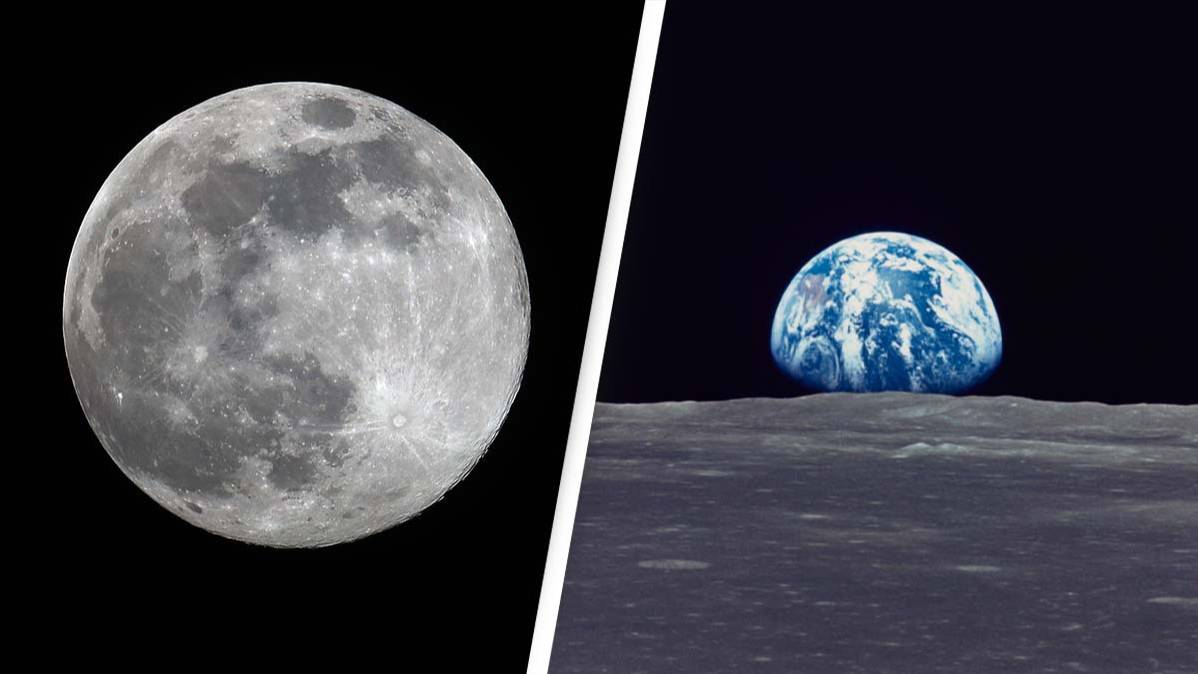
A new study by researchers at the University of Wisconsin-Madison has found that the moon's gradual drift away from the Earth is causing the length of a day to increase. The weakening gravitational pull between the two celestial bodies has resulted in the Earth spinning slower, allowing the moon to slowly move away at a rate of 3.82 centimeters per year. This small drift means that in 200 million years, a day on Earth will have increased from 24 hours to 25. Scientists also believe that 1.4 billion years ago, a day on Earth lasted just 18 hours due to the moon's closer proximity. The study used astrochronology to study ancient geological time scales and gain insights into the past of our solar system.

science-and-technology2 years ago

"Unveiling the Gravitational Forces that Saved us from 60-Hour Days"

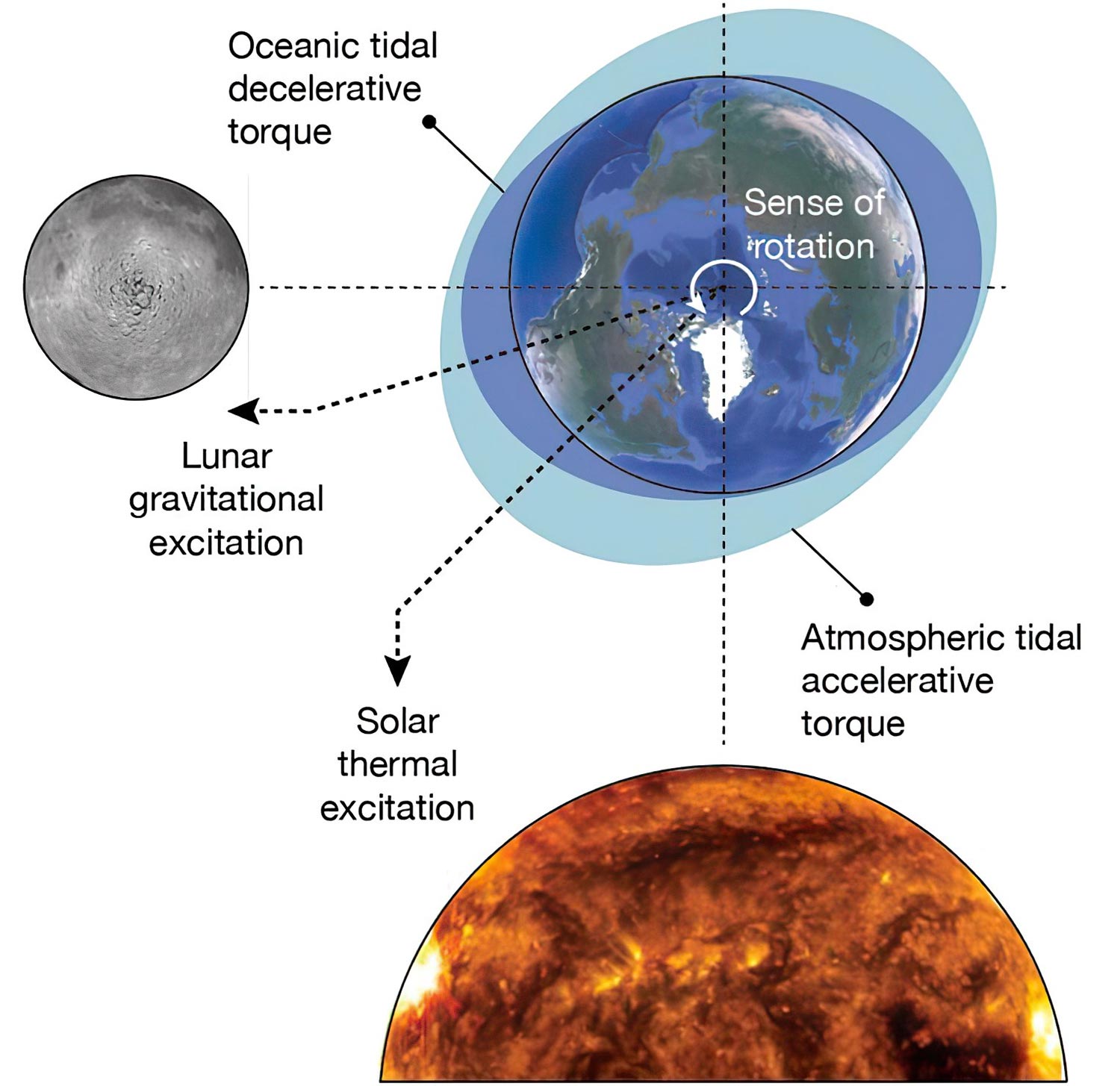
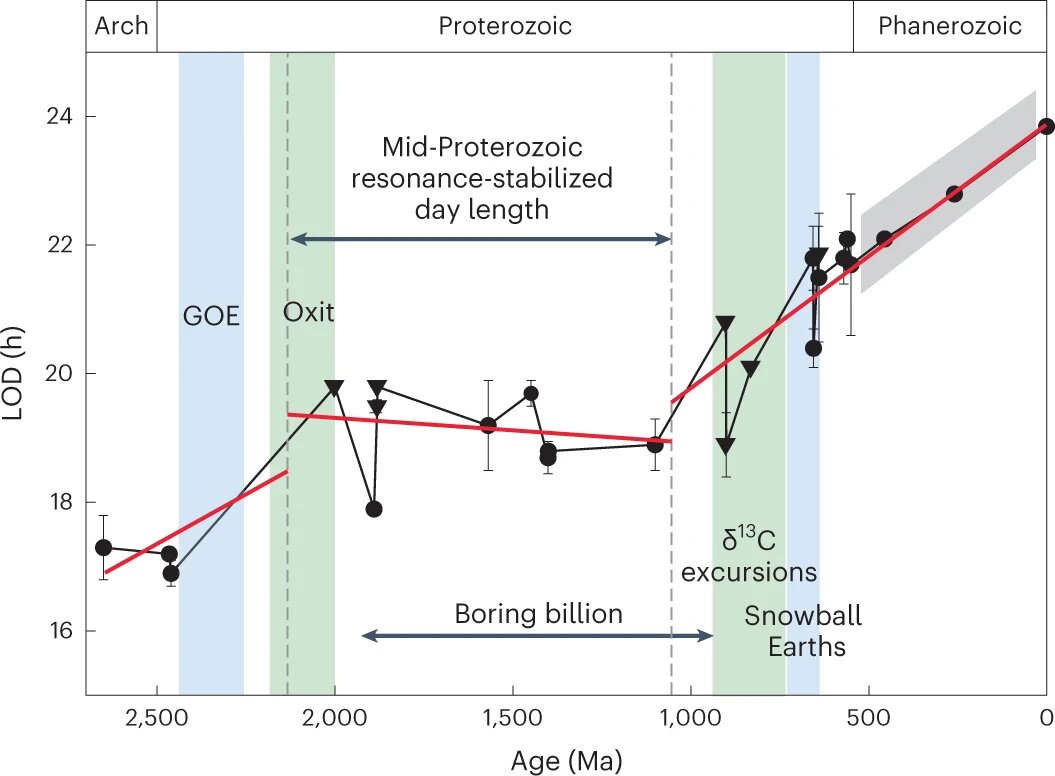
Earth's rotation has been influenced by tidal forces from the Moon and the Sun, gradually lengthening our days over billions of years. However, from 2 billion to 600 million years ago, various tidal forces canceled each other out, keeping Earth's rotation at a consistent speed and resulting in days that were approximately 19.5 hours long. This period of stasis ended 600 million years ago, and our present 24-hour days are a result of the resonance between Earth's rotation and atmospheric waves. Rising temperatures due to global warming may disrupt this resonance and further lengthen our days.

earth-science2 years ago

Earth's 19-hour days and the origin of water.

Earth's day length may have stalled at about 19 hours for about a billion years, according to a study published in Nature Geoscience. This period of stable day length intriguingly coincides with two significant rises in atmospheric oxygen, suggesting Earth's rotation may have affected its atmospheric composition. The study supports the idea that Earth's rise to modern oxygen levels had to wait for longer days for photosynthetic bacteria to generate more oxygen each day.

science2 years ago

Earth's Day Stalled at 19 Hours for a Billion Years, Scientists Explain How.

A new study published in Nature Geoscience suggests that the length of a day on Earth stalled at a constant value of about 19 hours for a billion years, one to two billion years ago, due to the sun speeding up the planet's rotation, which canceled out the tidal pull of the moon. This stalling may have been instrumental in allowing plants enough time to photosynthesize and thrive on Earth, leading to a surge in oxygen levels in the planet's atmosphere. The study used cyclostratigraphy to add long-term astronomical cycles to the mix and calculate the paleorotation of Earth.

science2 years ago

Earth's Days Were Only 19 Hours Long for a Billion Years, Study Finds.

A new study published in Nature Geoscience reveals that Earth's day length stalled at about 19 hours roughly between two to one billion years ago, commonly referred to as the "boring" billion. The timing of the stalling intriguingly lies between the two largest rises in oxygen, suggesting that the evolution of Earth's rotation could have affected the evolving composition of the atmosphere. The study supports the idea that Earth's rise to modern oxygen levels had to wait for longer days for photosynthetic bacteria to generate more oxygen each day.