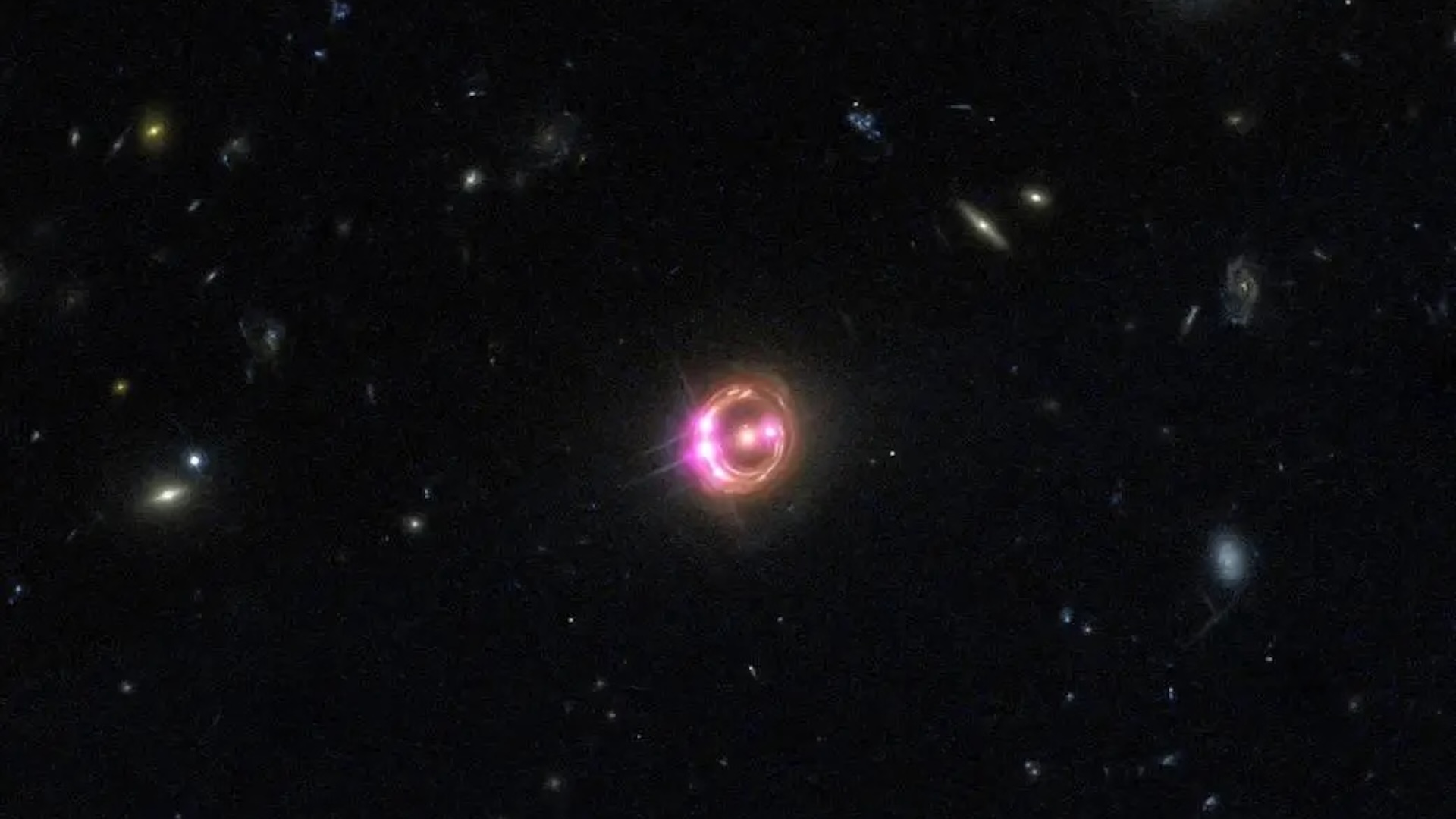
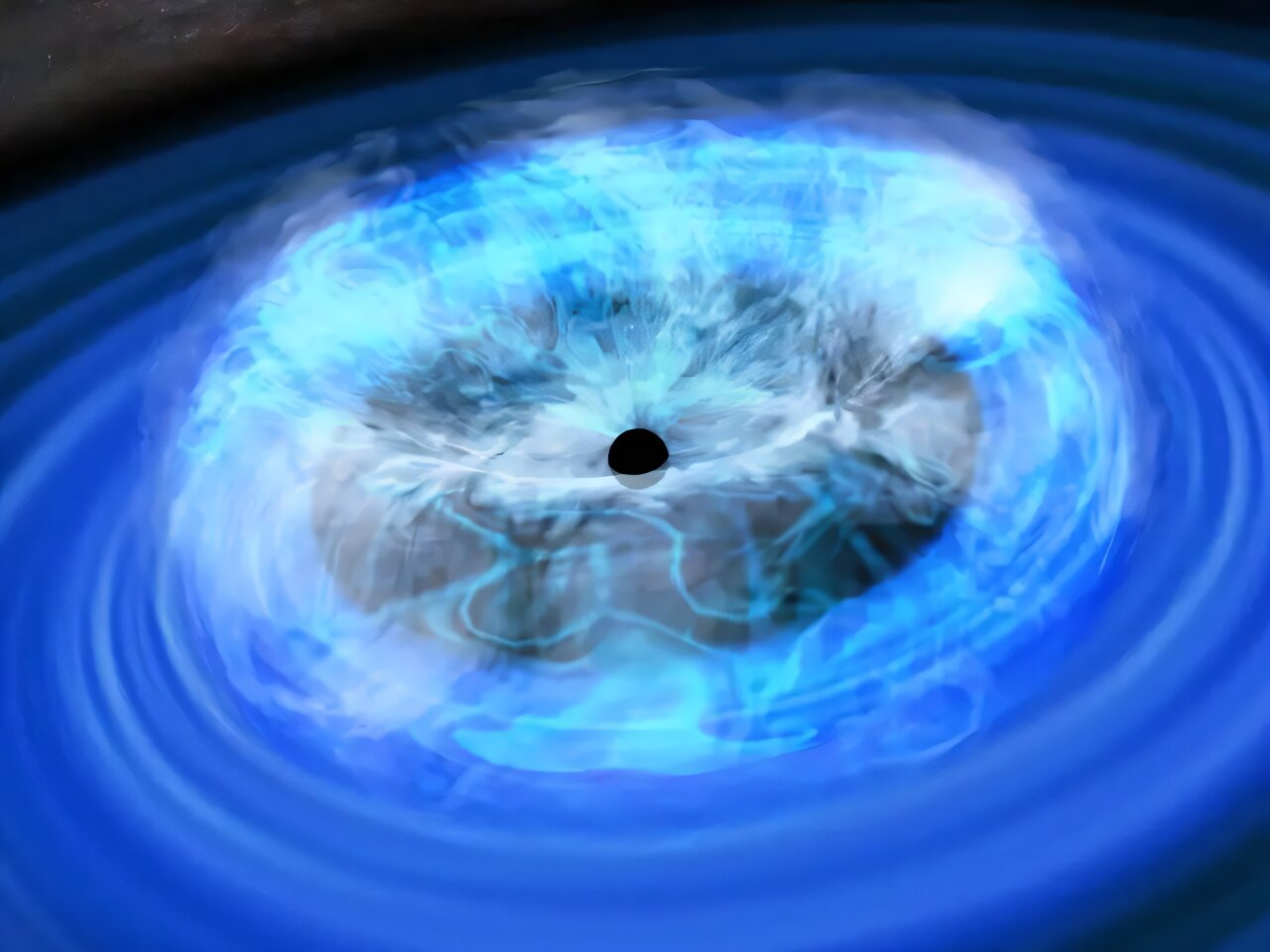
Astronomers used a rare 'double zoom' gravitational lensing technique to directly measure the size of a black hole's corona, revealing it to be about the size of our solar system, and opening new avenues for studying black hole environments.
An international team of astronomers discovered that millimeter radiation is generated close to the core of a supermassive black hole by using accidental double zoom via microlensing and macrolensing, revealing new insights into the conditions near black holes.
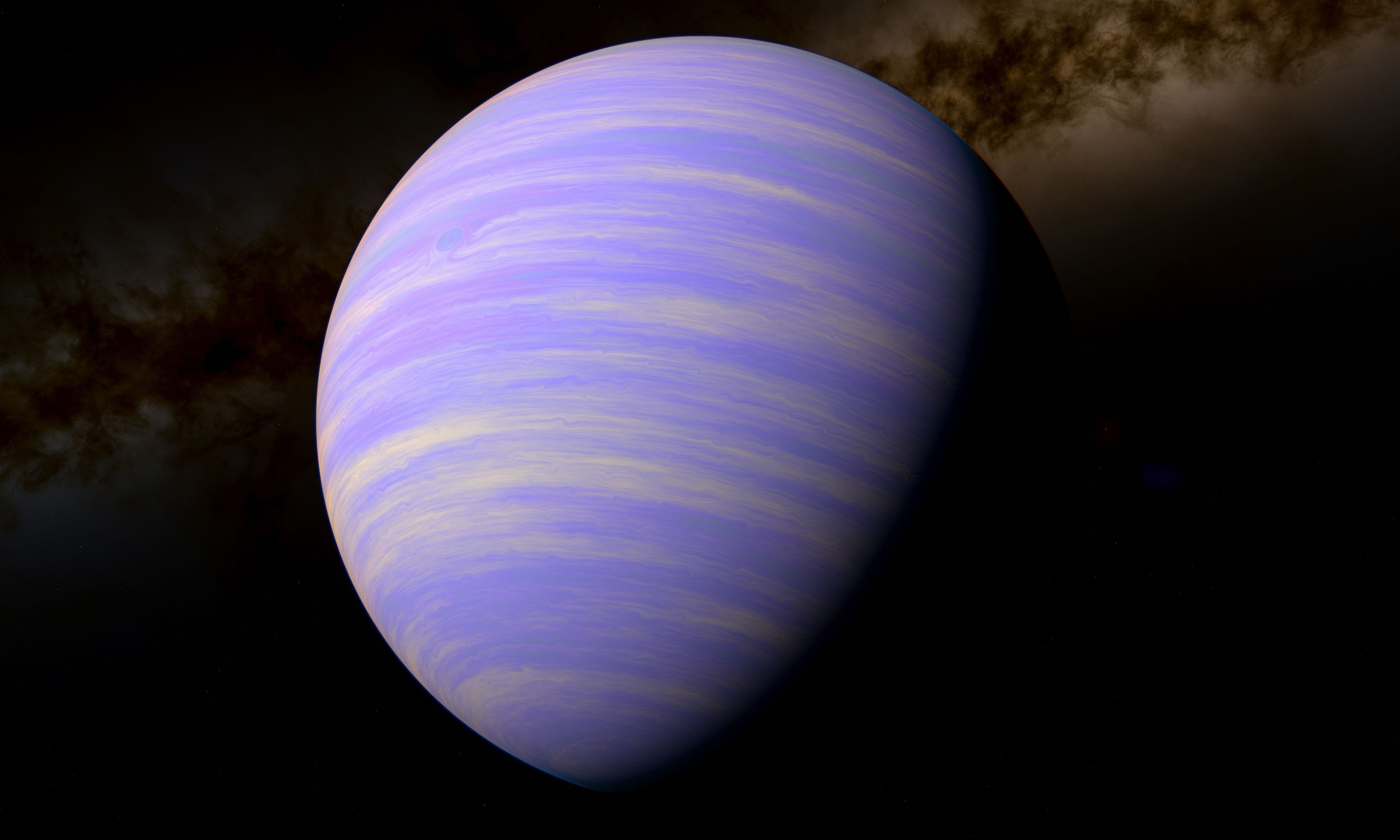
Scientists used Einstein's predicted space-time phenomenon, microlensing, to discover a rare Jupiter-sized exoplanet, AT2021uey b, at the edge of the Milky Way, highlighting the method's ability to detect invisible bodies and expanding our understanding of planetary formation in unlikely regions.
Scientists used Einstein's predicted space-time phenomenon, microlensing, to discover a rare Jupiter-sized exoplanet, AT2021uey b, at the edge of the Milky Way, highlighting the method's ability to detect invisible celestial bodies in distant, sparse regions of our galaxy.
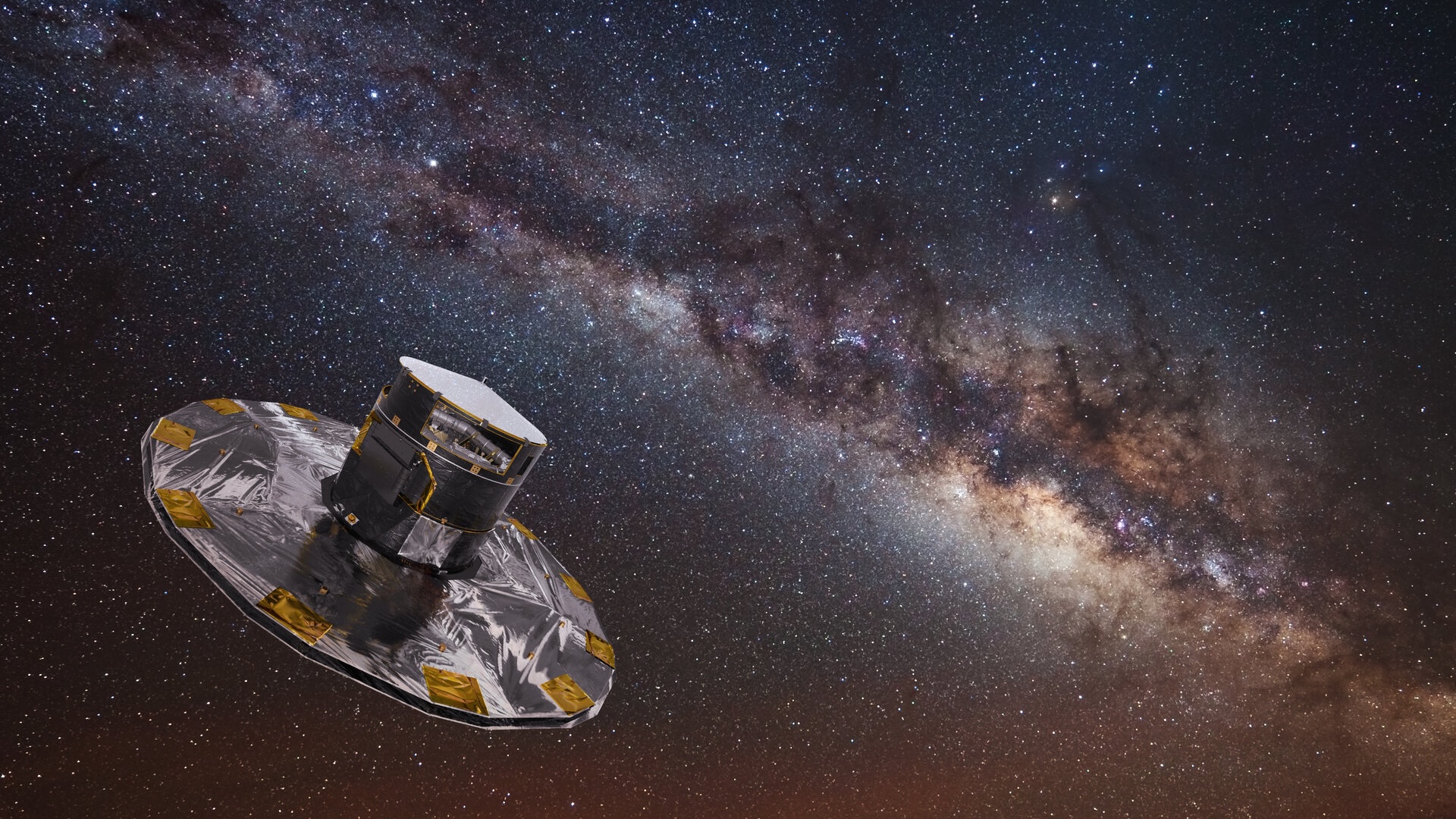
A team of astronomers used gravitational microlensing, a technique based on Einstein's 1936 theory, to discover a rare gas giant exoplanet, AT2021ueyL b, located over 3,200 light-years away in the galactic halo, marking only the third such discovery outside the Milky Way's dense center. This method allows detection of distant, cold planets in wide orbits, providing valuable insights into planetary formation in metal-poor regions. The discovery was facilitated by Gaia satellite alerts and ground-based telescopes, and it highlights the potential of upcoming missions like the Nancy Grace Roman Space Telescope to vastly expand our understanding of exoplanets.
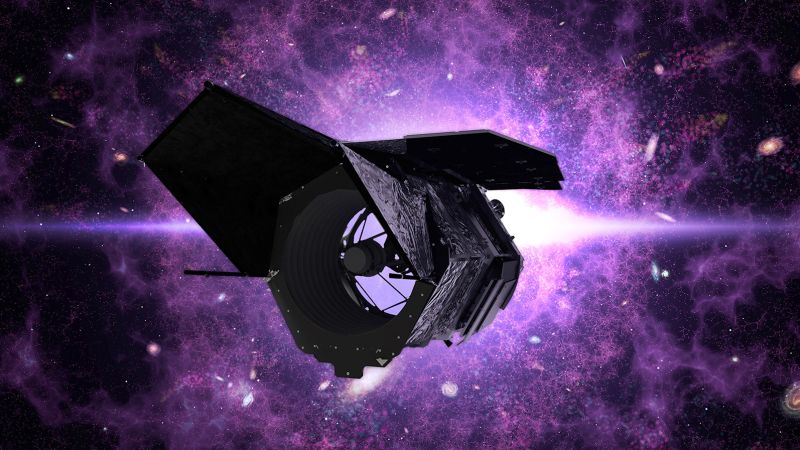
The smallest known planet is Kepler 37-b, discovered in 2013 by scientists using data from the Kepler space telescope. It is smaller than Mercury and about the same size as Earth's moon, orbiting the star Kepler-37. While it shares some similarities with Mercury, its status as a planet is debated due to differences in the definition of a planet for exoplanets. Scientists are now looking to the Nancy Grace Roman Space Telescope, scheduled for launch by May 2027, to find even smaller exoplanets using a technique called microlensing.
NASA's upcoming Nancy Grace Roman Space Telescope, set to launch between October 2026 and May 2027, could potentially detect 400 Earth-mass rogue planets, shedding light on the formation and evolution of planetary systems. Two new studies suggest that rogue planets are six times more abundant than star-orbiting planets in our galaxy. The telescope's wide field of view and sharp vision will allow for detailed study of these objects, and its improved capabilities are expected to discover around 2,600 exoplanets across the Milky Way. Roman's coronagraph will directly image exoplanets, capturing details of planets that are 10 billion times fainter than their stars.
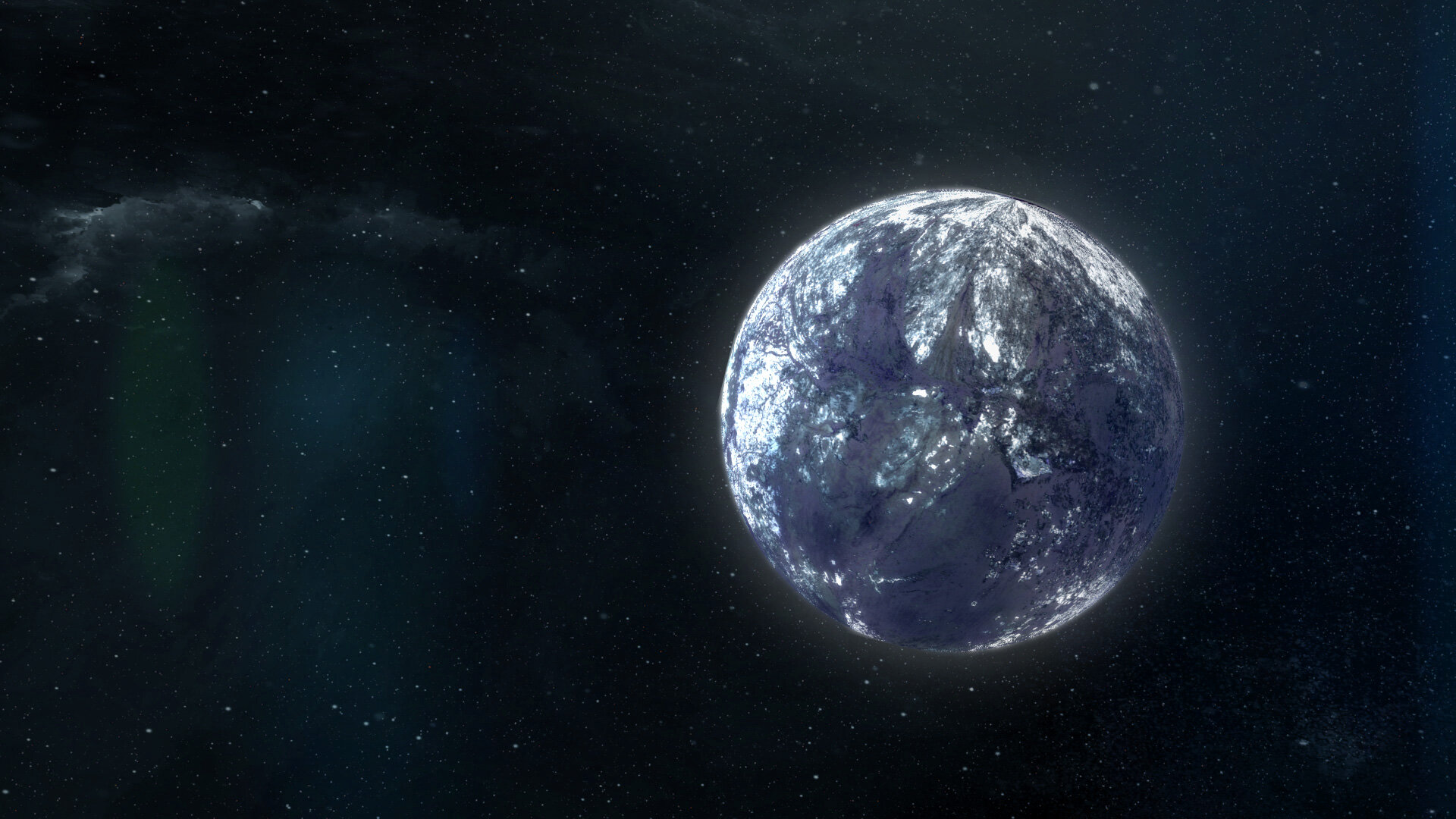
A new study by NASA and Osaka University suggests that there are far more rogue planets, which drift through space without orbiting a star, than planets that orbit stars. The study estimates that there could be trillions of rogue planets in our galaxy, with the potential for NASA's upcoming Roman Space Telescope to discover around 400 Earth-mass rogue worlds. The research is based on a nine-year survey using microlensing observations, which revealed the second discovery of an Earth-mass rogue planet. The findings also indicate that Earth-size rogue planets are more common than larger ones, providing insights into planetary formation mechanisms. The Roman Space Telescope, set to launch by May 2027, will significantly expand the search for these hidden worlds.