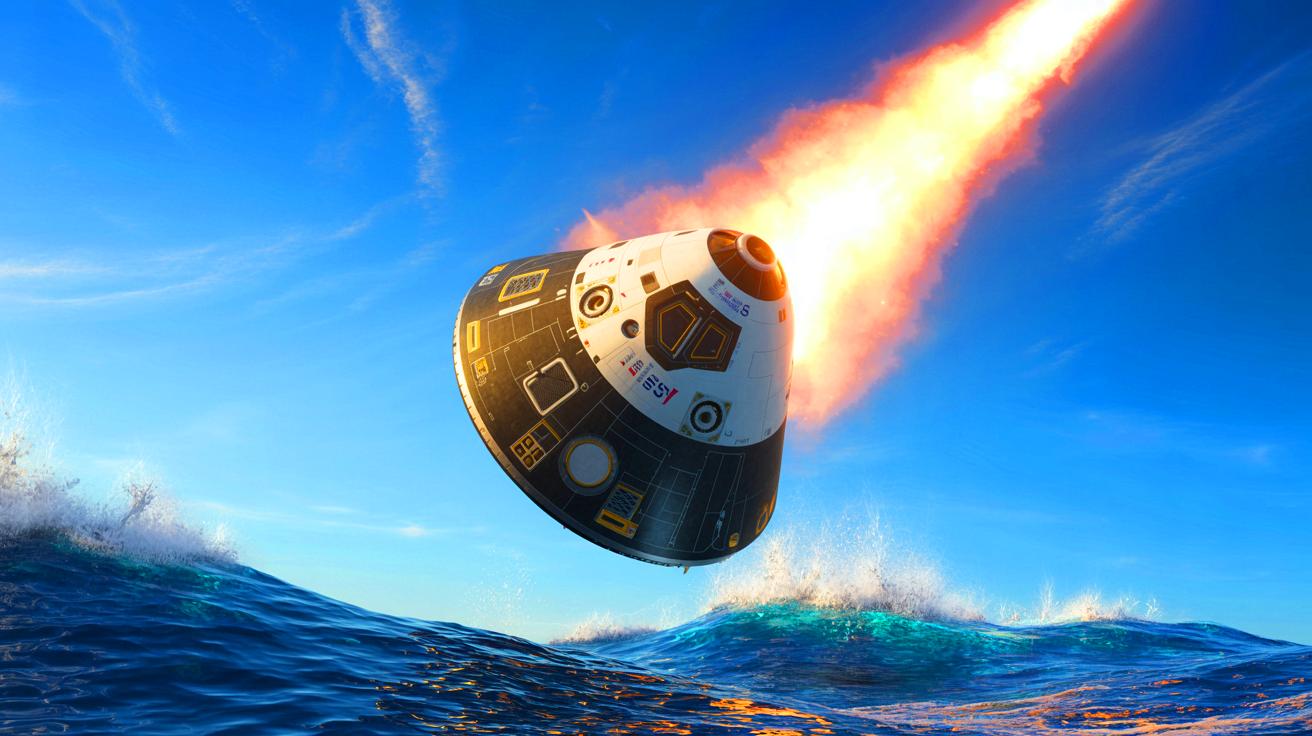
The Exploration Company's Nyx capsule, carrying human remains and cannabis seeds for scientific research, failed to safely reenter Earth after reaching orbit, resulting in the loss of cargo in the Pacific Ocean. Despite the setback, the mission aimed to study microgravity effects on plants and expand commercial space activities, highlighting both the potential and risks of private space ventures.
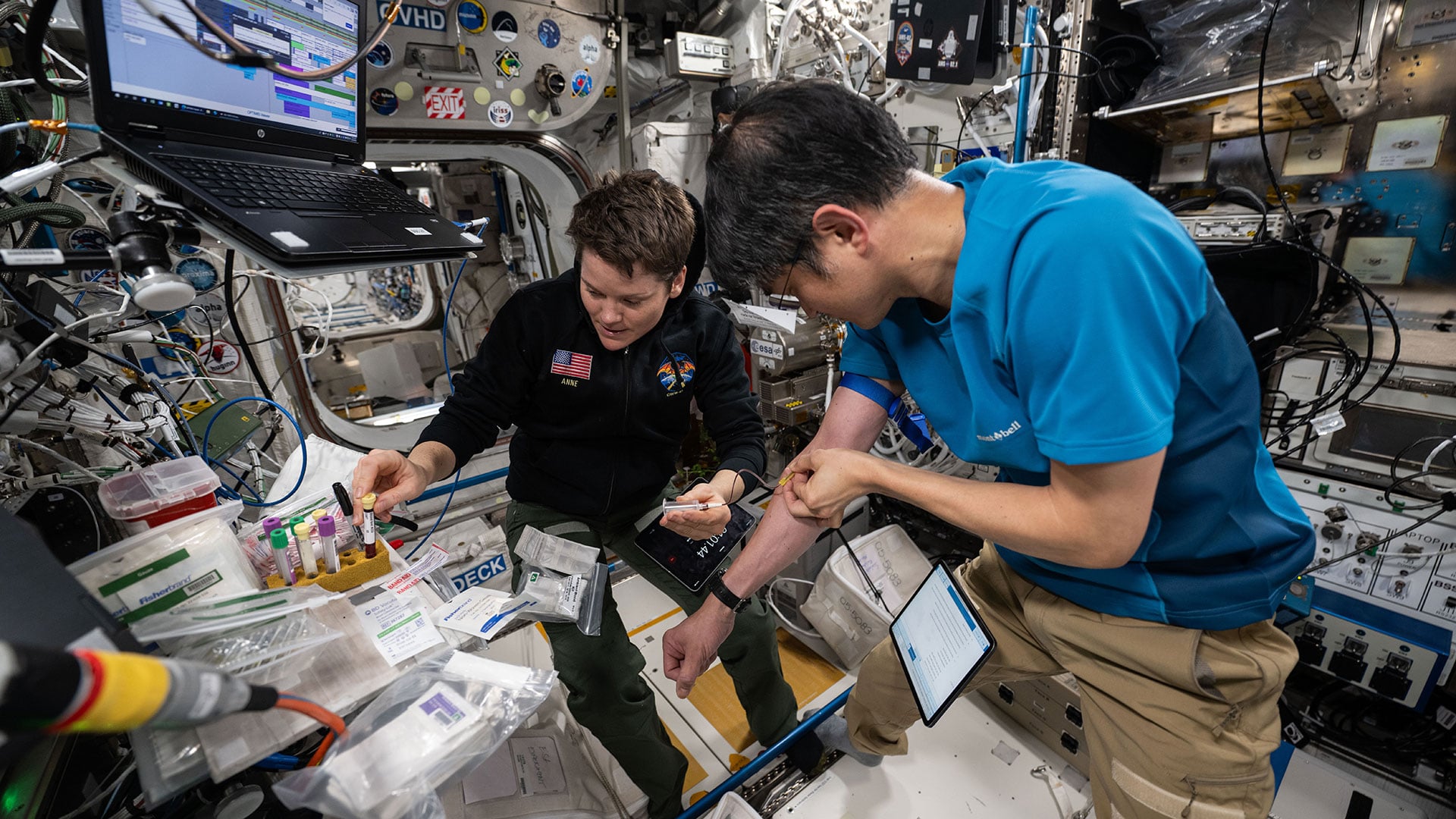
Astronauts aboard the ISS observed Canadian wildfire smoke affecting North America, conducted various scientific experiments including health monitoring and fire behavior studies, maintained station systems, and prepared for the arrival of a new crew on a SpaceX mission led by Peggy Whitson.
Varda Space Industries secures $90 million in Series B funding following the successful return of its first drug manufacturing capsule from orbit, marking a significant milestone for the company. The startup, founded by Delian Asparouhov and Will Bruey, aims to commercialize microgravity research for pharmaceutical crystallization, leveraging low-cost rideshare launches and innovations in satellite bus manufacturing. With a focus on pharmaceuticals, Varda plans to scale its missions, drive down mission costs, and improve processing capabilities for on-board pharmaceutical reactors, with a handful of contracts already in place and the next manufacturing mission set to launch later this year.
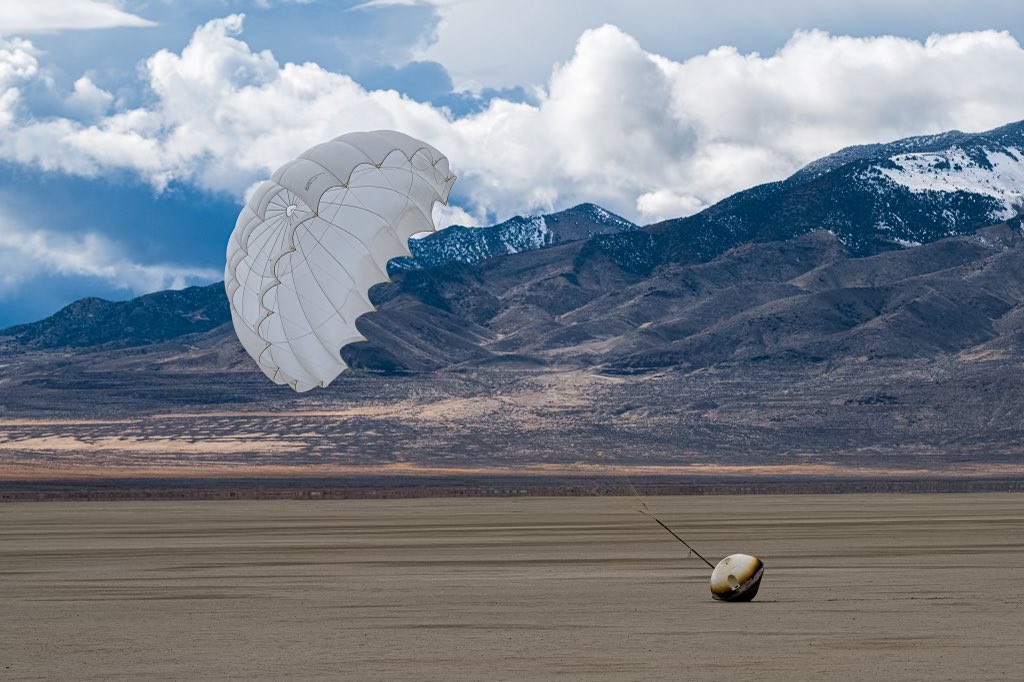
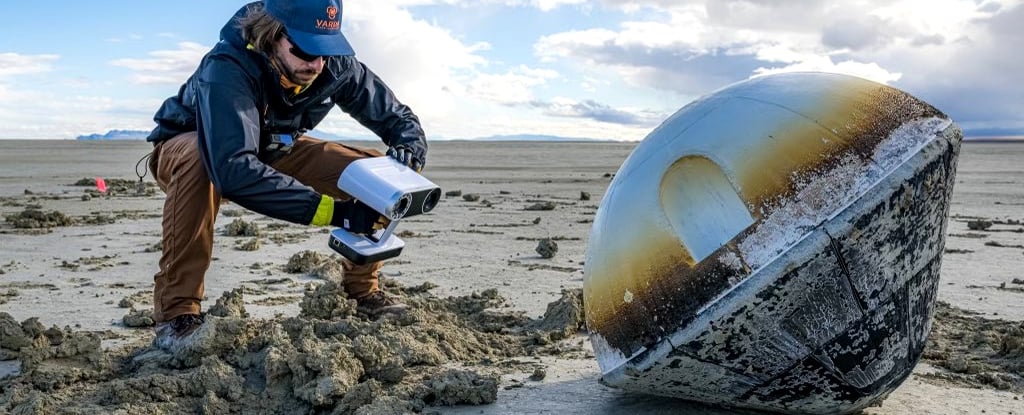
Varda Space Industries' W-1 mission capsule, carrying antiviral drugs grown in microgravity, has returned to Earth from Low Earth Orbit. The company aims to develop pharmaceuticals and other products in space and return them to Earth via their proprietary reentry capsules, taking advantage of the declining cost of sending payloads to space. The drugs will undergo post-mission analysis, and the company is preparing for its second launch this summer, continuing its efforts in space manufacturing and microgravity research.
Japan's SLIM lunar lander successfully touched down on the moon, making Japan the fifth country to achieve this feat, although its solar cells are not generating electricity. Axiom Space launched its third private mission with SpaceX, aiming to continue flying private missions to the International Space Station at a pace of around two missions per year through 2026. NASA's Commercial Lunar Payload Services program embraces risk-tolerance, as seen with Astrobotic's Peregrine lander, and 32 years ago, the first International Microgravity Laboratory was launched by NASA.
Taylor Wang, a Chinese-born American physicist, became the first person of Chinese ethnicity to fly into space on the STS-51-B mission in 1985 as a payload specialist. He had developed the "Drop Dynamics Module" experiment to study the behavior of droplets in zero gravity. When the experiment failed to work in orbit, Wang's desperation led him to say he wouldn't return if not given a chance to repair it. This incident sheds light on the challenges faced by non-NASA astronauts and payload specialists during early Space Shuttle missions, highlighting the lasting consequences into the era of commercial spaceflight.
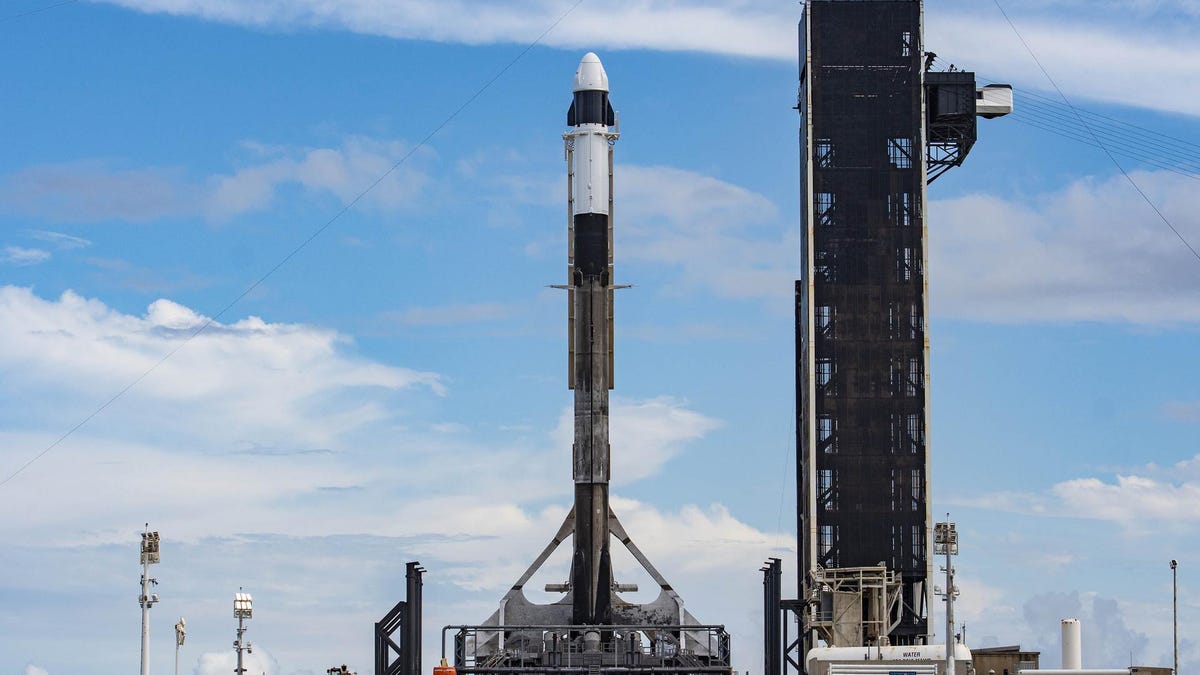
SpaceX is set to launch a Falcon 9 rocket tonight on NASA's 29th commercial resupply mission to the International Space Station. The uncrewed Dragon capsule will deliver over 6,500 pounds of supplies, equipment, and science experiments, including a study on horseshoe crab blood's ability to detect E. coli bacteria in microgravity. The launch has a 95% chance of favorable weather conditions, and the cargo also includes a laser terminal for faster data relay and experiments on reproductive health, water filtration, and respiratory distress syndromes.
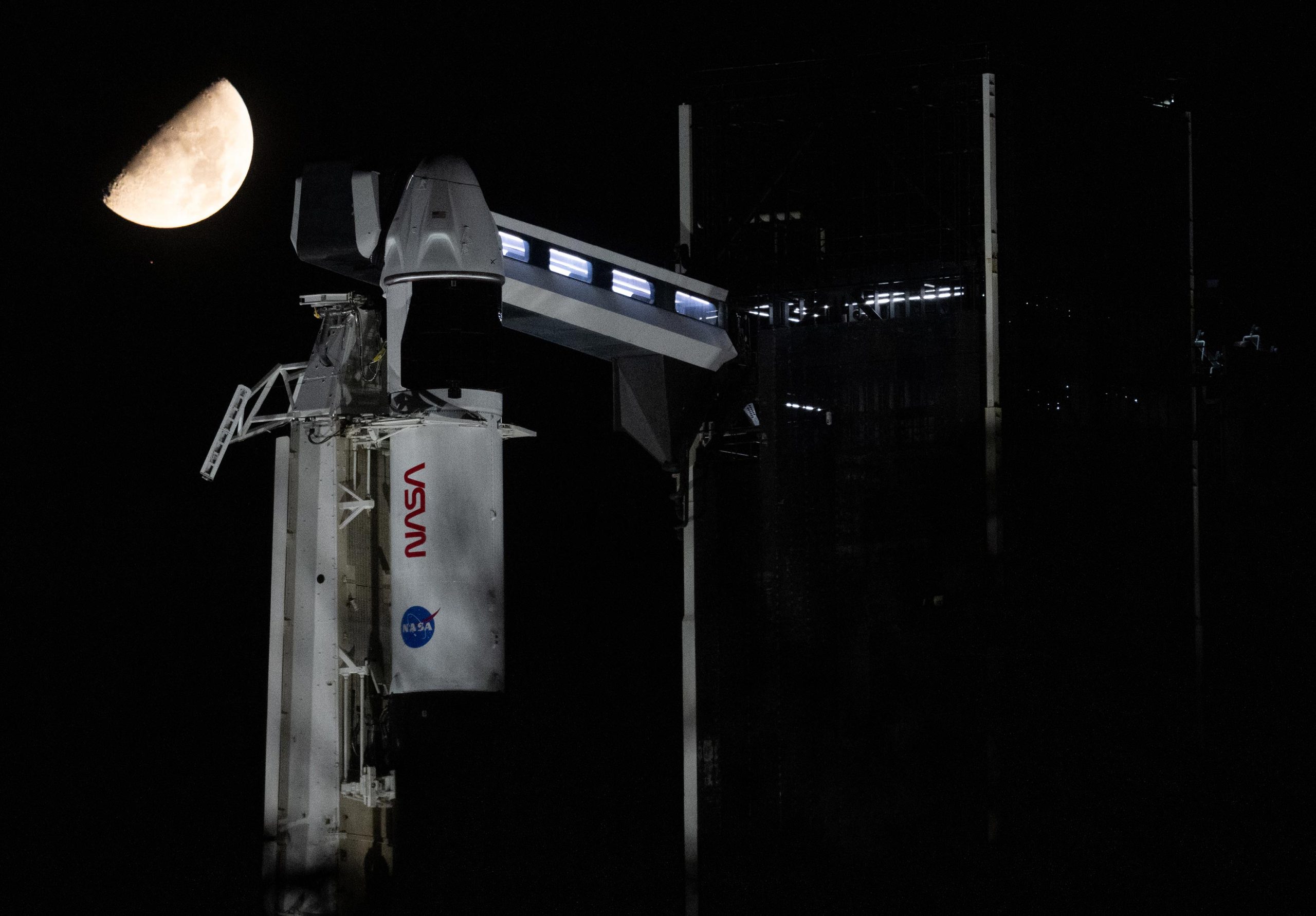
The International Space Station (ISS) received a new cargo craft while the launch of the SpaceX Crew-7 mission was postponed for 24 hours. The crew members of Expedition 69 began unpacking the new cargo and servicing science equipment on the ISS. Meanwhile, the Roscosmos Progress 85 resupply ship successfully docked with the ISS, delivering food, fuel, and supplies. The launch of the SpaceX Dragon Endurance spacecraft, carrying the Crew-7 members, has been rescheduled for the next day to allow for a review of safety and life support systems. The four crew members are set to join the ISS for a six-month microgravity research mission.
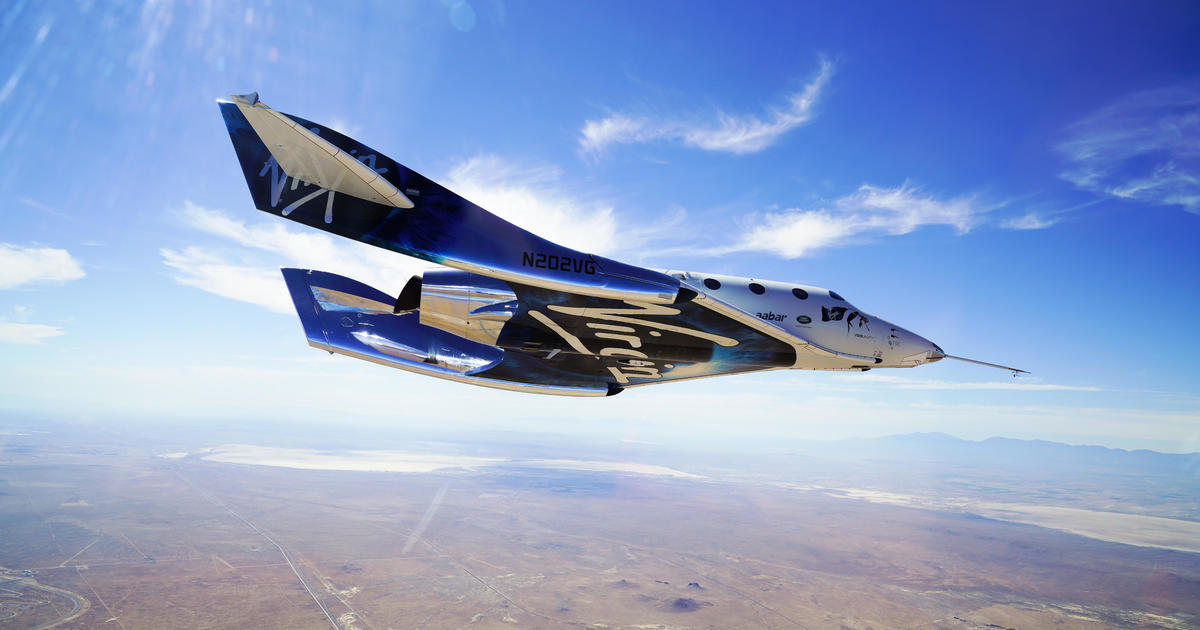
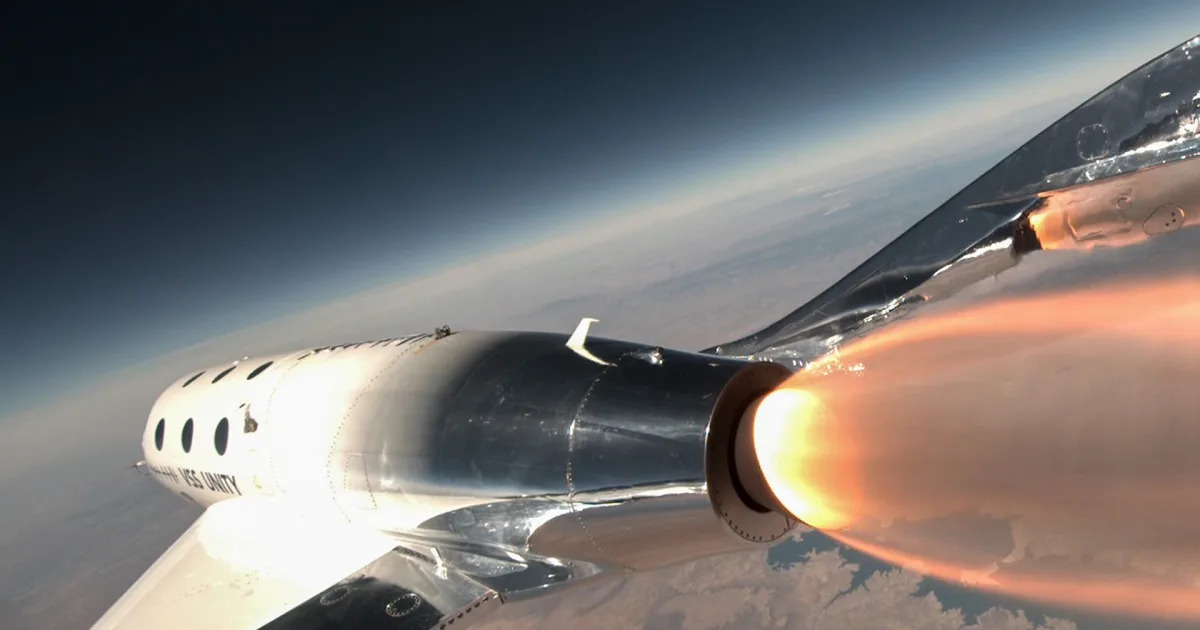
Virgin Galactic has successfully completed its first commercial spaceflight, marking a significant milestone after a decade of development. The VSS Unity spacecraft, launched by the mothership VMS Eve, reached an altitude of approximately 52 miles before landing at the Spaceport America base in New Mexico. The Italian government was the first client, conducting microgravity research during the mission. This achievement is crucial for Virgin Galactic's financial prospects, as the company has faced significant losses in recent years. Its main competitor in the suborbital tourism space race, Blue Origin, has criticized Virgin Galactic's spaceflight experience, while SpaceX offers orbital flights.
Virgin Galactic is set to launch its first commercial flight, "Galactic 01," between June 27 and June 30 with three crew members on board to conduct microgravity research. The company's second commercial flight, Galactic 02, is planned to depart in August, with hopes to launch commercial spaceflights on a monthly basis thereafter. More than 800 tickets for these flights have already been sold, but the cost is steep, with a $10,000 temporary credit card authorization, a $150,000 deposit, and an additional $300,000 payment required before the flight. The venture comes amid a space race between Virgin Galactic and Jeff Bezos' Blue Origin.
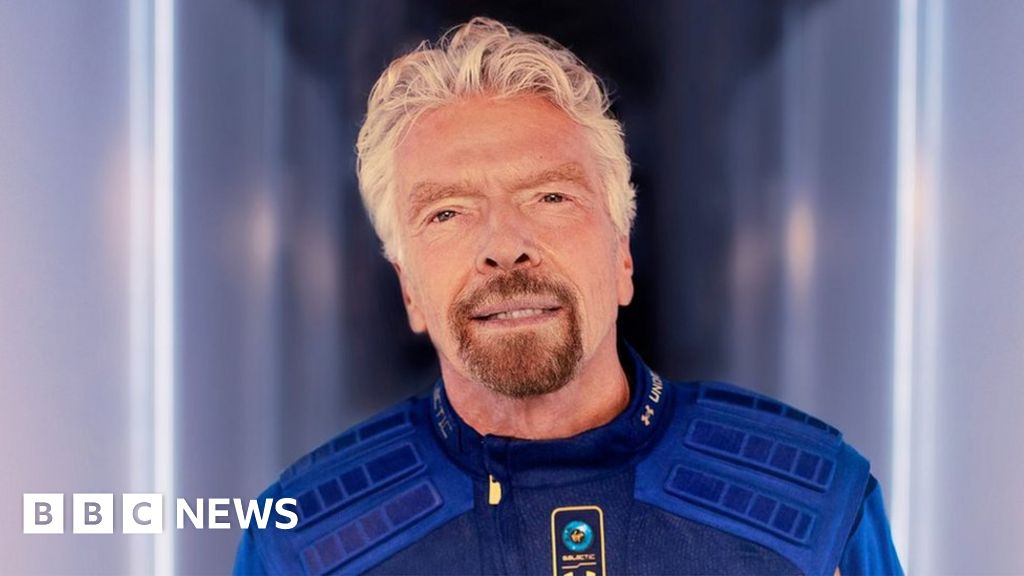
Virgin Galactic, Richard Branson's space tourism company, announced that it will launch its first commercial flight, a scientific research mission, before the end of June. The company expects to operate monthly spaceflights from August onwards. Virgin Galactic has sold over 800 tickets for space tourism, offering passengers views from space and a few minutes of weightlessness at a cost of $450,000 per person. The announcement comes after Virgin Orbit, a separate space firm owned by Branson, shut down in May following a failed mission.
Virgin Galactic has confirmed that its first commercial spaceflight, Galactic 01, will launch between June 27th and June 30th, carrying three people from Italy's Air Force and National Research Council as they conduct microgravity research. The company already has follow-up flights scheduled, with Galactic 02 expected to launch in early August. Virgin has operated at a loss for years, losing more than $500 million just in 2022, but commercial service will give the company a significant source of revenue.
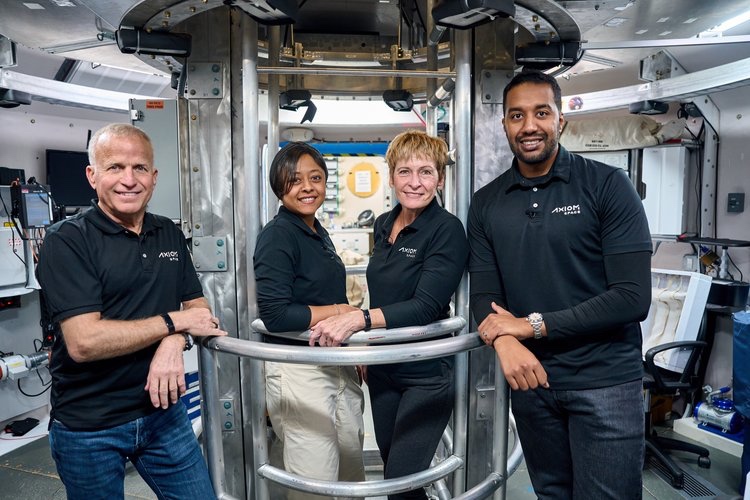
Axiom Space's second private astronaut mission to the International Space Station, Ax-2, is scheduled to launch on May 8 with a crew of four, including two Saudi astronauts. The mission will last for 10 days and will involve microgravity research and educational outreach activities. Axiom plans to add commercial modules to the ISS as precursors to a standalone space station in the late 2020s. The company has signed a mission order with NASA for a third private astronaut mission, Ax-3, scheduled for as soon as November.