Researchers from Dartmouth College have published a study in Nature Neuroscience indicating that the brain may use a "retinotopic" code, which is visual information encoded via the retina, to store memories, challenging the previous belief that the brain converts visual signals into a non-visual format for memory storage. Through fMRI experiments, they found a direct relationship between the brain's sensing and memory areas, with an "opponent suppression" dynamic suggesting a central role for retinotopic coding in memory. This discovery has implications for understanding memory in individuals with different cognitive abilities and could potentially inform treatments for memory-related diseases.
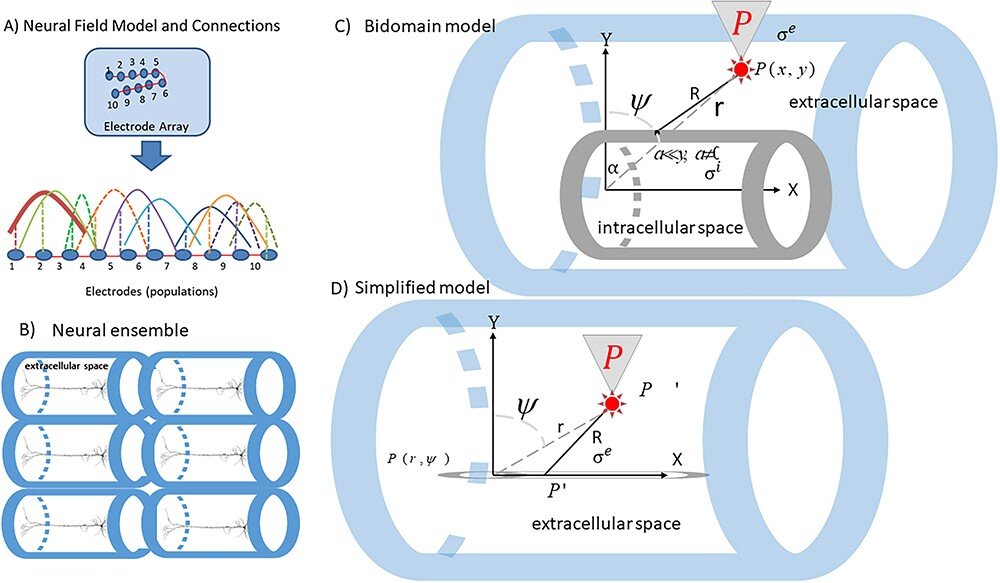
A new study published in Cerebral Cortex suggests that electric fields play a crucial role in coordinating brain circuits and networks involved in memory encoding. The study found that the electric field generated by the underlying electrical activity of neurons coordinated the information across key brain regions during working memory tasks. This electric field appeared to drive neural activity and influence the fluctuations of voltage across neurons' membranes. The findings could have implications for understanding brain-computer interfaces and developing treatments for mental health conditions by manipulating electrical fields to alter faulty circuits.
Electric fields generated by the collective electrical activity of neurons play a crucial role in coordinating information across key brain regions, according to a recent study. These fields, known as ephaptic coupling, influence the spiking of neurons and their signaling to other neurons, ultimately shaping the brain's functional networks. The findings have implications for understanding memory encoding and could impact the development of brain-computer interfaces and brain-controlled prosthetics.