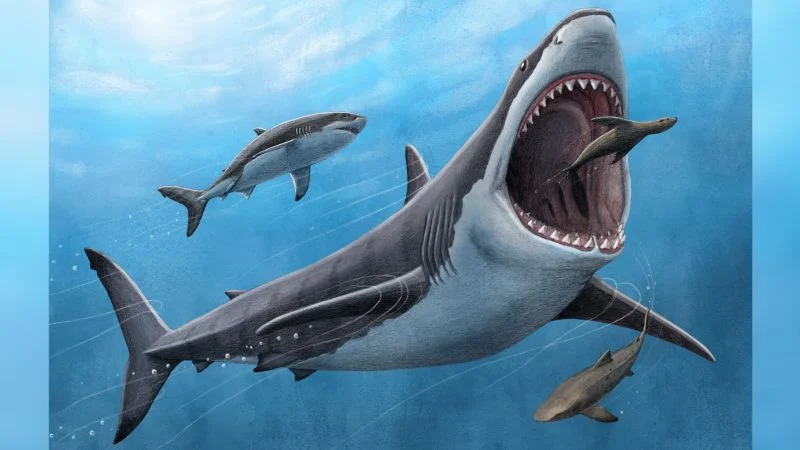
The article highlights five of the largest animals to have ever roamed Earth, including the blue whale, Argentinosaurus, Patagotitan, Megalodon, and Spinosaurus, with the blue whale still existing today as the largest animal, while the others are extinct relics of the past.
New research suggests that the extinct Megalodon shark may have been more slender than previously thought, altering our understanding of its behavior and impact on the ancient ocean ecosystem. Debate over the shark's appearance continues, with some researchers arguing for a longer, more slender body shape based on fossil evidence, while others maintain the traditional depiction as a larger version of the modern great white shark. Understanding Megalodon's biology is crucial for comprehending its role in marine ecosystems and the factors contributing to its extinction millions of years ago.
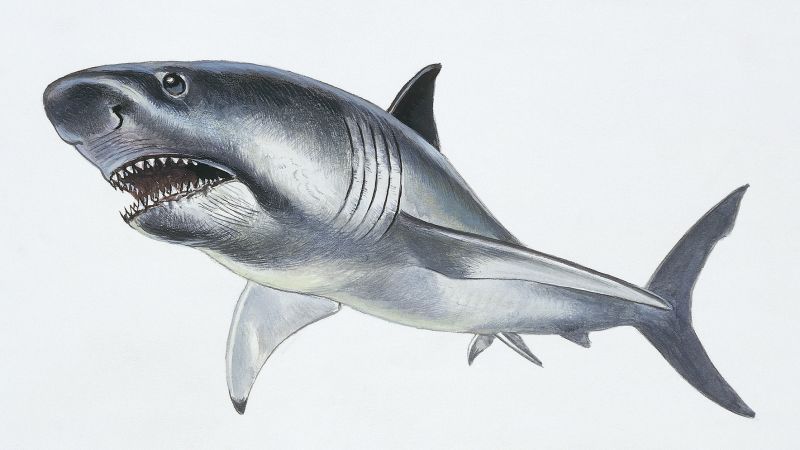
A new study comparing the bones of a great white shark to fossilized vertebrae of the ancient Megalodon suggests that the ancient apex predators may have been longer and more slender than previously believed. This finding could force a reevaluation of how the Megalodon lived and hunted, with implications for its impact on the marine food chain and its eventual extinction. The study's authors propose that the Megalodon's body form was likely slimmer and longer than previously thought, potentially indicating a more expansive digestive canal and less disruptive feeding habits.
Researchers suggest that the megalodon, a gigantic prehistoric shark, may have had a slimmer and more elongated body shape than previously thought, challenging past reconstructions that likened it to a larger great white shark. The study highlights the need for a complete megalodon skeleton to confirm its true size and body form. While some experts argue that the new analysis does not disprove previous hypotheses, the evolving understanding of prehistoric creatures, including the megalodon, underscores the dynamic nature of paleontological research.
A new study reignites the debate over the appearance of the extinct megalodon shark, suggesting it may have been slimmer and longer than previously thought, similar to a mako shark. The study challenges previous findings that depicted the megalodon as a robust, bulky predator akin to a great white shark. The ongoing scientific dispute reflects the fascination with this ancient creature, with experts critiquing each other's studies and offering differing interpretations. Despite the disagreement, the competition between research groups has spurred more in-depth research into ancient ecology and the role of the megalodon in ancient and modern ecosystems.
A new study led by paleobiologist Kenshu Shimada and doctoral candidate Phillip Sternes suggests that megalodons, the prehistoric sharks, had slimmer bodies than previously thought, challenging the previous assumption that they resembled great white sharks. The research, based on a reappraisal of fossil vertebrae found in Belgium, indicates that megalodons would have had leaner bodies, at least compared to modern great white sharks. The study, published in the journal Palaeontologia Electronica, highlights the ongoing mysteries and misconceptions surrounding megalodon biology, as their complete skeletons are rare. Previous research also suggests that the extinction of megalodons around 3.6 million years ago may have been linked to their warm-blooded nature and sensitivity to environmental changes.
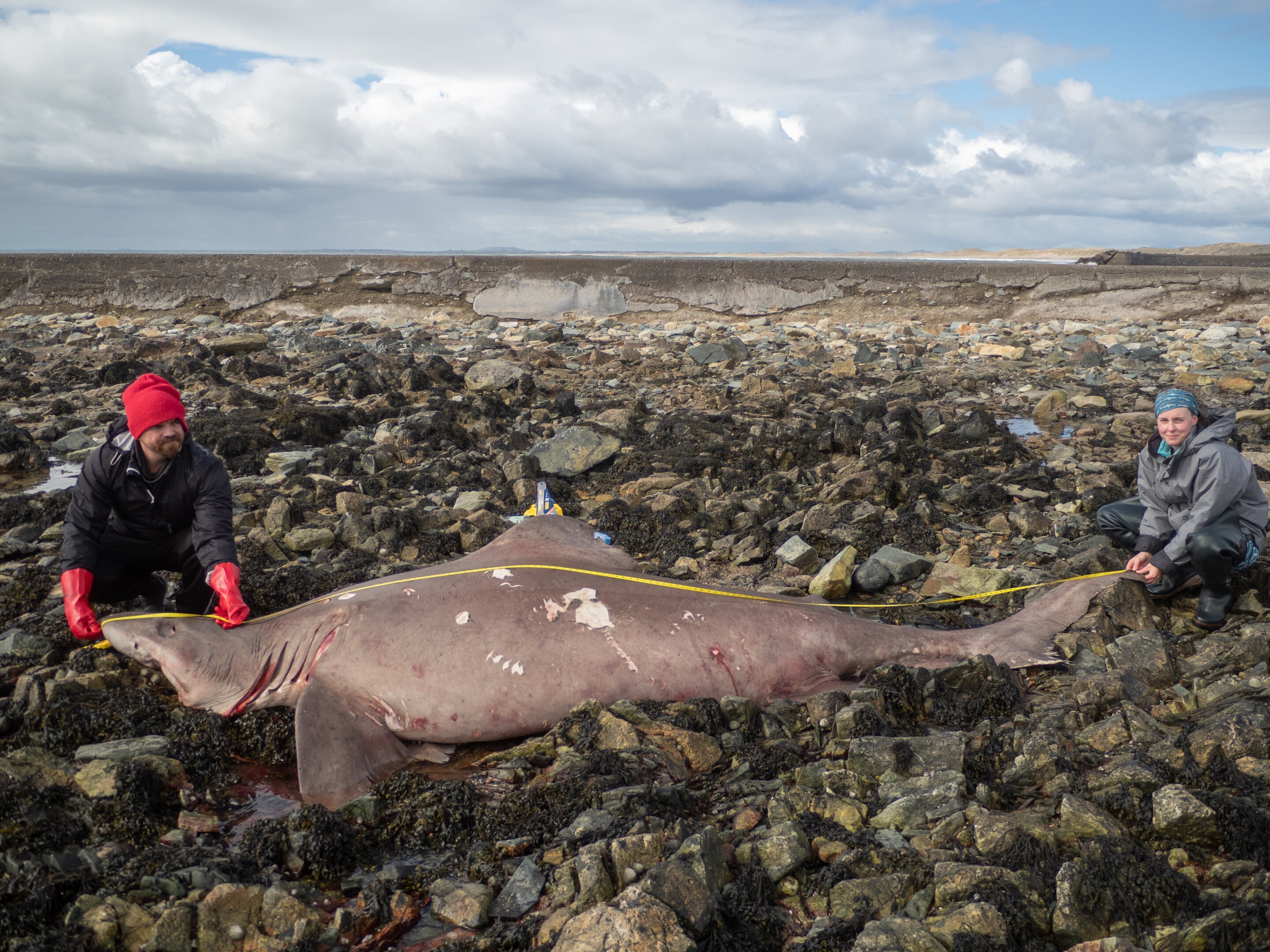
Marine biologists studying shark strandings and autopsies have discovered that there may be more warm-blooded sharks than previously believed. A study led by Trinity College Dublin found that the smalltooth sand tiger shark, which diverged from the extinct megalodon at least 20 million years ago, exhibits anatomical features suggesting it is a regional endotherm. This finding, along with the discovery that basking sharks also possess regional endothermy, raises questions about the evolution of warm-bloodedness and its conservation implications. The researchers believe that warming seas may pose a threat to these warm-bodied shark species, as seen in the extinction of the megalodon.
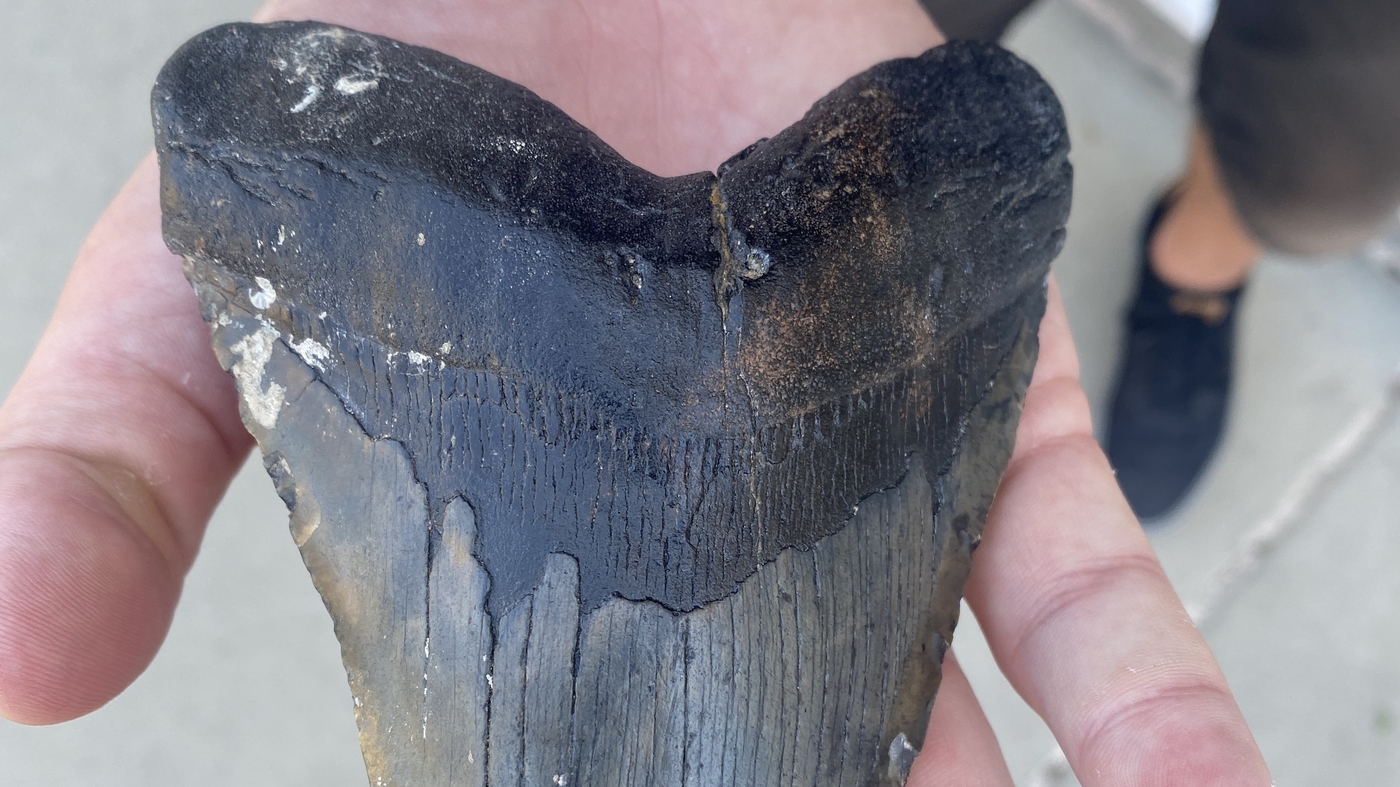
A mother and son found a massive megalodon shark tooth while beachcombing at Cape Lookout National Seashore in North Carolina. The megalodon, an extinct shark species, was estimated to be at least twice the size of a Great White Shark. While rare at Cape Lookout, divers mentioned that Wrightsville Beach in Wilmington is a hot spot for finding megalodon teeth. The megalodon went extinct nearly four million years ago, and its size is determined by tooth size since there are no skeletons.
Scientists have discovered that the megalodon, an extinct shark species, was partially warm-blooded based on an analysis of fossilized teeth. The study suggests that this trait played a role in the shark's massive size and eventual extinction. Megalodons were regionally endothermic, able to regulate temperature in certain parts of their bodies, similar to modern great white and mako sharks. The researchers believe that the need to constantly regulate body temperature may have contributed to the megalodon's downfall as the Earth's temperature cooled. The study highlights the vulnerability of large apex predators, such as the modern great white shark, to climate change.
Analysis of the mineral makeup of megalodon's teeth confirms that the ancient shark was warm-blooded, a trait that likely contributed to its success and eventual extinction. Researchers estimate that megalodon had an average body temperature of about 81 degrees Fahrenheit (27 degrees Celsius), allowing it to be a dynamic predator and tolerate colder waters. While warm-bloodedness may have provided advantages, such as a broader range and efficient digestion, it also required a high food intake to sustain metabolism. The decline in ocean temperatures and sea levels, potentially leading to scarcity of its prey, may have contributed to megalodon's extinction. The study provides the first empirical evidence of megalodon's warm-bloodedness, shedding light on the enigmatic species that is primarily known through its teeth and a few vertebral specimens in the fossil record.
New research on fossilized teeth of megalodon, a large predatory shark that lived 4 million years ago, suggests that it regulated its body temperature and was at least partially endothermic. The study used isotope clumping to estimate the temperature at which the teeth formed and found that megalodon consistently had a body temperature about 7°C warmer than cold-blooded fish. This could have helped the shark maintain its growth rates and swim faster, but also made it vulnerable to climate change.