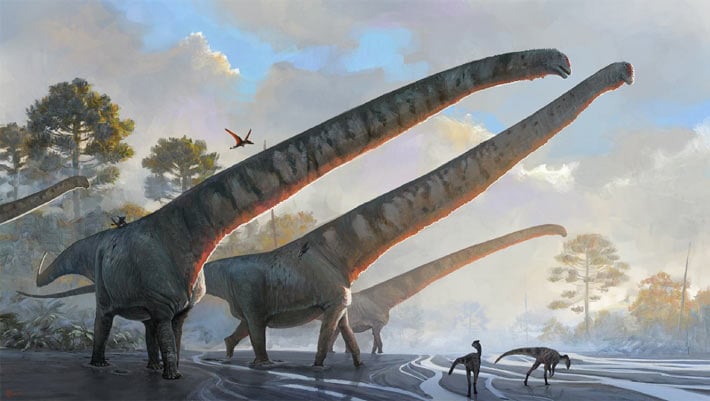
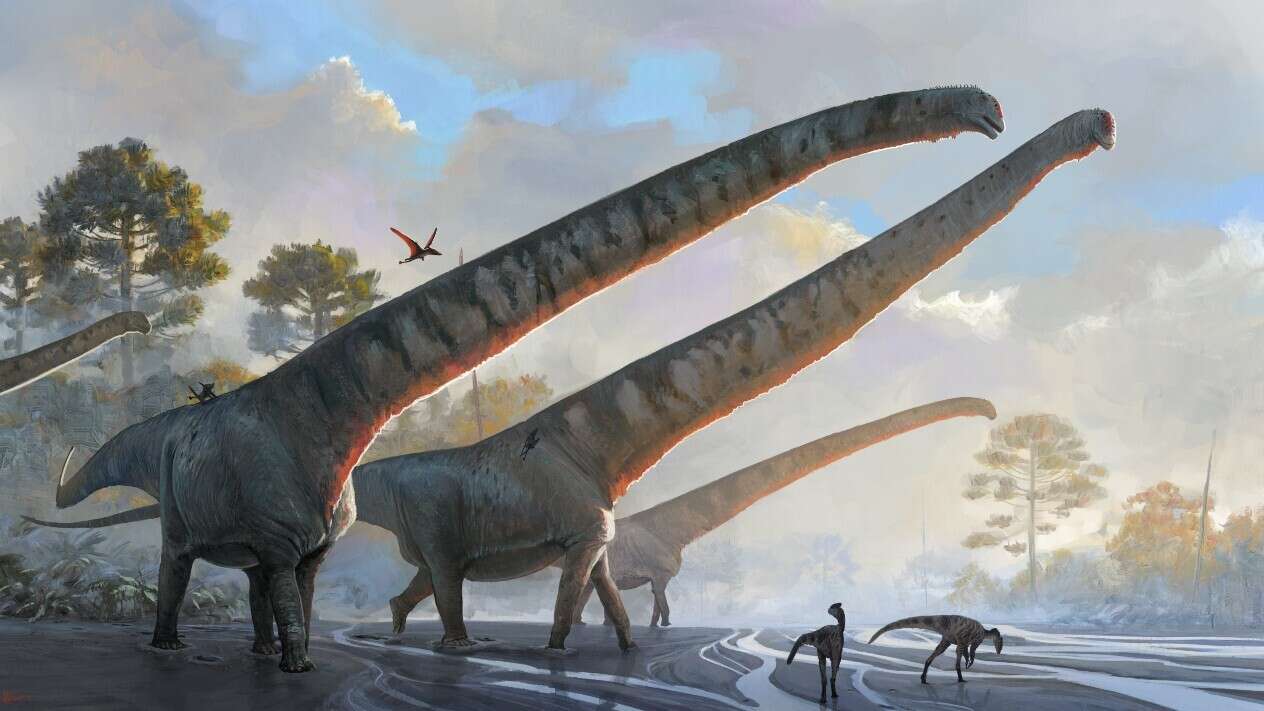
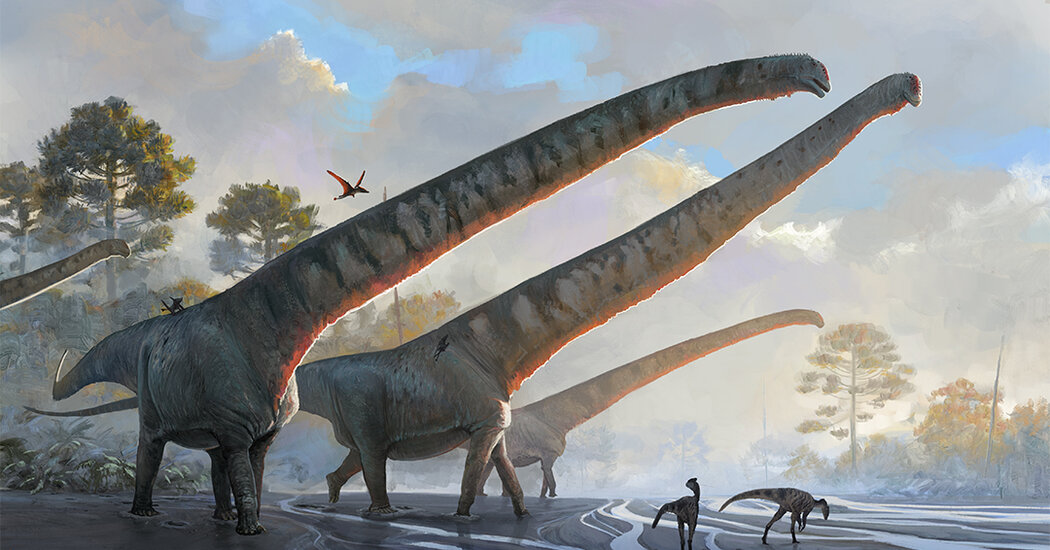
Paleontologists in China have discovered a new species of Mamenchisaurus from the Late Jurassic period, enriching our understanding of sauropod diversity and evolution in East Asia. The find, a partial skeleton from the Chongqing region, provides insights into the paleobiogeography and evolutionary history of early sauropods, highlighting regional differences in dinosaur faunas during the Jurassic.
Scientists have discovered a new record for the longest neck on any dinosaur or animal yet, belonging to the Late Jurassic Chinese sauropod Mamenchisaurus sinocanadorum, with a 50-foot-long neck. The researchers used close relatives to estimate the neck length and found that the vertebrae contained pockets of air, making the spine lighter in density. The reason for the evolution of such long necks is not certain, but it could have made them more efficient at foraging and helped them release excess body heat from their huge bodies.
Researchers estimate that the neck of Mamenchisaurus, a sauropod that roamed China during the late Jurassic period, stretched to nearly 50 feet, making it the longest estimated neck of any sauropod species and possibly the longest neck on any animal ever observed. The estimate was made by comparing Mamenchisaurus to its close relative, Xinjiangtitan, whose entire vertebral column was unearthed. The study also found that the sauropod's neck was reinforced with cervical ribs and had hollow vertebrae filled with air pockets to decrease its weight.