Tag

Catalysis

All articles tagged with #catalysis

Scientists Measure Tiny Electron Fraction, Solving Century-Old Catalysis Mystery

Originally Published 3 months ago — by SciTechDaily

Featured image for Scientists Measure Tiny Electron Fraction, Solving Century-Old Catalysis Mystery
Source: SciTechDaily

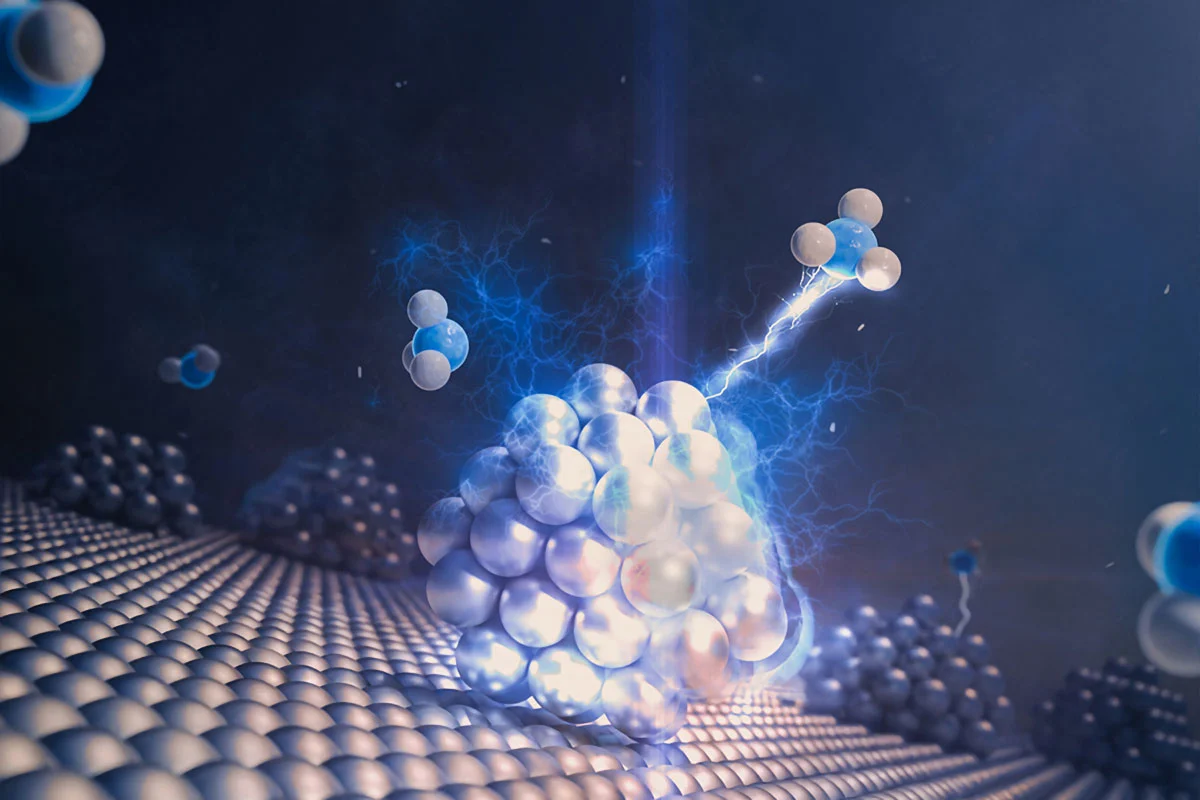
Scientists at the University of Minnesota and University of Houston have developed a new technique called Isopotential Electron Titration (IET) to directly measure the tiny fraction of an electron involved in catalytic processes, providing new insights into how catalysts like gold, silver, and platinum work, which could lead to more efficient and cost-effective manufacturing of fuels, chemicals, and materials.

Innovative Catalytic Method for Enantioselective Alkylidenecyclopropane Synthesis

Originally Published 5 months ago — by Nature

The article reports a new method for the enantioselective synthesis of alkylidenecyclopropanes using bifunctional iminophosphorane catalysis, enabling the production of enantioenriched small ring carbocycles that are important in pharmaceuticals and agrochemicals, with applications demonstrated in the synthesis of insecticide cores like permethrin.

"Oxygen's Impact on Nickel Catalysts in Methane Reforming"

Originally Published 2 years ago — by Phys.org

Featured image for "Oxygen's Impact on Nickel Catalysts in Methane Reforming"
Source: Phys.org

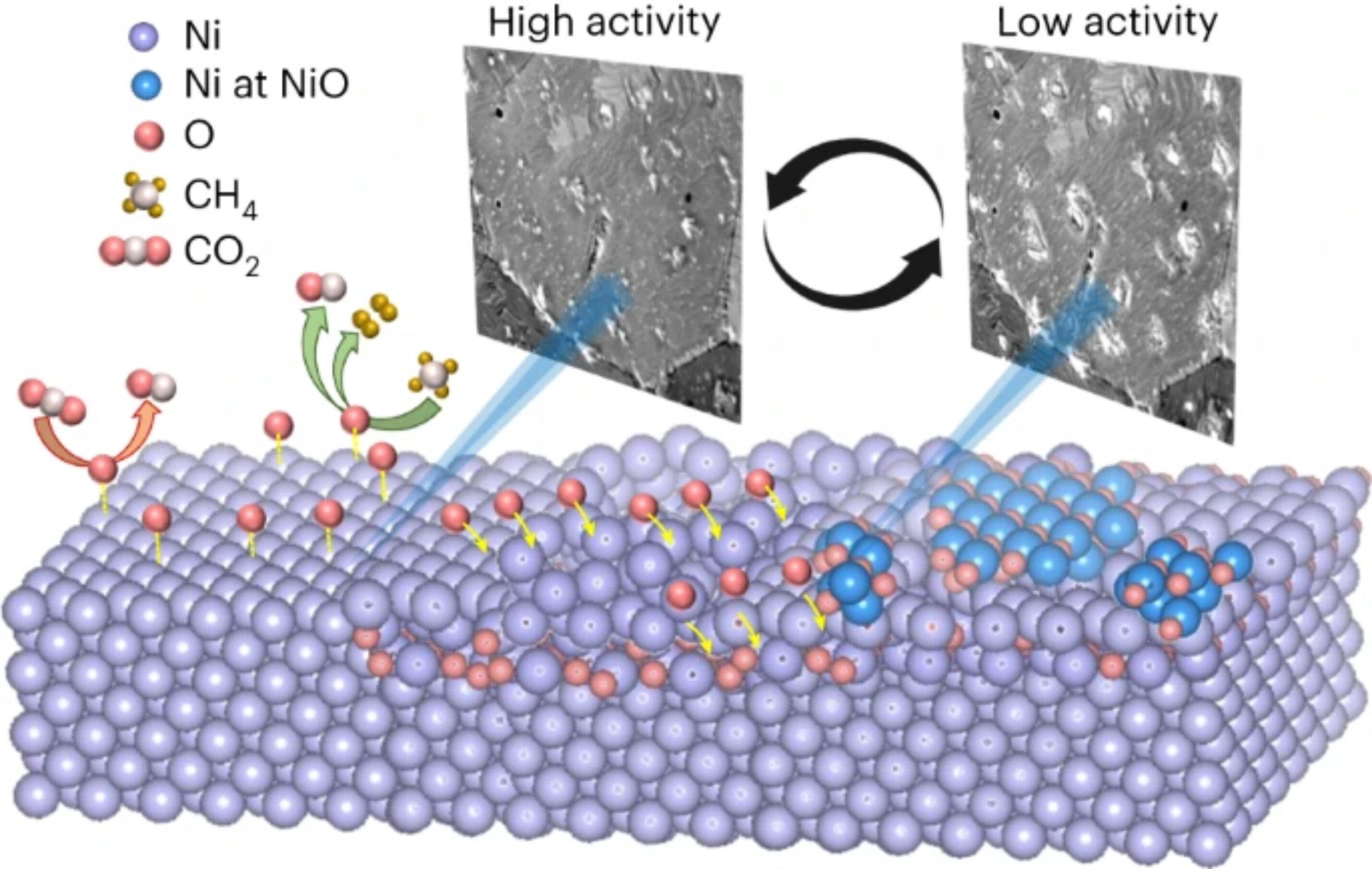
A study on the mechanism of CH4 dry reforming on nickel catalysts reveals the formation of metastable surface nickel-oxygen structures from CO2 dissociation, which exhibit different catalytic properties and induce rate oscillations. Understanding the role of different oxygen species on a nickel catalyst during dry reforming of methane is crucial for designing high-performance catalysts. The study highlights the critical role of dissociative CO2 adsorption in regulating the oxygen content of the catalyst and CH4 activation, providing fundamental insights into the processes occurring at the catalyst surface and how this modulates the catalytic performance during dry reforming of methane.

"Efficient Halodealkylation of Fully Alkylated Silanes with Arenium-Ion Catalysts"

Originally Published 2 years ago — by Nature.com

Featured image for "Efficient Halodealkylation of Fully Alkylated Silanes with Arenium-Ion Catalysts"
Source: Nature.com

Researchers have developed a new method for the halodealkylation of fully alkylated silanes using arenium-ion catalysis. This approach offers a more sustainable and efficient route for the synthesis of methylchlorosilanes, which are important precursors in the production of silicones. The study provides insights into the catalysts, mechanisms, reaction conditions, and reactor designs involved in this process, highlighting the potential for further advancements in the field of molecular catalysis and the silicone industry.

Cracking the Code: Unveiling the Elusive Catalytic Intermediate

Originally Published 2 years ago — by SciTechDaily

Featured image for Cracking the Code: Unveiling the Elusive Catalytic Intermediate
Source: SciTechDaily

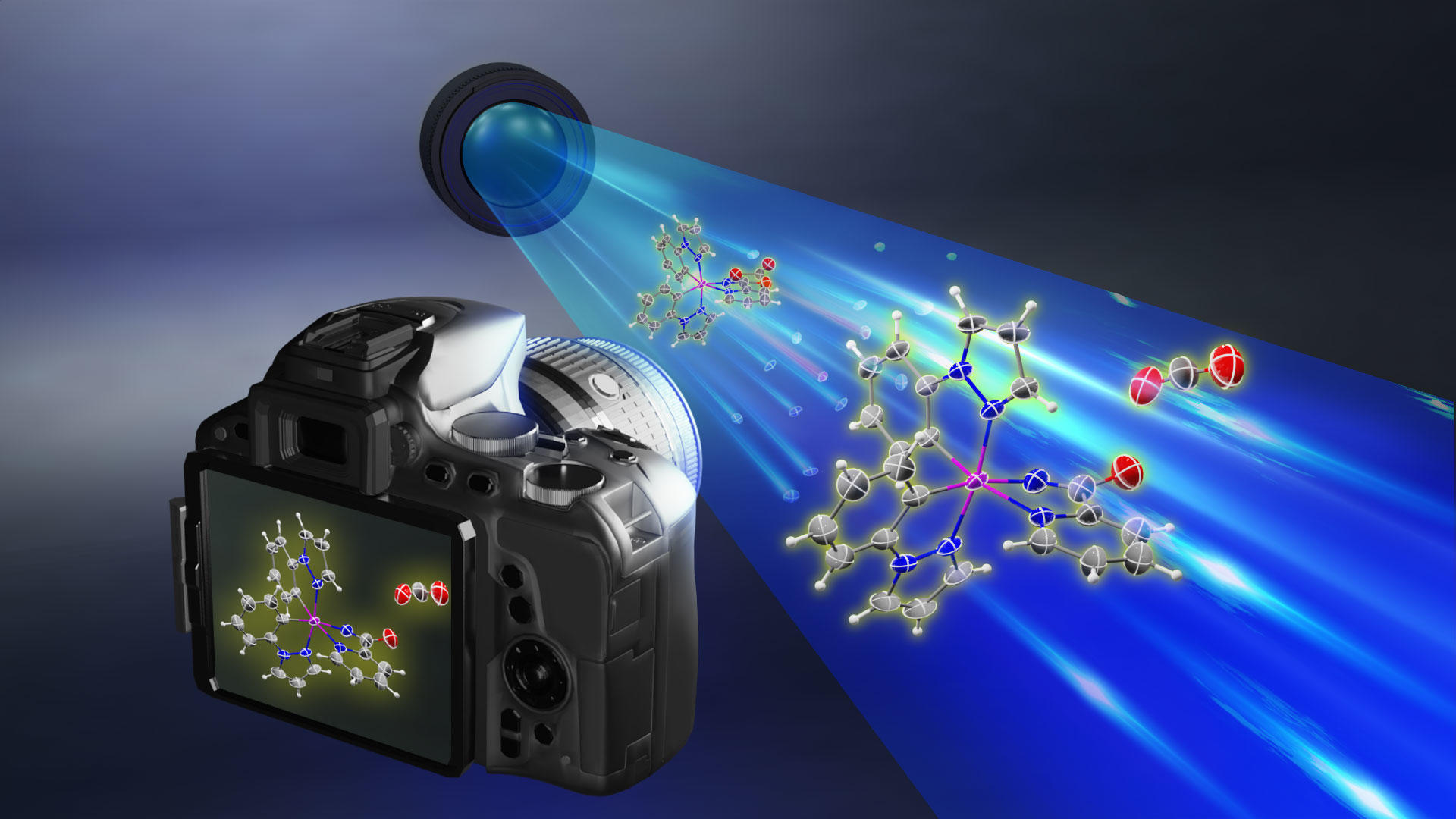
Researchers at the Institute for Basic Science (IBS) have successfully observed and confirmed the structure and properties of a transition metal-nitrenoid intermediate, a key component in catalytic amination reactions. By using X-ray photocrystallography, the team captured the elusive intermediate, shedding light on the process of transforming hydrocarbons into amides, which are important in pharmaceutical and materials science. This breakthrough provides valuable insights into reaction pathways and catalyst development, potentially leading to more efficient and selective catalysts for hydrocarbon amination reactions in various industries.

Unveiling the 'Molecular Scissors': Researchers Capture Atomic View of Synthetic DNA

Originally Published 2 years ago — by Phys.org

Featured image for Unveiling the 'Molecular Scissors': Researchers Capture Atomic View of Synthetic DNA
Source: Phys.org

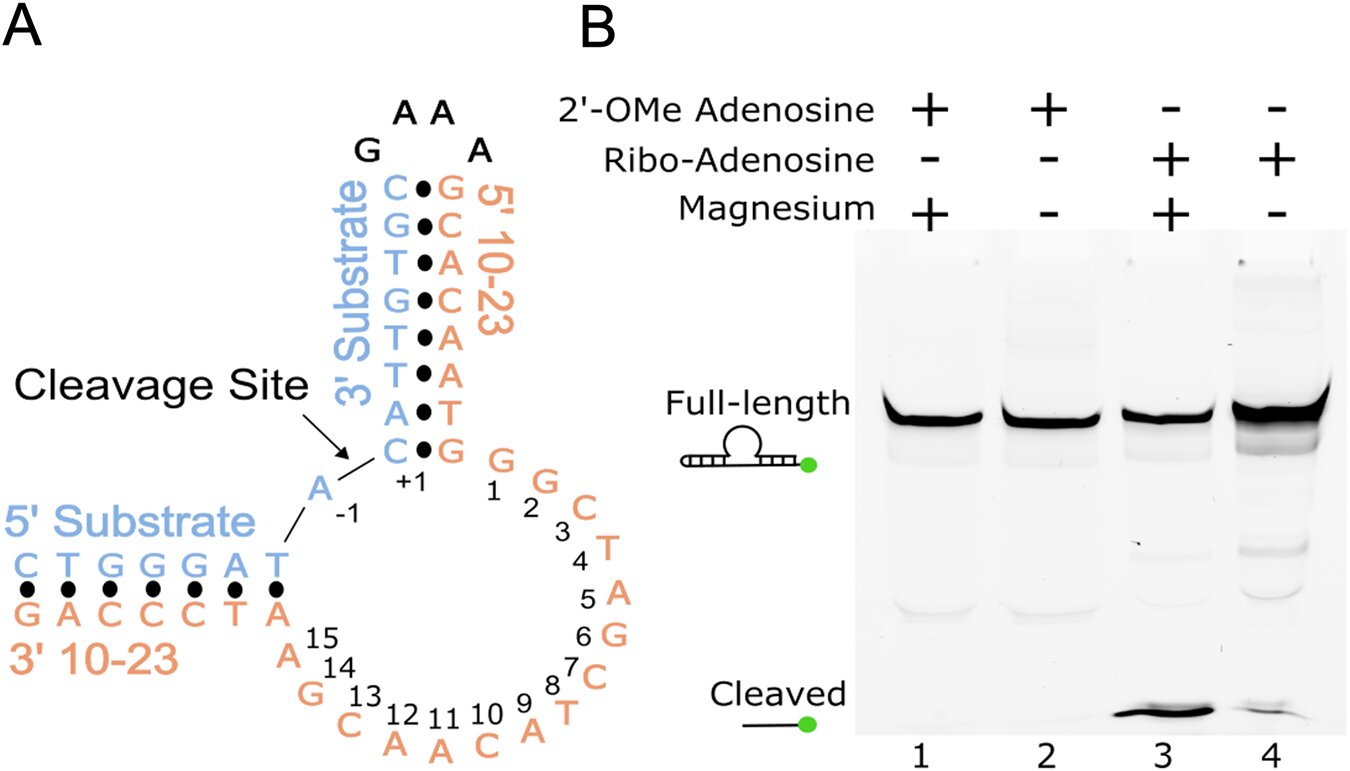
Researchers at West Virginia University have successfully captured the atomic view of synthetic DNA, known as DNAzymes, which have scissor-like functions. By understanding the structure and catalytic abilities of these synthetic DNA molecules, scientists hope to develop new technologies for medical diagnoses and treatments. The findings provide insights into how chemically active DNA can promote unique functions and pave the way for advancements in health and diagnostics. The researchers aim to improve the efficiency of the technology for potential applications in treating diseases such as retinal degeneration and cancer.

Unveiling the Formation of Primordial Proteins on Prebiotic Earth

Originally Published 2 years ago — by SciTechDaily

Featured image for Unveiling the Formation of Primordial Proteins on Prebiotic Earth
Source: SciTechDaily

Scientists at Tohoku University have discovered that boric acid can catalyze the formation of lengthy peptides under neutral and acidic conditions, challenging previous theories that alkaline conditions were necessary. The presence of boron-containing minerals in ancient rocks supports the idea that boron-rich, neutral environments on prebiotic Earth could have facilitated protein synthesis. This finding sheds light on the origin of life and the formation of catalytic organic polymers. The researchers evaporated amino acid solutions containing boric acid and observed the creation of polypeptides, with the longest peptides reaching 39 monomers in length under neutral conditions. The study suggests that boron-rich, neutral evaporative environments were ideal for the formation and interaction of essential polymers in the chemical evolution of life.

Revolutionary Catalysis Discovery Promises Huge Energy Efficiency Gains

Originally Published 2 years ago — by SciTechDaily

Featured image for Revolutionary Catalysis Discovery Promises Huge Energy Efficiency Gains
Source: SciTechDaily

Chemical engineers from the University of Wisconsin-Madison have developed a model that explains how catalytic reactions work at the atomic level, potentially leading to more efficient catalysts, optimized industrial processes, and significant energy savings. Catalysis plays a crucial role in producing 90% of the products we use daily, and just three catalytic reactions use close to 10% of the world's energy. The researchers used powerful modeling techniques to simulate catalytic reactions at the atomic scale and found that the energy provided for many catalytic processes to take place is enough to break bonds and allow single metal atoms to pop loose and start traveling on the surface of the catalyst, forming small metal clusters that serve as sites for chemical reactions to take place much easier than the original rigid surface of the catalyst.

"Revolutionizing Energy Efficiency and Carbon Control through Atomic-Scale Catalysis and Equations"

Originally Published 2 years ago — by Phys.org

Featured image for "Revolutionizing Energy Efficiency and Carbon Control through Atomic-Scale Catalysis and Equations"
Source: Phys.org

Chemical engineers at the University of Wisconsin-Madison have developed a breakthrough model of how catalytic reactions work at the atomic scale, which could allow engineers and chemists to develop more efficient catalysts and tune industrial processes, potentially with enormous energy savings. The researchers used powerful modelling techniques to simulate catalytic reactions at the atomic scale, looking at reactions involving transition metal catalysts in nanoparticle form. The new framework challenges the foundation of how researchers understand catalysis and how it takes place, and may apply to other non-metal catalysts as well.

"AI-assisted Computational Modeling for Ultrastable Material Design"

Originally Published 2 years ago — by MIT News

Featured image for "AI-assisted Computational Modeling for Ultrastable Material Design"
Source: MIT News

MIT researchers have developed a computational approach to predict the stability of metal-organic frameworks (MOFs), which have a rigid, cage-like structure that makes them useful for applications such as gas storage and drug delivery. Using their model, the researchers identified about 10,000 possible MOF structures that they classify as “ultrastable,” making them good candidates for applications such as converting methane gas to methanol. The researchers also identified certain building blocks that tend to produce more stable materials, and have made their database of ultrastable materials available for researchers interested in testing them for their own scientific applications.

Cu-catalyzed N-alkylation of aliphatic amines with enantioconvergence.

Originally Published 2 years ago — by Nature.com

Researchers have developed a new method for the enantioselective N-alkylation of aliphatic amines with α-carbonyl alkyl chlorides using chiral tridentate anionic ligands and copper catalysts. The method can convert feedstock chemicals, including ammonia and pharmaceutically-relevant amines, into unnatural chiral α-amino amides under mild and robust conditions with excellent enantioselectivity and functional group tolerance. The method has potential applications in the expedited synthesis of diverse amine drug molecules.