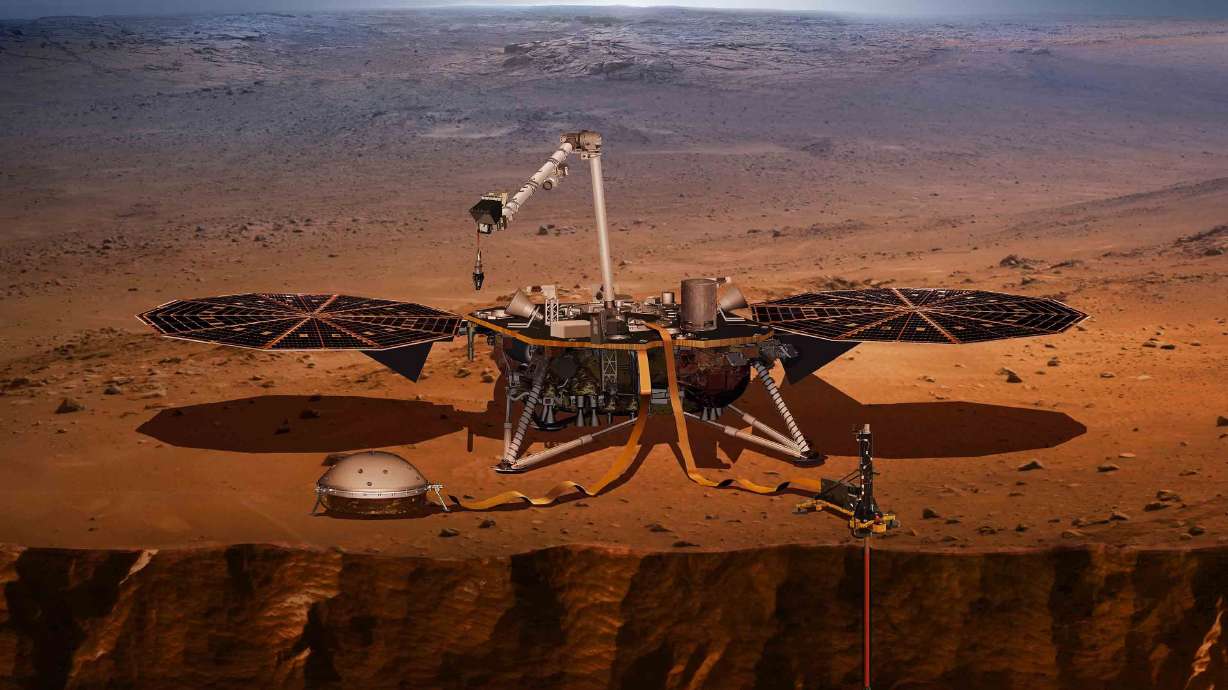
NASA's InSight lander data reveals that Mars' mantle contains large, ancient lumps of rocky material from early impacts, indicating a sluggish interior evolution and providing new insights into the planet's formation and history.
A study finds that short naps, especially reaching N2 sleep, significantly enhance problem-solving insight, with EEG data indicating deeper sleep correlates with 'aha' moments, suggesting sleep's role in fostering creativity and connections.
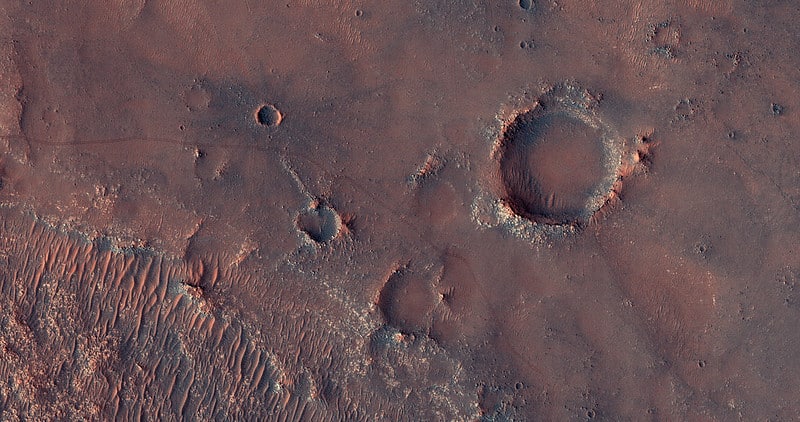
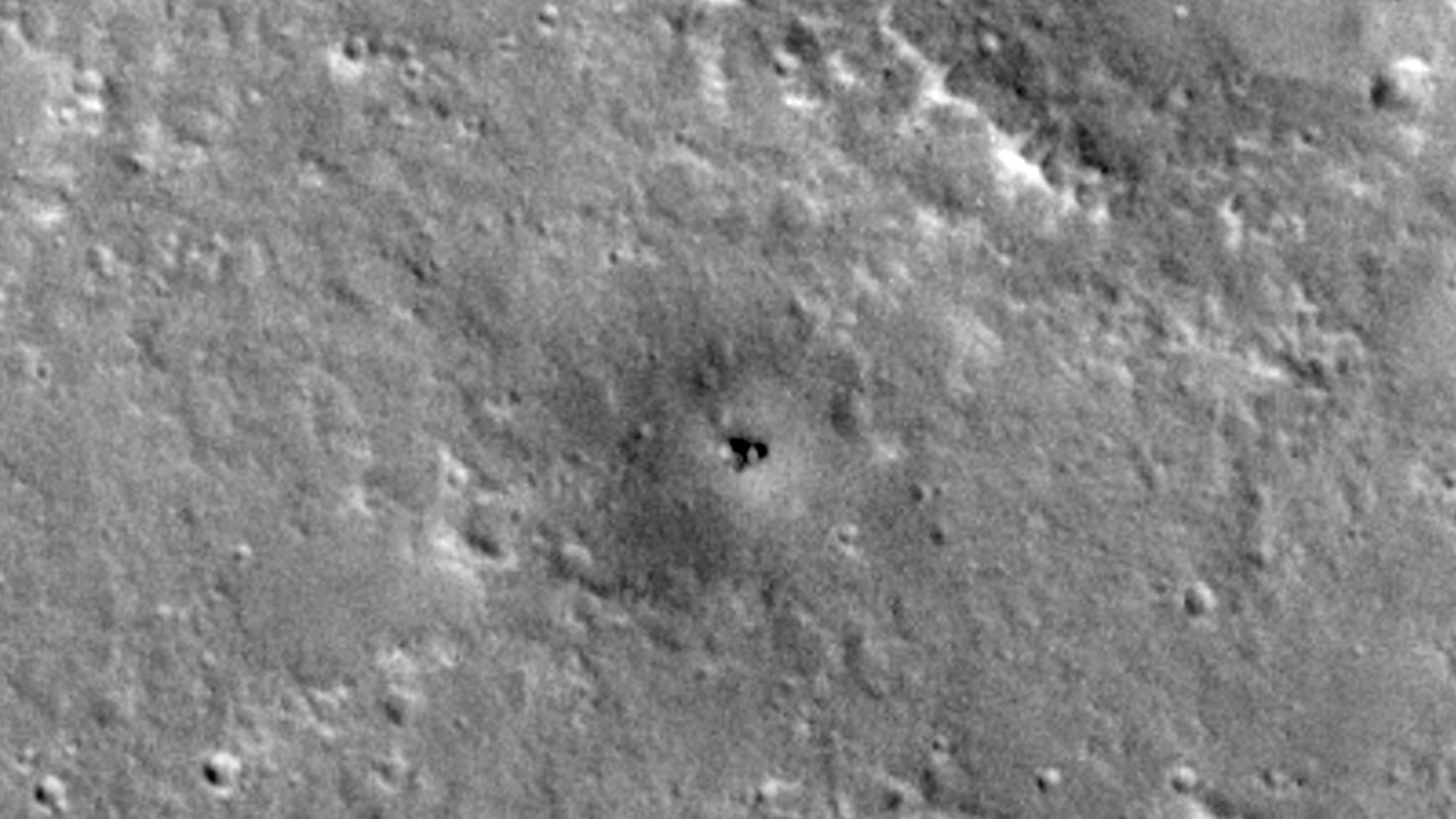
NASA's Mars Reconnaissance Orbiter has captured images of the retired InSight robot on Mars, which has been inactive since 2022. The orbiter, which has been studying Mars for over 18 years, continues to provide valuable data on the planet's surface changes and conditions.
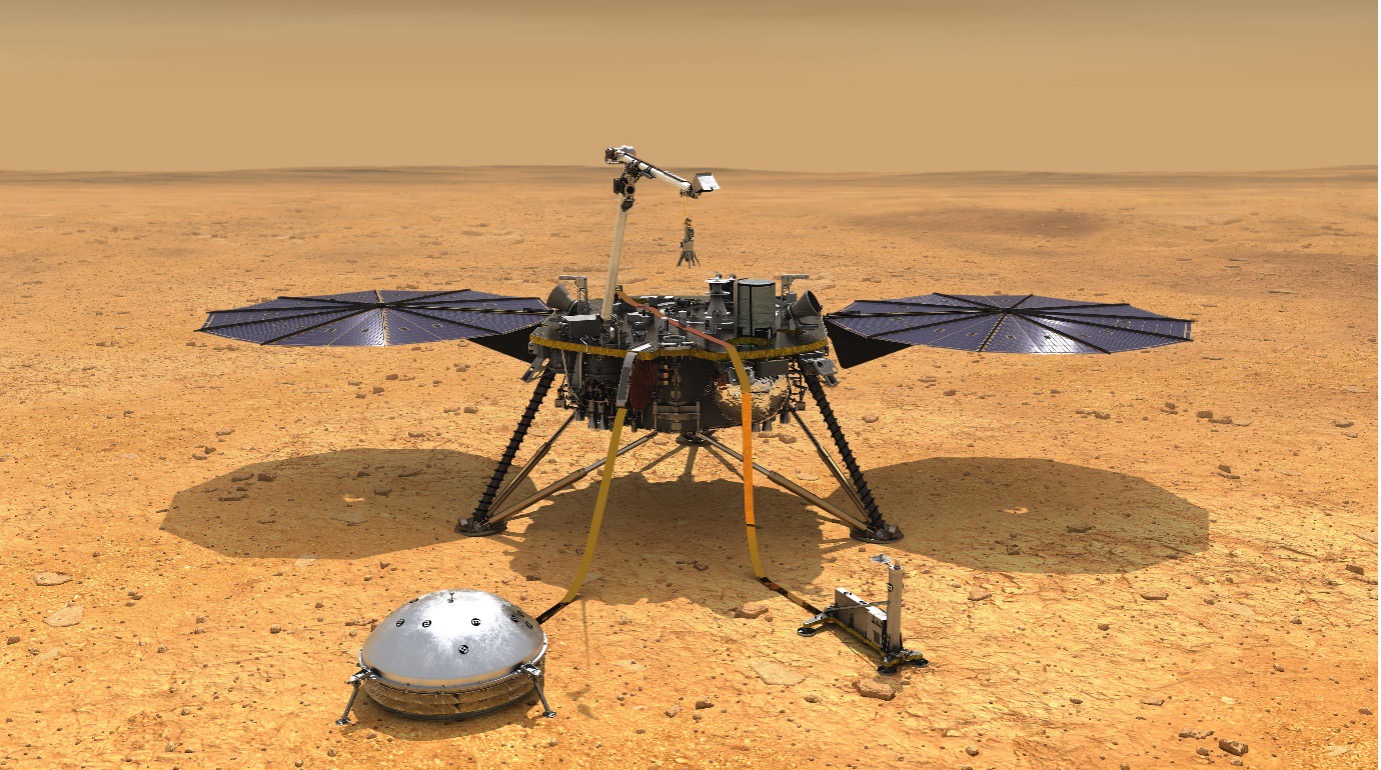
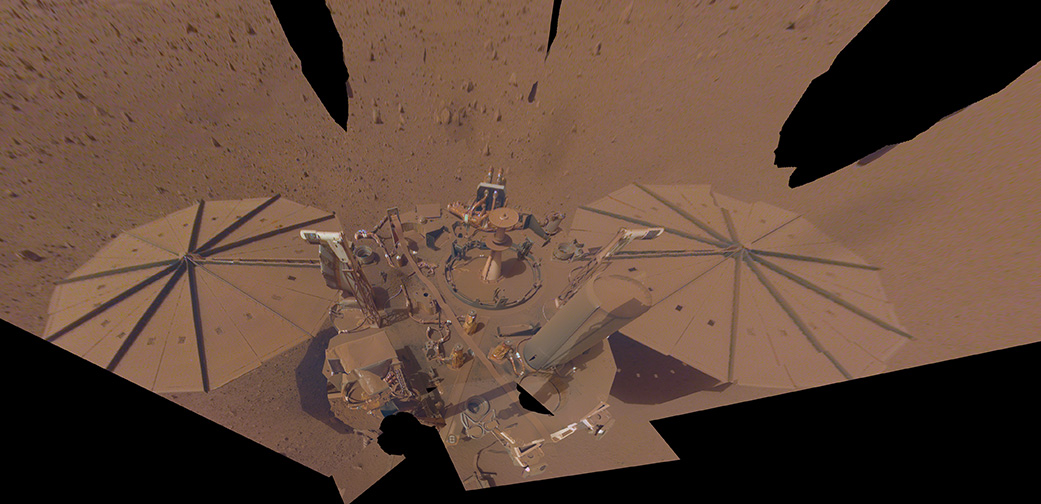
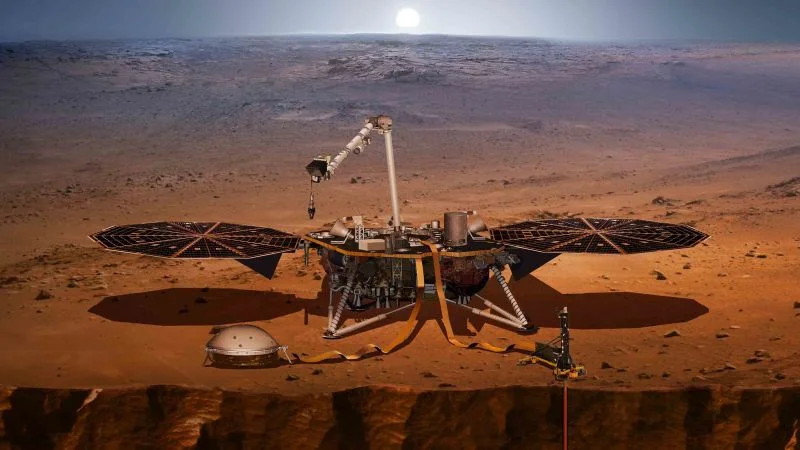
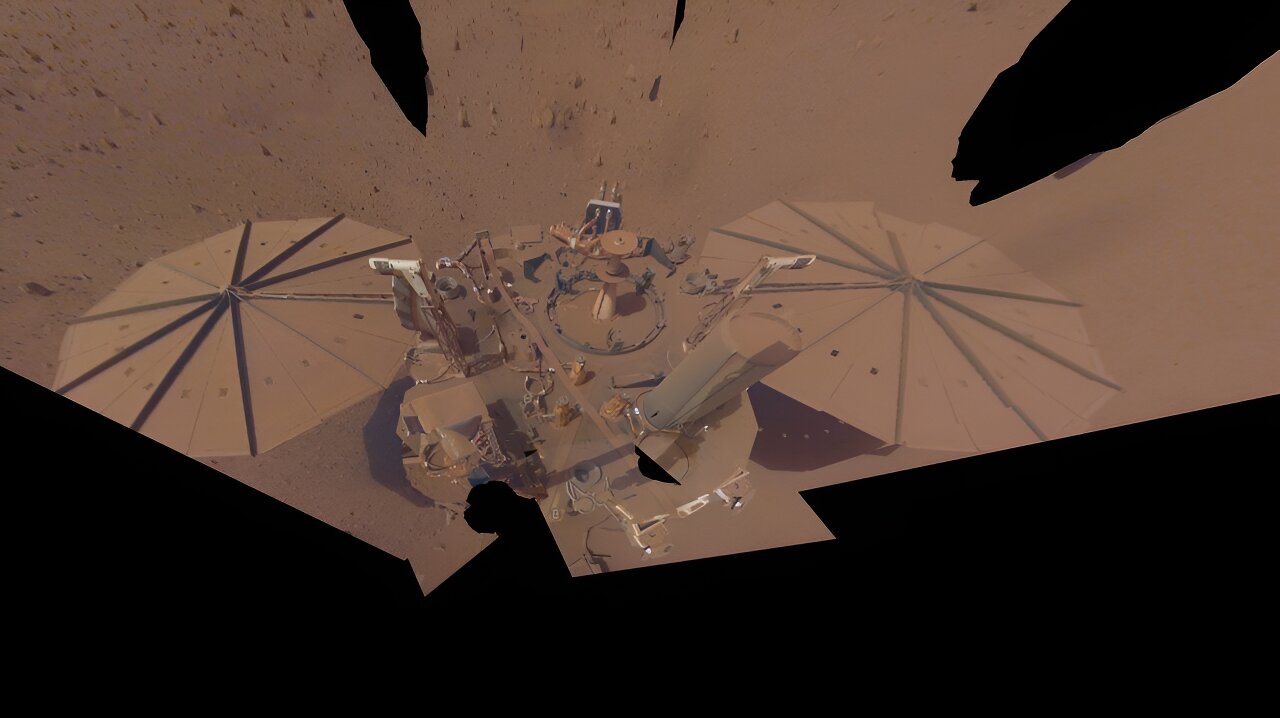
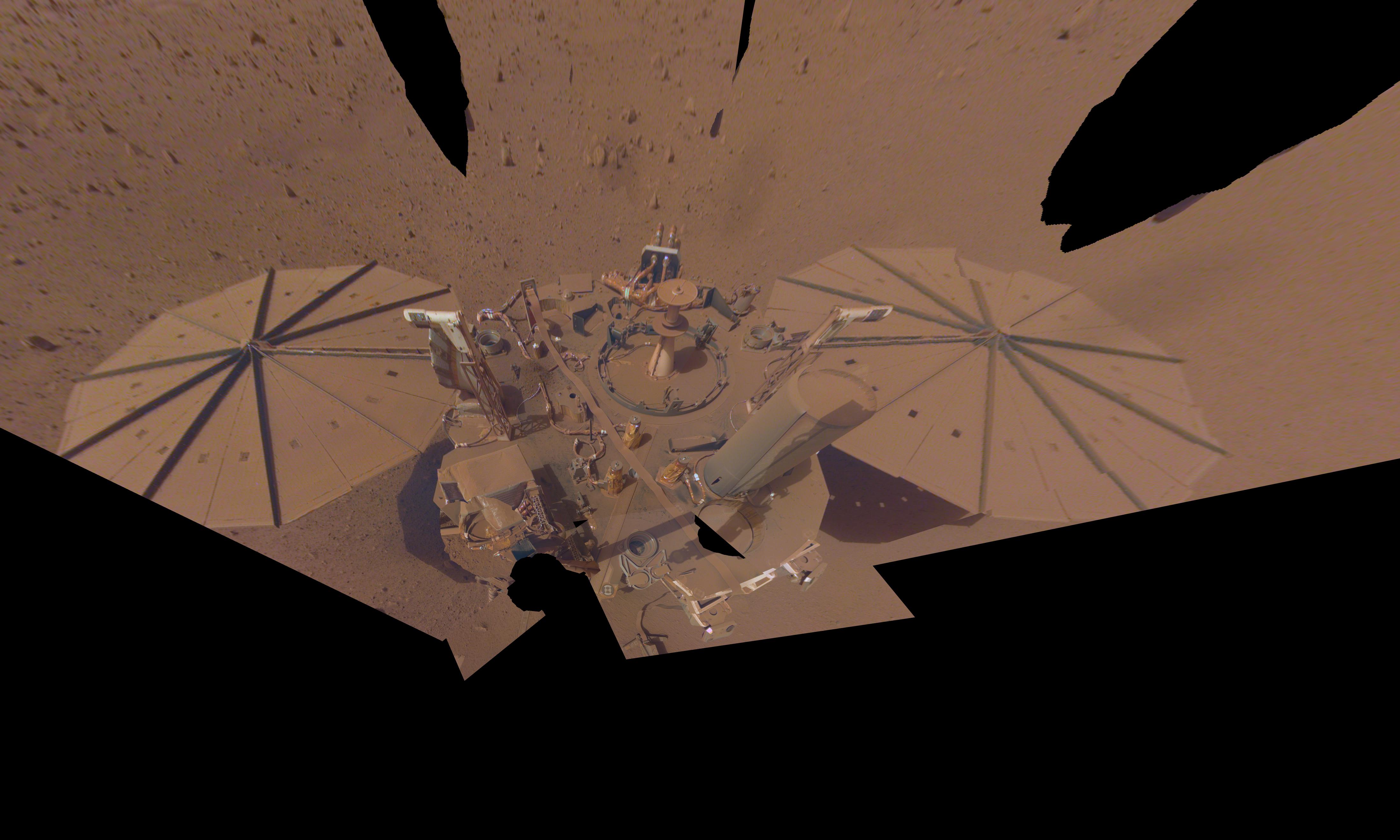
NASA's Mars Reconnaissance Orbiter spotted the "dead" InSight lander on the surface of Mars, which ceased to function in 2022 after operating for four years. InSight was sent to study the planet's interior, depositing a seismometer to record marsquakes and a thermometer to measure temperature. Despite running out of power due to dust accumulation on its solar panels, InSight continues to provide valuable data for studying Mars' surface disturbances.
This weekly horoscope provides astrological predictions for all zodiac signs. Aries can expect new sources of income and improved family life, while Taurus may face health problems and financial challenges. Gemini will experience business success and improved relationships, while Cancer may face work-related stress and health issues. Leo will find satisfaction in their work and improved family relationships, while Virgo may feel unhappy and face financial difficulties. Libra will enjoy unity at home and business success, while Scorpio will experience happiness and good news at work. Sagittarius will focus on self-discovery and career advancement, while Capricorn may feel stressed and face challenges. Aquarius will receive support and business opportunities, while Pisces will experience happiness and financial improvement.
An international team of scientists, including researchers from the European Space Agency, the Chinese National Space Agency, the Indian Space Research Organisation, and the United Arab Emirates Space Agency, have determined that the largest Marsquake observed by NASA's InSight lander was caused by a release of stress within Mars' crust, ruling out a meteor impact. By analyzing data from multiple spacecraft in orbit around Mars, the team found no evidence of an impact crater and concluded that the quake was a tectonic event. This discovery provides valuable insights into the geological activity of Mars and may help in future missions and potential human habitation on the planet.
Scientists analyzing data from NASA's InSight Mars lander have discovered that Mars is rotating faster, with its rotational speed increasing by approximately four milliarcseconds per year squared. The measurements, made using InSight's Rotation and Interior Structure Experiment (RISE) instrument, also revealed the planet's wobbling motion caused by its molten metal core. The data allowed scientists to estimate the size of Mars' core and revealed regions of slightly higher or lower density buried deep within the mantle. The findings provide valuable insights into Mars' rotation, core, and other planetary characteristics, contributing to groundbreaking discoveries in planetary science.
NASA's InSight lander has collected data indicating that Mars is rotating more quickly than before, shortening the length of a Martian day by a fraction of a millisecond per year. The increased acceleration, about 4 milliarcseconds per year², is still being investigated, but it may be due to ice accumulation at the Martian poles or the rise of landmasses after being covered in ice. The findings, based on InSight data, suggest that Mars has a molten metal core with a radius of about 1,140 miles. Although the mission has ended, the data collected by InSight has significantly contributed to our understanding of the red planet.
NASA's InSight lander has collected data indicating that Mars is rotating more quickly than before, shortening the length of a Martian day by a fraction of a millisecond per year. The increased acceleration in rotation is believed to be caused by ice accumulation at the Martian poles or the rise of landmasses after being covered in ice. The findings, based on an analysis of InSight data, also revealed that Mars has a molten metal core with a radius estimated to be between 1,112 and 1,150 miles. Although InSight is no longer operational, its data has significantly contributed to our understanding of the red planet.
NASA's InSight Mars lander has provided scientists with precise measurements of Mars' rotation, revealing a subtle acceleration and the planet's wobble caused by its molten core. This data offers unprecedented insights into the size and shape of Mars' core, providing crucial information about the planet's internal structure. The measurements were made using InSight's Rotation and Interior Structure Experiment (RISE), which utilized advanced radio technology and upgrades to antennas within NASA's Deep Space Network. The findings suggest that Mars' rotation is accelerating by about 4 milliarcseconds per year², resulting in a slight shortening of the Martian day. The study also measured Mars' wobble, allowing scientists to estimate the core's radius and shape.
Scientists have discovered that Mars is spinning faster each year, shortening the length of a Martian day by a fraction of a millisecond. The cause of this acceleration is still unknown, but it could provide insights into Mars' past evolution. Hypotheses include long-term trends such as accumulating material at the polar ice caps and interior dynamics. The data was obtained from the now-retired InSight lander, which provided precise measurements of Mars' rotation through radio communications. Additionally, the data allowed scientists to refine measurements of Mars' core structure, revealing density variations that will be further investigated.
NASA's InSight lander has provided the most precise measurements of Mars's rotation, revealing that the planet is spinning faster. Using data from InSight's Rotation and Interior Structure Experiment (RISE), scientists found that Mars's rotation is accelerating by about 4 milliarcseconds per year, resulting in a slight shortening of the Martian day. The cause of this acceleration is still uncertain, but possibilities include ice accumulation on the polar caps or post-glacial rebound. RISE data also allowed scientists to measure Mars's wobble and estimate the size and shape of its liquid core.
NASA's InSight Mars lander has provided the most precise measurements to date of Mars' rotation, revealing that the planet is spinning faster and its rotation is accelerating by about 4 milliarcseconds per year. The cause of this acceleration is still uncertain, but possibilities include ice accumulation on the polar caps or post-glacial rebound. InSight's advanced radio technology, including the Rotation and Interior Structure Experiment (RISE), allowed scientists to track Mars' spin rate with unprecedented accuracy. RISE also provided data on Mars' wobble, allowing scientists to estimate the size and shape of the planet's molten metal core. These findings contribute to a better understanding of Mars' geophysical properties.
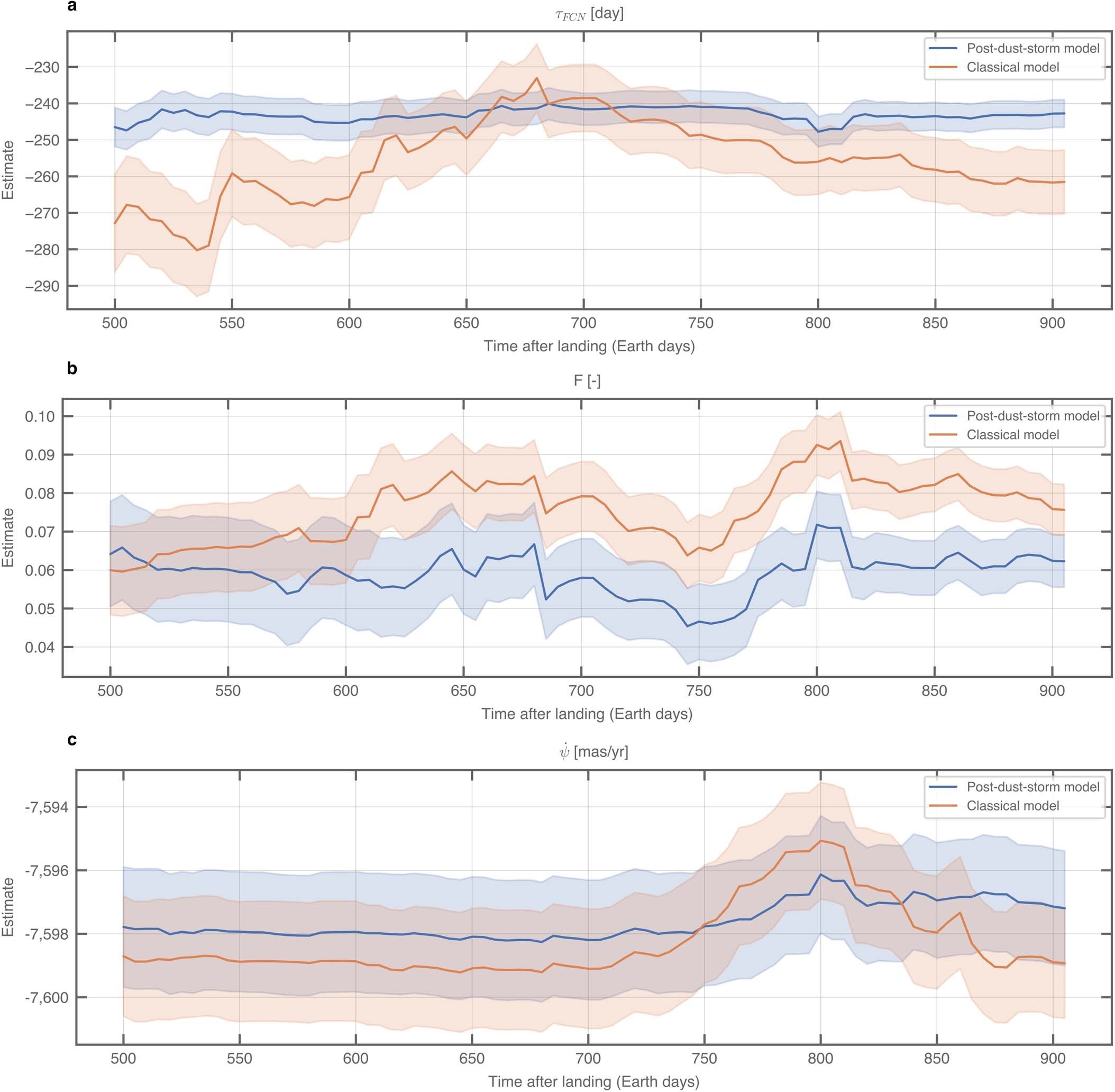
Data from the InSight lander suggests that Mars has an all-liquid core and internal mass anomalies, according to a team of planetary scientists from Belgium, the U.S., France, and Germany. The researchers analyzed data sent back to Earth from the lander, which had two main sensors, one that used a seismometer to measure marsquakes and another that sent radio signals from the lander back to Earth. By studying data related to the core and characterizing it separately from data related to the mantle, the team found what they believe to be evidence showing that Mars' core is molten liquid, and they also found a slight increase in the planet's spin.
The crust of Mars is around 70% thicker than the average continental crust on Earth, according to a report by planetary scientists. The measurement was based on data from NASA’s InSight lander, which recorded waves rippling through Mars’ interior for four Earth years. The team's findings also revealed that the crust is inconsistent across Mars, which might explain a significant north-south elevation difference on the planet. The discovery supports the idea that volcanic activity may still be found in some parts of Mars, denying claims that the "Red Planet is dead".