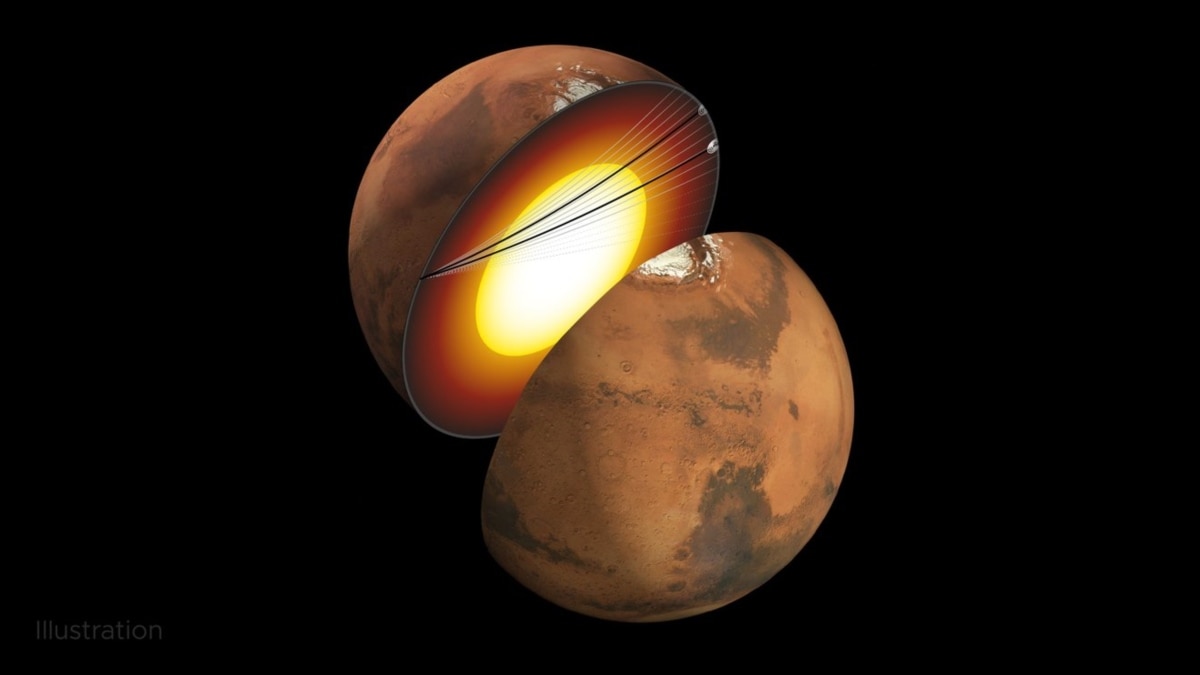
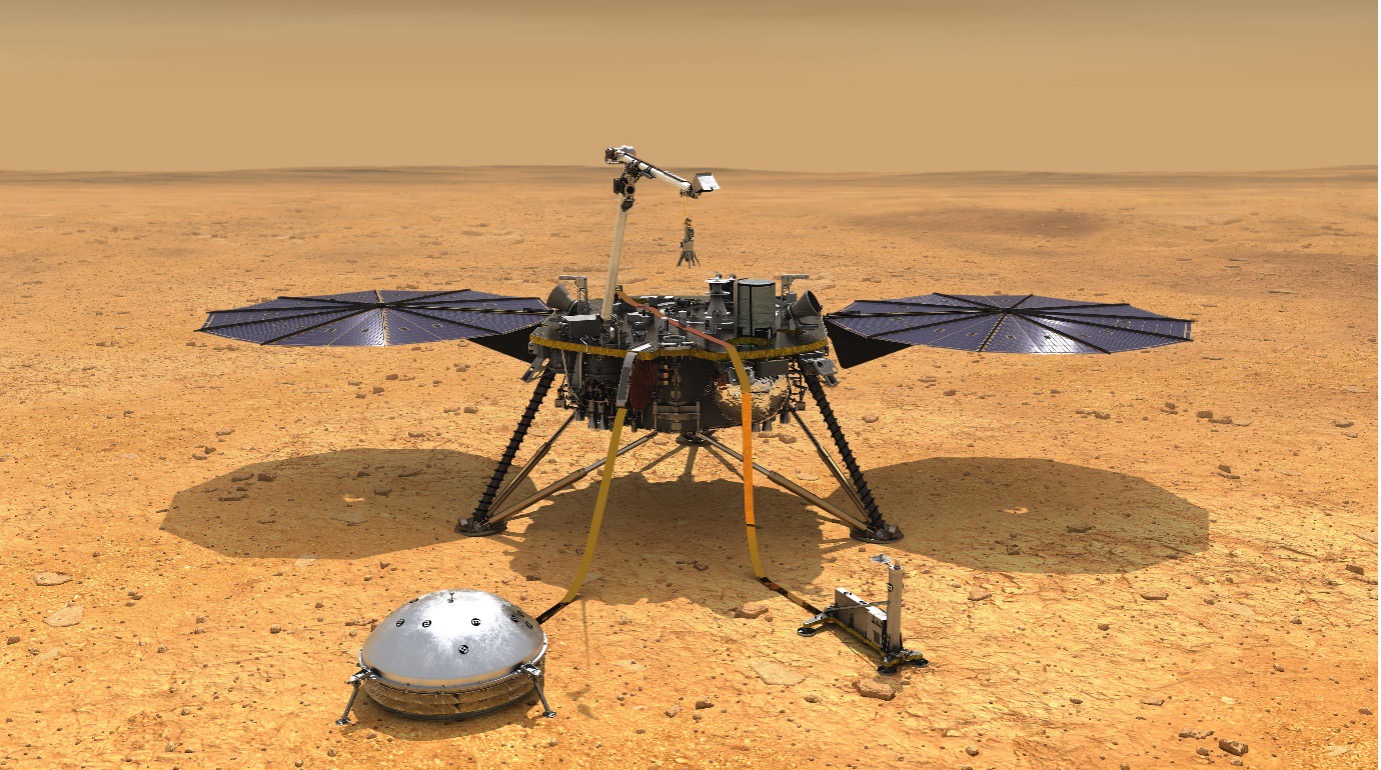
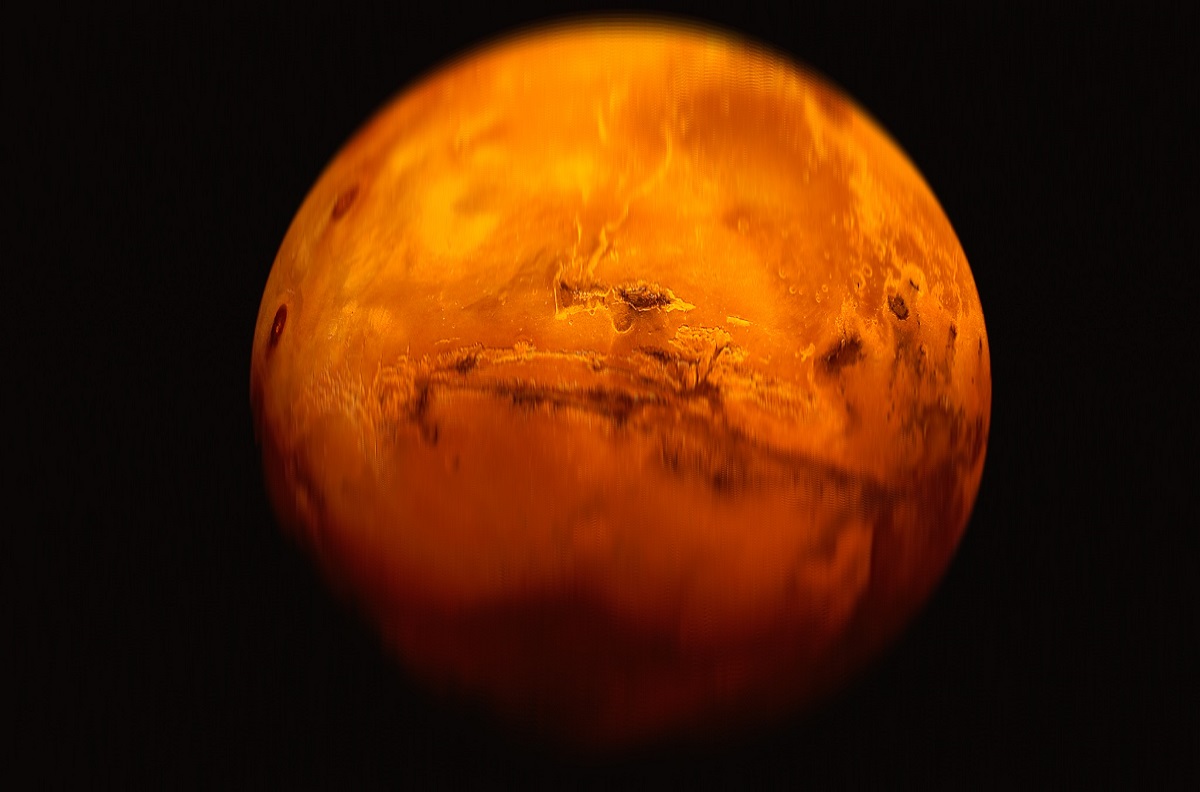
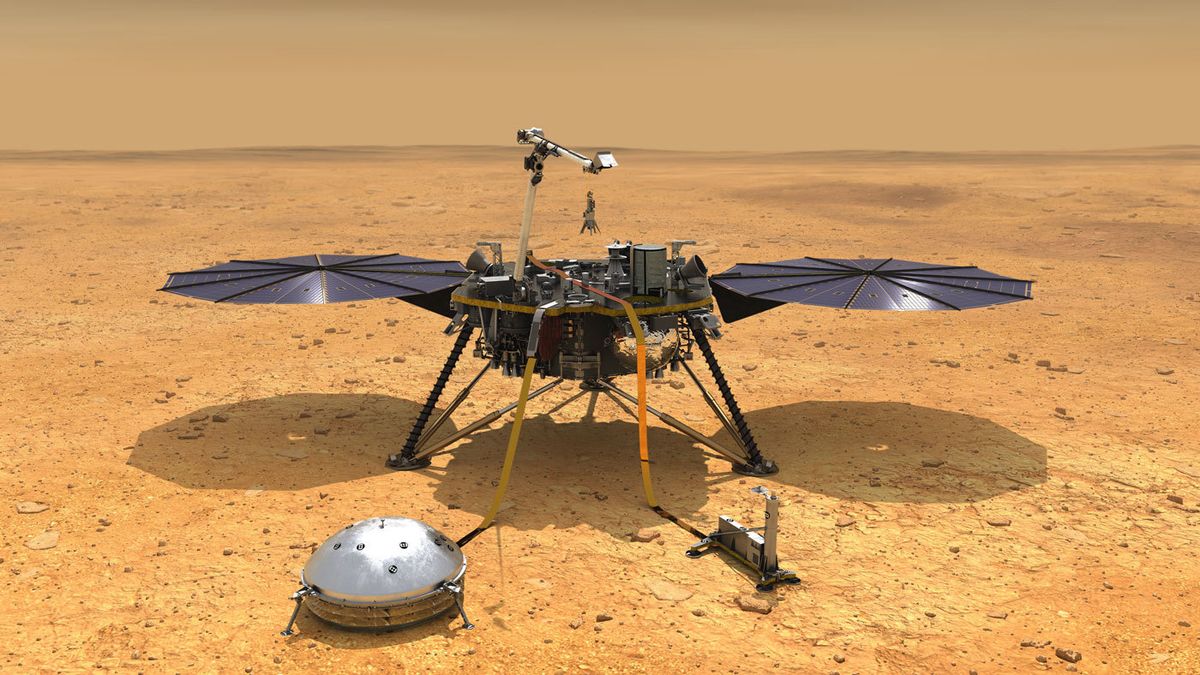
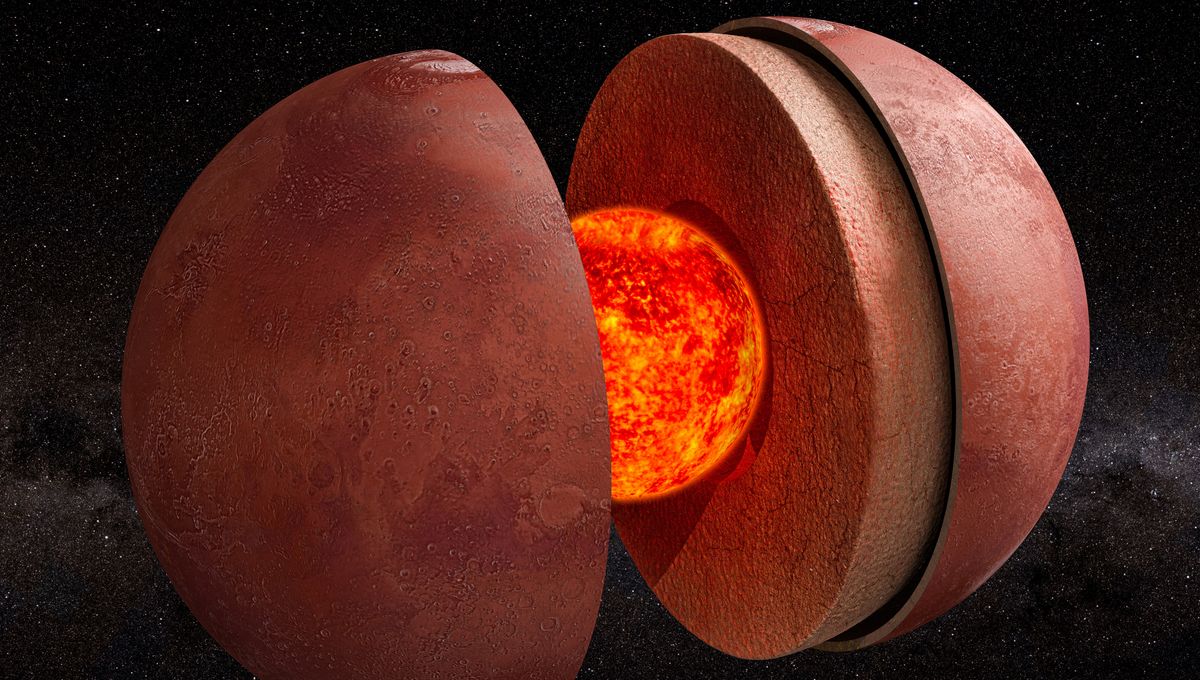
Researchers analyzing Marsquake data from NASA's InSight lander have discovered dozens of dense blobs within Mars' mantle, likely remnants of ancient protoplanets from up to 4.5 billion years ago, providing new insights into the planet's early history and internal structure.
NASA's InSight lander data reveals that Mars' mantle contains ancient impact fragments, indicating a sluggish interior that has preserved features from early solar system impacts, providing new insights into the planet's geological history.
NASA's InSight lander data reveals that Mars' mantle contains large, ancient lumps of rocky material from early impacts, indicating a sluggish interior evolution and providing new insights into the planet's formation and history.
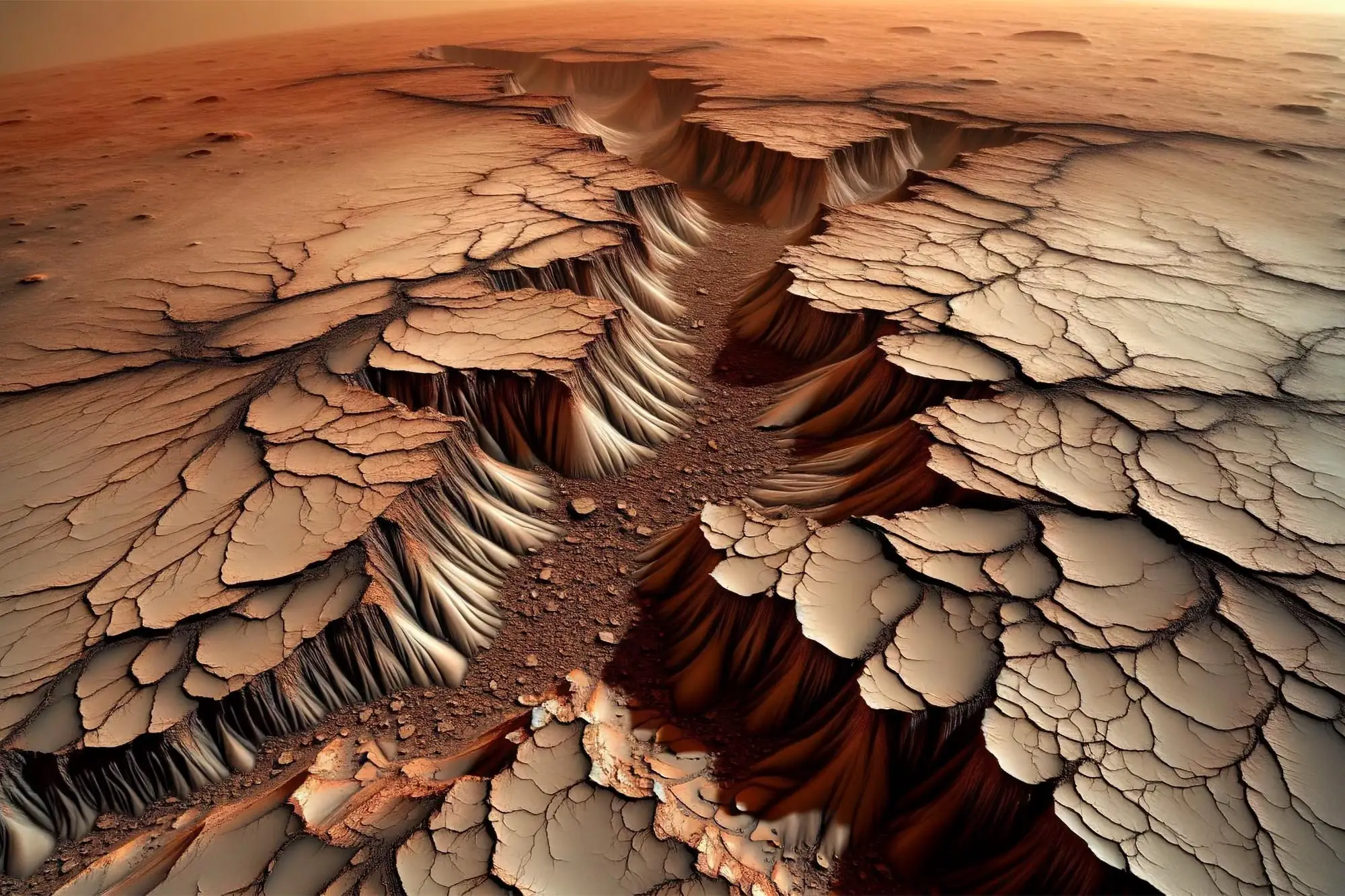
The most intense marsquake ever recorded, known as S1222a, was initially assumed to be caused by a meteoroid impact, but no evidence of a fresh crater was found. An international team of researchers led by planetary geophysicist Benjamin Fernando concluded that the marsquake was likely caused by subsurface tectonic forces, as there were no visible craters or blast zones. The team suggests that the Martian crust undergoing immense stress from cooling and shrinking over billions of years may be responsible for the seismic activity. Further research is needed to understand the geological processes occurring beneath the surface of Mars.
Scientists have determined that the strongest recorded marsquake on Mars was not caused by a meteorite strike, but rather by the release of powerful tectonic forces within the planet's crust. The quake, with a strength of 4.7, was detected by instruments on NASA's InSight lander. The absence of a corresponding crater led researchers to conclude that Mars is more seismically active than previously thought. The findings provide valuable insights into Martian seismic activity and may contribute to future understanding of safe living conditions for humans on Mars.
An international team of scientists, including researchers from the European Space Agency, the Chinese National Space Agency, the Indian Space Research Organisation, and the United Arab Emirates Space Agency, have determined that the largest Marsquake observed by NASA's InSight lander was caused by a release of stress within Mars' crust, ruling out a meteor impact. By analyzing data from multiple spacecraft in orbit around Mars, the team found no evidence of an impact crater and concluded that the quake was a tectonic event. This discovery provides valuable insights into the geological activity of Mars and may help in future missions and potential human habitation on the planet.
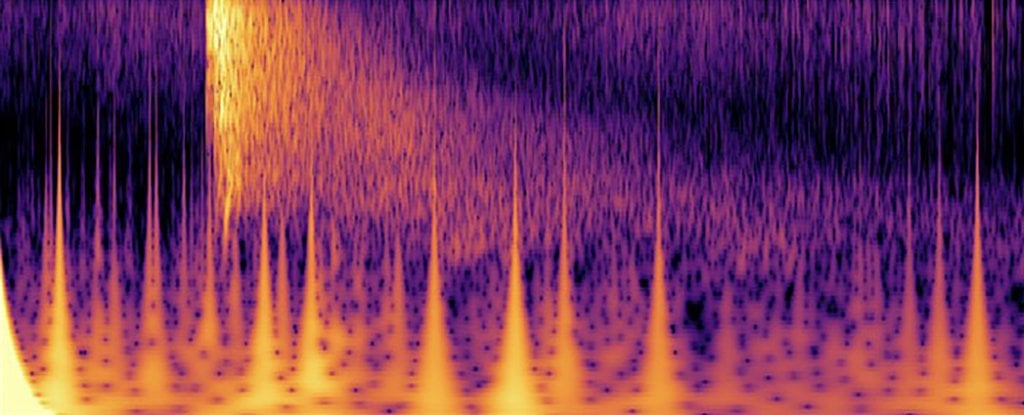
Scientists have determined that the strongest-ever quake detected on Mars was not caused by an asteroid impact, but rather by tectonic forces within the planet itself. The magnitude 4.7 quake, recorded by NASA's InSight lander in May 2022, was five times stronger than the previous record. Unlike most marsquakes, which last for about an hour, this quake continued for a record six hours. The findings suggest that Mars is more seismically active than previously thought, challenging the belief that the planet is too small and cold to host tectonic processes. The research may help in understanding potential safe zones for human habitation on Mars.
The largest-ever recorded Marsquake, known as S1222a, was caused by tectonic forces within Mars' crust, rather than a meteorite impact, according to a global collaboration led by the University of Oxford. The seismic event, which lasted over six hours and had a magnitude of 4.7, suggests that Mars may be more seismically active than previously believed. The discovery has implications for future habitation efforts on the planet. The research involved contributions from international space agencies and was published in the journal Geophysical Research Letters.
Scientists are puzzled by a powerful seismic tremor detected on Mars, known as a "marsquake," which is the most powerful ever detected on the planet. Initially thought to be caused by a meteoroid impact, a new study suggests that the tremor originated deep within the planet, indicating tectonic activity. The source of the tremor is located in the planet's southeast, beyond the known fault lines, suggesting the existence of some other mysterious phenomenon. Further research is needed to unravel this seismic puzzle and understand the geology of Mars.
Scientists have determined that the strongest marsquake ever recorded on Mars, a magnitude 4.7 quake, was not caused by an asteroid impact but rather by tectonic forces within the planet itself. This discovery suggests that Mars is more seismically active than previously thought. The quake, which lasted for a record six hours, was detected by NASA's InSight lander in May 2022. Unlike Earth, Mars is believed to lack plate tectonics, but the new study suggests that the release of billion-year-old stress within Mars' crust, due to differential cooling and shrinking rates, can cause seismic activity. Understanding these processes could help determine safe areas for human habitation on Mars.
The source of a massive quake on Mars, detected by NASA's InSight lander, has surprised scientists. Mars, which was believed to lack tectonic plates, experienced colossal tectonic activity in its crust, according to a study led by Benjamin Fernando of the University of Oxford. The leading alternative explanation, a meteorite impact, was ruled out. The findings suggest that Mars is more seismically active than previously thought, although further exploration is needed to fully understand the planet's geological processes.
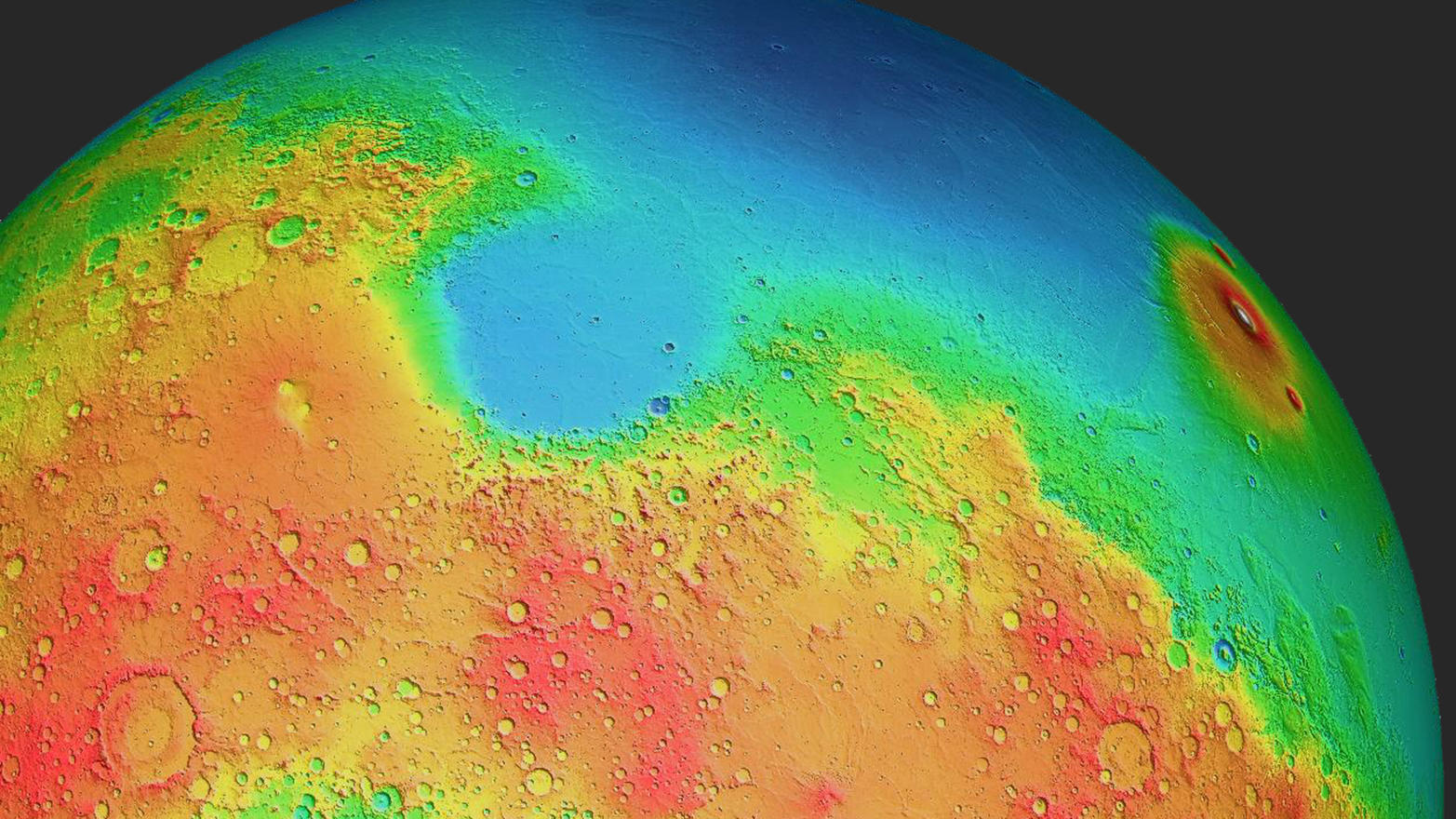
Researchers from ETH Zurich, using data from a large marsquake detected by the Mars InSight mission, have determined that the Martian crust is significantly thicker than that of Earth or the Moon, with an average thickness of 42 to 56 kilometers (26 - 35 miles). The seismic observations also revealed that the density of the crust in the northern lowlands and southern highlands of Mars is similar, suggesting that the composition of the crust is the same in both regions. Additionally, the study found that 50 to 70 percent of the heat-producing elements in Mars' interior are located in the crust, providing insights into the planet's thermal history.
The largest marsquake ever recorded by NASA's InSight lander in May 2022 has helped scientists estimate the average global crustal thickness of Mars between 42-56 kilometers (26-35 miles), with the thickest crust located in the Tharsis province and the thinnest crust located at the Hellas impact basin. The study also found similar densities of the crusts between the northern and southern hemispheres, despite each having a large difference in their crustal thickness, and hypothesized that Mars could be geologically active today due to the decay of radioactive elements, including uranium, thorium, and potassium, of which between 50-70 percent was found to reside with the Martian crust.
The crust of Mars is much thicker than that of Earth or the Moon, according to a study that analyzed data collected by NASA's InSight. The study also reported on the radioactive material heating up the interior of Mars, such as thorium, uranium, and potassium. Between 50 and 70 percent of these heat-producing elements are found in the Martian crust. The findings suggest that the crust averages between 42 and 56 kilometers thick, with the Tharsis province being the thickest at about 90 kilometers. The study is due to be published in Geophysical Research Letters.