Tag

Genome Evolution

All articles tagged with #genome evolution

Genomic convergence drove the rise of land animals

Originally Published 2 months ago — by Nature

Featured image for Genomic convergence drove the rise of land animals
Source: Nature

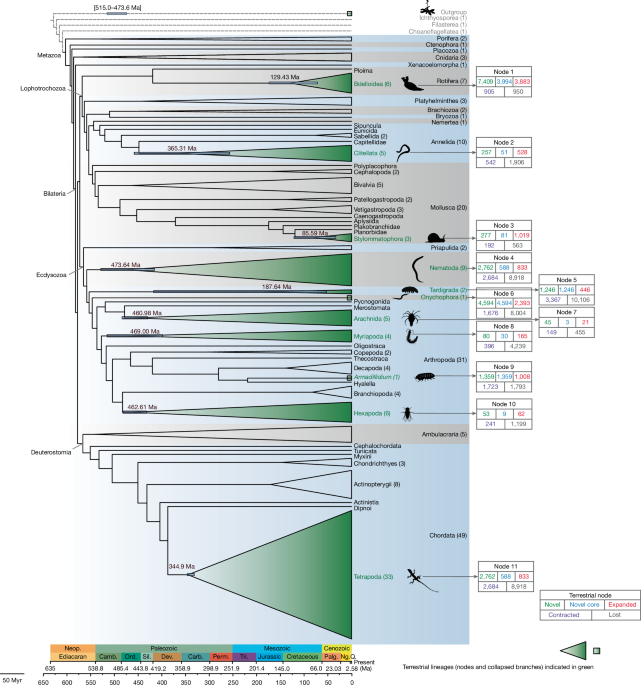
The study reveals that independent terrestrialization events in animals involved convergent genomic adaptations, including gene gains and losses related to osmoregulation, stress response, immunity, and sensory functions, with three major temporal windows identified during Earth's history, highlighting both predictable and lineage-specific evolutionary responses to land colonization.
Genomic Insights into the Unique Body Plan of Chaetognaths

Originally Published 5 months ago — by Nature

Featured image for Genomic Insights into the Unique Body Plan of Chaetognaths
Source: Nature

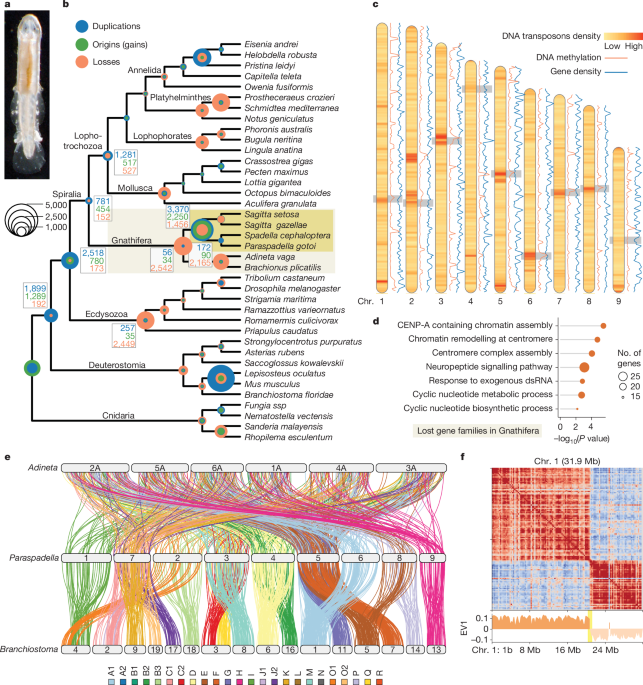
The study investigates the genomic basis of the unique body plan of chaetognaths, revealing extensive gene loss, tandem gene duplications, and a large Hox gene expansion, alongside the evolution of novel cell types and gene regulation strategies like trans-splicing, which together underpin their distinctive morphology and complex sensory systems.

"Slow Genome Evolution in Frogs Revealed by Conserved Chromatin and Repetitive Patterns"

Originally Published 2 years ago — by Nature.com

Featured image for "Slow Genome Evolution in Frogs Revealed by Conserved Chromatin and Repetitive Patterns"
Source: Nature.com

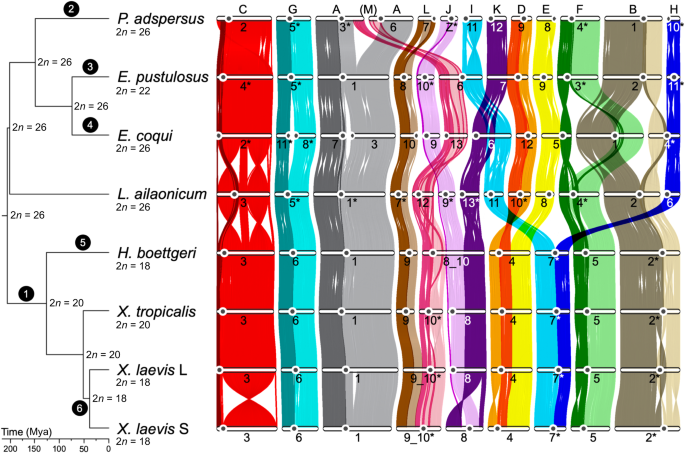
A study reports a high-quality reference genome sequence for the western clawed frog, Xenopus tropicalis, along with draft chromosome-scale sequences of three distantly related emerging model frog species, revealing that frog chromosomes have remained remarkably stable since the Mesozoic Era with limited translocations and fusions. The study explores the structure of chromosomes across frogs, using a dense meiotic linkage map for X. tropicalis and chromatin conformation capture (Hi-C) data for all species, revealing conserved ancestral anuran chromosomes from which contemporary frog genomes were constructed. The findings provide essential resources for further work to exploit the experimental possibilities of these diverse animals and make anurans ripe for comparative genomic and evolutionary analysis.

"Visualizing Genetic Copy-and-Paste Machinery in Action"

Originally Published 2 years ago — by Nature.com

Featured image for "Visualizing Genetic Copy-and-Paste Machinery in Action"
Source: Nature.com

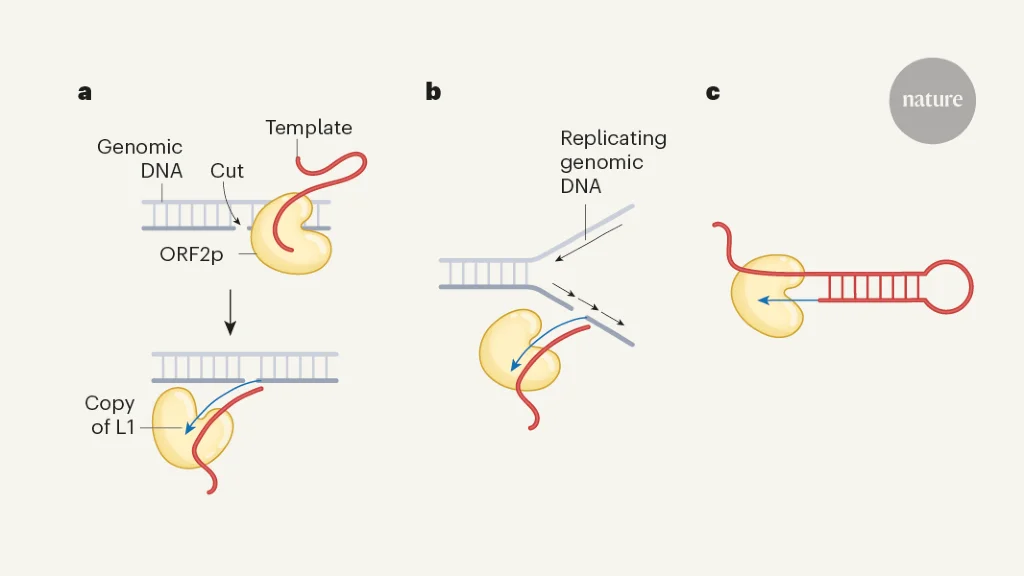
Researchers have reported the X-ray and cryoelectron-microscopy structures of the machinery that enables LINE-1 (L1) DNA elements to self-duplicate and spread throughout mammalian genomes, shedding light on the process of chromosome evolution. This biological 'copy and paste' mechanism provides insight into how and where this DNA element is duplicated, offering valuable information for understanding genome evolution and molecular biology.