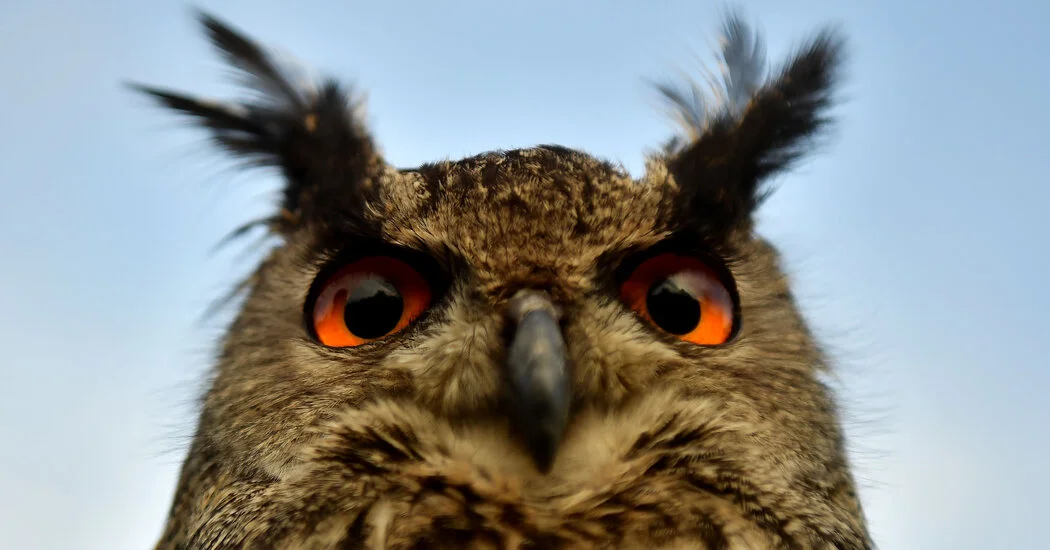
Researchers propose that vertebrate eyes originated from a single ancestral eye in ancient invertebrates around 560 million years ago, later splitting into two—offering a potential answer to how the complex eye evolved and addressing Darwin’s long-standing questions.
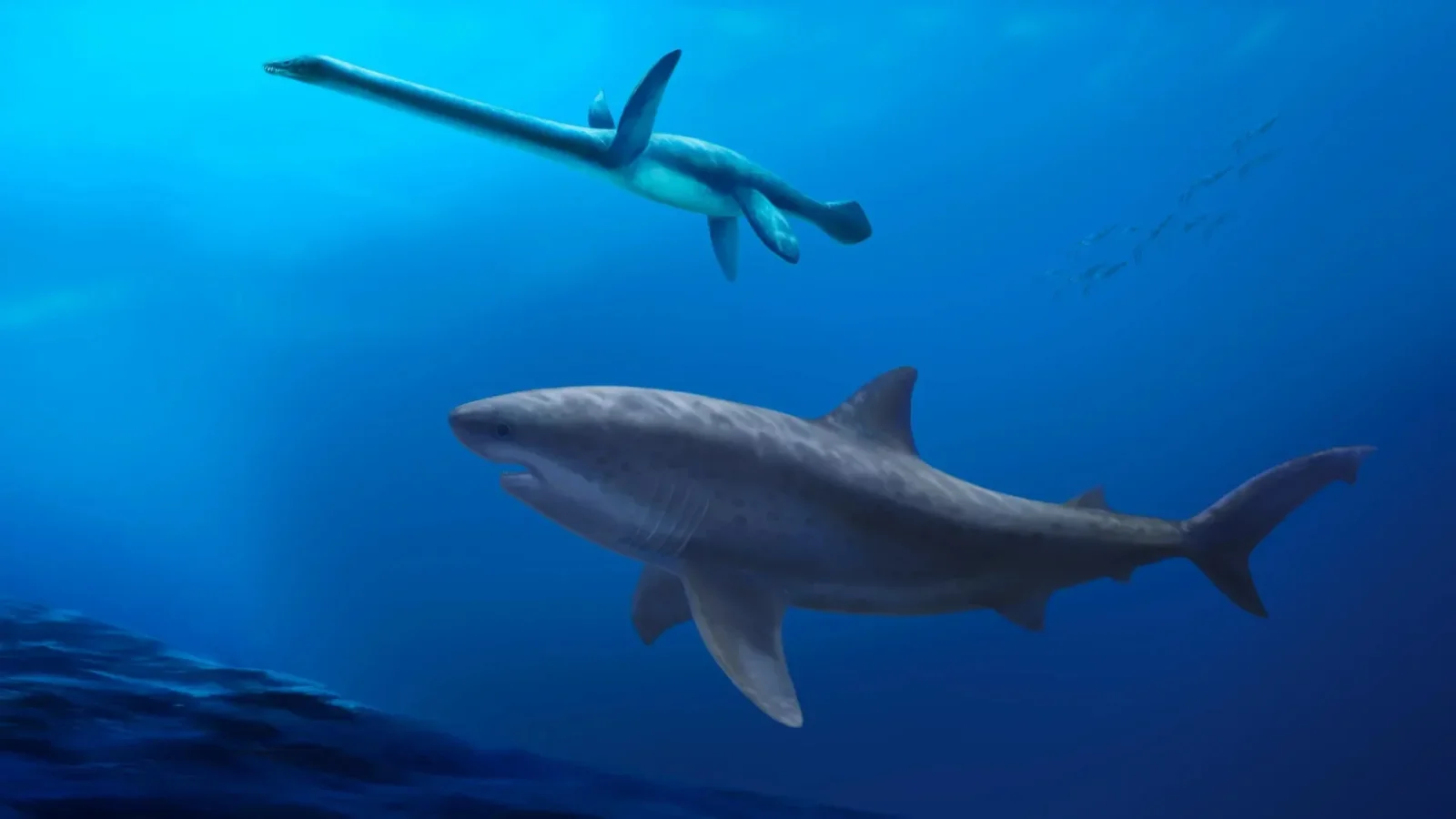
Researchers re-examined five large vertebrae found near Darwin, Australia, and concluded they belong to a previously unknown giant shark from the early Cretaceous Cardabiodontidae, about 115 million years old, reaching up to 26 feet (8 m) and weighing around 3,000 kg. This finding, published in Communications Biology in 2025, pushes back the emergence of giant sharks by ~15 million years and provides rare insight into cartilage-preserving fossils that reveal the anatomy of these prehistoric predators.
Researchers found that more than 20 bird species across four continents share nearly identical warning cries for brood parasites; these calls are learned through social transmission but rest on an innate instinct, representing a rare case of a vocalization that blends learned meaning with an inborn response and offering clues about how language could evolve from instinctive sounds.
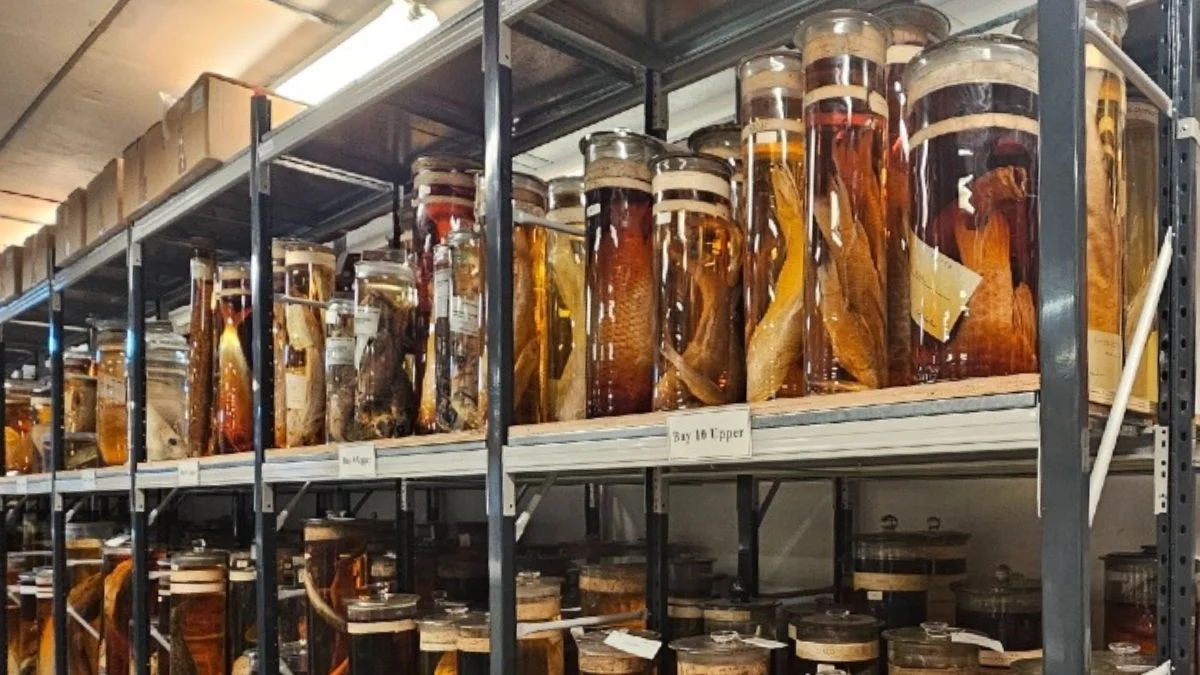
Scientists used portable spatially offset Raman spectroscopy (SORS) to peek inside Charles Darwin’s 200-year-old preserved specimen jars at the Natural History Museum without opening them. The technique identified preservation fluids in about 80% of jars (mammals/reptiles often in formalin then ethanol, invertebrates in formaldehyde-based mixtures), with 15% partially identifiable and 6.5% not confidently identified. The method helps conserve delicate collections while guiding storage practices across museums, and the study was published in ACS Omega (2026).
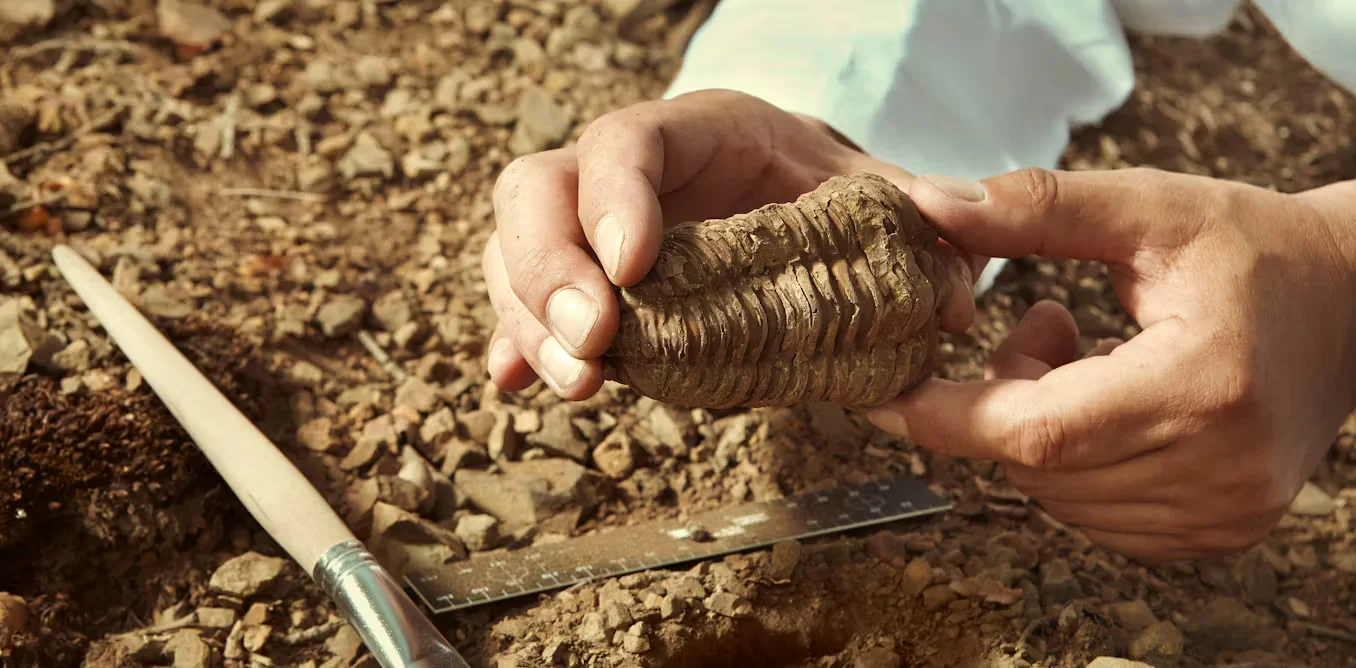
A new theory suggests that the molecular clock, which estimates the timing of evolutionary events, may have sped up during major evolutionary transitions, potentially explaining the 30-million-year gap between the predicted age of the common ancestor of complex animals and their first fossil appearance, thus aligning Darwin's theory with fossil evidence.
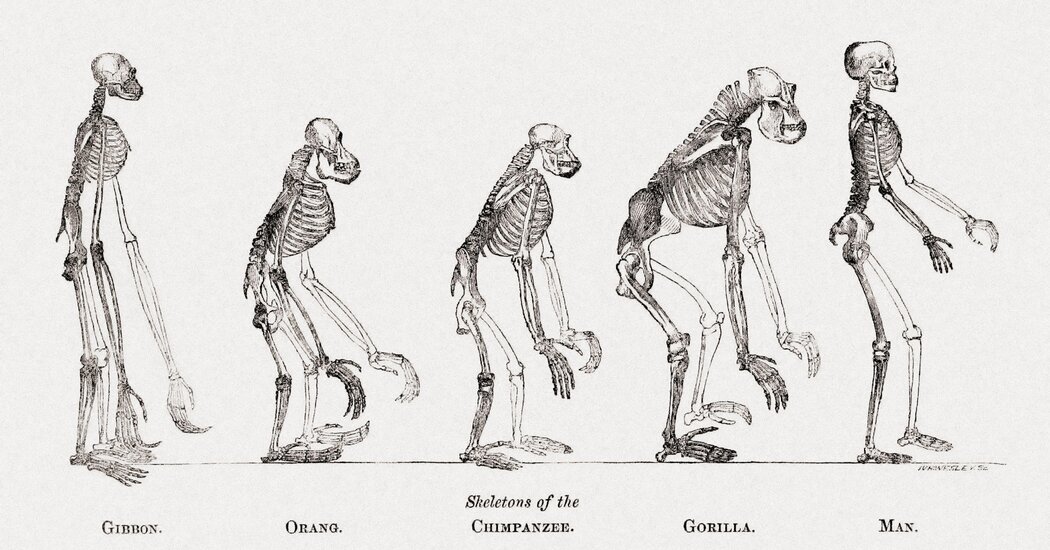
A recent study explores the genetic and molecular basis of the evolution of upright walking in humans, highlighting its significance as a key trait that distinguishes humans from other primates, building on Darwin's theories of human evolution.
New research analyzing earthworm genomes suggests that evolution may occur through rapid, significant changes rather than slow, incremental ones, challenging traditional Darwinian theory and indicating that our understanding of evolutionary processes might need to be revised.
NPR's correspondent shares her fascination with the blue-footed booby during a trip to the Galápagos Islands, highlighting their unique appearance, behavior, and historical significance in Darwin's theory of evolution.
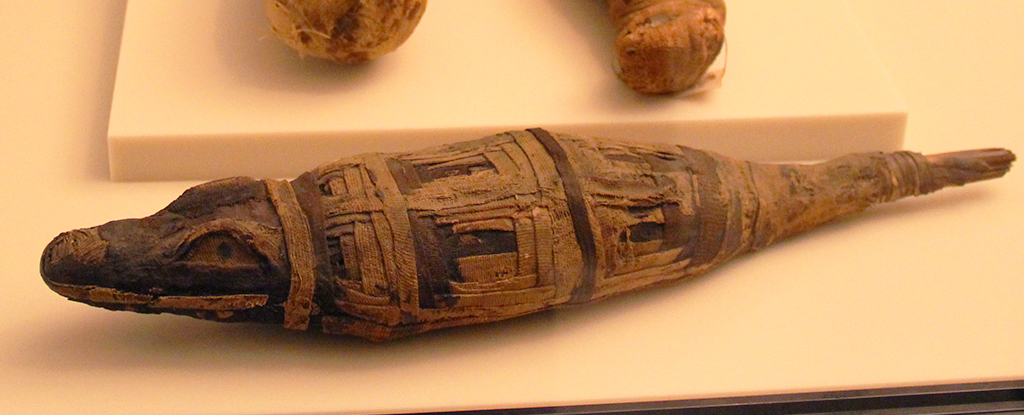
In the early 1800s, the debate over whether animals could evolve into new species was fueled by the discovery of mummified animals from Egypt. Naturalists Georges Cuvier and Jean-Baptiste Lamarck represented opposing views, with Cuvier mocking Lamarck's theory of transformism in an obituary. The mummified animals, including ibises, cats, and crocodiles, were examined for evidence of species change, but their similarity to modern counterparts seemed to support Cuvier's belief in the unchanging nature of species. However, this debate was reignited with the publication of Charles Darwin's On the Origin of Species in 1859, acknowledging Lamarck as a predecessor in the study of species modification.
An aircraft incident involving US defense personnel occurred during Exercise Predator's Run 2023 near Darwin, Australia. The Australian Department of Defence confirmed the incident and stated that the focus is on the response and safety of those involved. No further details about casualties have been provided at this time.