Tag

Forests

All articles tagged with #forests

Trump Administration Moves to Remove Roadless Forest Protections
environment8 months ago

Trump Administration Moves to Remove Roadless Forest Protections

U.S. Secretary of Agriculture Brooke Rollins announced the rescinding of the 2001 Roadless Rule, which restricts road construction and timber harvest on nearly 59 million acres of national forests. This move aims to improve forest management, reduce wildfire risks, and boost economic development in rural areas by allowing more local decision-making and responsible resource use.

Mapping the Massive Fungus: Nature's Giant Revealed
science1 year ago

Mapping the Massive Fungus: Nature's Giant Revealed

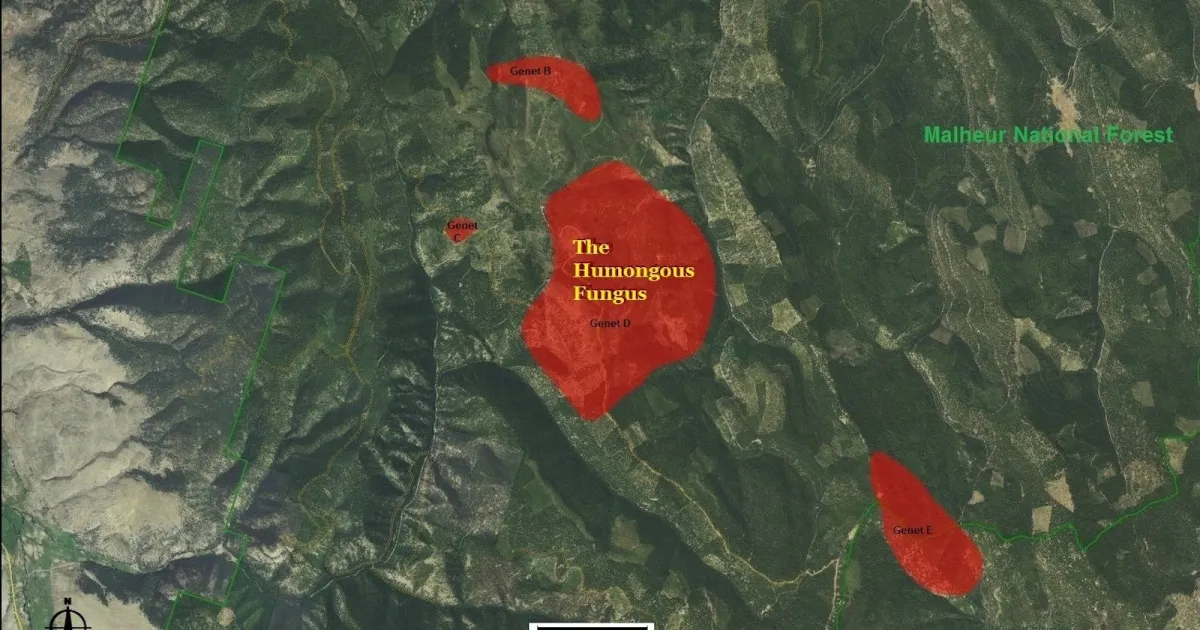
In Oregon's Blue Mountains, the Humongous Fungus, a massive Armillaria ostoyae colony, is possibly the largest and oldest living organism on Earth, covering up to 3.7 square miles and weighing as much as 27,000 metric tons. This subterranean fungus, known for its honey mushrooms, kills trees by colonizing their roots. Its vast size and age, potentially up to 8,600 years, make it a unique ecological phenomenon, though its exact dimensions and impact remain subjects of scientific study.

Antarctic Amber Discovery Sheds Light on Ancient Cretaceous Forests
science1 year ago

Antarctic Amber Discovery Sheds Light on Ancient Cretaceous Forests

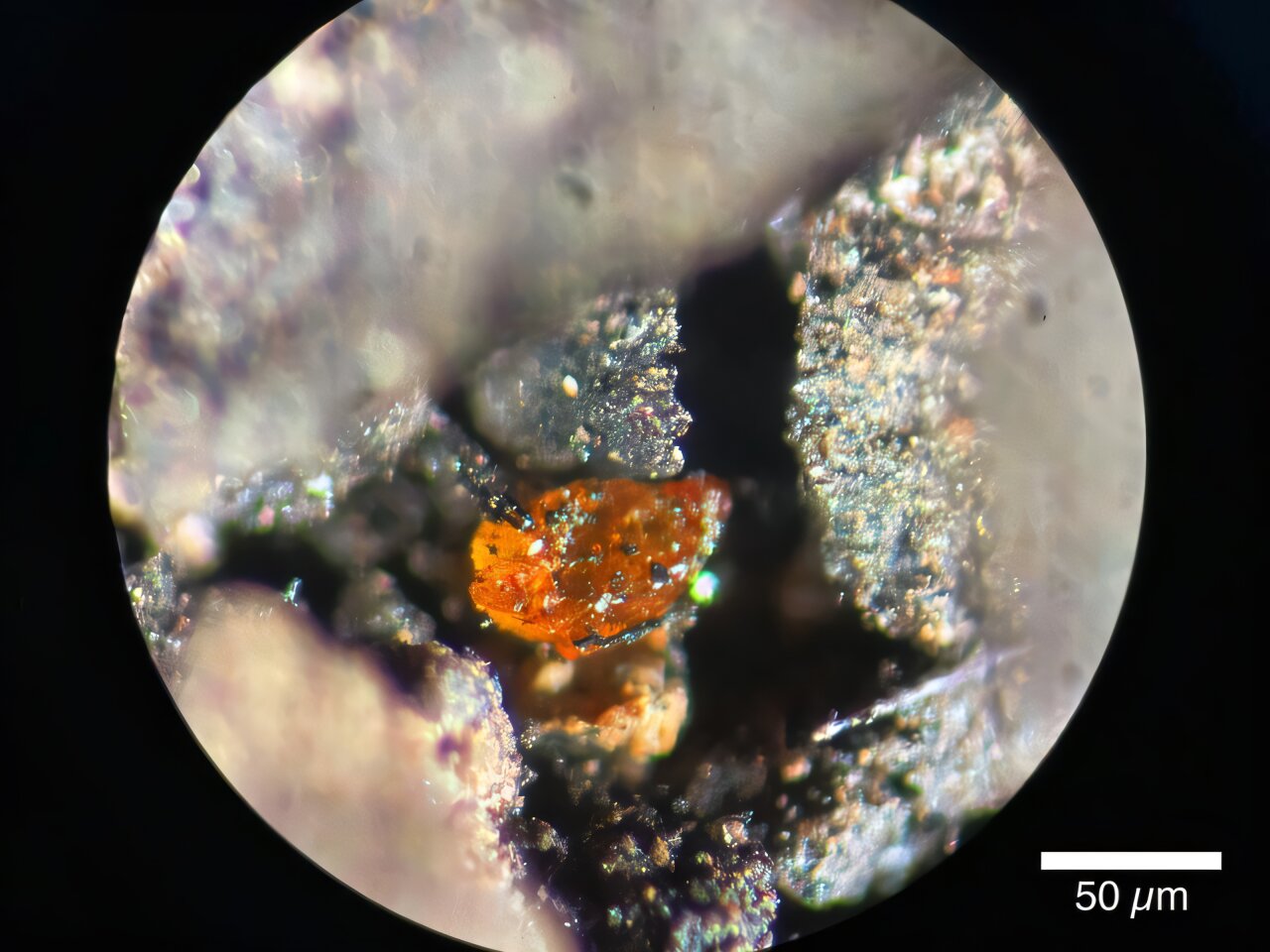
Scientists have discovered the first amber on the Antarctic continent, providing new insights into the Cretaceous period's forest ecosystems. The amber, found in a sediment core from Pine Island Bay, offers evidence of resin-producing trees in Antarctica 90 million years ago. This discovery helps reconstruct the ancient swampy, conifer-rich rainforests near the South Pole and suggests that all continents once had climates suitable for such forests. The amber contains micro-inclusions of tree bark and shows signs of pathological resin flow, indicating past environmental conditions.

"Mathematical Limits: Forest Complexity Surpasses Expectations"
science2 years ago

"Mathematical Limits: Forest Complexity Surpasses Expectations"

A study from the University of Bristol challenges the assumption that forests exhibit fractal patterns similar to individual trees, revealing that forest canopies are not fractal in nature. The research, published in the Journal of Ecology, used airborne laser scanning data from diverse forest sites in Australia to compare forest height maps to fractal patterns. The findings suggest that while forests do not display fractality, there are consistent deviations from it across different ecosystems, indicating potential organizing principles in biology and implications for monitoring forests in response to environmental changes.

"Redwood Trees: A Growing Presence in WA's Forests"
environment2 years ago

"Redwood Trees: A Growing Presence in WA's Forests"

Redwood trees, typically found in California, are being planted in Washington and Oregon as a potential solution to climate change threats facing the region's forests. While some believe redwoods could play a key role in forest resiliency due to their carbon absorption and resistance to fire and disease, others are concerned about the ecological impact on native plants and animals. The debate continues as tree farmers and organizations experiment with growing redwoods in the Pacific Northwest, with some seeing promising results while others prefer to stick with native species.

"Climate Change's Impact on Global Forest Carbon Sequestration"
environment2 years ago

"Climate Change's Impact on Global Forest Carbon Sequestration"

A new study reveals that climate change is disproportionately affecting U.S. forests, particularly in the West, leading to decreased tree growth and challenging their role as carbon sinks. The study highlights the urgent need for greenhouse gas emission reductions and forest conservation to address the impact of climate change on forest health and carbon sequestration. The findings emphasize the regional disparities in forest productivity and the dynamic influence of climate change on forests, underscoring the need for urgent action to mitigate emissions and preserve forest ecosystems.

"Study: Climate Change Reduces Global Forest Carbon Sequestration Productivity"
environment2 years ago

"Study: Climate Change Reduces Global Forest Carbon Sequestration Productivity"

A new study analyzing U.S. Forest Service data reveals that climate change is impacting forests differently across the United States, with the Western region experiencing a notable slowdown in productivity due to severe climate change impacts, while the Eastern region has seen slightly accelerated growth. This imbalance in forest productivity has significant implications for global carbon sequestration, as forests play a critical role in storing carbon and regulating the Earth's climate. The study emphasizes the urgent need for reduced global greenhouse gas emissions to preserve forest carbon sinks and limit the acceleration of climate change.

Unlocking the Power of Forests in Combating Climate Change
environment2 years ago

Unlocking the Power of Forests in Combating Climate Change

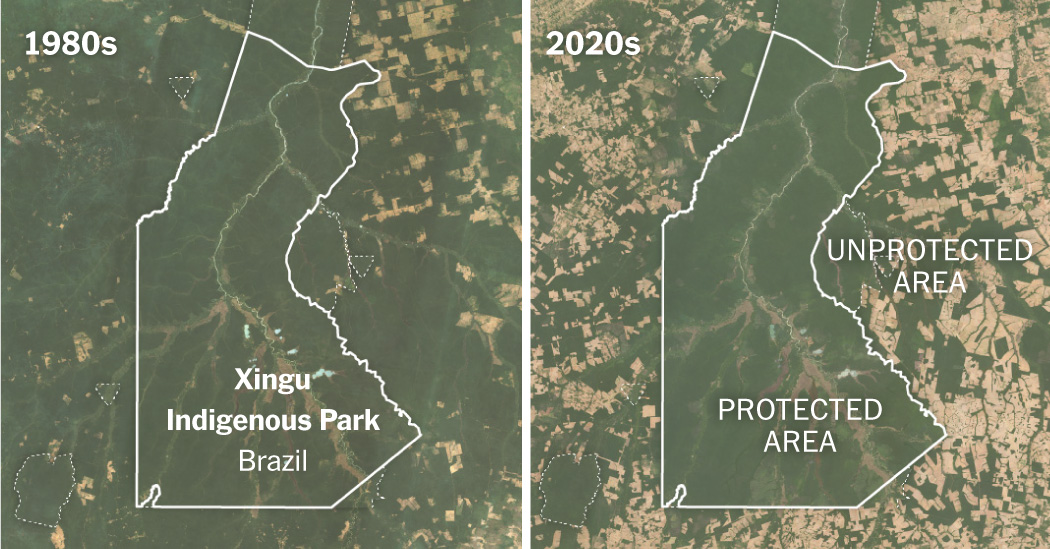
A new NASA program called the Global Ecosystem Dynamics Investigation (GEDI) is using laser technology to measure the biomass of forests around the world, allowing researchers to calculate how much carbon these protected areas are storing. The study found that protected areas have helped prevent deforestation and kept as much as a year's worth of fossil fuel emissions from being released into the atmosphere. However, these reserves are facing increasing pressure as boundaries are disregarded and deforestation continues. The GEDI program, which provides precise 3D measurements of vegetation, offers a new way to understand the carbon storage potential of forests and highlights the importance of protecting these ecosystems in the fight against climate change.

The Powerful Role of Trees in Combating Climate Change
environment2 years ago

The Powerful Role of Trees in Combating Climate Change

A new study published in the journal Nature suggests that restoring global forests to their natural state could potentially capture an additional 226 gigatons of carbon, equivalent to about a third of the carbon released since the Industrial Era began. However, there are important caveats to consider, such as the need to cut greenhouse gas emissions and the potential loss of forest carbon due to fire, drought, and pests. The study emphasizes that forests are crucial for addressing both the climate and biodiversity crises, but caution is needed to avoid misusing nature as an excuse to continue relying on fossil fuels.

"Unlocking the Carbon Potential of Natural Forests: A Global Assessment"
environment2 years ago

"Unlocking the Carbon Potential of Natural Forests: A Global Assessment"

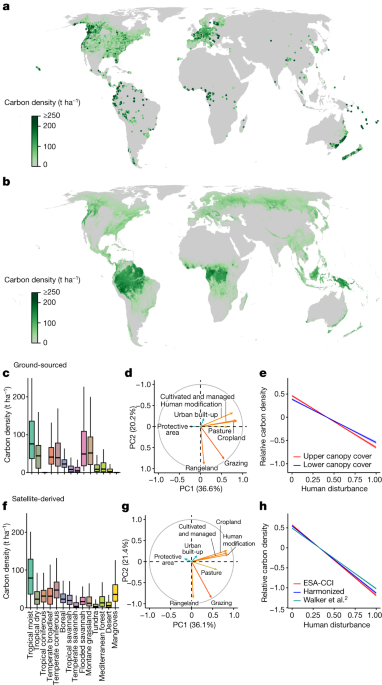
An integrated global assessment of natural forest carbon potential reveals that current forest carbon stocks are 328 Gt lower than their full natural potential. The study combines ground-sourced and satellite-derived models to estimate the potential biomass of forests worldwide. The analysis shows that 61% of the carbon potential lies in existing forests, highlighting the importance of forest conservation and restoration in mitigating climate change. The study also identifies spatial variations and uncertainties in the models, emphasizing the need for more ground-sourced data from tropical regions. Overall, the findings underscore the significance of sustainable forest management in achieving climate targets and enhancing carbon sequestration.