Astronomers using the European Southern Observatory’s VLT have captured the first direct images of a newborn planet around the star HD 135344B, revealing a planet still gathering mass and sculpting its dust disk, providing a rare glimpse into early planet formation.
New models based on data from radio telescopes in Chile have revealed that Eris, a dwarf planet located billions of miles beyond Neptune, is surprisingly squishy. The heat leftover from its birth is causing Eris to behave more like a soft cheese, with its icy surface slowly flexing. Eris is considered an "almost perfect" twin of Pluto, and the new findings suggest it has a rocky core enveloped by a convecting icy shell. Scientists hope to obtain measurements of Eris' shape to further validate their model.
A recent study led by Professor Francis Nimmo from the University of California, Santa Cruz, has revealed that the dwarf planet Eris, similar in size to Pluto but located farther from the sun, has a surprisingly "squishy" internal structure. The study utilized data on Eris's moon Dysnomia to infer properties of Eris's internal structure. The researchers found that Eris has a rocky core surrounded by a convecting layer of ice, making it behave less like a rigid object and more like a soft cheese. Further measurements and observations are needed to refine the model and determine the exact shape of Eris.
A recent study provides new insights into the structure and composition of Eris, a small planet similar in size to Pluto. Researchers have discovered that Eris has a rocky inside under a layer of ice, distinguishing it from Pluto, which has a higher ice content and a possible underground liquid ocean. The study also reveals that Eris has a slow churning motion of its ice, driven by leftover heat from its interior, suggesting the absence of a liquid ocean. Eris, the most massive dwarf planet, orbits beyond Neptune and is about 40 percent farther from the sun than Pluto.
Scientists have gained a better understanding of the internal structure and composition of the dwarf planet Eris, which is similar in size to Pluto. Research based on its orbital relationship with its moon Dysnomia suggests that Eris has a rocky interior beneath an icy shell. Unlike Pluto, Eris is thought to have experienced enough heat in its history to melt, causing the rock to sink to the center. Eris has a higher concentration of rock and a lower ice content compared to Pluto, making it more massive. The new findings highlight the uniqueness of each dwarf planet and caution against inferring too much from what is known about Pluto.
Scientists have gained a better understanding of the mysterious dwarf planet Eris, which is similar in size to Pluto but has never been visited. Research based on its orbital relationship with its moon Dysnomia suggests that Eris has a rocky interior below an icy shell. Unlike Pluto, Eris is thought to have separated rock from ice, indicating that it got hot enough at some point to melt. Eris has a higher rock content and a slower churning motion of ice, driven by leftover heat. The findings highlight the uniqueness of each dwarf planet and caution against inferring too much from what is known about Pluto.
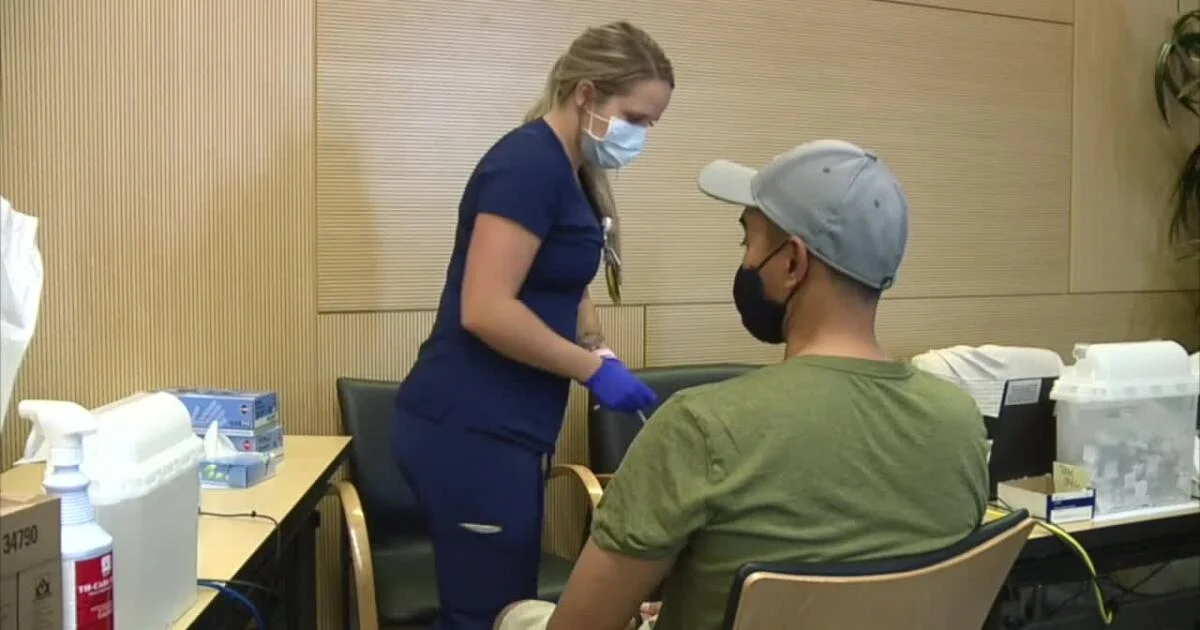
UofL Health provides an update on the new Covid variant EG.5, also known as Eris, which is currently the dominant strain in the United States. The variant is highly transmissible, and with a population that is not fully immunized, it poses a significant challenge. A new booster is expected to be available in mid-September, which should provide protection against this new strain. UofL Health currently has seven Covid patients in the hospital.
The Eris sub-variant of the Omicron coronavirus, which is more transmissible but not necessarily more severe, has become the dominant sub-variant in the US. However, another sub-variant called Pirola, also known as BA.2.86, is emerging as a potential concern due to its high number of mutations and potential immune evasion. While it is too early to determine the transmissibility and severity of Pirola, it has been designated as a "variant under monitoring" by the World Health Organization. Vaccination and preventive measures remain crucial in combating these evolving sub-variants.
Two new COVID variants, EG.5 (Eris) and BA.2.86 (BA.X), both sub-variants of Omicron, are causing an increase in COVID cases. Eris accounts for 17% of cases in the US and is spreading rapidly in the UK, while BA.X has been added to the WHO's monitoring list. The symptoms of these variants are similar to previous strains, including fever, cough, shortness of breath, fatigue, loss of taste or smell, sore throat, and gastrointestinal symptoms. The public health risk of EG.5 is considered low, while more information is needed on BA.2.86 due to its numerous mutations.
The "Eris" COVID-19 variant, also known as EG.5, is rapidly spreading throughout the Las Vegas valley, with an estimated 17% of U.S. COVID-19 cases attributed to this strain. Symptoms include cough, shortness of breath, fatigue, and nausea. Dr. Yvonne Barry of Valley Oaks Medical Group expressed concern over the fast spread, particularly among nursing homes and individuals who are not following safety measures such as wearing masks and practicing proper hand hygiene. She advises individuals over 65 with underlying health conditions to wear masks in public places, and a new vaccine specifically targeting the "Eris" variant is expected to be available in the fall.
The Eris variant, a descendant of Omicron, has become the second most prevalent variant in the UK, accounting for one in 10 Covid cases. Symptoms of Eris are similar to those of Omicron, including a runny nose, headache, fatigue, sneezing, and sore throat. Experts suggest that the surge in cases may be driven by waning immunity, poor weather, and the spread of subvariants like Arcturus and Eris. While some believe the wave may slow down over the summer holidays, it is expected to grow faster in September when schools and workplaces reopen. However, others downplay concerns, stating that Eris is currently designated as a variant under monitoring and not a variant of concern, and further monitoring is needed to assess its impact on infections, hospital admissions, and deaths.