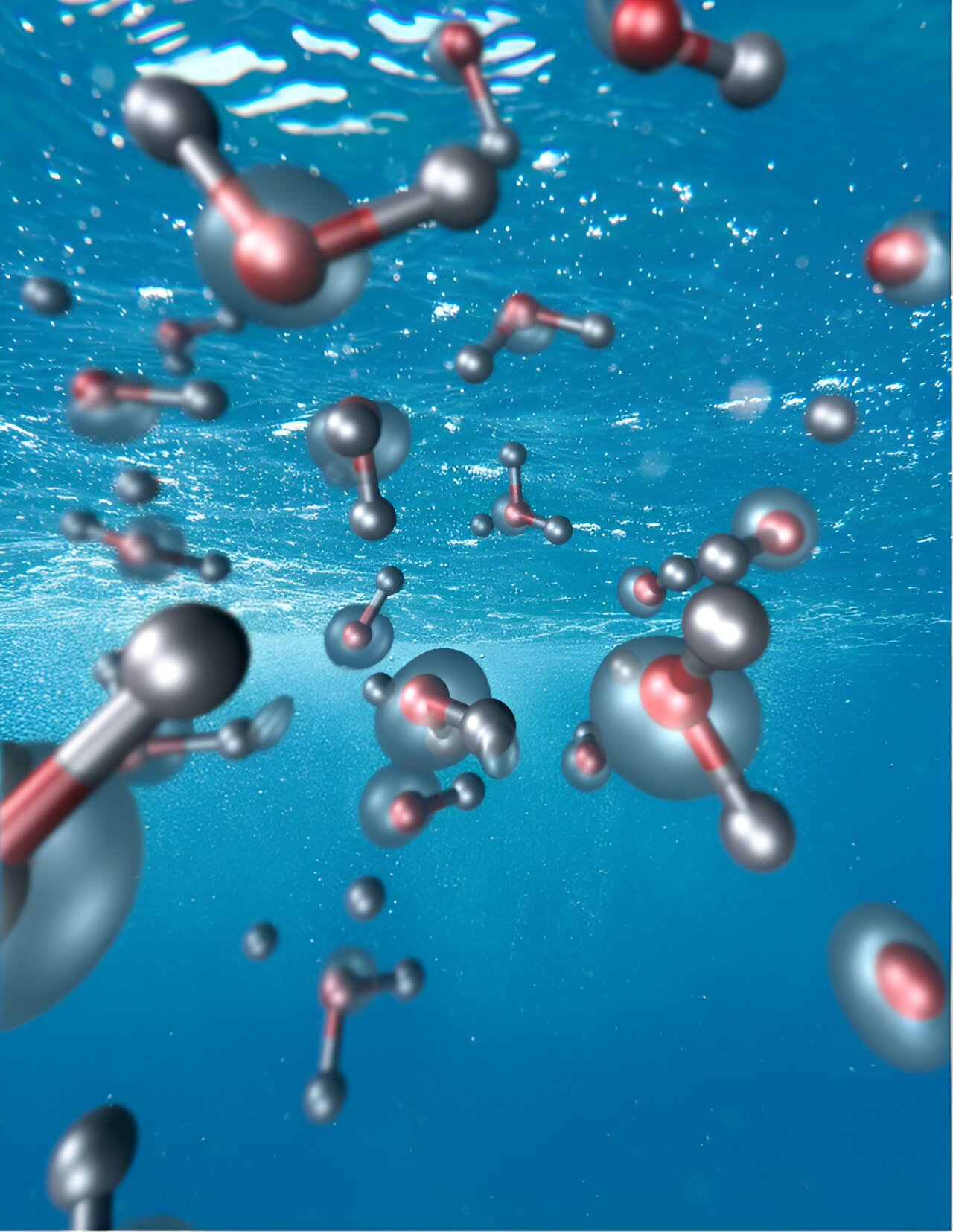
EPFL researchers have made significant progress in understanding water's electronic structure by using many-body perturbation theory with effective vertex corrections, a complex mathematical framework that accounts for the interactions of multiple particles within a system. Their study provides a more accurate understanding of water's electronic properties, such as its ionization potential, electron affinity, and band gap, which are crucial for various applications including biological systems, environmental cycles, and technological advancements like solar energy conversion. This theoretical development could also lay the groundwork for achieving accurate electronic structures of materials and revolutionize our fundamental understanding of electronic properties in condensed matter science.
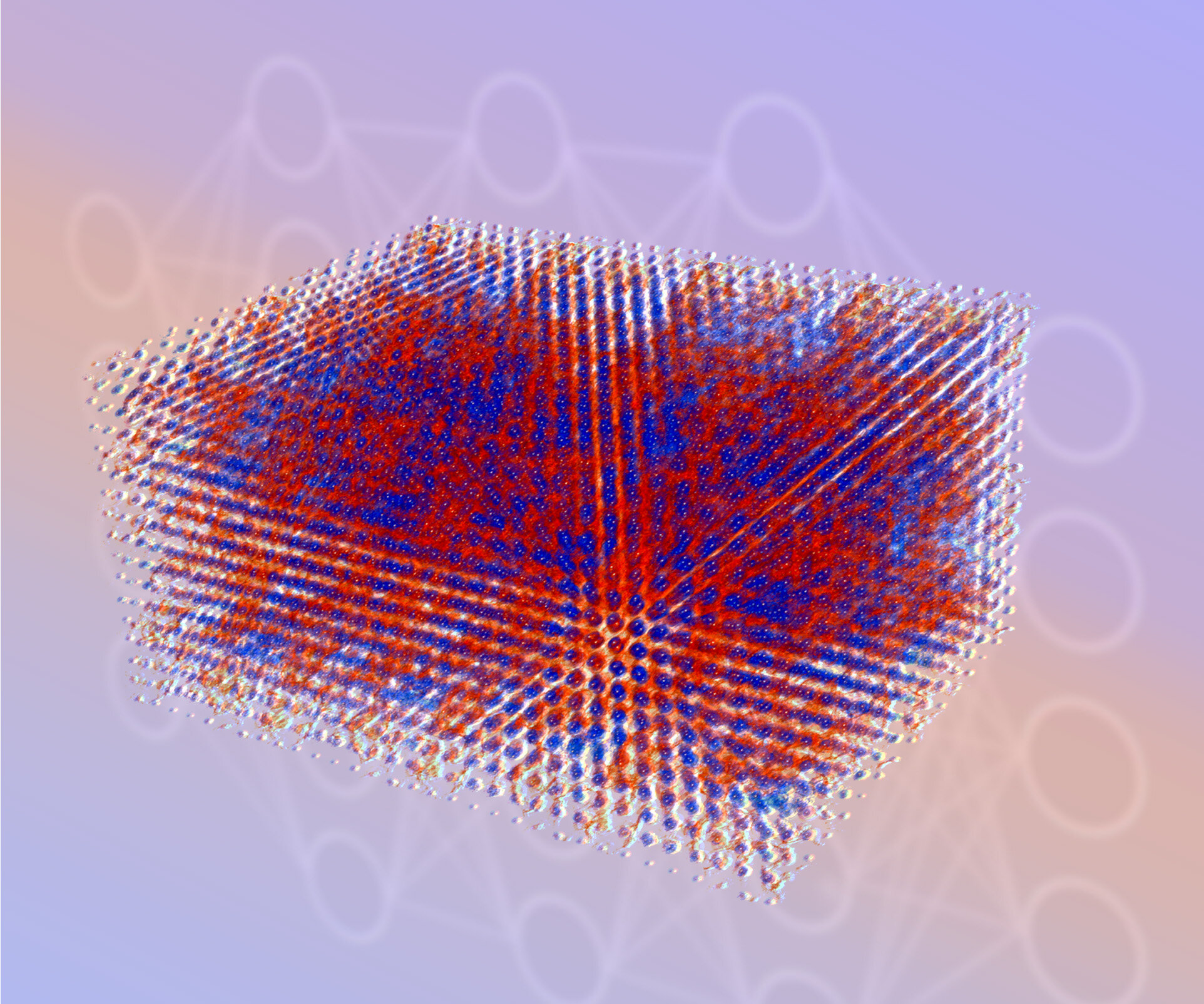
The Center for Advanced Systems Understanding and Sandia National Laboratories have developed Materials Learning Algorithms (MALA), a machine learning-based simulation method that outperforms traditional techniques by integrating machine learning with physics algorithms. MALA provides a significant speedup for smaller systems and the ability to accurately simulate large-scale systems of over 100,000 atoms. This innovation has the potential to revolutionize applied research in fields such as drug design and energy storage, and is highly compatible with high-performance computing systems.
Researchers from the Center for Advanced Systems Understanding (CASUS) and Sandia National Laboratories have developed a machine learning-based simulation method called Materials Learning Algorithms (MALA) that surpasses traditional electronic structure simulation techniques. MALA integrates machine learning with physics-based approaches to accurately predict the electronic structure of materials, enabling access to previously unattainable length scales. The software stack achieved a speedup of over 1,000 times for smaller system sizes and accurately performed electronic structure calculations involving more than 100,000 atoms. This breakthrough opens up computational possibilities for addressing societal challenges and advancing applied research in areas such as drug design, energy storage, and semiconductor devices.
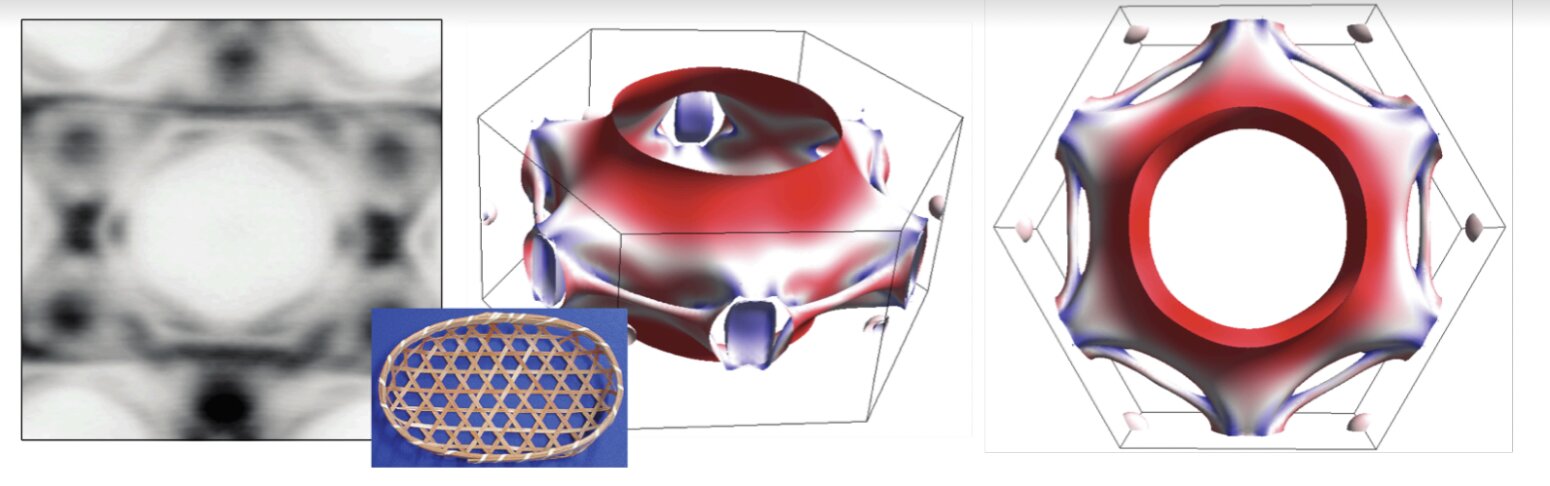
Researchers have mapped the behavior of electrons residing in a curved space within Kagome metals, a class of quantum materials with a unique lattice structure resembling Japanese woven bamboo patterns. The study investigated the spin and electronic structure of XV6Sn6, materials, a family of Kagome metals that is partly composed of a rare-earth element. The researchers used both theoretical and experimental methods to explore the spin Berry curvature in the XV6Sn6 Kagome family and gathered evidence of a finite spin Berry curvature at the center of the Brillouin zone.
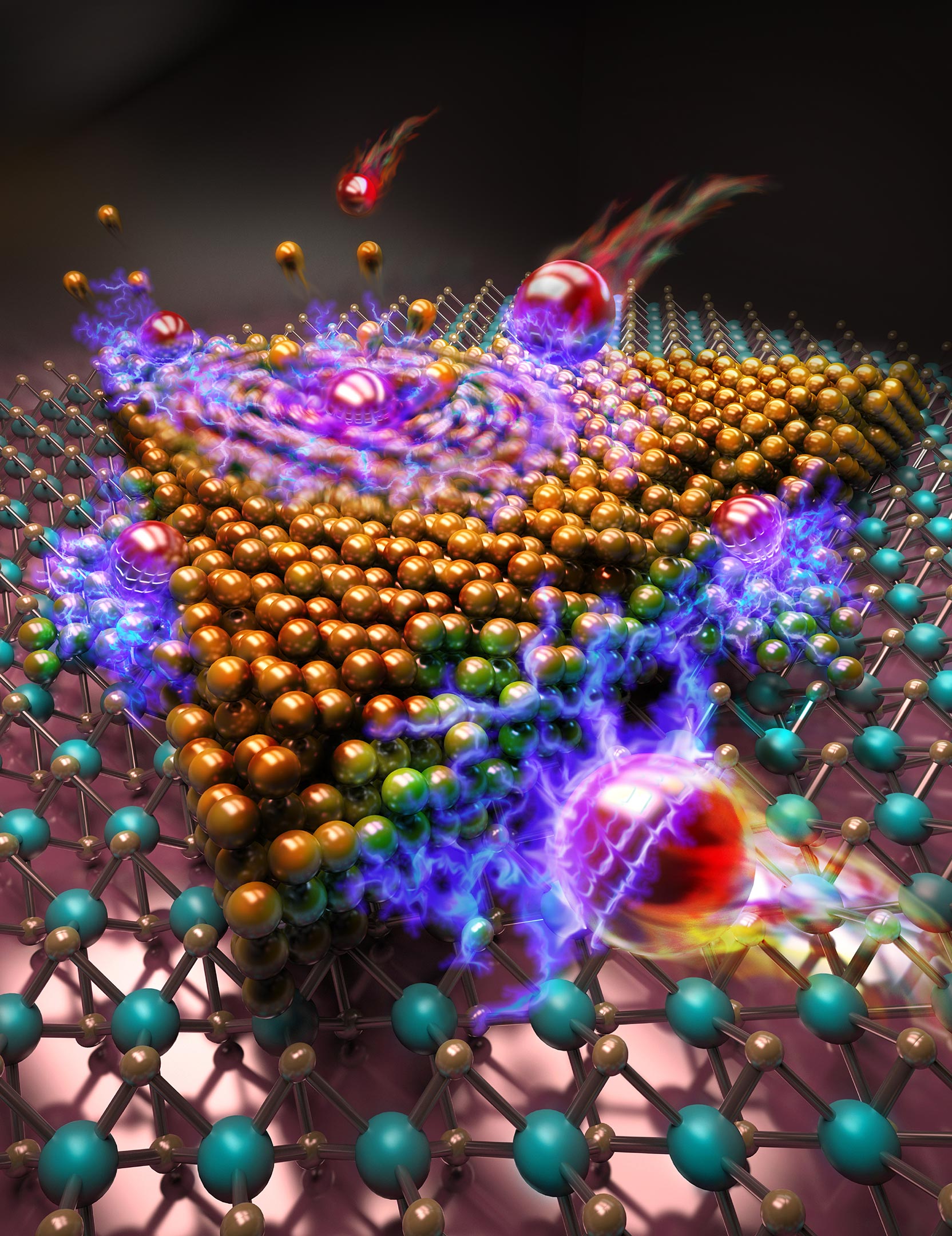
Researchers at Vienna University of Technology have found a way to control the geometry of tiny gold particles by bombarding them with highly charged ions, which knock electrons away from the gold, altering the particles’ electronic structures and causing their atoms to move. The size and shape of the particles can be changed, creating new kinds of nanostructures, including quantum dots. The effects of the ion bombardment can be studied in an atomic force microscope, and improved control and deeper understanding of such processes is important for making a wide variety of nanostructures.