D-Wave has achieved a historic milestone by demonstrating scalable on-chip cryogenic control of gate-model qubits, reducing wiring complexity and paving the way for larger, more practical quantum computers. This technology, previously used in D-Wave's annealing systems, can now be applied to gate-model architectures, significantly advancing the development of commercially viable quantum processors.
Researchers at Peking University have developed a high-precision analog computing system using RRAM chips that can rapidly solve matrix equations with 24-bit fixed-point accuracy, demonstrating scalability and potential applications in AI and communications.
MIT researchers developed a framework to evaluate the commercial potential of quantum materials by considering their quantum properties, cost, and environmental impact, identifying promising sustainable materials for future applications in electronics, energy, and medicine.
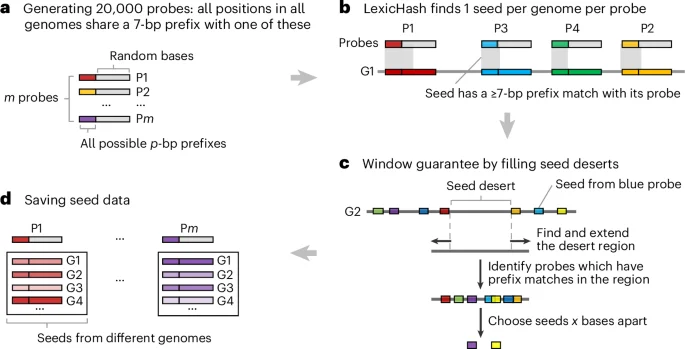
LexicMap is a high-performance tool designed for efficient sequence alignment against millions of prokaryotic genomes, using a novel seeding approach with variable-length prefix and suffix matching, enabling rapid and scalable analysis suitable for large genomic databases.
Researchers at the University of Illinois have developed a modular superconducting quantum processor that can be assembled like LEGO blocks, achieving near-perfect qubit performance (~99% fidelity) and demonstrating a promising approach for scalable, reconfigurable quantum computers. This modular architecture offers advantages over traditional monolithic designs, including better scalability, easier hardware upgrades, and increased resilience, paving the way for future quantum networks.
Originally Published 6 months ago — by Hacker News
The article discusses the history, current state, and debates surrounding Bitcoin, highlighting its role as a decentralized asset, its limitations as a currency, and the ongoing issues of centralization, liquidity, and security, while also touching on its potential future in a digital society. It reflects on the disillusionment some feel about Bitcoin's original promise and its evolution into a financial instrument and store of value.
The article explains how to leverage ChatGPT with strategic prompts to create scalable digital products and passive income streams, potentially earning six figures, by automating idea generation and product development within a weekend. It emphasizes the importance of market research and maintaining brand authenticity while using AI tools.
A week-long, web-based program involving small daily acts of kindness and gratitude significantly improved emotional wellbeing, reduced stress, and enhanced sleep, especially benefiting younger, Black, Hispanic, and socially disadvantaged individuals, demonstrating a scalable approach to mental health improvement.
Researchers at the University of Chicago have developed a new design for a superconducting quantum processor that uses a modular approach with a reconfigurable router as a central hub. This design allows any two qubits to connect and entangle, overcoming the limitations of traditional 2D grid layouts where qubits can only interact with their immediate neighbors. The new architecture aims to enhance scalability and fault tolerance, crucial for advancing quantum computing capabilities.
The Dencun upgrade on Ethereum Layer-2 networks like Optimism, Zora, and Base has significantly reduced transaction costs, with some fees now appearing as less than a penny. This upgrade introduced proto-danksharding, allowing for the division of data into smaller pieces to process it more efficiently, resulting in lower operational costs for L2 networks and cheaper transaction costs for users. However, some experts caution that these low costs may not be sustainable as demand for the new data storage method, known as blobs, increases over time.
Palantir Technologies' Q4 2023 financial results indicate a paradigm shift for the company, with the launch of their Artificial Intelligence Platform (AIP) and new onboarding method showing signs of scalability and operational efficiency. While the intrinsic value has increased, the stock price has reached fair value, leading to a rating downgrade to hold until more clarity on the revenue impacts of AIP is available. The company's customer acquisition costs are trending down, customer count growth is re-accelerating, and free cash flow margins are increasing, pointing towards a more profitable future.
Linux storage expert Jens Axboe has improved the scalability of the BFQ I/O scheduler, resulting in significantly better performance for speedy storage devices. The optimizations include reducing locking contention and system time while increasing IOPS by 2.73x. These improvements involve serializing request dispatch, bypassing merging when contended, and using separate insertion lists and locking.
PostgreSQL, an open-source relational database system, has evolved from a niche solution to a widely used platform for various applications and workloads. With the recent release of PostgreSQL 16, which includes logical replication from standby servers, developers can achieve better scalability. The meticulousness and collaborative efforts of the Postgres community contribute to the stability and reliability of the features. The implementation of Direct I/O, a long-term feature, is expected to improve performance in writing data to disk, although it will take years to fully implement. Amazon RDS for PostgreSQL offers managed operational tasks, making it easier for developers to focus on application development rather than deployment and monitoring.
Astron Aerospace has developed the H2 Starfire Omega 1, an internal combustion engine (ICE) with a gas turbine configuration that claims to be a viable alternative to electric vehicles (EVs). The engine weighs only 35 pounds yet produces 160 horsepower and 170 pound-feet of torque, with an alleged 60 percent efficiency. It can run on any combustible fuel, including hydrogen, reducing emissions significantly. The engine is stackable, easily scalable for other applications, and air-cooled, simplifying the package and requiring minimal maintenance. However, the engine has not been thoroughly tested in real-world conditions and lacks investors for mass testing and production.
Researchers at Georgia Tech have made a breakthrough in harvesting mechanical energy using the triboelectric effect, which allows for the direct generation of electricity at a much higher rate than previous techniques. By utilizing modern materials science, they have created materials that can generate voltages thousands of times higher than before. Additionally, a new method allows for the efficient stringing together of small generators, reducing coupling capacitance and enabling the construction of larger arrays. The hope is to combine these advancements with existing solar panels to gather energy from falling raindrops, although cost and scalability remain challenges.