Tag

Mantle Dynamics

All articles tagged with #mantle dynamics

Antarctica’s Gravity Hole Grows Stronger, Hinting at Deep Mantle Shifts
earth-science10 days ago

Antarctica’s Gravity Hole Grows Stronger, Hinting at Deep Mantle Shifts

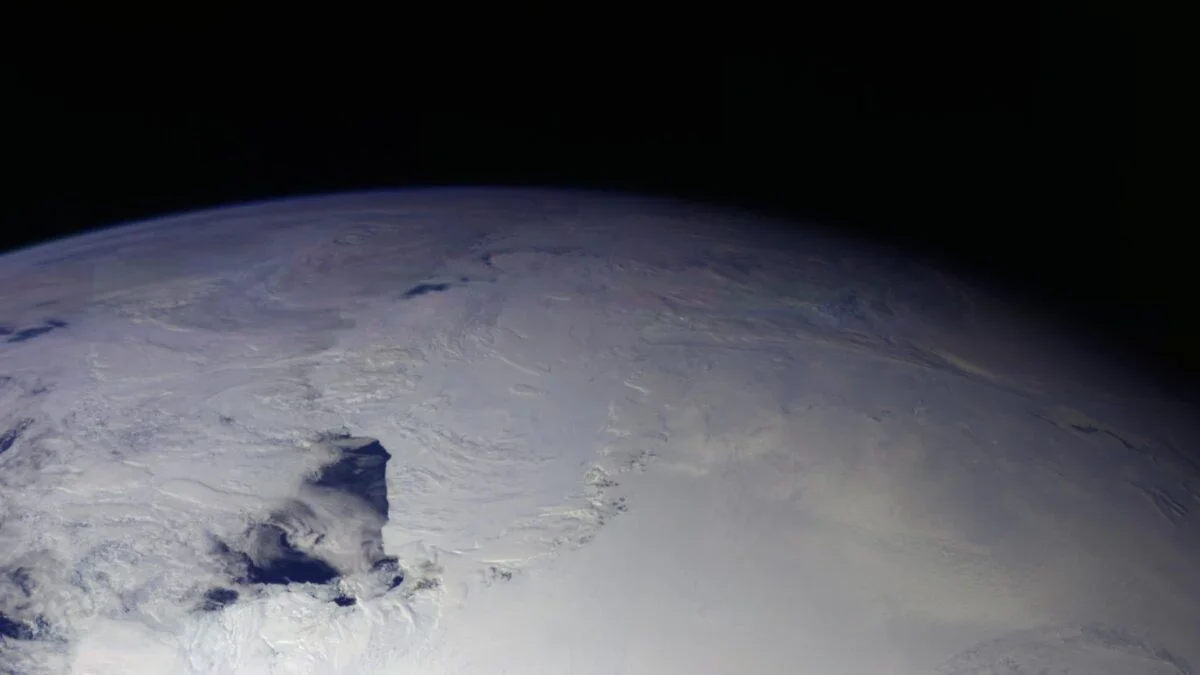
Scientists used earthquakes and geophysical data to reconstruct Earth’s interior and map a gravity hole beneath Antarctica that began weakening but has grown stronger over roughly 50–30 million years, driven by competing mantle flows (cold, sinking material beneath and hotter, rising material above). This amplified mass deficit alters the geoid and regional sea-level dynamics, offering clues about ice-sheet stability and climate-related sea-level changes, though the exact future impact remains uncertain.

Underground Sinking Unveils Hidden Forces Shaping Turkey’s Central Plateau
science1 month ago

Underground Sinking Unveils Hidden Forces Shaping Turkey’s Central Plateau

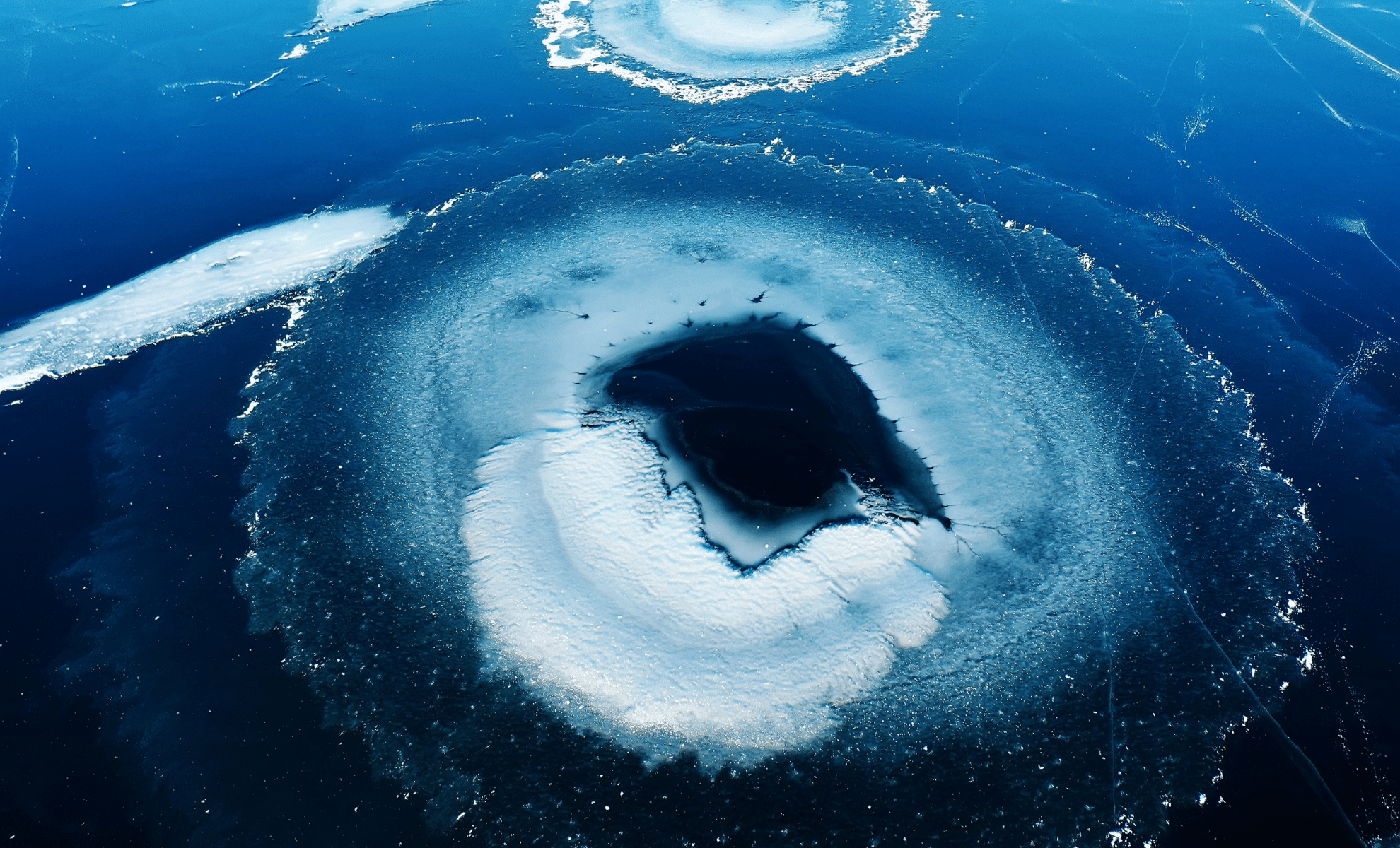
Scientists find that a dense portion of the lower lithosphere beneath Turkey’s Konya Basin is slowly sinking into the mantle via multi-stage lithospheric dripping, causing persistent subsidence while the surrounding Central Anatolian Plateau uplifts. The conclusion, drawn from satellite data and seismic imaging and supported by lab models, explains long-term basin deepening and regional crustal dynamics.

Scientists Discover Enormous Hole in Indian Ocean
science4 months ago

Scientists Discover Enormous Hole in Indian Ocean

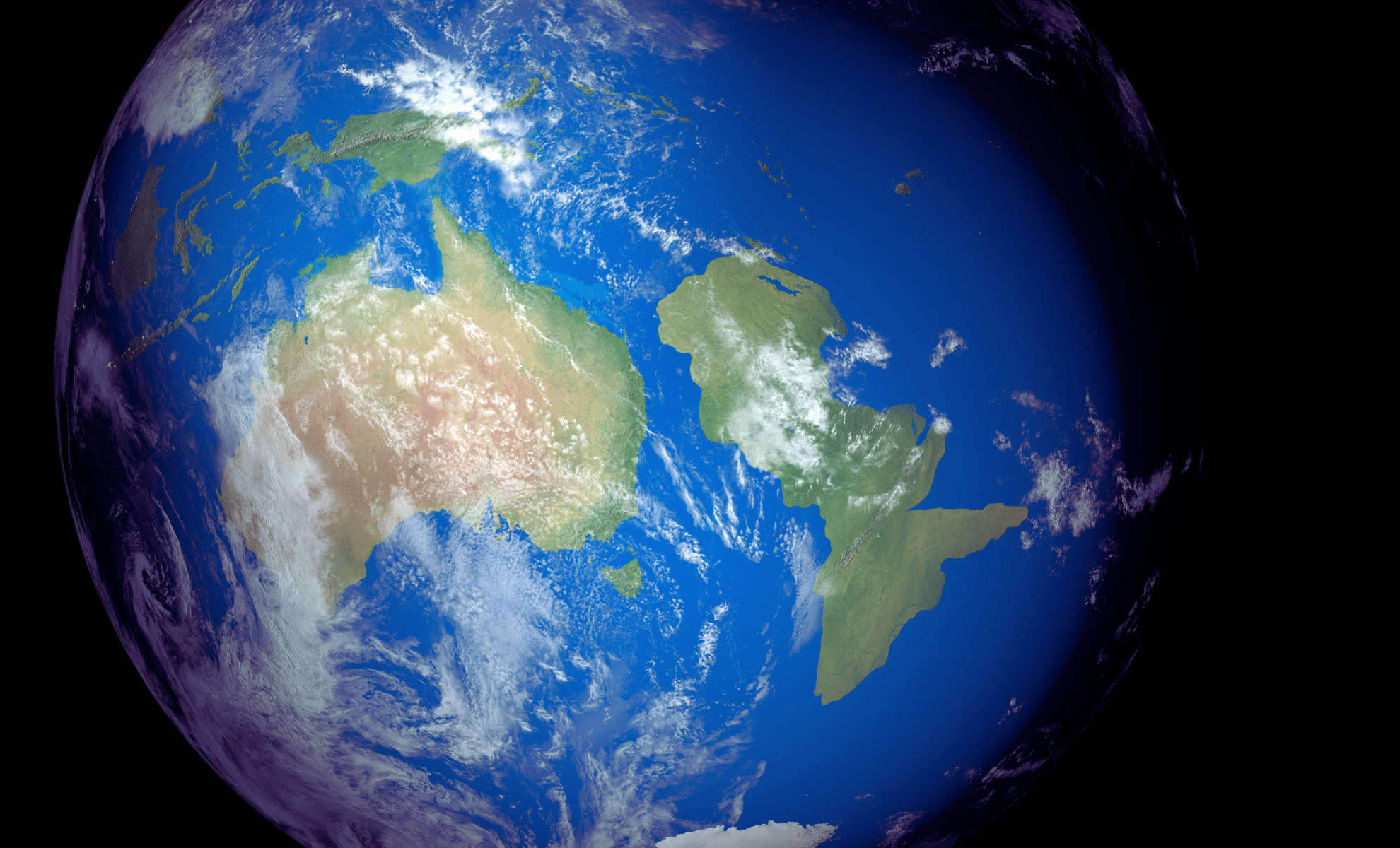
Scientists have uncovered new insights into the Indian Ocean Geoid Low, the largest gravity hole on Earth, linking it to mantle processes such as sinking slabs and rising plumes originating from deep within Earth's mantle, which have evolved over millions of years and are influenced by interactions with the African hotspot and mantle structures like the LLSVP.

"Uncovering an Ultra-Low Velocity Zone Beneath the Himalayas"
science1 year ago

"Uncovering an Ultra-Low Velocity Zone Beneath the Himalayas"

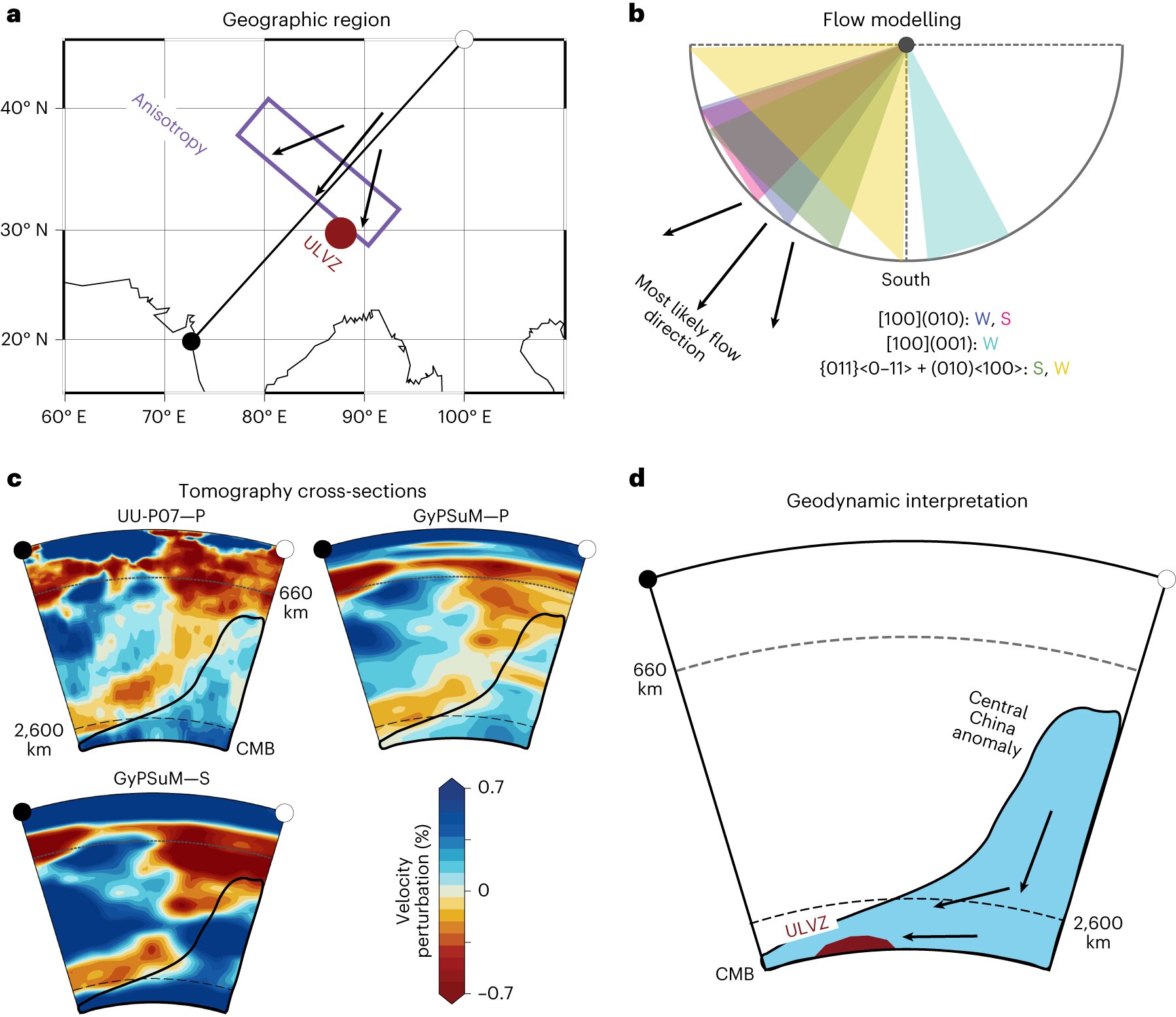
Researchers from Yale University have discovered an ultra-low velocity zone (ULVZ) beneath the Himalayas, 1,800 miles beneath Earth's surface, using seismic waves to study the structure just above the boundary between Earth's rocky mantle and metallic core. The ULVZ may have been formed by subducted material that had sunk from the surface down to the core-mantle boundary, providing direct evidence for subducted slabs playing a role in driving flow at the base of the mantle. This discovery sheds light on the poorly understood composition and role of ULVZs in mantle dynamics, offering insights into the interconnected processes of the deep mantle and their influence on tectonic plates and surface features.