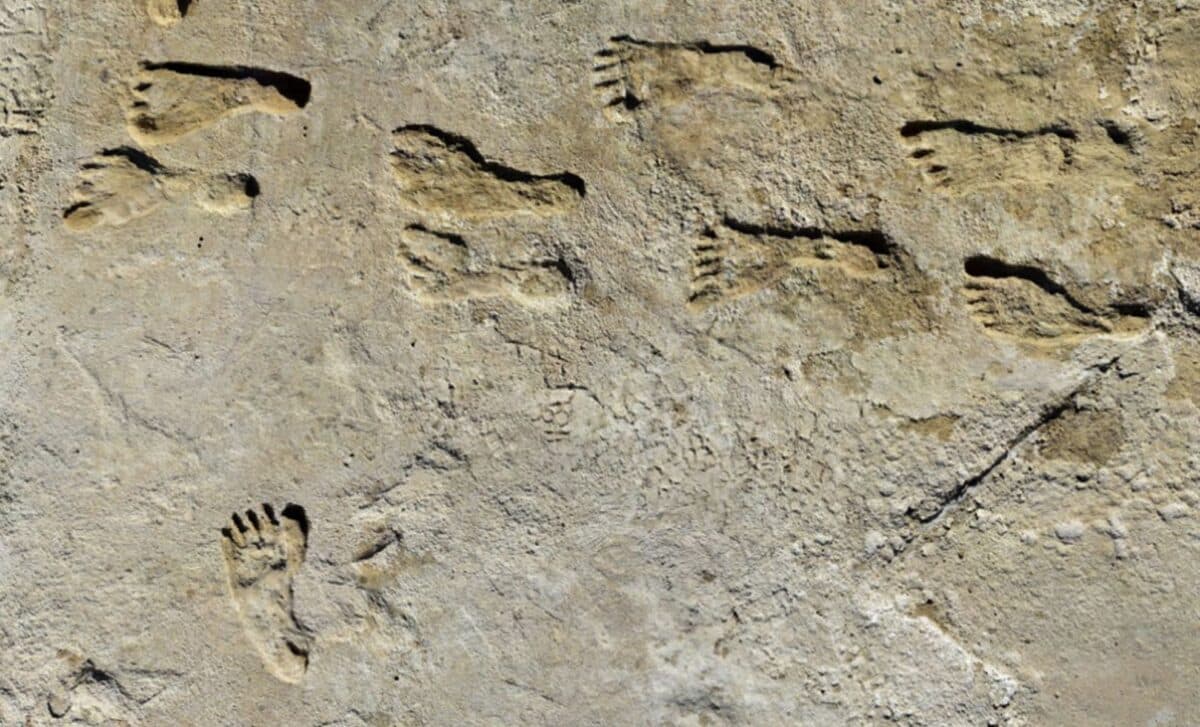
Scientists discovered the oldest known human footprints in North America at White Sands National Park, dating back 23,000 to 21,000 years, challenging previous timelines and suggesting early human presence during the Last Glacial Maximum. The footprints, mainly of teenagers and children, provide insights into daily life and are under threat from erosion.
Recent discoveries include evidence of early human migration routes in Turkey, 112-million-year-old amber fossils from South America, a study on playing badminton in space for astronaut well-being, a breakthrough in quantum squeezing with nanoparticles, and wild chimpanzees consuming alcohol, suggesting deep evolutionary roots for alcohol attraction.
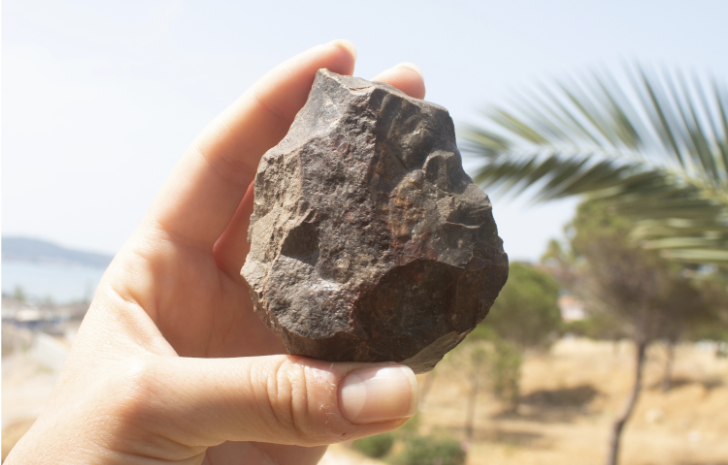
Archaeologists have discovered ancient tools in Southeast Asia that suggest early humans mastered seafaring and navigation as early as 40,000 years ago, challenging previous beliefs that such skills only developed later and indicating active exploration and settlement across the region's waters.
A new study has identified the Persian Plateau as a crucial hub for early human migration out of Africa, challenging previous understandings of human expansion into Eurasia. The research, published in Nature Communications, reveals the plateau as a region where population waves originated, supporting a larger population compared to other areas in West Asia. Genetic evidence indicates a long-lasting differentiation in the area, emphasizing its significance for early human settlement and subsequent migrations. The findings shed light on a critical period in human history and highlight the need for further archaeological exploration in the region.
Genetic analysis of bone fragments from an archaeological site in Germany provides evidence that modern humans arrived in northern Europe around 45,000 years ago, coexisting with Neanderthals for millennia and interbreeding with them. Stone tools found at the site were initially attributed to Neanderthals but are now recognized as part of the early Homo sapiens toolkit. This challenges the previous belief that modern humans arrived after Neanderthals went extinct and suggests they played a role in their demise.
Scientists have conducted genome sequencing on the skull of 'Zlatý Kůň', the earliest known woman who lived 45,000 years ago in Eurasia. Using statistical data and CT scans, researchers have reconstructed her face, revealing her dark features and a jaw structure more compatible with Neanderthals. The genomic analysis suggests that Zlatý Kůň lived 2,000 years after the first interactions between Homo sapiens and Neanderthals, making her a key figure in early human migration and interaction.
Researchers at the University of Washington have discovered two new chemical structures for saltwater that only form at extremely high pressure and low temperatures, which may be what causes the mysterious reddish-colored veins on Jupiter's moon Europa. Scientists have found physical evidence that temperatures likely haven’t been as hot in the Pacific Northwest for at least 1,000 years, using tree rings sampled in Idaho, Oregon, Washington, and British Columbia. Researchers from the US Geological Survey, Oregon State University, and the University of Oregon have identified two historic windows where sea ice conditions would have been favorable for south-bound foot traffic along the Pacific Northwest coast. Researchers at Washington State University have found a more successful and efficient way to manage bee banks by keeping the bees indoors and applying a little refrigeration. A team of scientists, including researchers at Oregon State University and the Pacific Northwest National Laboratory, has found that moisture is a huge driver in how much and how long carbon is stored in soil.