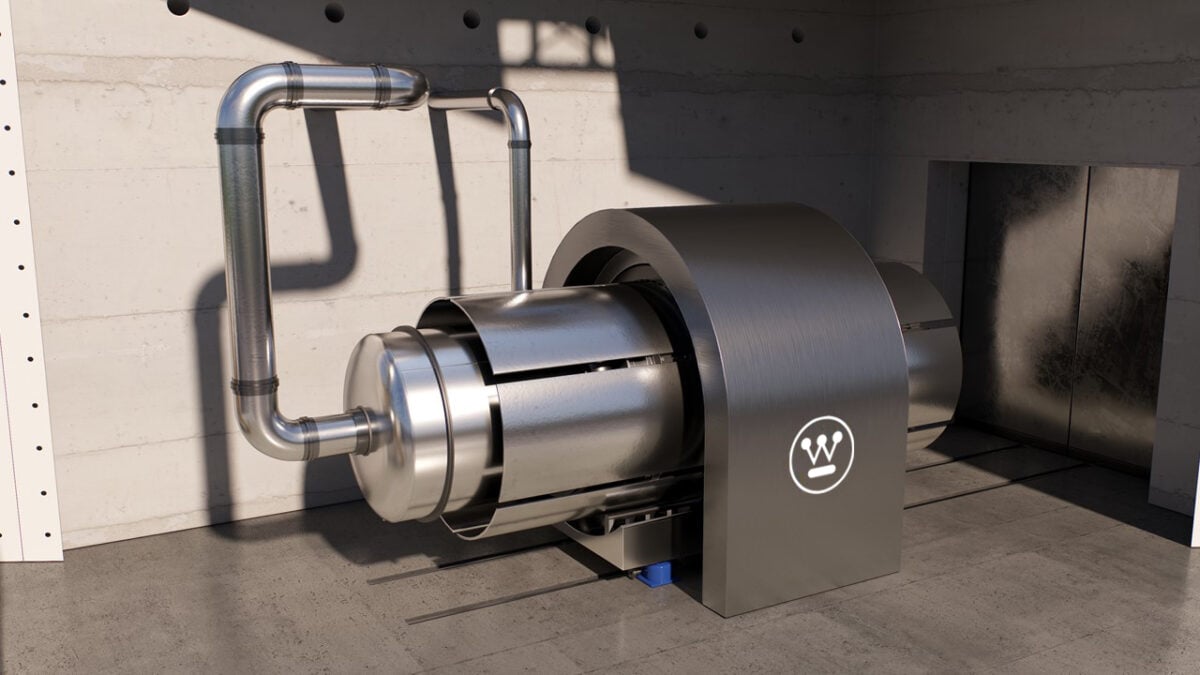
The U.S. Department of Energy is testing small, portable nuclear reactors called microreactors at Idaho National Laboratory, with plans to evaluate their efficiency and potential to provide reliable power for remote sites, data centers, and emergency situations, starting as early as spring 2026.
Sam Altman, founder of OpenAI, has announced that Oklo, a startup focused on "nuclear microreactors," will go public in 2024 via a SPAC. Oklo aims to replicate nuclear fission in smaller reactors, with the goal of providing widely affordable clean energy. The company plans to use the $500 million raised from the public offering to build its first microreactor. Oklo envisions its technology being used in smaller power plants, generating nuclear power without creating nuclear waste. Potential customers include data centers, military bases, and companies seeking decarbonization solutions. Altman's investments in nuclear energy, including Helion, reflect his interest in both nuclear fusion and fission as key components of a clean energy future. Oklo CEO Jacob DeWitte believes the company could provide "energy at planetary scales for a billion-plus years."
Ultra Safe Nuclear Corporation has chosen Gadsden, Alabama as the location for its MMR Assembly Plant, a $232 million investment that will manufacture, assemble, and test non-radiological modules needed to construct USNC’s Micro-Modular Reactors. The facility will be the country’s first commercial-scale advanced microreactor production factory and will employ 250 professional and technical workers. The microreactors are intended to generate clean, cost-effective, and safe electrical power and heat, and can be deployed anywhere that humans need power, in any climate, because they require no electrical grid, infrastructure support, or water.
The Microreactor Applications Research Validation and Evaluation project (MARVEL) at the Idaho National Laboratory is developing microreactor technology that can provide 24/7 reliable carbon-free electricity on demand, regardless of geographic location. The technology is designed to help bring electricity to the 2.5 billion people on the planet who do not have access to it, including remote areas of Alaska. MARVEL's passive design uses a Stirling engine to convert heat into motion and does not require pumps to drive the coolant around the reactor. The goal is to demonstrate the workability of the design in a very short time frame and get it ready for demonstration in a year.