Tag

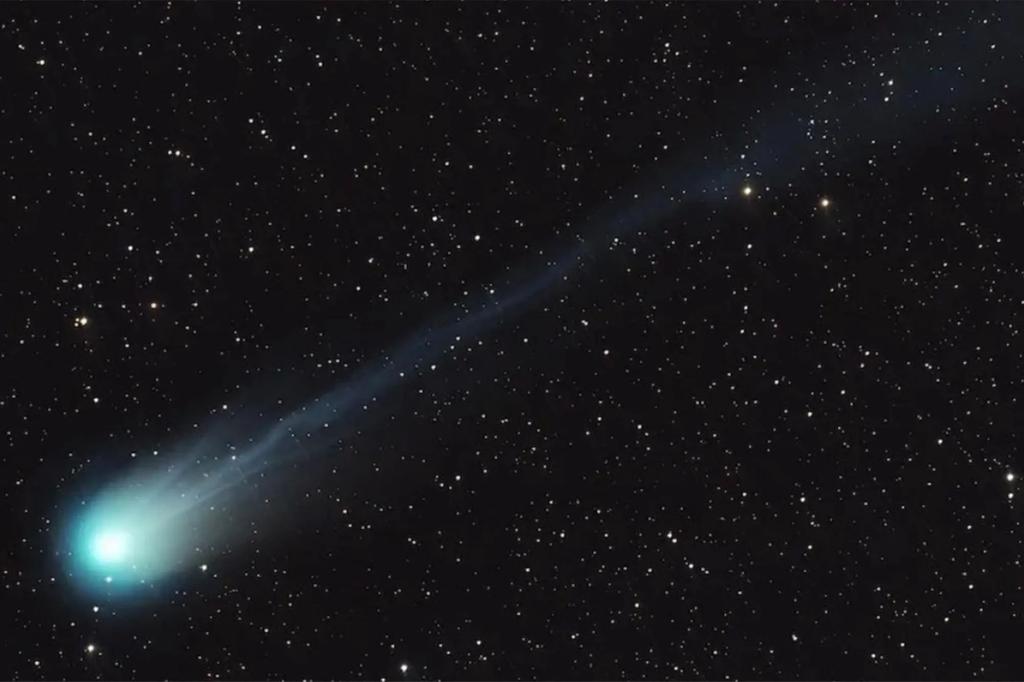
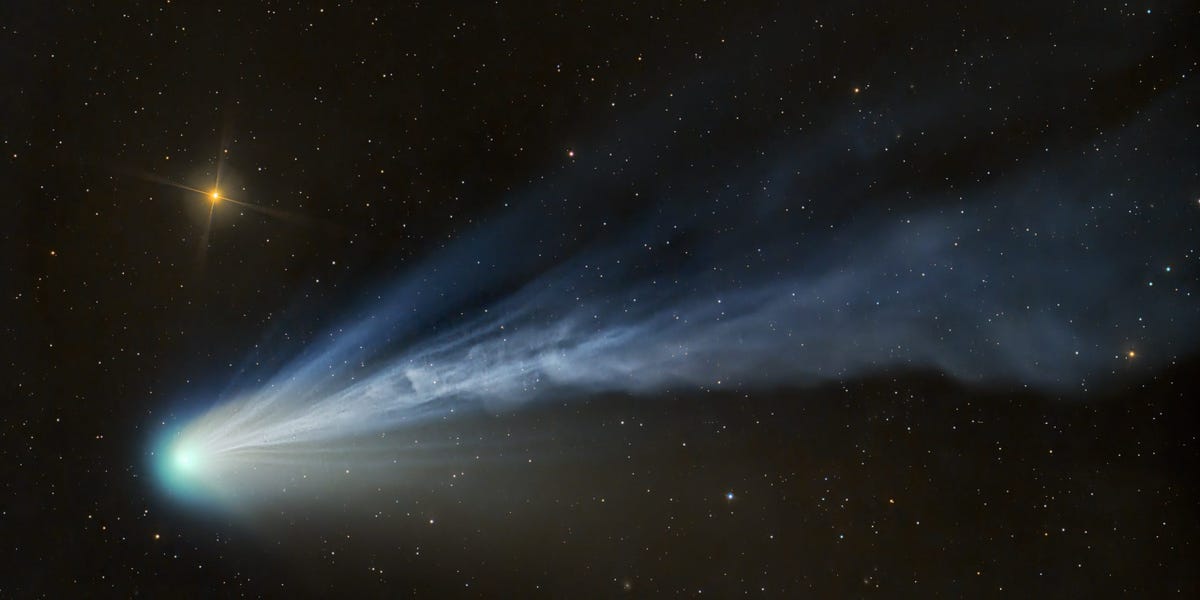
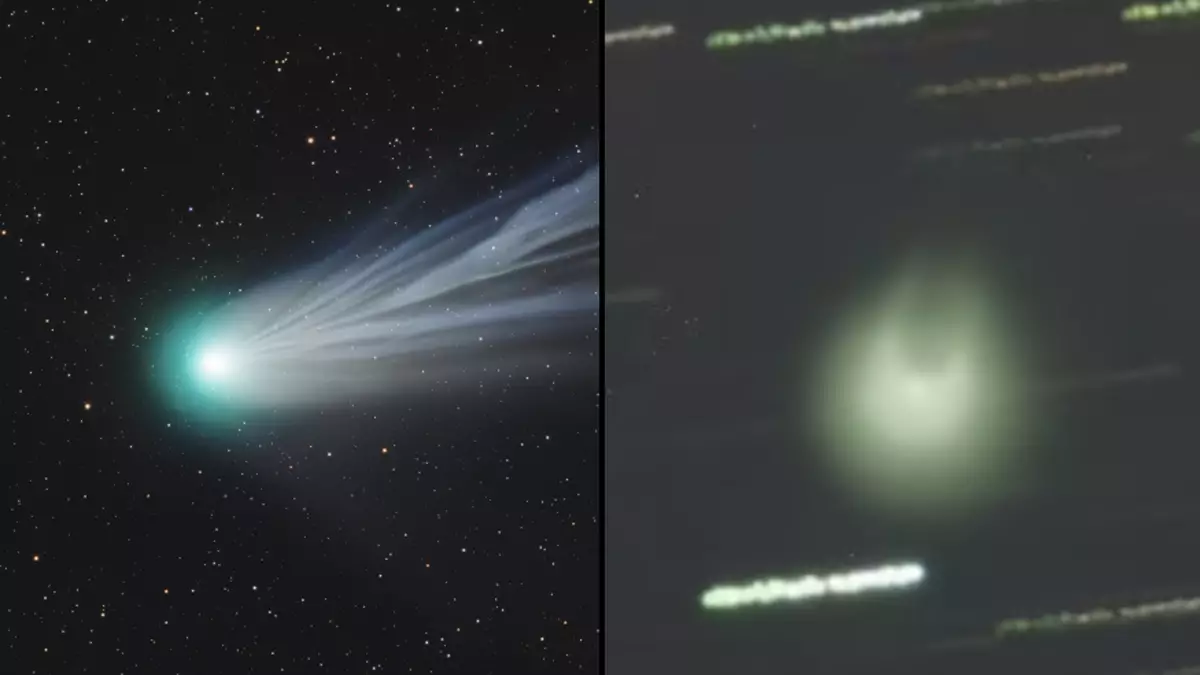
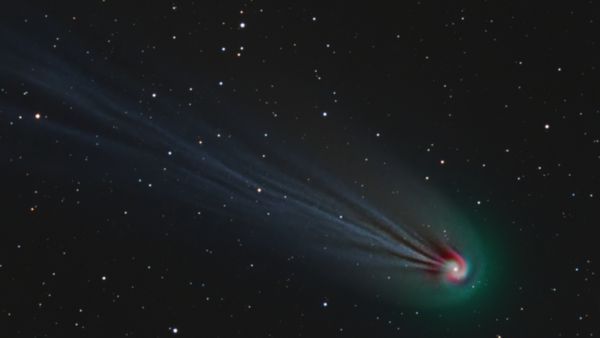
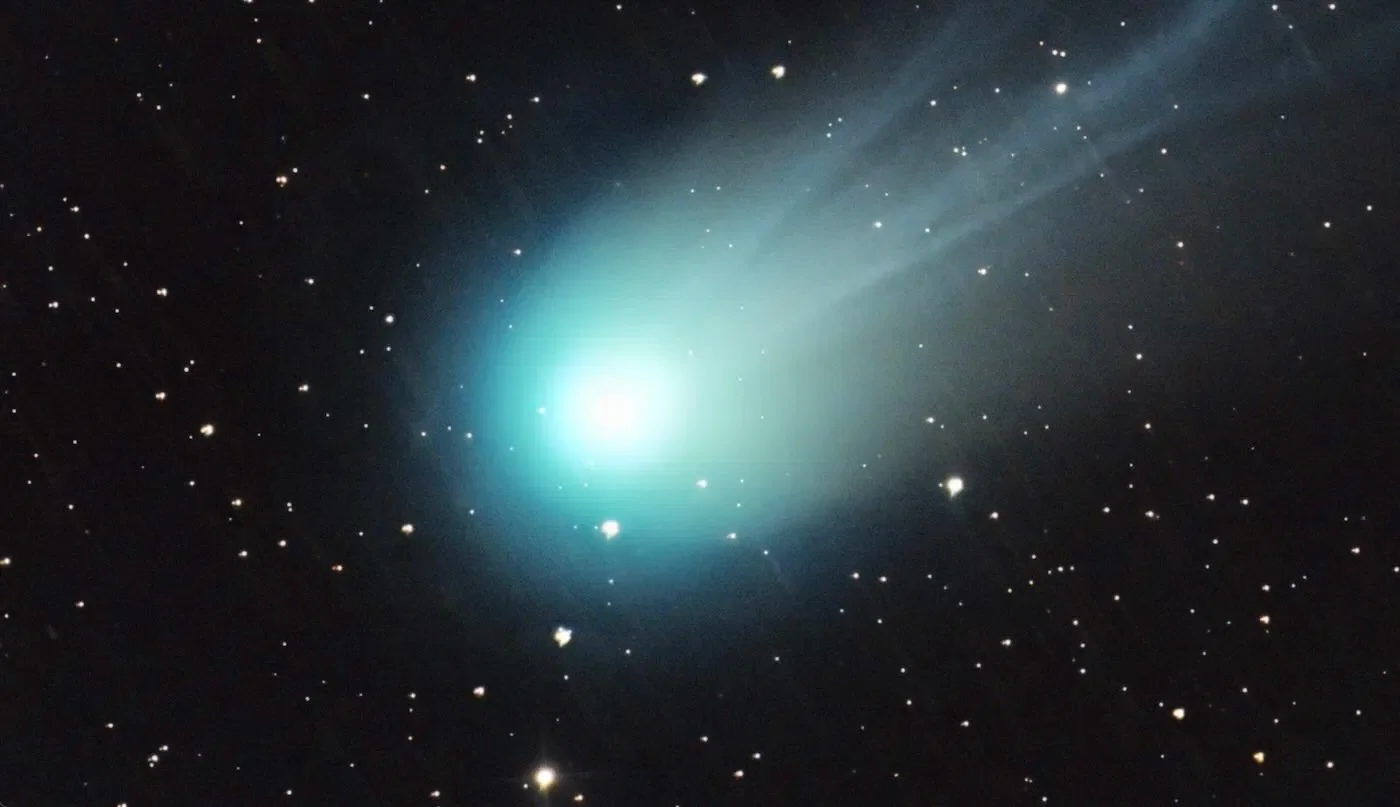
Comet 12ppons Brooks

All articles tagged with #comet 12ppons brooks

science2 months ago

Scientists Detect Mysterious Radio Signals from 71-Year-Old Comet

Astronomers in China detected unusual radio signals from comet 12P/Pons-Brooks, revealing the most distant detection of ammonia molecules in a comet, which may explain its outbursts and offers insights into the early solar system's chemistry, with potential implications for studying interstellar objects and extraterrestrial technology.
astronomy1 year ago

"Sun's Solar Storm Rips Tail off 'Devil Comet' Before Close Approach"

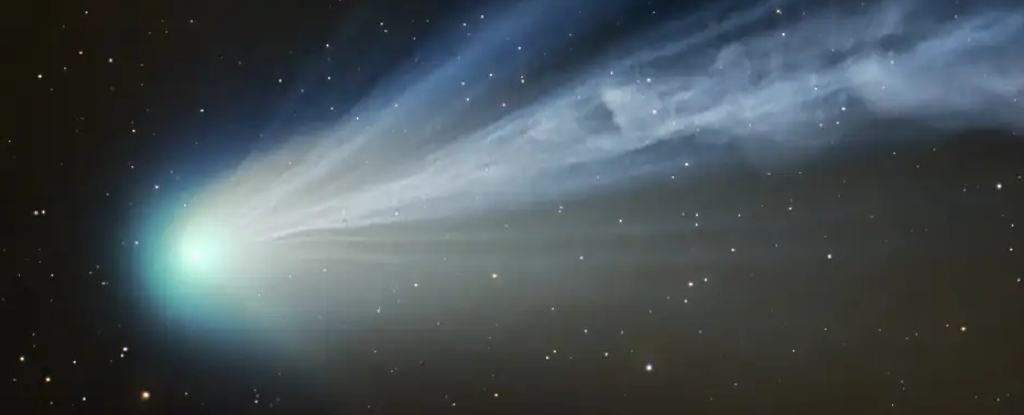
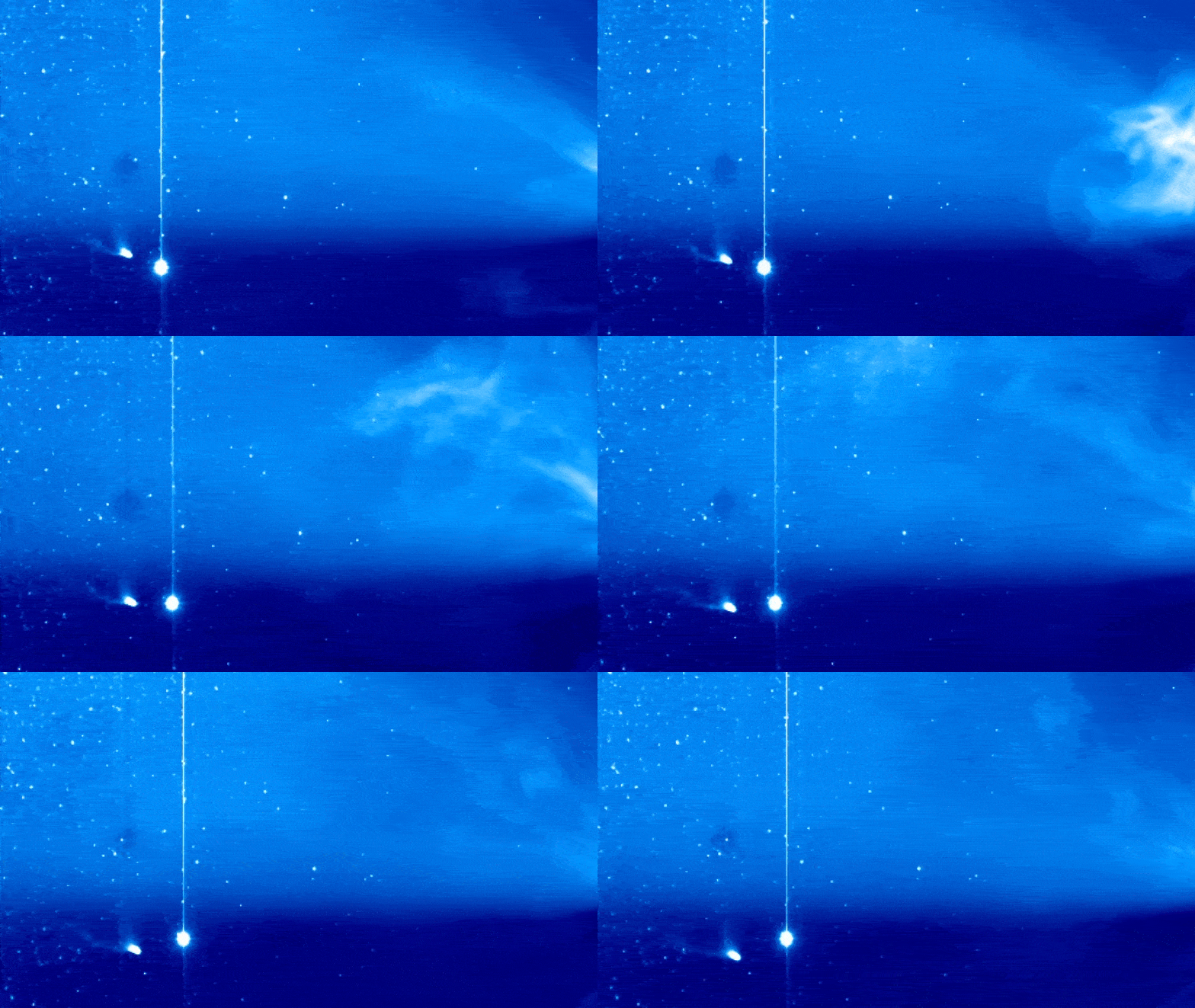
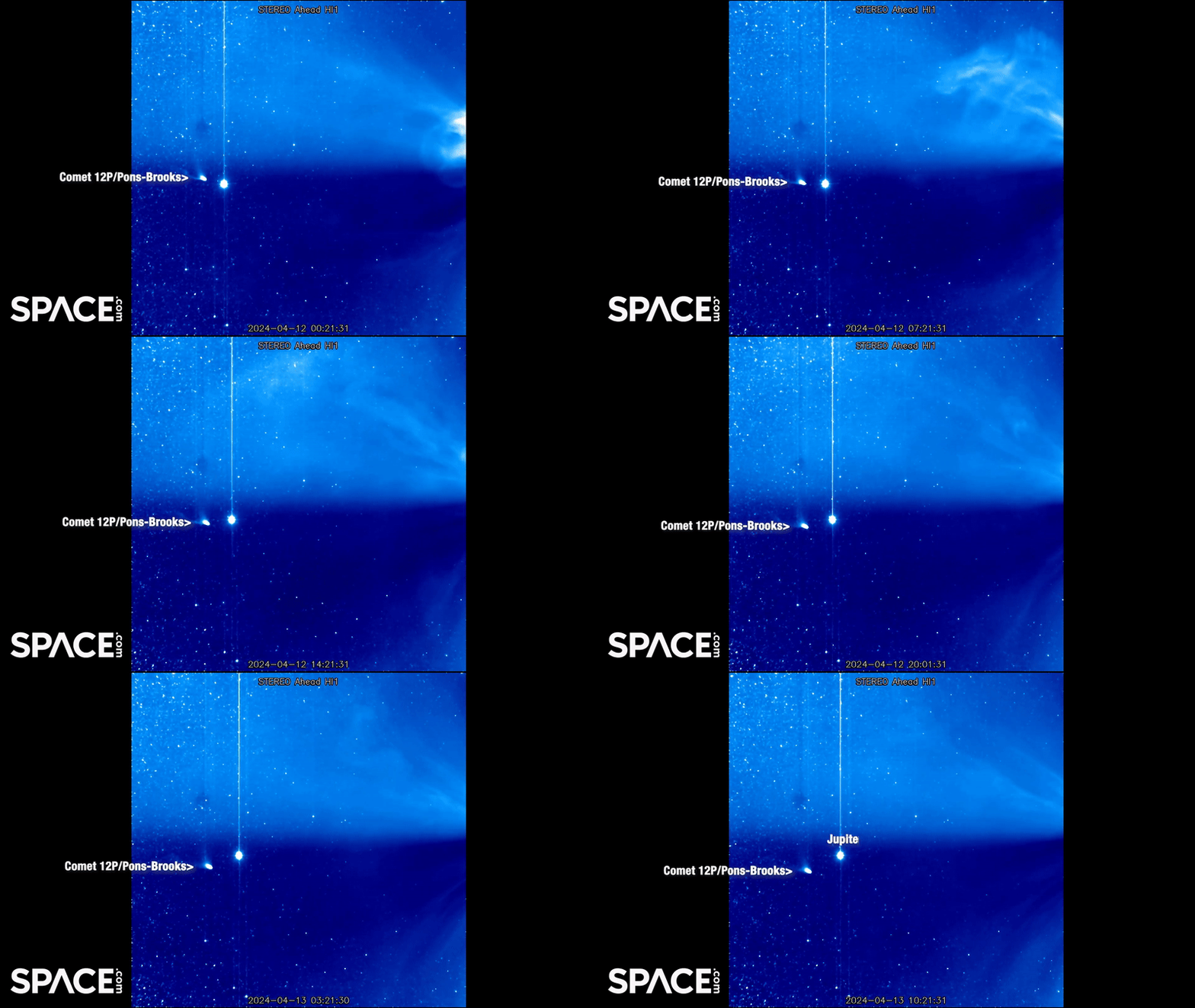
The "devil comet" 12P/Pons-Brooks was hit by a massive plasma wave from the sun, temporarily blowing away its tail, captured in a video by NASA's STEREO-A spacecraft. The comet, known for its occasional eruptions, is currently making its last dash toward the sun and will reach its closest point, perihelion, on April 21. Disconnection events like this are rare but become more likely the closer a comet gets to the sun. The comet should be visible to the naked eye low in the west about an hour after sunset over the next few nights.

space1 year ago

"Spotting the 'Devil Comet' During its Close Encounter with Earth"

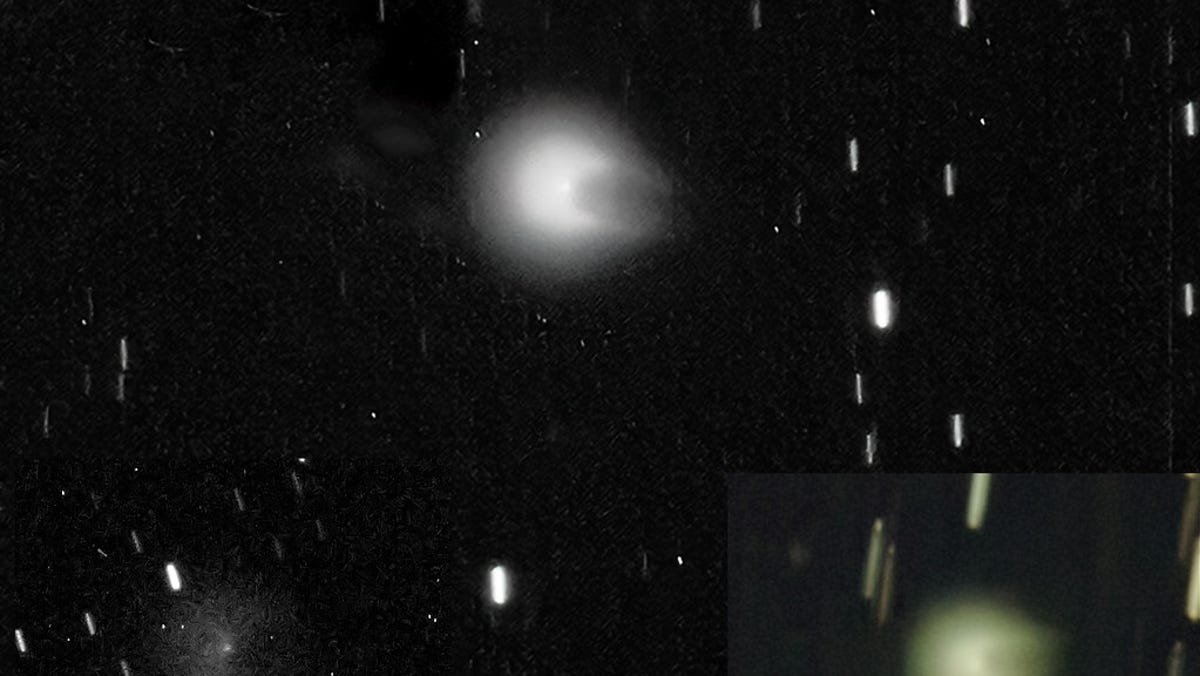
NASA's solar observatory STEREO-A is monitoring 'Devil Comet' 12P/Pons-Brooks as it approaches its closest point to the sun, while capturing footage of a coronal mass ejection (CME) launching into space. The comet's tail was affected by a CME, creating a kink, and it will pass within 72.6 million miles of the sun on April 21. The comet's sudden brightness changes have drawn attention, with speculation that it may contain active ice volcanoes. The comet gained the nickname 'Devil Comet' after a notable outburst in 2023, and its changing appearance has led to various comparisons, including to a horseshoe crab and the Millennium Falcon from Star Wars.

astronomy1 year ago

"Survival of 'Devil Comet' 12P/Pons-Brooks During Close Sun Encounter"

Comet 12P/Pons-Brooks, also known as the 'Devil Comet,' will reach its closest point to the sun on April 21, with a good chance of survival as it will pass at a safe distance. However, it is expected to fade rapidly after the encounter, becoming visible mainly to Southern Hemisphere observers. There may be future flare-ups, but the overall brightness of the comet has increased significantly as it moves closer to the sun. After perihelion, the comet will continue its journey through the solar system and is not expected to return to our skies until 2095.

astronomy1 year ago

"View the Spectacular 'Devil Comet' Flyby: A Guide"

The "devil comet," Comet 12P/Pons-Brooks, is currently visible in the Northern Hemisphere and will be at its brightest in mid-April. It can be observed with binoculars or a small telescope just after sunset, looking West beneath the Moon and to the right of Jupiter. Although it will make its closest approach to Earth on June 2, it poses no danger to the planet. Comets are composed of frozen dust, rock, and ice from the solar system's formation, and as they heat up, they emit gases and dust, forming a glowing head and a tail.

astronomy1 year ago

"Spot the Explosive 'Devil Comet' 12P at Its Brightest This Weekend"

The "Devil Comet," officially known as Comet 12P/Pons-Brooks, will reach its maximum brightness this weekend in a one-in-70-year event as it approaches its closest point to the sun. It will be best visible in the Northern Hemisphere right after sunset with a telescope or binoculars, but spotting it will be challenging without a completely clear view of the horizon. The comet, known for its horn-shaped explosions of ice and gas, will reach perihelion on April 21, appearing close to the west-north-west horizon. It will also reach its closest point to Earth on June 2, passing at a distance of about 144 million miles.

astronomy1 year ago

"Spotting the Devil Comet: A Guide for Skywatchers"

Comet 12P/Pons-Brooks, also known as the "devil comet," will reach its peak brightness on Sunday, April 21, and can be seen in the southwest sky just after sunset. The comet, discovered in 1812, is currently racing toward the sun at 40,000 mph and may be visible with the naked eye, but binoculars or a telescope will make it easier to see. Additionally, the article mentions the upcoming Lyrid meteor shower, which peaks overnight on April 21-22, and the Eta Aquariids meteor shower, which peaks around May 5-6.

astronomy1 year ago

"2024 Solar Eclipse: Viewing Tips and Peak Times Across the U.S."

The total solar eclipse on April 8 will be visible in the U.S., with Southern California experiencing a partial eclipse. The eclipse will start at 10:03 a.m. and peak around 11:15 a.m. The weather forecast for the Palm Springs area indicates clear skies, making it a good location to view the eclipse. Joshua Tree National Park and Rancho Mirage Community Park are recommended spots for eclipse viewing. Additionally, a rare "horned" comet, 12P/Pons-Brooks, may also be visible on the same day.

astronomy1 year ago

"Rare 'Planet Parade' and Comet Spotted During Total Solar Eclipse"

On April 8, 2024, a total solar eclipse will offer a rare chance to witness a "Planet Parade" featuring Uranus, Jupiter, Mercury, Venus, Neptune, Saturn, and Mars, along with Comet 12P/Pons-Brooks, visible only during totality. Observers within the 115-mile-wide path of totality will experience darkness, the sun's corona, and the opportunity to spot these celestial bodies. Tips for observing include using solar eclipse glasses and filters, focusing on the solar corona, and locating Venus, Jupiter, and the comet during totality.

astronomy1 year ago

"Rare 'Devil Comet' to Share Sky with Solar Eclipse"

On April 8, a total solar eclipse will occur in the US, offering a chance to spot Comet 12P/Pons-Brooks, also known as the "Devil comet." This unusually large comet, with horn-shaped outbursts in its coma, may be visible near the eclipsed sun during totality. While its brightness is difficult to predict, it is estimated to have an apparent magnitude of about 4.9 during the eclipse. The comet's cryovolcanic nature means it could erupt and appear brighter. If not visible during the eclipse, it can be observed in the days leading up to April 21 when it will be nearest to the sun and brightest.

astronomy1 year ago

"Rare 'Mother of Dragons' Comet to Illuminate 2024 Solar Eclipse"

The "Mother of Dragons" comet, also known as Comet 12P/Pons-Brooks, will be visible in the Northern Hemisphere for the next few weeks, reaching its brightest point on April 21. This rare celestial event, which only occurs once every 71 years, can be observed low in the west about an hour after sunset. Stargazers are advised to find an unpopulated area with a clear west-facing view and consider using binoculars for a better view. The comet will also be visible on April 8 during the solar eclipse, but astronomers recommend focusing on the eclipse itself during that time.

astronomy1 year ago

"2024 Solar Eclipse: Witness the Spectacular 'Devil Comet' and Planets in the Night Sky"

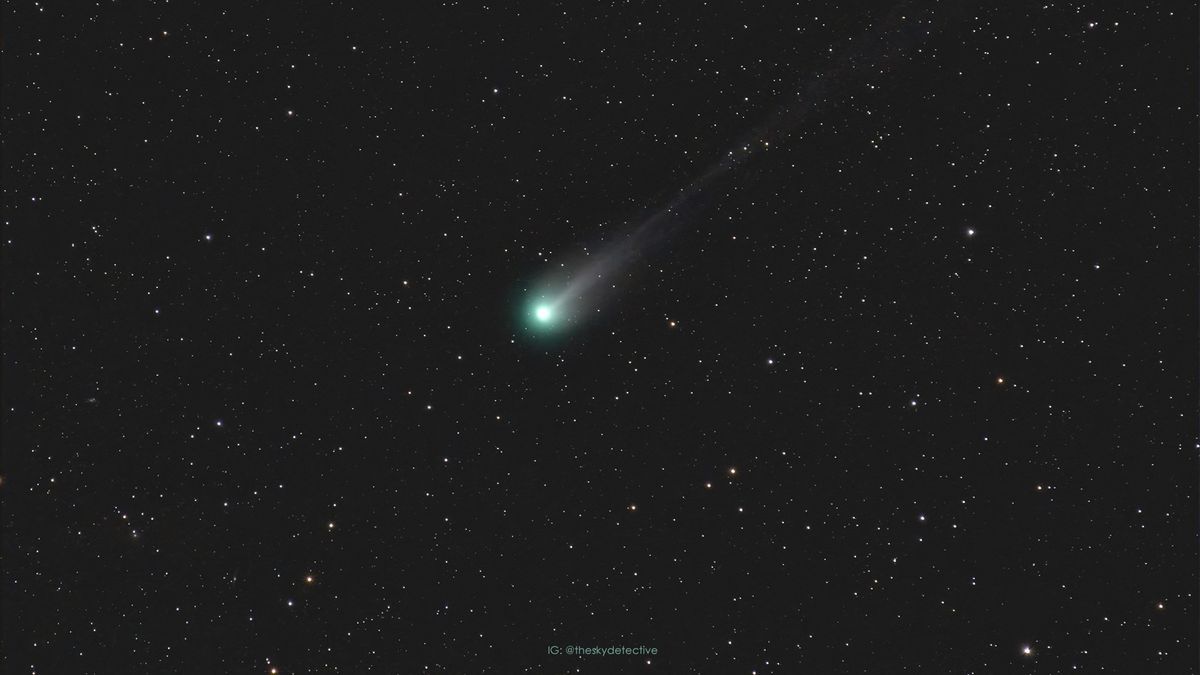
On April 8, a total solar eclipse will occur in the US, coinciding with the close approach of Comet 12P/Pons-Brooks, also known as the "Devil comet." This large comet, with horn-shaped outbursts in its coma, may be visible during the eclipse, appearing as a green streak due to its high dicarbon levels. While its brightness is difficult to predict, an eruption during the eclipse could make it appear brighter. To spot the comet, look for Jupiter during totality, but remember to use proper eye protection when observing the eclipse. If not visible on April 8, try again in the days leading up to April 21 when it will be nearest to the sun and brightest.

space1 year ago

"Rare 'Mother of Dragons' Comet Lights Up Night Skies"

A green comet known as the "Mother of Dragons" will be visible in UK skies tonight, offering a once-in-a-lifetime spectacle for sky gazers. Comet 12P/Pons–Brooks, which last appeared in 1954, will be visible in the west-northwest direction just above the horizon, resembling a faint star-like blob with a green tint and a tail. Astronomers recommend using binoculars or a small telescope for optimal viewing, as the comet makes its way towards the inner solar system for the first time in 71 years.

astronomy1 year ago

Rare 'Horned' Comet to Grace Night Sky During Eclipse Season

Comet 12P/Pons-Brooks, known as the "devil comet" for its horned features and green color, will be visible from Earth for the first time in over 70 years, coinciding with April's solar eclipse. Stargazers in the Northern Hemisphere may spot the comet near the western horizon at dusk using a telescope or binoculars, and it will make its closest pass by Earth in the days leading up to the eclipse. Those using binoculars or a telescope during mid-eclipse may have the potential to see the comet, which will be about 25 degrees away from the eclipsed sun.

astronomy1 year ago

"2024 Solar Eclipse: Witness the Spectacular 'Horned' Comet"

Comet 12P/Pons-Brooks, known for its horned appearance, is currently visible in the night sky and may be seen during the 2024 total solar eclipse on April 8. The comet, which visits the inner solar system every 71 years, will make its closest approach to the sun on April 21. Its visibility during the eclipse will depend on its brightness that day, and observers are advised to use solar eclipse glasses and solar filters for cameras, telescopes, and binoculars.