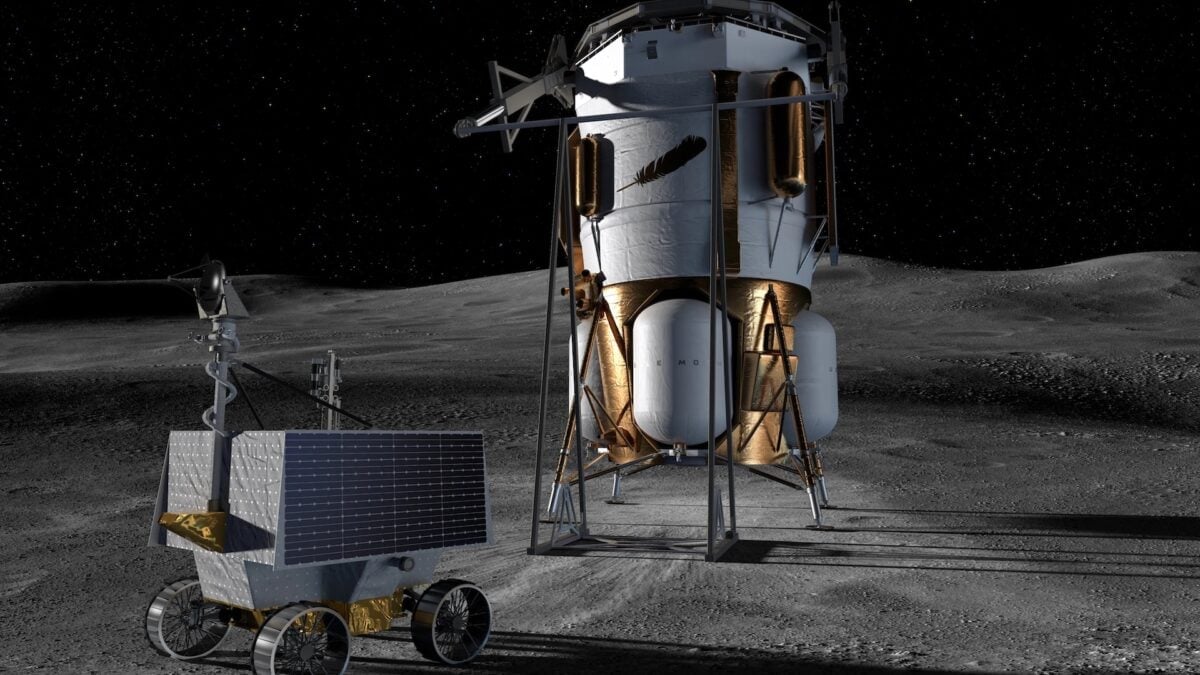
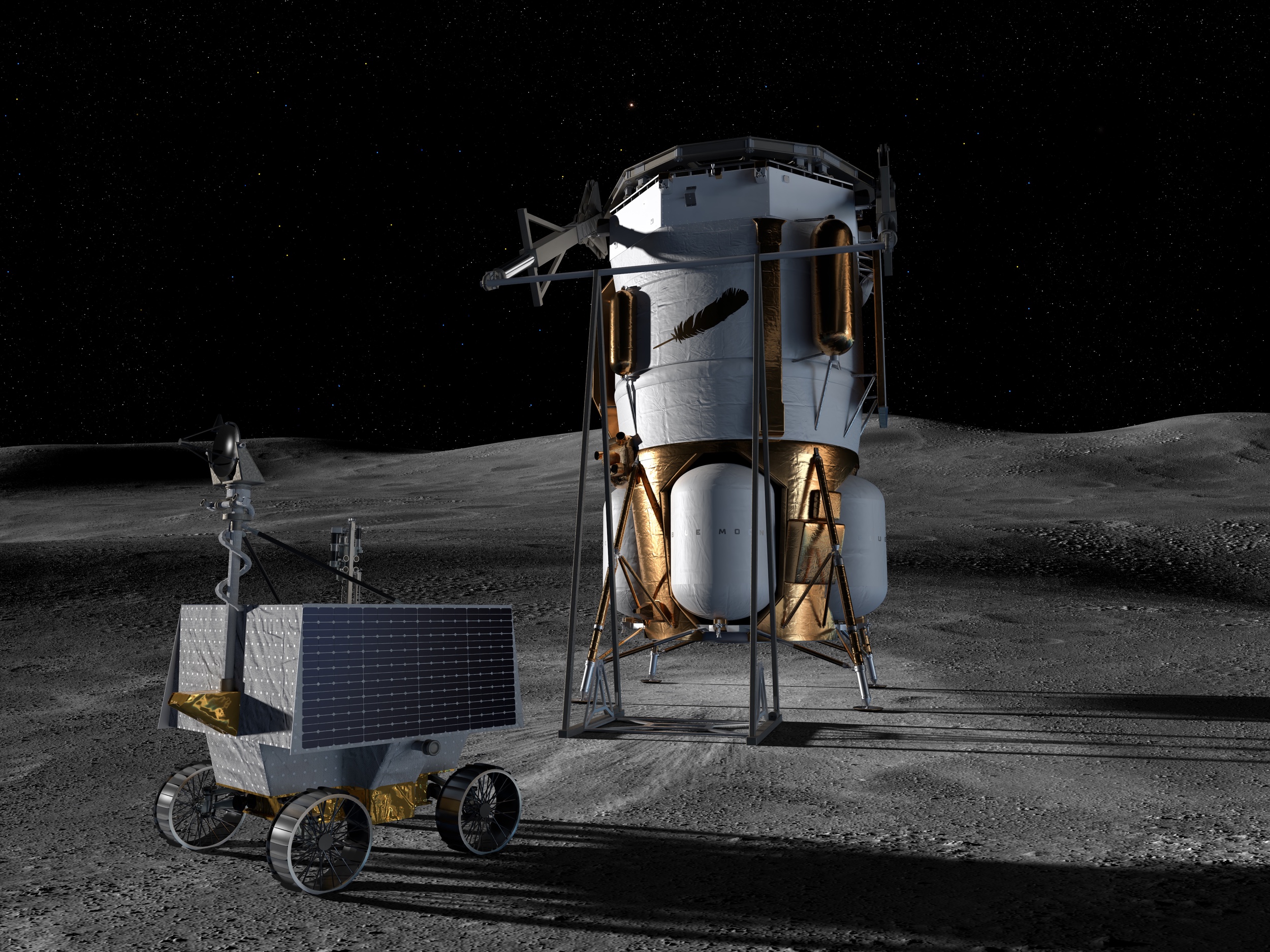
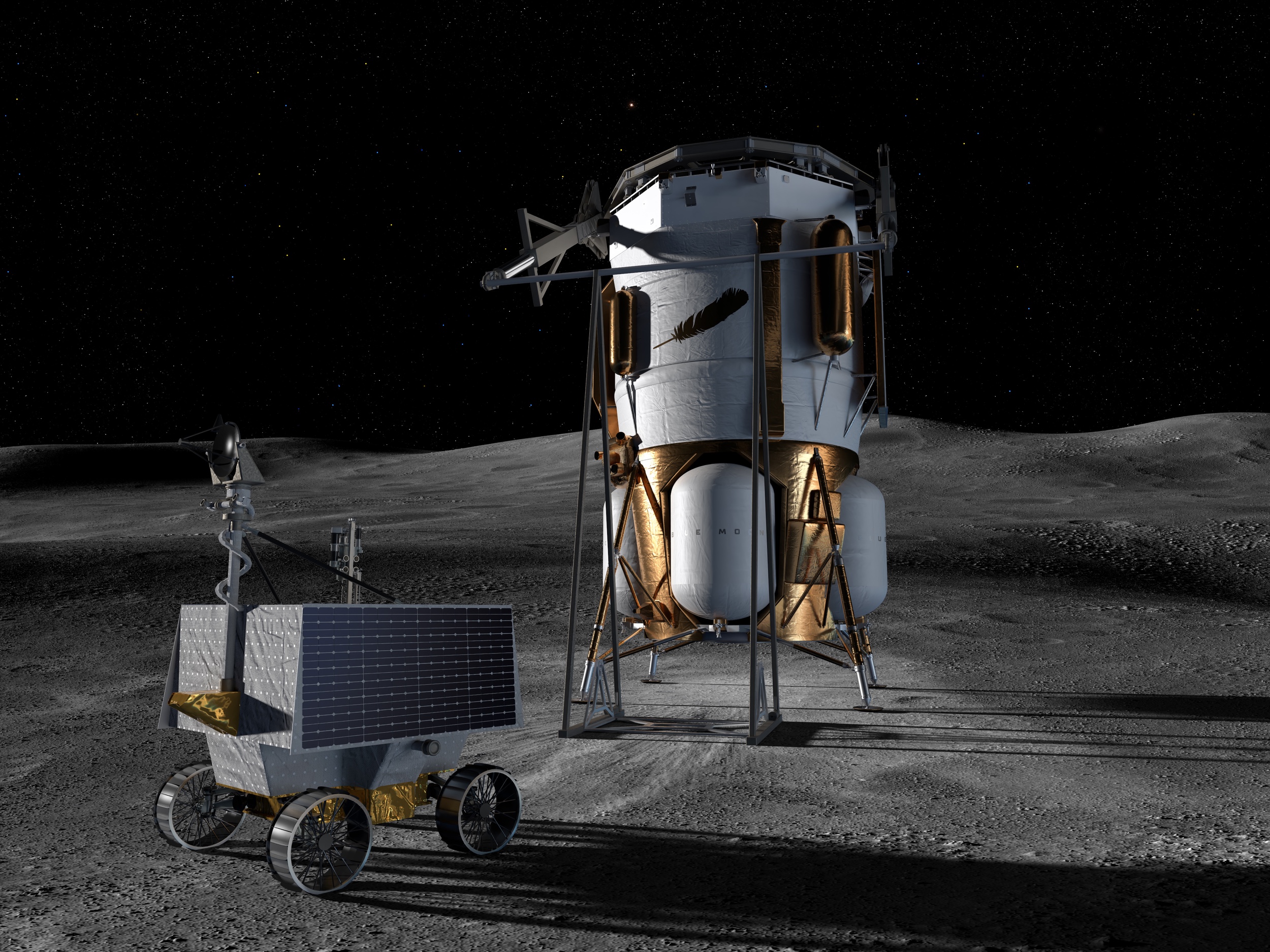
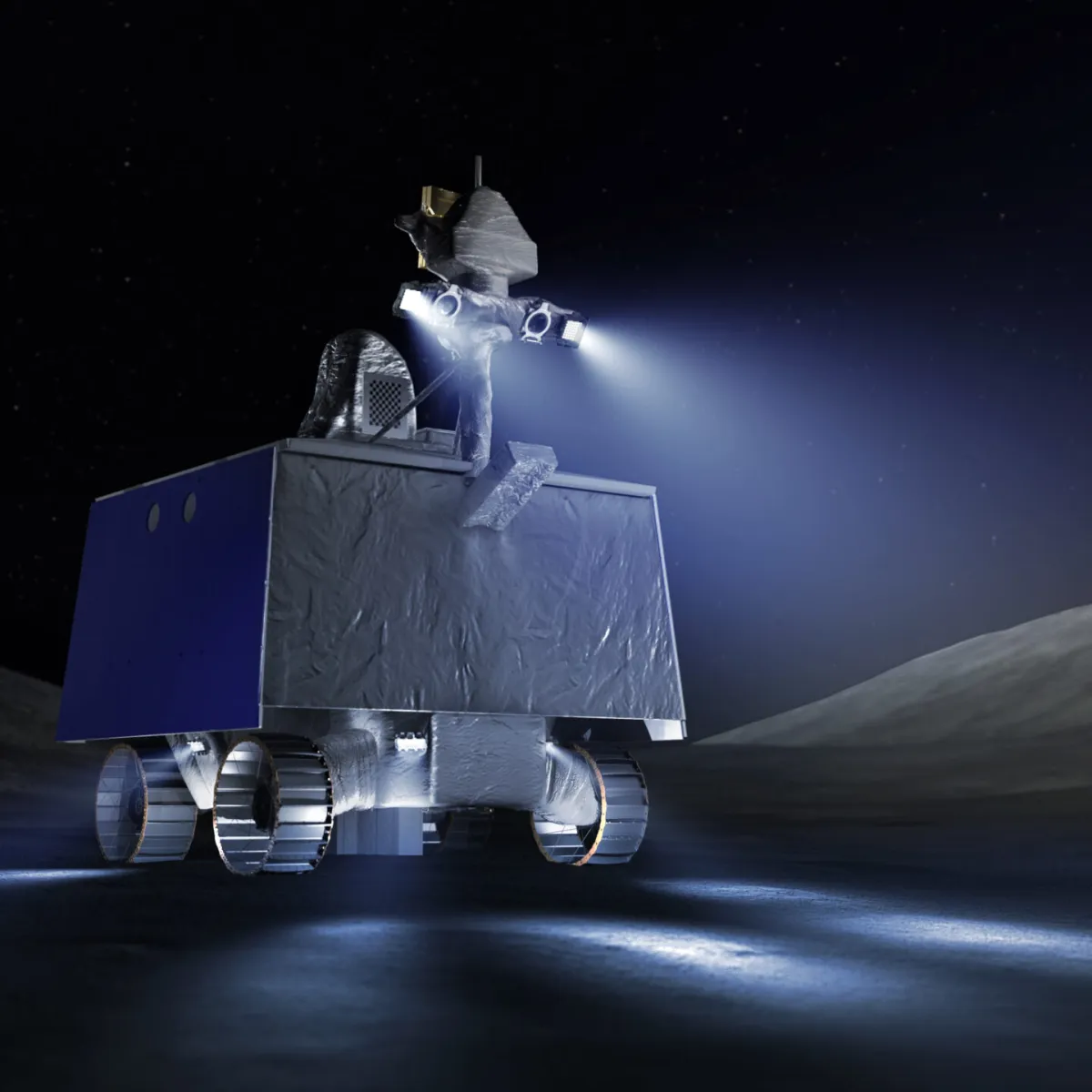
NASA's lunar water-hunting rover VIPER, initially canceled due to delays, will now be delivered to the Moon by Blue Origin in 2027 as part of a new partnership, ensuring continued exploration of lunar water resources crucial for future human missions.
NASA awarded Blue Origin a sole-source contract to deliver the VIPER lunar rover to the moon's south pole using the Blue Moon Mark 1 lander, after a competitive process where only Blue Origin submitted a proposal, reviving a previously canceled mission and highlighting the challenges in lunar delivery options.
NASA has revived its VIPER lunar rover mission by awarding Blue Origin a $190 million contract to deliver the rover to the moon's south pole in 2027 using the Blue Moon Mark 1 lander, marking a strategic shift after previous cancellation concerns, and supporting lunar water exploration.
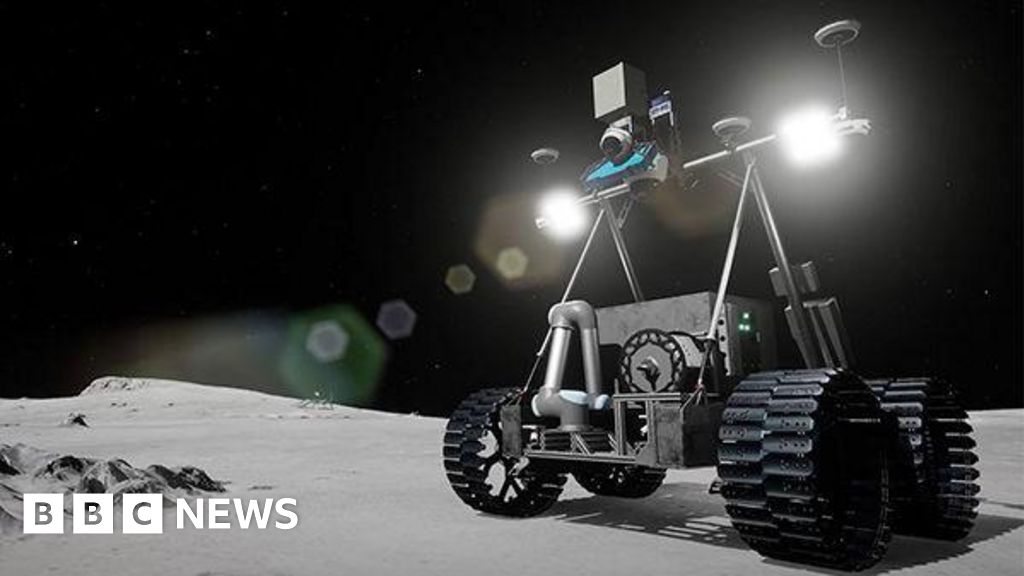
Canada's Canadensys Aerospace is developing its first lunar rover, set to launch around 2029 as part of NASA's Artemis program, aiming to explore water sources and radiation on the Moon's south pole, marking a significant step in Canadian space exploration and technology.
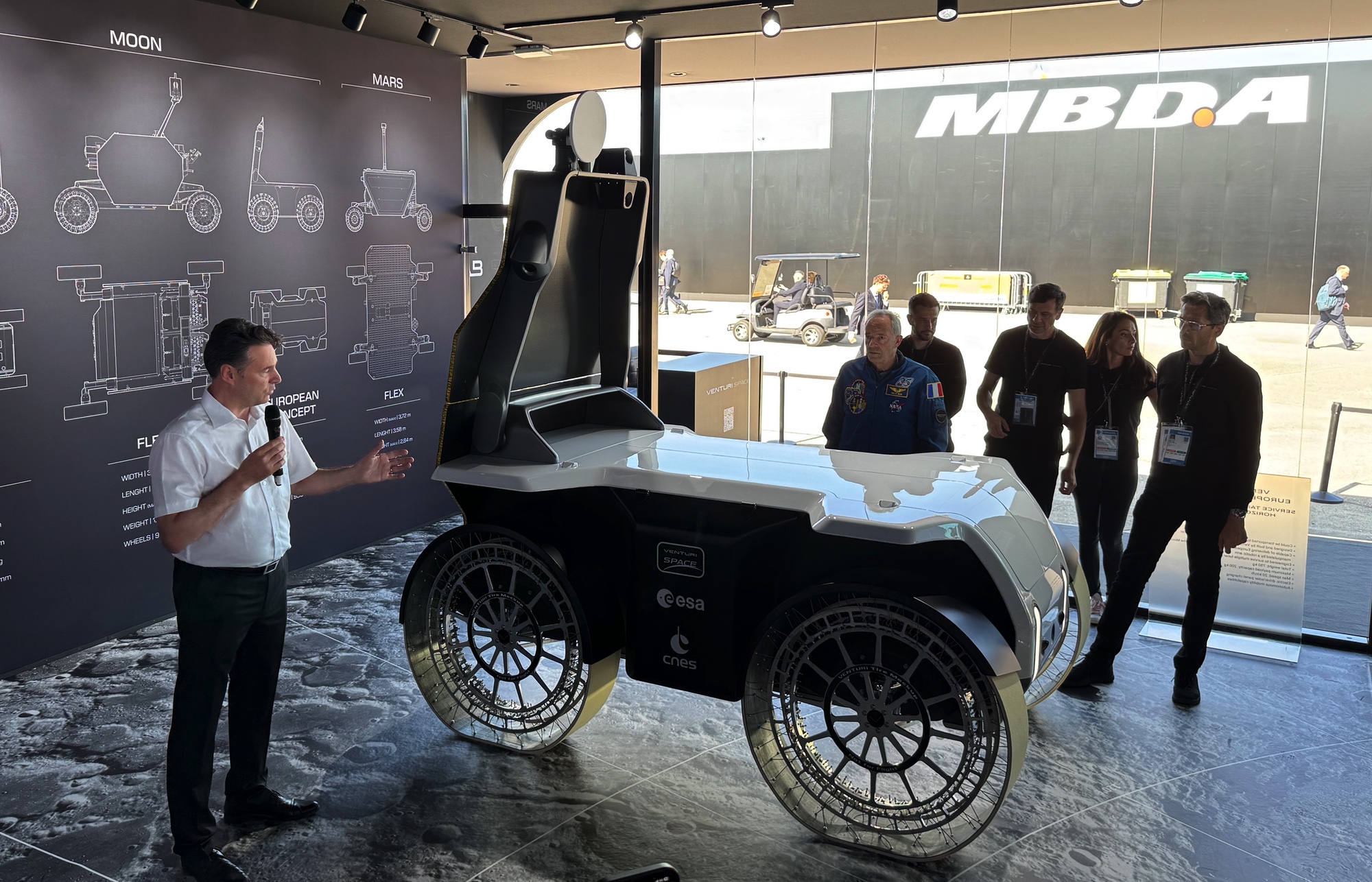
Venturi Space unveiled Mona Luna, an all-European lunar rover designed for exploration and potential mining, featuring advanced suspension, steering, and thermal management systems, aiming to fill Europe's gap in lunar exploration capabilities and seeking support from ESA.
China plans to land astronauts on the moon by 2030, as detailed in a video released by the China Manned Space Agency. The mission will involve two launches of the Long March 10 rocket, sending a crewed spacecraft and a lunar landing stack into orbit, where they will dock before astronauts descend to the lunar surface. The video showcases tests on lunar hardware, including a rover and extravehicular suits, and highlights the expansion of the Wenchang Satellite Launch Center to accommodate the mission.
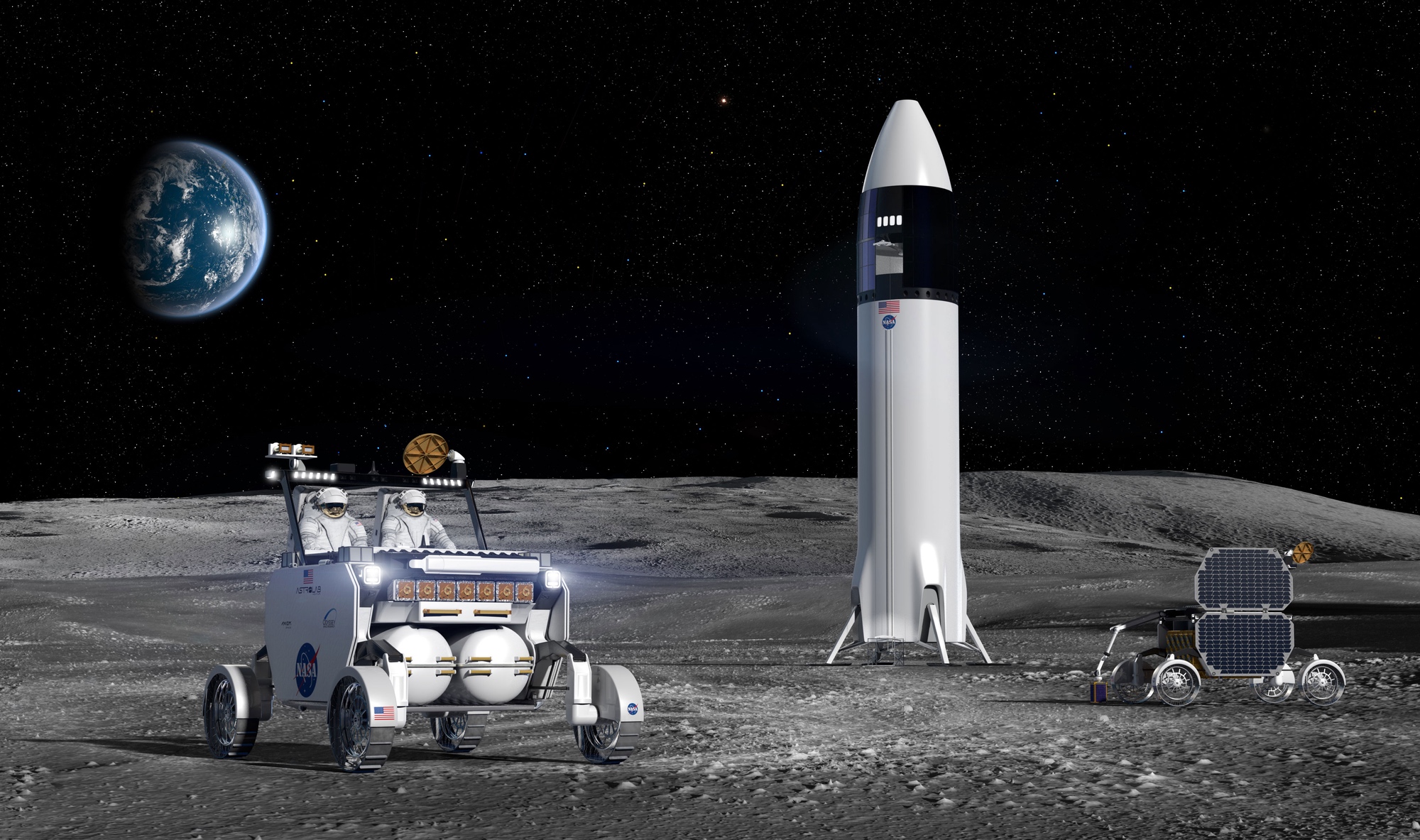
SpaceX has signed its second commercial contract to deliver a payload to the moon using its Starship lunar lander, this time with Lunar Outpost. The deal involves transporting Lunar Outpost's rover, Eagle, to the lunar surface by 2029. This follows Lunar Outpost's selection by NASA for the lunar terrain vehicle program, which could be worth up to $4.6 billion over 13 years. Despite uncertainties about the mission specifics and NASA's final selection, Lunar Outpost plans to continue developing its rover, supported by a recent Series A funding round.
NASA is evaluating the future of its VIPER lunar rover mission, which was canceled in July due to anticipated cost overruns and delays. The agency is reviewing responses to a request for information (RFI) seeking alternative uses for the nearly complete rover. Despite successful environmental tests, VIPER's launch was delayed to no earlier than September 2025 on Astrobotic's Griffin lander. NASA is considering partnerships and may propose next steps by early 2025, while Congress could potentially intervene to revive the mission.
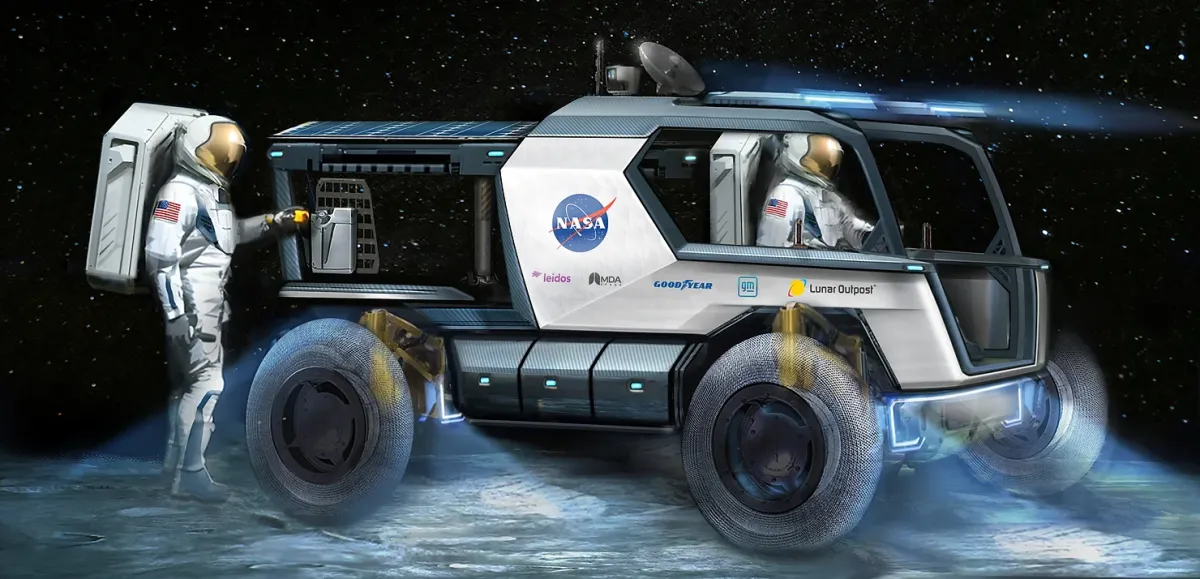
NASA selected three companies, Intuitive Machines, Lunar Outpost, and Venturi Astrolab, to continue work on an Artemis lunar rover based on a balance of cost, capabilities, and experience. The agency evaluated nine proposals and deemed six as unacceptable or not evaluated. Each selected company received a task order to fund design work leading up to a preliminary design review. Despite concerns about one company's ability to carry out the work, NASA ultimately approved contracts for all three companies, with plans to select only one for a task order to develop and demonstrate its rover after completion of the preliminary design reviews.
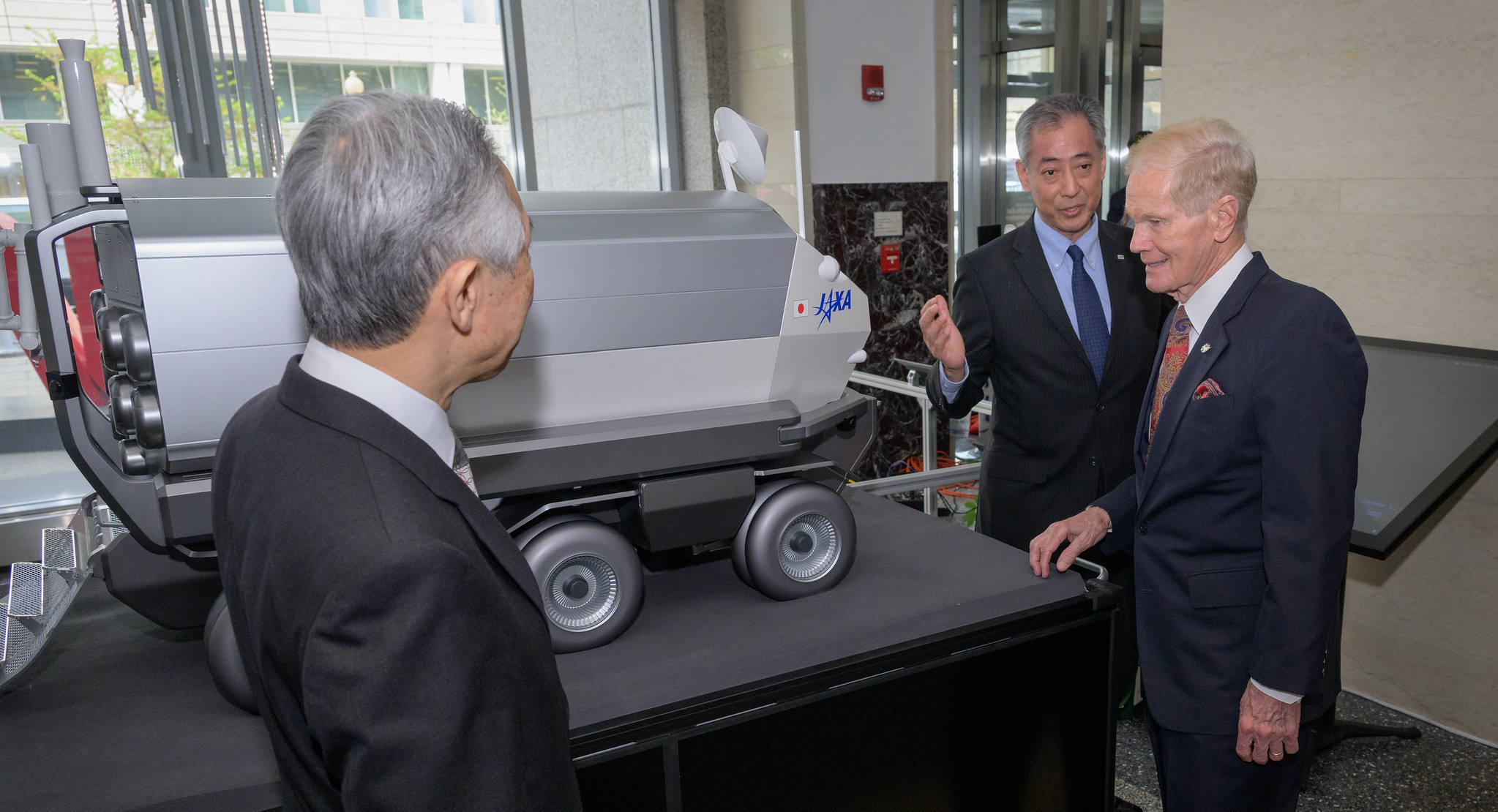
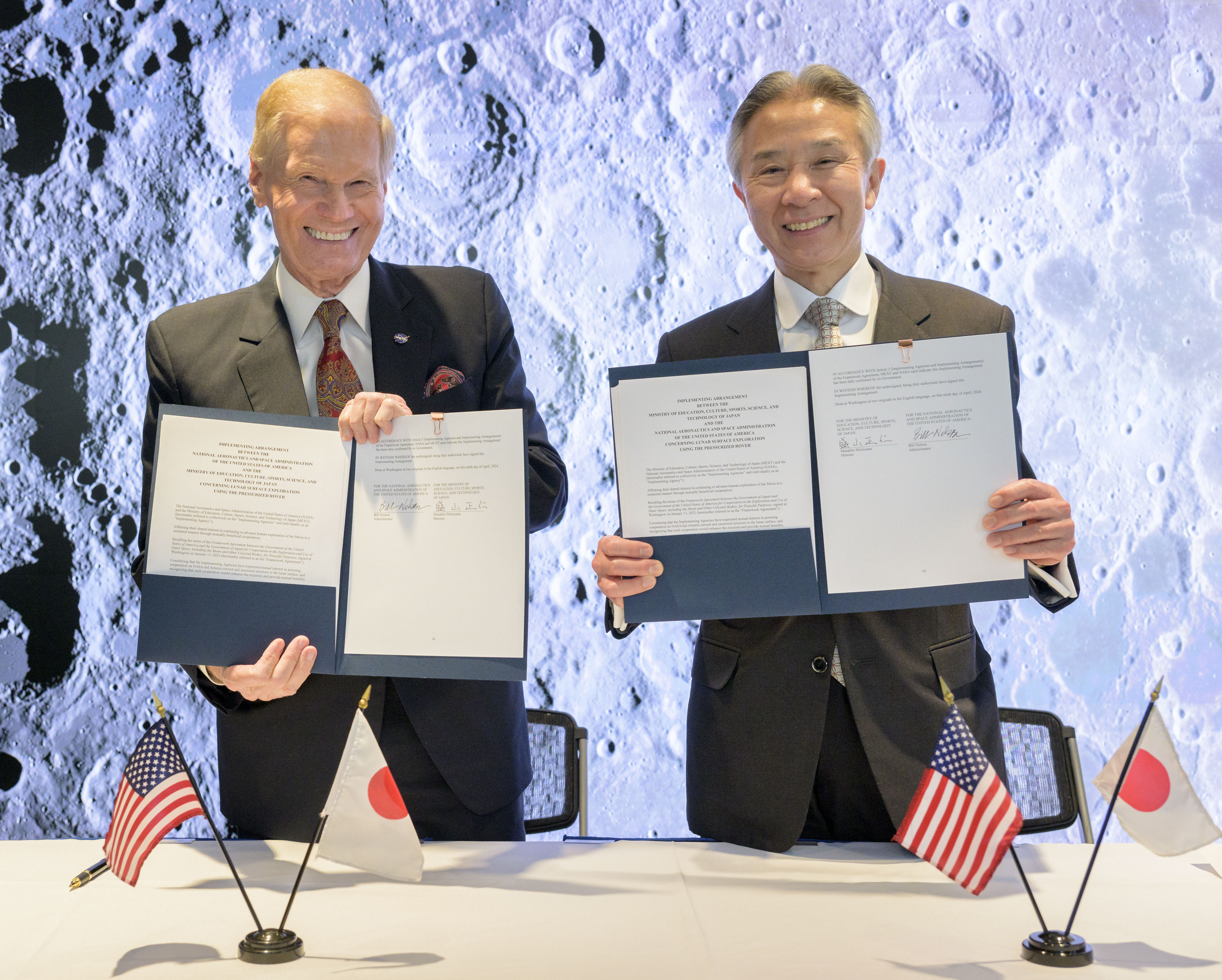
Japan and NASA have signed an agreement for Japan to contribute a pressurized lunar rover called Lunar Cruiser to the Artemis lunar exploration campaign, with NASA providing two seats on future Artemis lunar landing missions to Japanese astronauts. The rover is expected to be delivered to the moon ahead of the Artemis 7 mission, and will support extended expeditions from landing sites. The agreement marks Japan as the first nation after the United States to land an astronaut on the moon, and is part of broader international collaboration in lunar exploration.
NASA and Japan have signed an agreement to advance sustainable human exploration of the Moon, with Japan designing, developing, and operating a pressurized rover for crewed and uncrewed exploration on the lunar surface. The agreement also includes opportunities for Japanese astronauts to travel to the Moon and a shared goal for a Japanese national to be the first non-American astronaut to land on the Moon on a future Artemis mission. The pressurized rover will enable astronauts to travel farther and work for longer periods on the lunar surface, and falls under a broader framework agreement for cooperation in space exploration and use of outer space for peaceful purposes between the two nations.
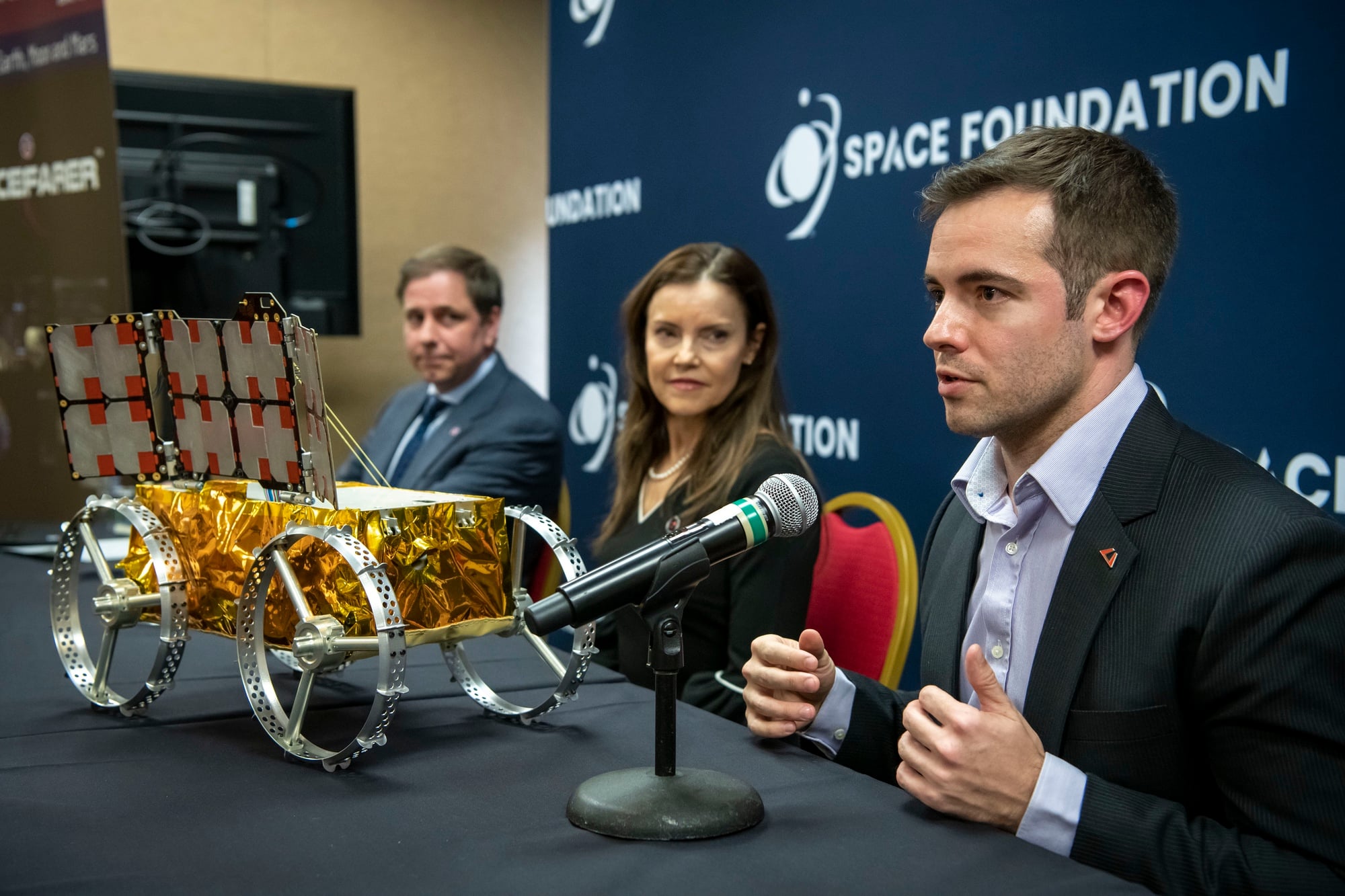
Astrobotic and Mission Control have partnered to use Mission Control’s Spacefarer software to operate Astrobotic’s CubeRover, which will be part of Astrobotic’s next lander mission to the Moon. The software will enable semi-autonomous navigation and analysis of images taken by the rover's cameras. The partnership, stimulated by the Canadian Space Agency's Lunar Exploration Accelerator Program, aims to demonstrate the software's capabilities and open up new opportunities for Mission Control in handling spacecraft operations.
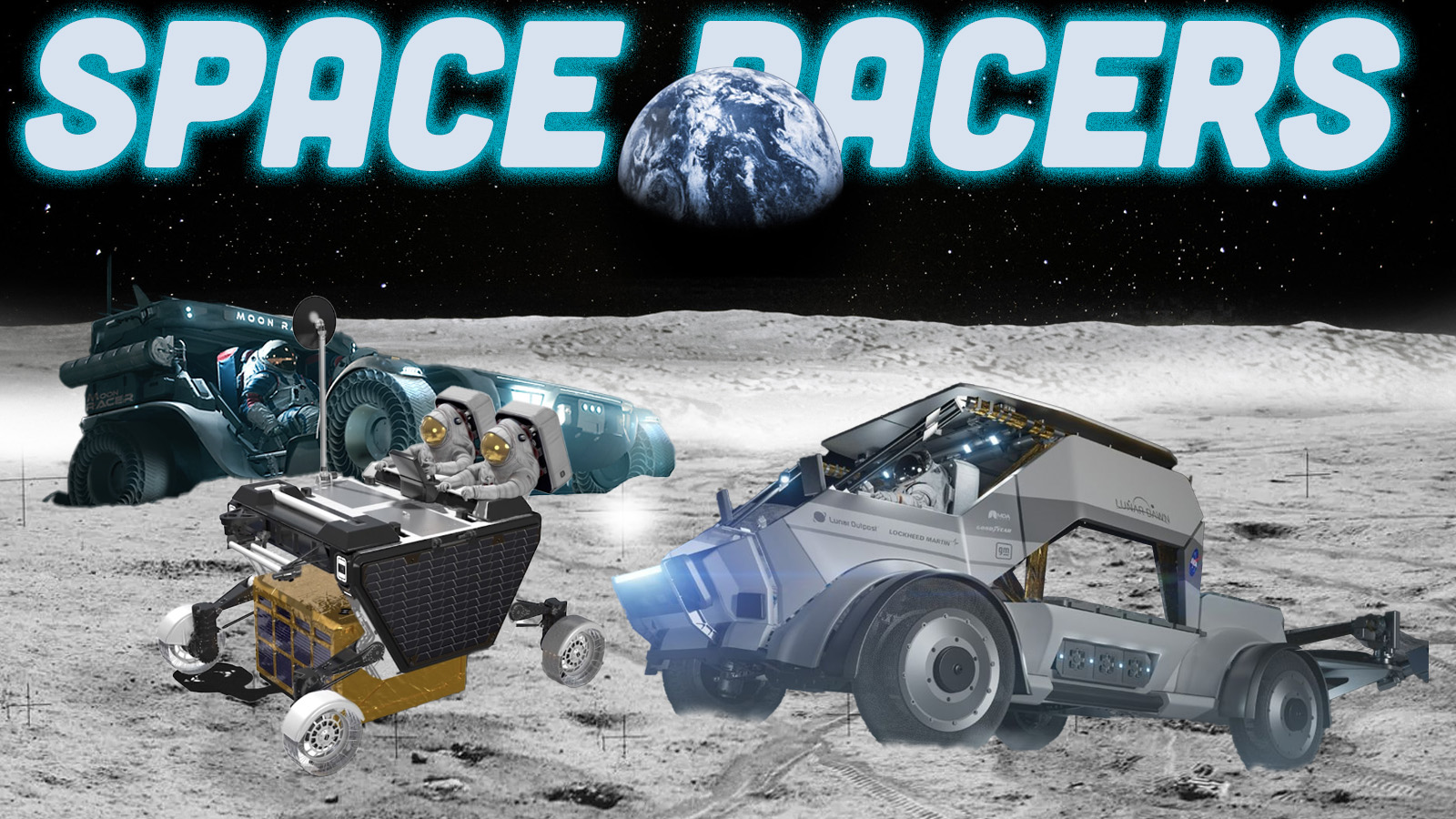
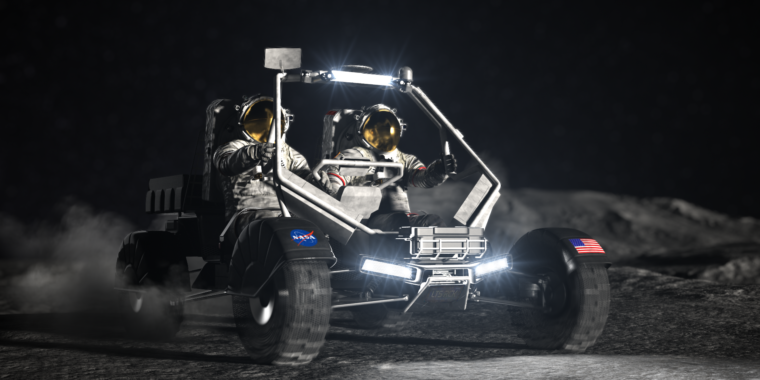
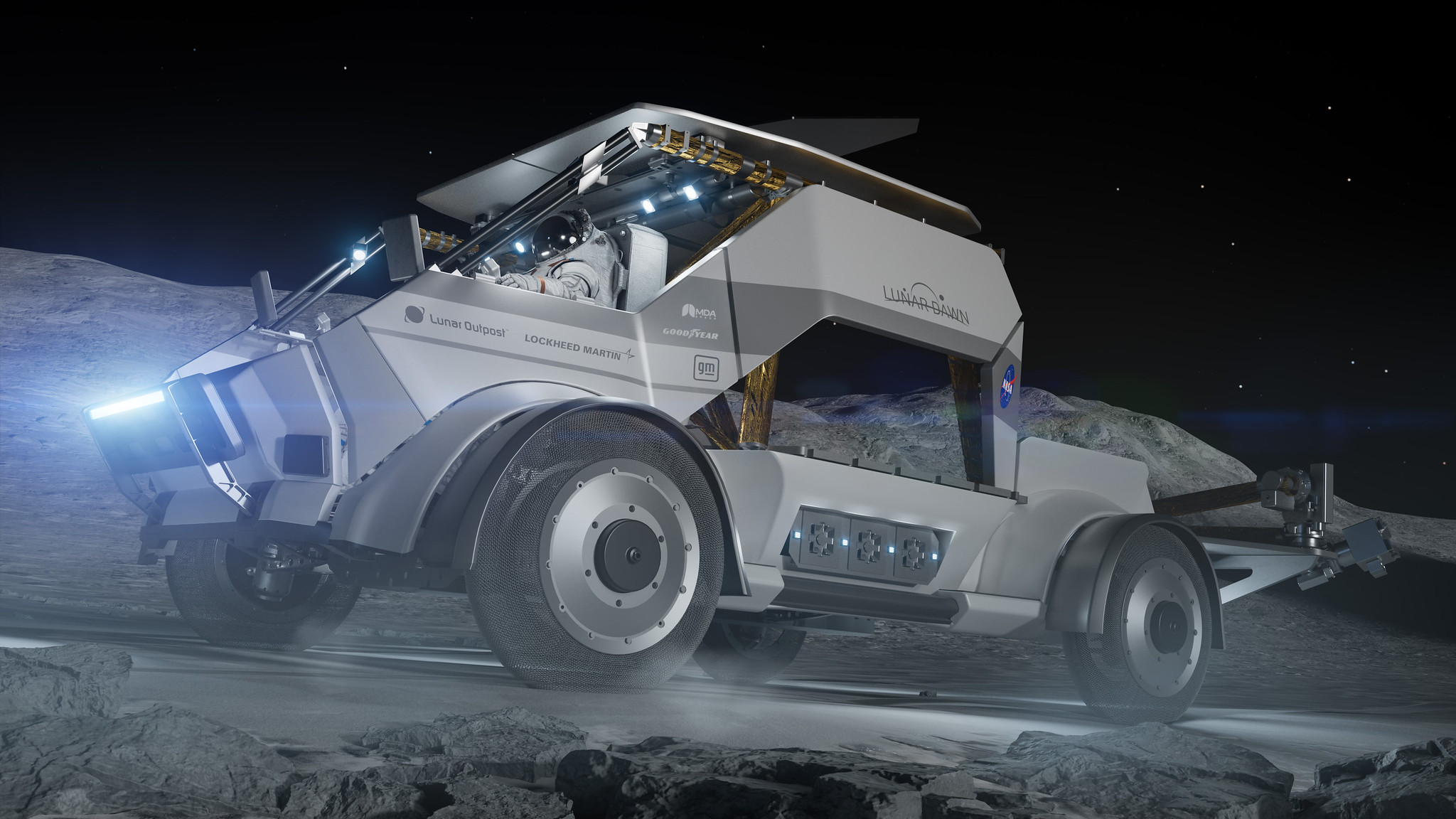
NASA has selected three companies, Intuitive Machines, Lunar Outpost, and Venturi Astrolab, to develop Lunar Terrain Vehicles (LTV) for Artemis missions, with contracts totaling up to $4.6 billion. The rovers are intended to enhance astronauts' mobility and serve as science platforms between crewed missions. Each company's approach to the LTV problem varies, with renderings showcasing unique designs such as Intuitive Machine's Moon Reusable Autonomous Crewed Exploration Rover (MRACER) and Lunar Outpost's Lunar Dawn. Venturi Astrolab's FLEX rover, which has reached the prototype hardware stage, is scheduled to go to the moon in 2026 as part of SpaceX’s Starship landing tests.
NASA has selected three private companies to design lunar rovers that can operate near the South Pole of the Moon for up to a decade, with a combined maximum potential value of $4.6 billion for all awards. The rovers will need to withstand harsh conditions and operate autonomously, and NASA aims to have them delivered prior to the Artemis V mission. This move reflects NASA's increasing reliance on the commercial space industry for services, following successes in cargo resupply and crew transportation to the International Space Station.
NASA has selected three companies, Intuitive Machines, Lunar Outpost, and Venturi Astrolab, to develop lunar rover concepts for Artemis missions, with the rovers to be provided as a service. The rovers will transport astronauts and conduct scientific investigations on the lunar surface, with the goal of continued exploration and science after astronauts depart. The companies, including automotive and aerospace industry partners, will refine their designs over the next year, with NASA expecting to select one company for a demonstration task order. The contract emphasizes competition and flexibility, with potential for commercial use of the rovers beyond NASA missions.