Tag

Ceres

All articles tagged with #ceres

10 Surprising Discoveries by Astronomers While Pursuing Other Goals

Originally Published 3 months ago — by Gizmodo

Featured image for 10 Surprising Discoveries by Astronomers While Pursuing Other Goals
Source: Gizmodo

Astronomers have made several unexpected discoveries while searching for other celestial phenomena, including the discovery of Uranus, Ceres, solar flares, cosmic X-rays, the cosmic microwave background, pulsars, gamma-ray bursts, exoplanets, dark energy, and fast radio bursts, all of which have significantly advanced our understanding of the universe.

NASA's Ceres Discoveries Suggest Past Habitability and Potential for Life

Originally Published 4 months ago — by ScienceAlert

Featured image for NASA's Ceres Discoveries Suggest Past Habitability and Potential for Life
Source: ScienceAlert

NASA's Dawn mission revealed that Ceres, the largest object in the Asteroid Belt, may have supported single-celled life 2.5 to 4 billion years ago due to a once-active subsurface water reservoir heated by radioactive decay, although it likely no longer has an internal ocean today.

Ceres' Potential for Habitability and Past Life Conditions

Originally Published 4 months ago — by Phys.org

Featured image for Ceres' Potential for Habitability and Past Life Conditions
Source: Phys.org

New NASA research suggests that Ceres, the largest asteroid in the belt, may have had a long-lasting source of chemical energy in its past, potentially supporting microbial life, due to a steady supply of hot, mineral-rich water from its interior, although current conditions are too cold for habitability.

NASA Scientists Suggest Ceres Could Have Supported Life Due to Long-Lasting Energy Sources

Originally Published 4 months ago — by NASA (.gov)

Featured image for NASA Scientists Suggest Ceres Could Have Supported Life Due to Long-Lasting Energy Sources
Source: NASA (.gov)

NASA research suggests that Ceres, a dwarf planet in the asteroid belt, may have had a long-standing internal energy source around 2.5 billion years ago, which could have supported microbial life due to the presence of water, organic molecules, and chemical energy, although it is now too cold to be habitable.

Ceres: A Clue to Life's Origins on a Dwarf Planet

Originally Published 7 months ago — by Salon.com

Featured image for Ceres: A Clue to Life's Origins on a Dwarf Planet
Source: Salon.com

A new study suggests that collisions in space can produce and preserve carbon on dwarf planets like Ceres, which may hold clues to the origins of life. The research highlights the importance of future sample return missions to analyze organic materials on Ceres, especially in light of its potential subsurface ocean and the challenges posed by shock metamorphism during impacts. Funding and mission planning are critical for advancing this research.

Ceres: A Potential Ocean World Teeming with Life-Supporting Organics

Originally Published 1 year ago — by Earth.com

Featured image for Ceres: A Potential Ocean World Teeming with Life-Supporting Organics
Source: Earth.com

Recent research on the dwarf planet Ceres, based on data from NASA's Dawn mission, has identified 11 new regions rich in organic materials, suggesting the presence of an internal reservoir. This discovery raises the possibility that Ceres could support biological processes, as these materials may have formed within the planet itself. The findings enhance Ceres' significance in planetary science and space exploration, highlighting its potential as a target for future missions and its role in understanding the solar system's history and the potential for life beyond Earth.

Ceres: A Treasure Trove of Water and Organic Material Unveiled

Originally Published 1 year ago — by Space.com

Featured image for Ceres: A Treasure Trove of Water and Organic Material Unveiled
Source: Space.com

Data from NASA's defunct Dawn spacecraft suggests that the dwarf planet Ceres may have a rich reserve of organic materials, potentially supporting conditions for life. Researchers identified 11 regions on Ceres with high organic content, indicating these materials might originate from within the planet. This discovery challenges previous theories that organics were delivered by comets or asteroids. The findings highlight Ceres' significance in the search for extraterrestrial life and its potential as a resource base for future space missions. The study was published in the Planetary Science Journal.

Ceres: A Water-Rich Dwarf Planet Teeming with Organics

Originally Published 1 year ago — by Yahoo! Voices

Featured image for Ceres: A Water-Rich Dwarf Planet Teeming with Organics
Source: Yahoo! Voices

Data from NASA's defunct Dawn spacecraft suggests that the dwarf planet Ceres may have a rich reserve of organic materials, potentially supporting the existence of life. Researchers identified 11 regions on Ceres with high organic content, indicating these materials might originate from within the planet. This discovery challenges previous theories that organics were delivered by comets or asteroids. The findings highlight Ceres' significance in the search for extraterrestrial life and its potential as a resource base for future space missions. The study was published in the Planetary Science Journal.

Organic Material Found on Water-Rich Dwarf Planet Ceres

Originally Published 1 year ago — by Phys.org

Featured image for Organic Material Found on Water-Rich Dwarf Planet Ceres
Source: Phys.org

A new study using data from NASA's Dawn spacecraft has identified 11 regions on Ceres, a dwarf planet in the asteroid belt, suggesting the presence of an internal reservoir of organic materials. This discovery challenges previous theories that these materials were delivered by external impacts and instead supports the idea that they may have formed within Ceres. The findings, published in The Planetary Science Journal, highlight Ceres' potential astrobiological significance and its role in future space exploration.

Uncovering the Origins of Ceres' Young Cold Traps

Originally Published 1 year ago — by Phys.org

Featured image for Uncovering the Origins of Ceres' Young Cold Traps
Source: Phys.org

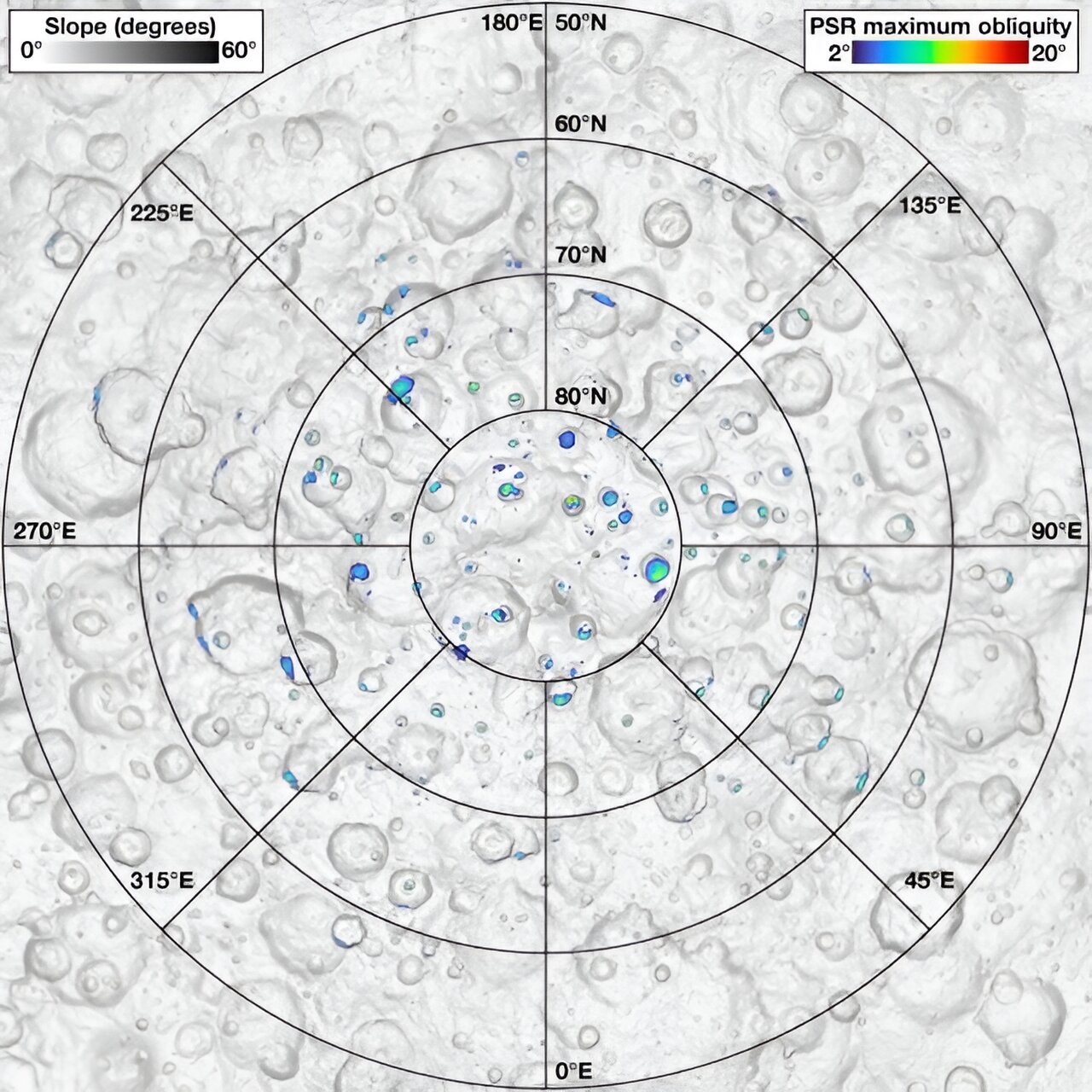
Scientists have discovered extremely young ice deposits in permanently shadowed craters near the poles of the asteroid Ceres, shedding light on its history. Research suggests that these ice deposits formed within the last 6,000 years, making them remarkably young compared to Ceres's age of over 4 billion years. The study also explores the possibility of other types of ices being trapped in these craters and reveals that Ceres's polar craters are cold enough to retain water ice but too warm to retain other common types of ice.