Tag

Habitable

All articles tagged with #habitable

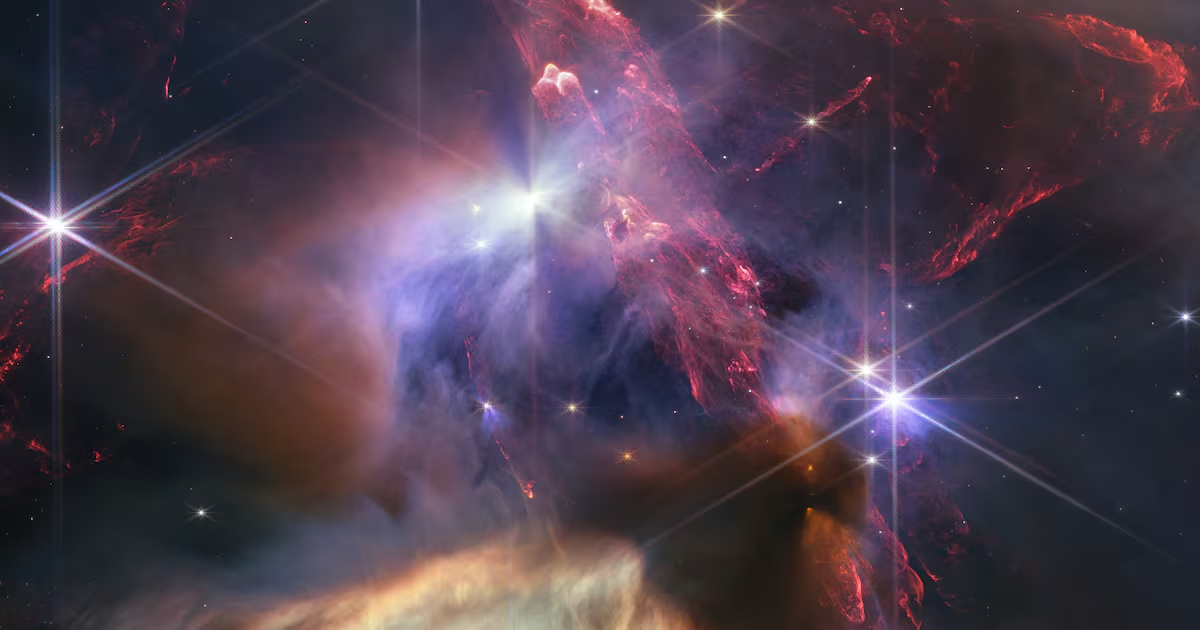
NASA's James Webb Telescope Discovers and Images Potentially Habitable Exoplanet

Originally Published 6 months ago — by The Daily Beast

Featured image for NASA's James Webb Telescope Discovers and Images Potentially Habitable Exoplanet
Source: The Daily Beast

NASA's James Webb Space Telescope discovered a potentially habitable planet, TWA 7b, located 34 light years away, using a new high-contrast imaging technique. The planet is about 100 times the size of Earth and has a temperature around 120°F, raising possibilities for life, although visiting it remains far beyond current capabilities.

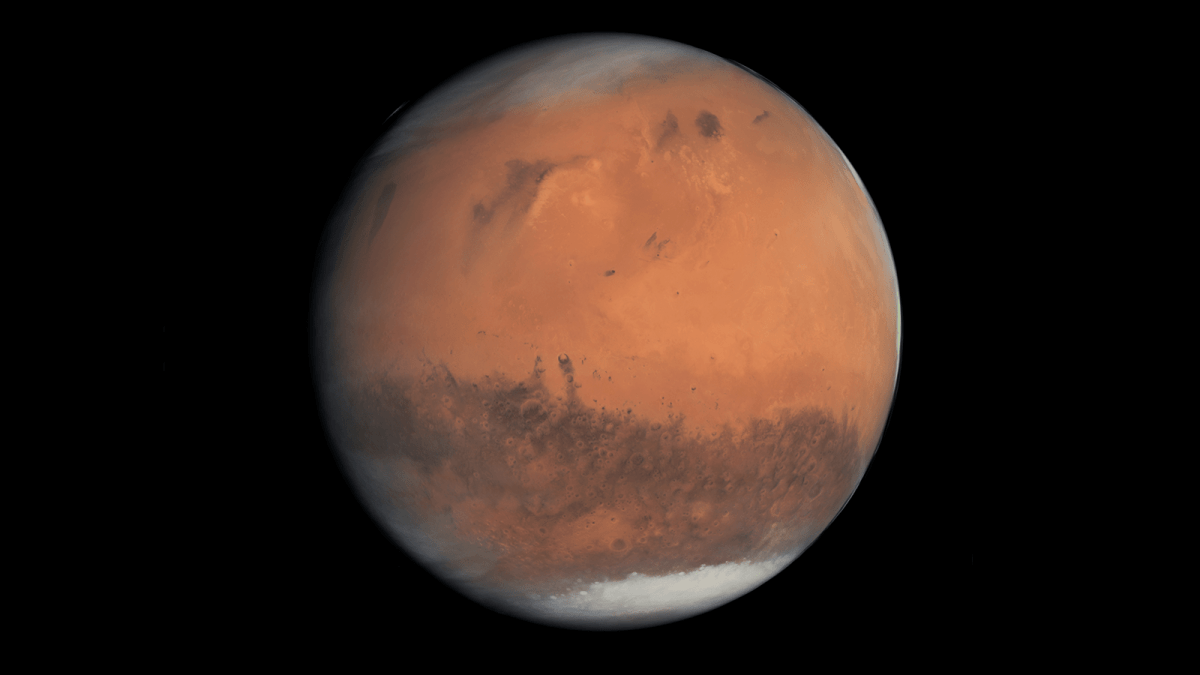
"Revisiting Mars' Watery Past: New Insights and Clues Uncovered"

Originally Published 1 year ago — by The Times

Featured image for "Revisiting Mars' Watery Past: New Insights and Clues Uncovered"
Source: The Times

Scientists believe that Mars may have been habitable for millions of years longer than previously thought, with its surface once covered in oceans, lakes, and rivers resembling early Earth. This raises the possibility of simple life evolving in Martian waters, but not for long enough to develop into complex organisms. The disappearance of liquid water from Mars more than three billion years ago likely ended any nascent life, but the tantalizing prospect remains that life may have thrived there.

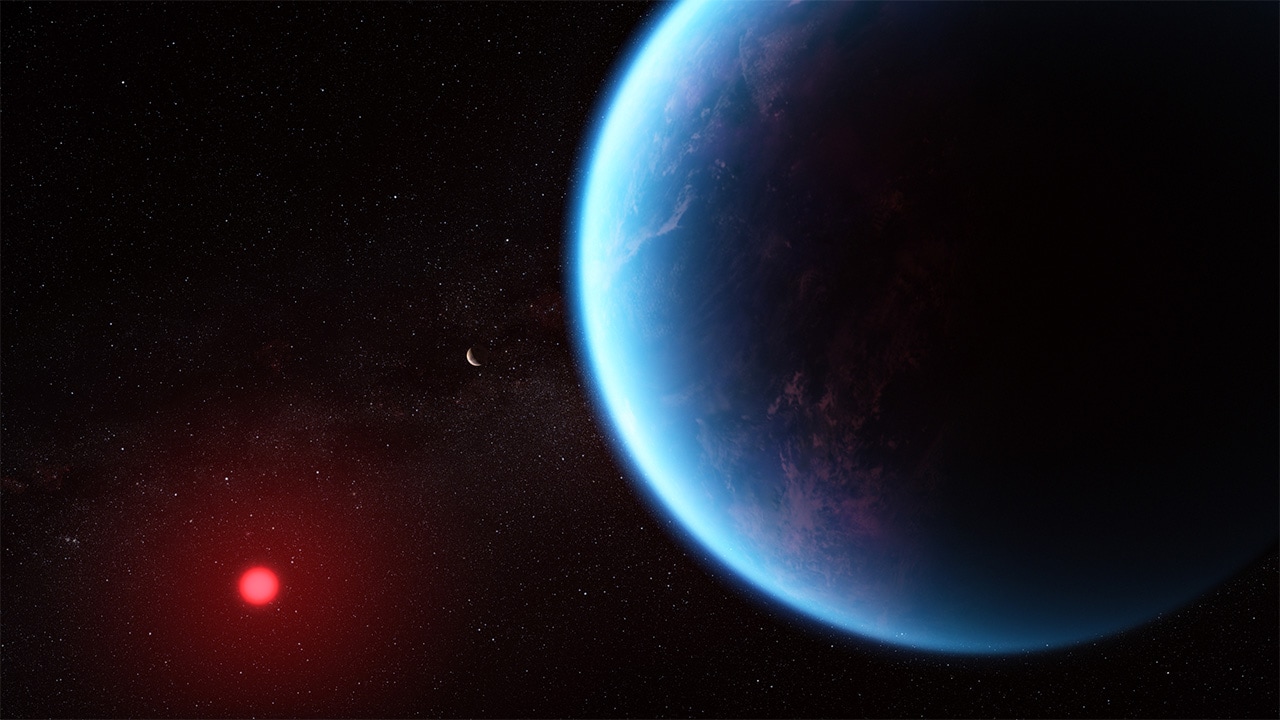
"NASA's Webb Telescope Uncovers Potential 'Hycean' Planet with Water Ocean and Signs of Life"

Originally Published 2 years ago — by The Washington Post

Featured image for "NASA's Webb Telescope Uncovers Potential 'Hycean' Planet with Water Ocean and Signs of Life"
Source: The Washington Post

NASA's James Webb Space Telescope has provided evidence suggesting the presence of an ocean on a massive exoplanet called K2-18 b, located over 100 light-years away in the constellation Leo. The planet, 8.6 times the mass of Earth, exhibits an atmosphere containing methane and carbon dioxide, consistent with an ocean-covered surface beneath a hydrogen-rich atmosphere. While the detection of dimethyl sulfide raises the possibility of biological activity, further observations are needed to confirm this finding. The planet's large size and potential high-pressure ice mantle may make it inhospitable for life, but the discovery highlights the importance of exploring diverse habitable environments in the search for extraterrestrial life.

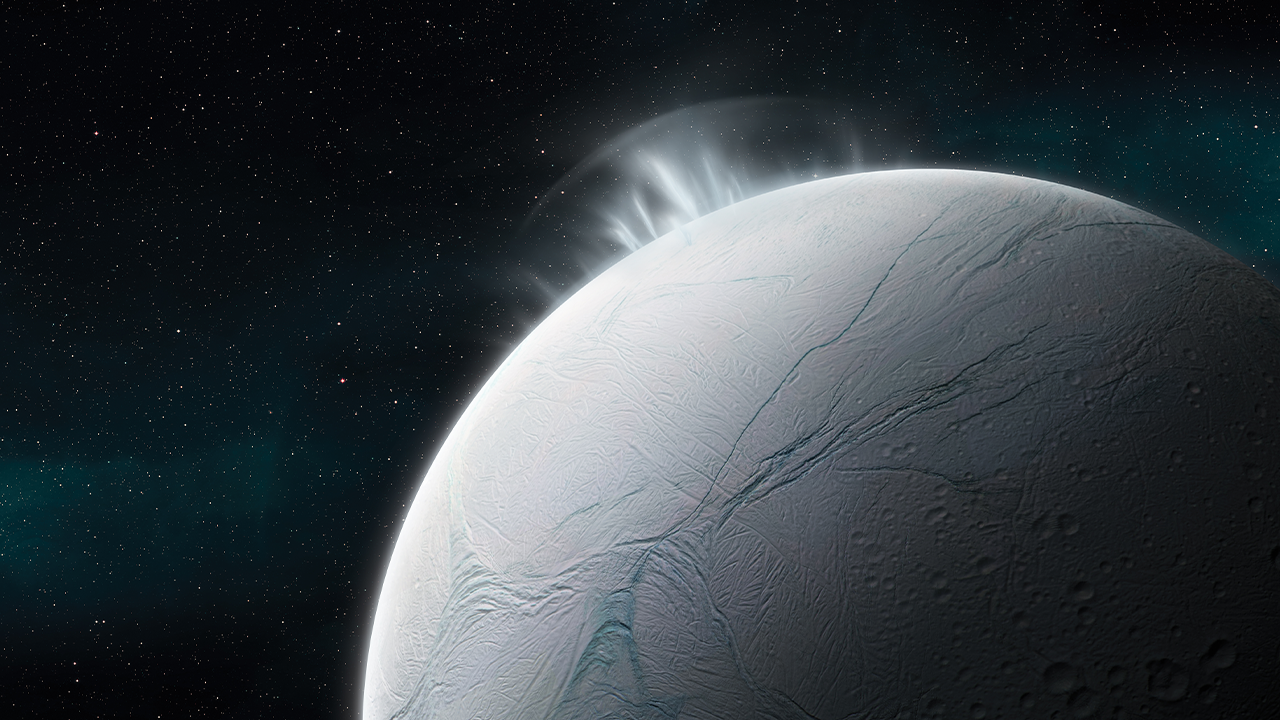
Moon's Elements Could Support Life, Say Scientists.

Originally Published 2 years ago — by Fox News

Featured image for Moon's Elements Could Support Life, Say Scientists.
Source: Fox News

Scientists have discovered that Saturn's moon Enceladus has substantial amounts of phosphorus salts, a key chemical element for many biological processes, inside icy particles ejected into space by the small moon's plume, indicating that the moon has the necessary materials to make it habitable. The discovery was made by analyzing frozen spray from the satellite that was collected by NASA's Cassini mission. While having the ingredients is necessary, it may not be sufficient for an extraterrestrial environment to host life.

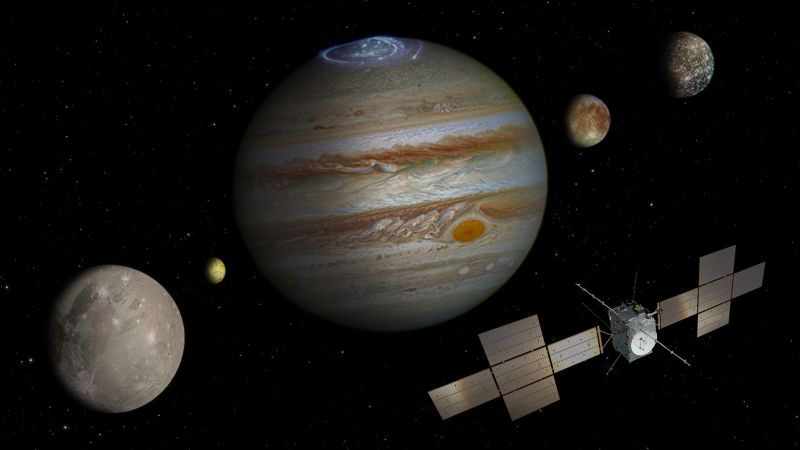
Europe's "Juice" mission set to explore Jupiter's icy ocean worlds.

Originally Published 2 years ago — by CNN

Featured image for Europe's "Juice" mission set to explore Jupiter's icy ocean worlds.
Source: CNN

The European Space Agency's Juice mission is set to launch on Thursday to explore Jupiter and its three largest moons, Ganymede, Callisto, and Europa, which are believed to have subsurface oceans that could potentially harbor life. The spacecraft will take eight years to reach Jupiter and will spend three and a half years orbiting the gas giant and conducting flybys of the moons. The mission aims to determine if the moons are habitable and to search for evidence of the building blocks of life. The spacecraft is equipped with 10 instruments to study the moons' composition, structure, and magnetic fields.