Tag

Celestial Objects

All articles tagged with #celestial objects

High School Senior Discovers 1.5 Million Hidden Celestial Objects

Originally Published 2 months ago — by Indian Defence Review

Featured image for High School Senior Discovers 1.5 Million Hidden Celestial Objects
Source: Indian Defence Review

A 17-year-old California high school student developed an AI model that analyzed over a decade of NASA's NEOWISE infrared data, uncovering 1.5 million previously unknown celestial objects and signals, demonstrating the transformative potential of machine learning in astrophysics and beyond.
3D Solar System Atlas Includes All Asteroids

Originally Published 4 months ago — by Boing Boing

Featured image for 3D Solar System Atlas Includes All Asteroids
Source: Boing Boing

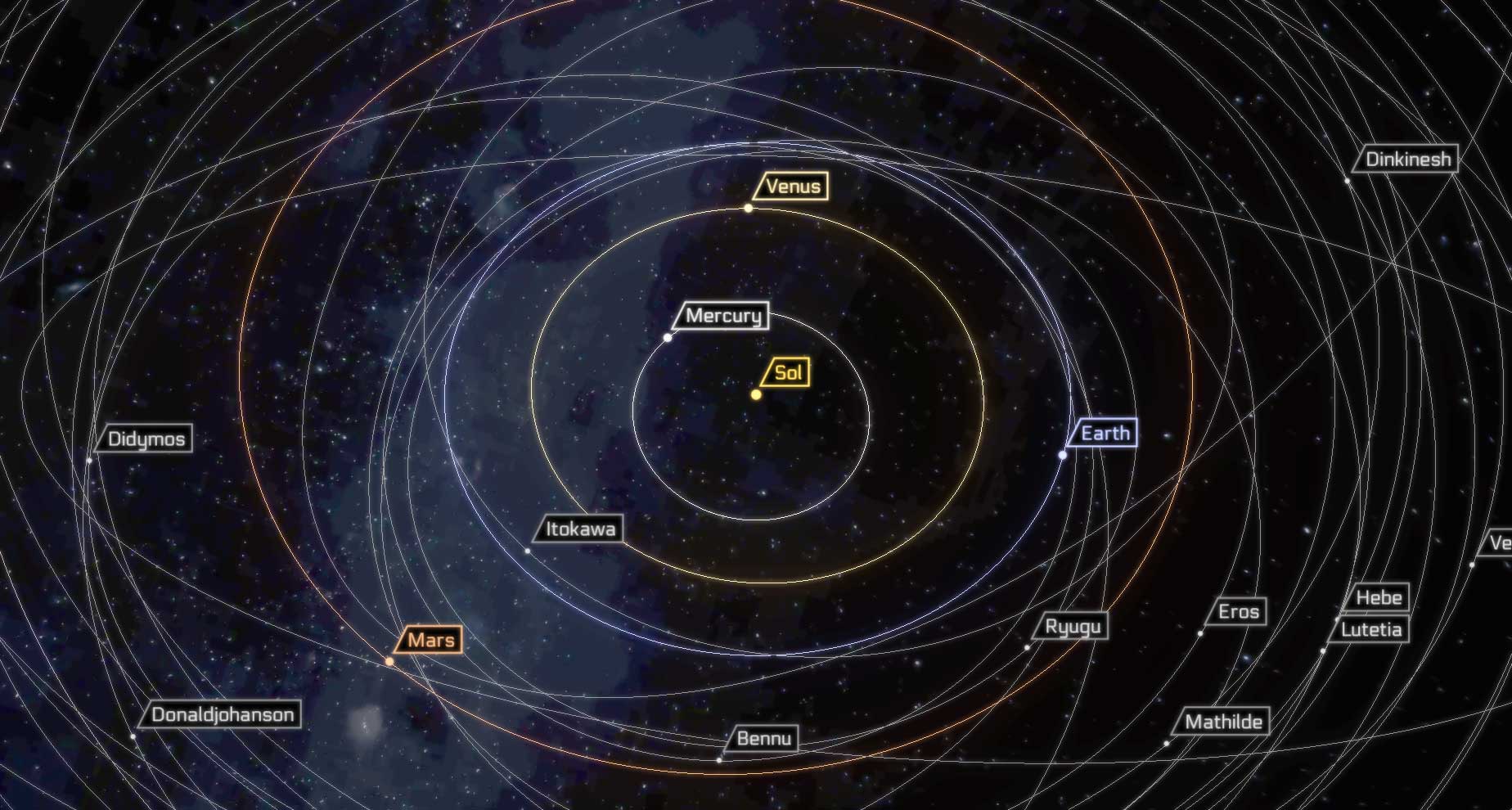
A detailed 3D interactive atlas of the solar system showcases planets, moons, asteroids, and other celestial objects, allowing users to explore and learn about space through an engaging browser-based visualization created by Gordon Hart, utilizing technologies like Three.js and data from JPL and Wikidata.

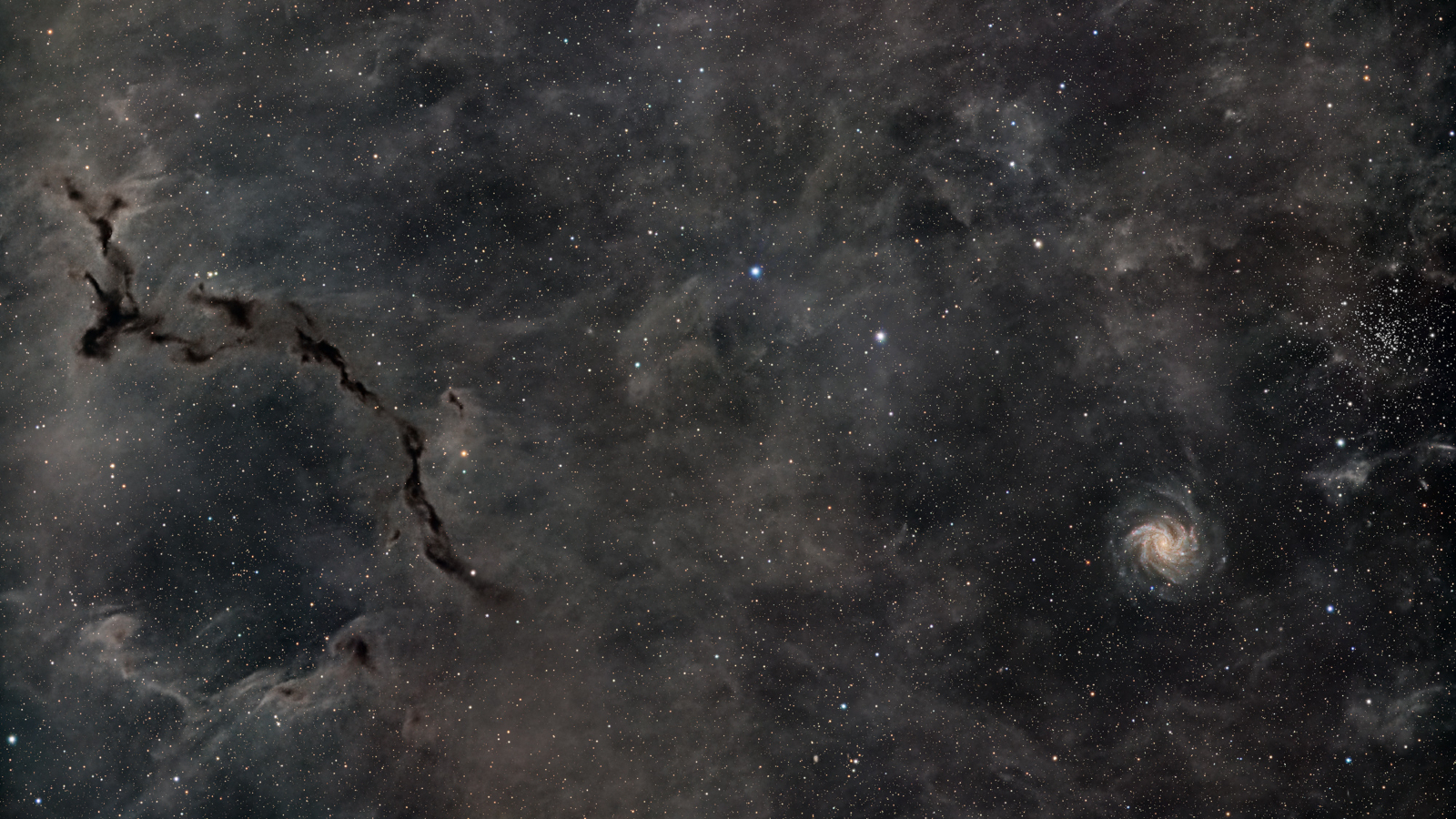
Astrophotographer Captures Spectacular Galactic Fireworks Near Seahorse Nebula

Originally Published 5 months ago — by Space

Featured image for Astrophotographer Captures Spectacular Galactic Fireworks Near Seahorse Nebula
Source: Space

Astrophotographer Greg Meyer captured a stunning image featuring the Fireworks Galaxy, the Seahorse Nebula, and the Ghost Bush star cluster in a single shot, showcasing a breathtaking deep-space vista from Arizona, despite the objects being millions of light-years apart.

NASA Unveils Growing Population of Mysterious Dark Comets

Originally Published 1 year ago — by Phys.org

Featured image for NASA Unveils Growing Population of Mysterious Dark Comets
Source: Phys.org

Astronomers have doubled the known number of 'dark comets'—celestial objects that resemble asteroids but behave like comets—bringing the total to 14. These objects are categorized into two groups: larger 'outer dark comets' with eccentric orbits similar to Jupiter-family comets, and smaller 'inner dark comets' with nearly circular orbits in the inner solar system. The discovery raises questions about their origins, acceleration, and potential role in delivering life-essential materials to Earth.

NASA Unveils New Findings on Dark Comets

Originally Published 1 year ago — by NASA Jet Propulsion Laboratory

Featured image for NASA Unveils New Findings on Dark Comets
Source: NASA Jet Propulsion Laboratory

NASA researchers have discovered seven more dark comets, doubling the known number of these celestial objects that resemble asteroids but behave like comets. These dark comets fall into two categories: larger ones in the outer solar system and smaller ones in the inner solar system. The study, published in the Proceedings of the National Academy of Sciences, raises questions about their origins and potential role in delivering life-essential materials to Earth.

NASA Unveils New Findings on Dark Comets

Originally Published 1 year ago — by NASA

Featured image for NASA Unveils New Findings on Dark Comets
Source: NASA

NASA researchers have discovered seven more dark comets, doubling the known number of these celestial objects that resemble asteroids but behave like comets. These dark comets fall into two categories: larger ones in the outer solar system and smaller ones in the inner solar system. The study, published in the Proceedings of the National Academy of Sciences, raises questions about the origins and characteristics of dark comets, including their potential role in delivering materials necessary for life on Earth.

"Exploring the Night Sky: A Beginner's Guide to Backyard Astronomy"

Originally Published 1 year ago — by Lifehacker

Featured image for "Exploring the Night Sky: A Beginner's Guide to Backyard Astronomy"
Source: Lifehacker

A beginner's guide to backyard astronomy includes tips on understanding the observable cosmos, finding a good stargazing location, essential gear such as binoculars and apps, and exploring celestial objects during the day. It also suggests connecting with other backyard astronomers and highlights notable astronomy events in 2024.

"Rare 'Devil Comet' Visible During April Eclipse: How to Safely Watch"

Originally Published 1 year ago — by CNN

Featured image for "Rare 'Devil Comet' Visible During April Eclipse: How to Safely Watch"
Source: CNN

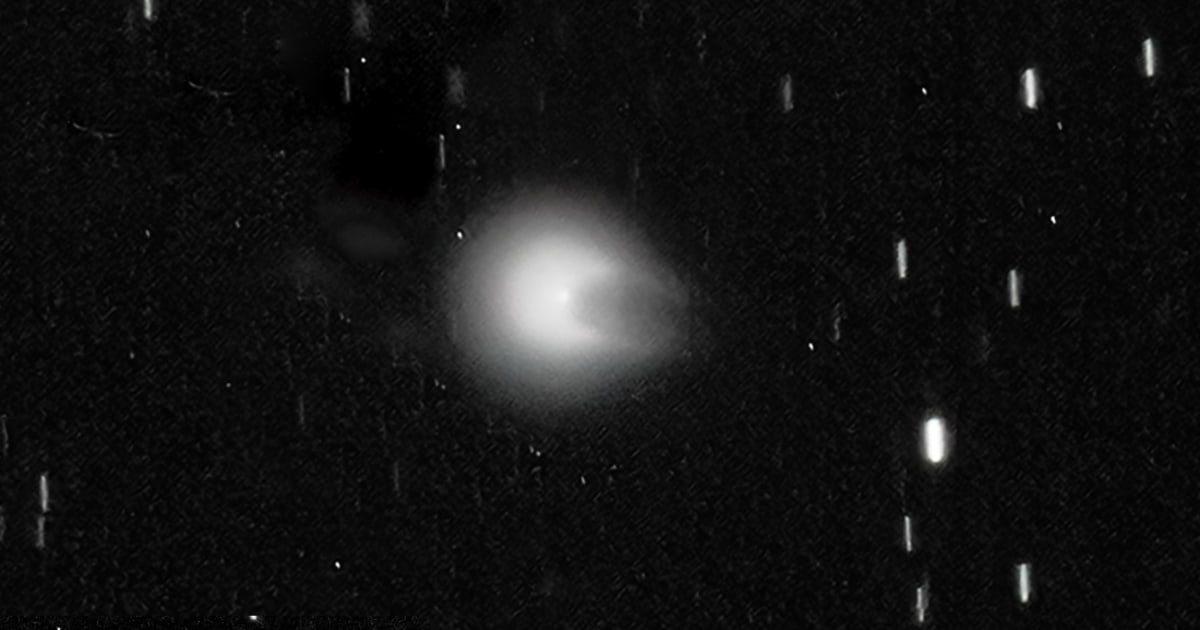
The "devil comet" known as Comet 12P/Pons-Brooks, which has been exhibiting unusual behavior and a horned appearance, will be visible in the night sky for the rest of March and is expected to make a rare appearance during the total solar eclipse on April 8. Astronomers are eager to study this once-in-a-lifetime opportunity as the comet only completes one orbit around the sun every 71 years. It will make its closest pass of the sun on April 21 and then be visible during the eclipse, but will shift to the southern night sky afterward. Scientists are intrigued by the comet's outbursts and are hoping to uncover more details about its behavior and rotation rate.

"Rare 'Devil' Comet to Grace April Solar Eclipse with Spectacular Visibility"

Originally Published 1 year ago — by NBC News

Featured image for "Rare 'Devil' Comet to Grace April Solar Eclipse with Spectacular Visibility"
Source: NBC News

The "devil comet" 12P/Pons-Brooks, known for occasional outbursts, is currently visible in the night sky and may be visible during next month's solar eclipse. It is currently visible from the Northern Hemisphere with binoculars and telescopes, and may be visible to the naked eye by the end of the month as it swings through the inner solar system. Stargazers can look toward the west-northwest horizon to spot the comet, and if it flares significantly, it could be visible during the total solar eclipse on April 8 for those in the path of totality.

"Rare Planetary Alignment: When Have All 8 Planets Ever Aligned?"

Originally Published 1 year ago — by Livescience.com

Featured image for "Rare Planetary Alignment: When Have All 8 Planets Ever Aligned?"
Source: Livescience.com

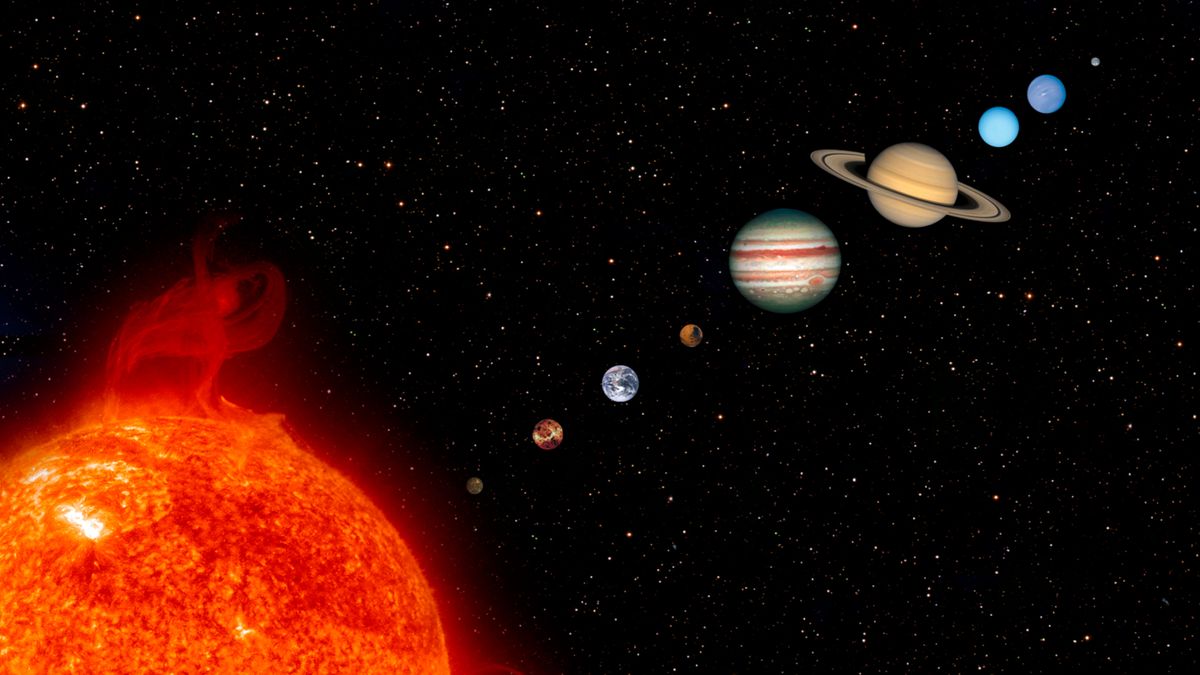
The eight planets in the solar system have never truly aligned in a straight line in 3D space due to their tilted orbits. While they may appear to line up from Earth, this is more about visual appearance than physical alignment. The last time the eight planets were grouped within 30 degrees was Jan. 1, 1665, and the next time will be March 20, 2673. Planetary alignments have virtually no significant physical effects on Earth, and the gravitational force changes during an alignment are negligible.

"Green 'Devil Comet' Photobombs Nebula on Collision Course with Earth"

Originally Published 2 years ago — by Livescience.com

Featured image for "Green 'Devil Comet' Photobombs Nebula on Collision Course with Earth"
Source: Livescience.com

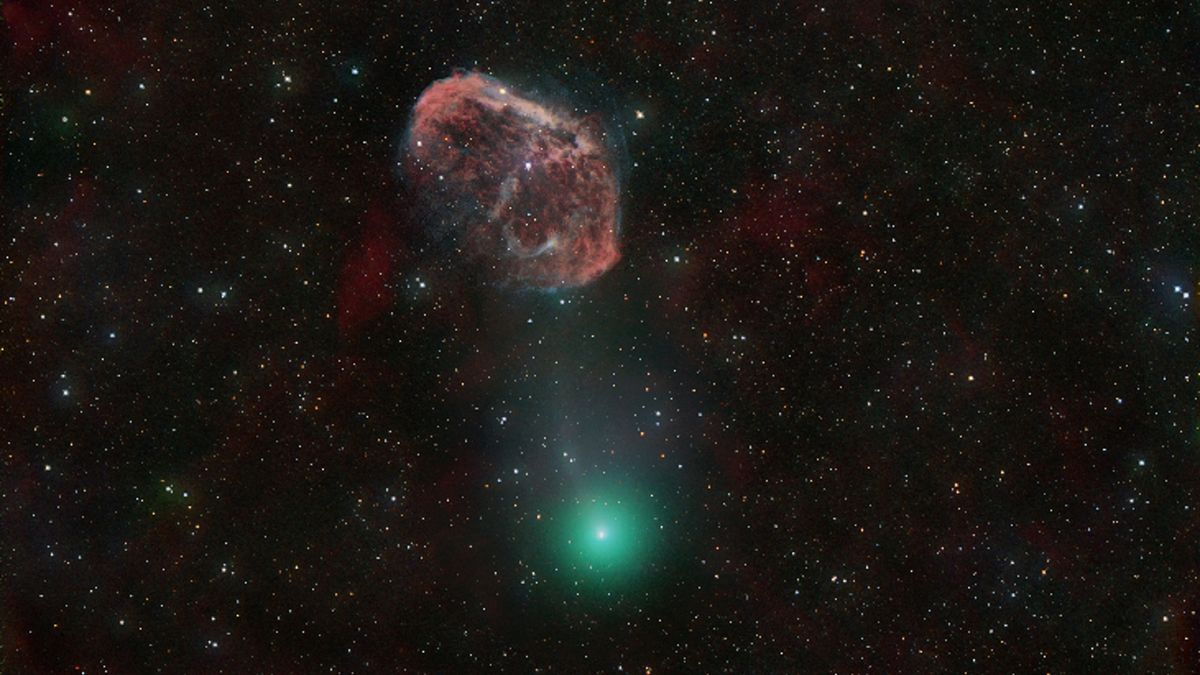
The "devil comet" 12P/Pons-Brooks, a cryovolcanic comet, has been captured in stunning photos as it races towards Earth, with its closest approach expected later this year. The comet, known for its green-hued coma, has been erupting irregularly, earning it the nickname "devil comet." Its recent lack of activity has puzzled scientists, as it was expected to become more active as it approached the sun. The comet's upcoming close approach to Earth may provide an opportunity for researchers to study this phenomenon in greater detail.

Cutting-Edge 'Einstein' Telescope Launches with Lobster-Eye Technology

Originally Published 2 years ago — by European Space Agency

Featured image for Cutting-Edge 'Einstein' Telescope Launches with Lobster-Eye Technology
Source: European Space Agency

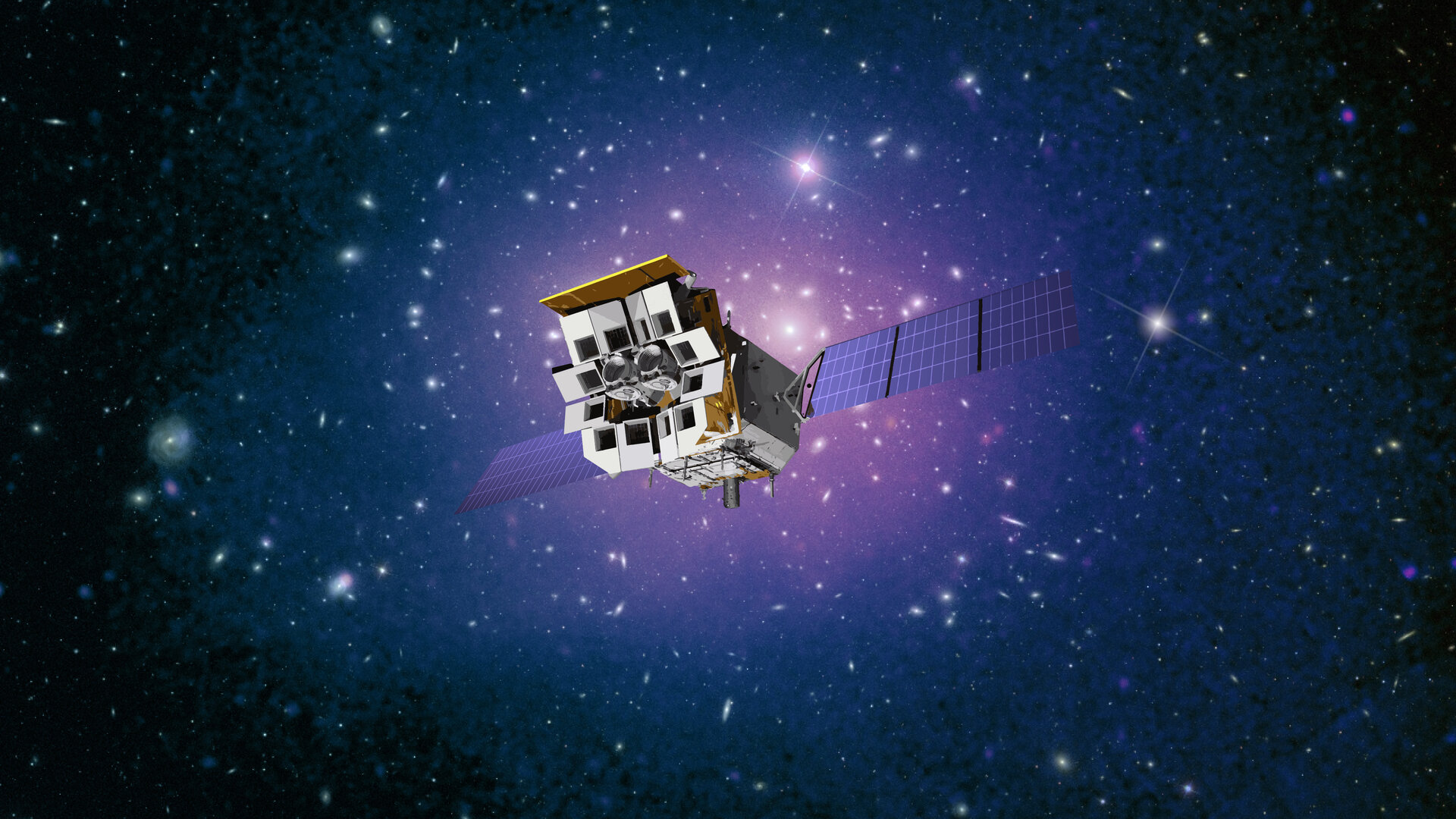
The Chinese Academy of Sciences (CAS) spacecraft Einstein Probe, in collaboration with the European Space Agency (ESA) and the Max Planck Institute for Extraterrestrial Physics (MPE), is set to launch in January 2024. Equipped with innovative X-ray instruments, the mission aims to survey the sky and detect powerful X-ray emissions from celestial objects such as neutron stars and black holes. The mission will contribute to advancing our understanding of high-energy physics and the origin of gravitational waves. The spacecraft's Wide-field X-ray Telescope (WXT) will observe large areas of the sky, while the Follow-up X-ray Telescope (FXT) will study interesting events in more detail. ESA's contribution includes developing the scientific instrumentation and providing ground stations for data download.

Unraveling the Enigma: New Discoveries in Fast Radio Bursts

Originally Published 2 years ago — by NDTV

Featured image for Unraveling the Enigma: New Discoveries in Fast Radio Bursts
Source: NDTV

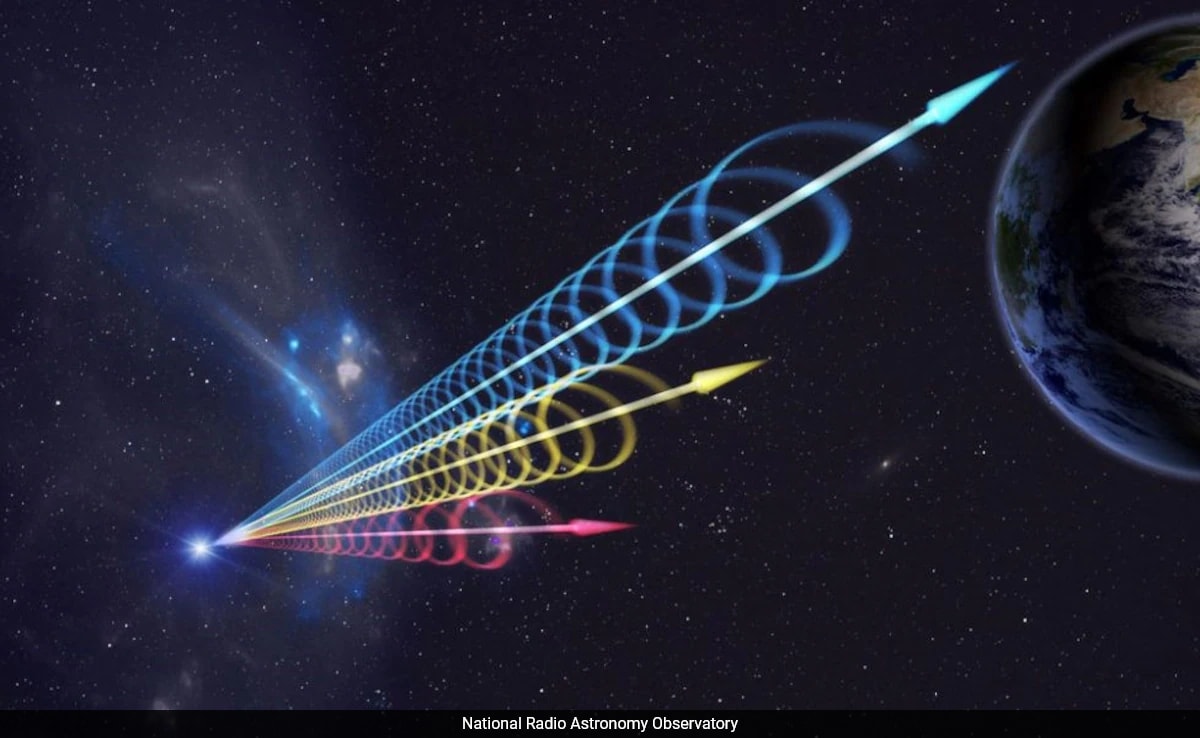
Astronomers have made a peculiar discovery involving a repeating Fast Radio Burst (FRB), a brief and intense energy blast brighter than galaxies. The highly active repeating FRB is emitting bursts with a strange "sliding whistle" effect, which is completely unprecedented. This finding offers new insights into the enigmatic nature of FRBs and brings scientists closer to understanding these mysterious celestial objects. While the exact cause of FRBs remains unknown, this discovery provides confirmation of known FRB properties and the potential for new discoveries in the realm of deep space phenomena.

Revolutionary Technique for Celestial Object Matching Across Telescopes

Originally Published 2 years ago — by Phys.org

Featured image for Revolutionary Technique for Celestial Object Matching Across Telescopes
Source: Phys.org

Researchers at Johns Hopkins University have developed a data science approach that can match observations of celestial objects taken across multiple telescope surveys. This method assigns a "score" to each pair of observations, increasing the likelihood that they are of the same object based on their angular distance in the sky. The tool improves the accuracy and reliability of astronomical catalogs, enabling deeper insights into the universe. The method is fast, handles vast datasets, and outperforms previous approaches in finding accurate matches between observations. Further validation and consensus within the astronomy community are needed for broader adoption.

"Rescuing Dark Matter Data: Balloon-Borne Telescope's Hard Landing Yields Valuable Insights"

Originally Published 2 years ago — by Space.com

Featured image for "Rescuing Dark Matter Data: Balloon-Borne Telescope's Hard Landing Yields Valuable Insights"
Source: Space.com

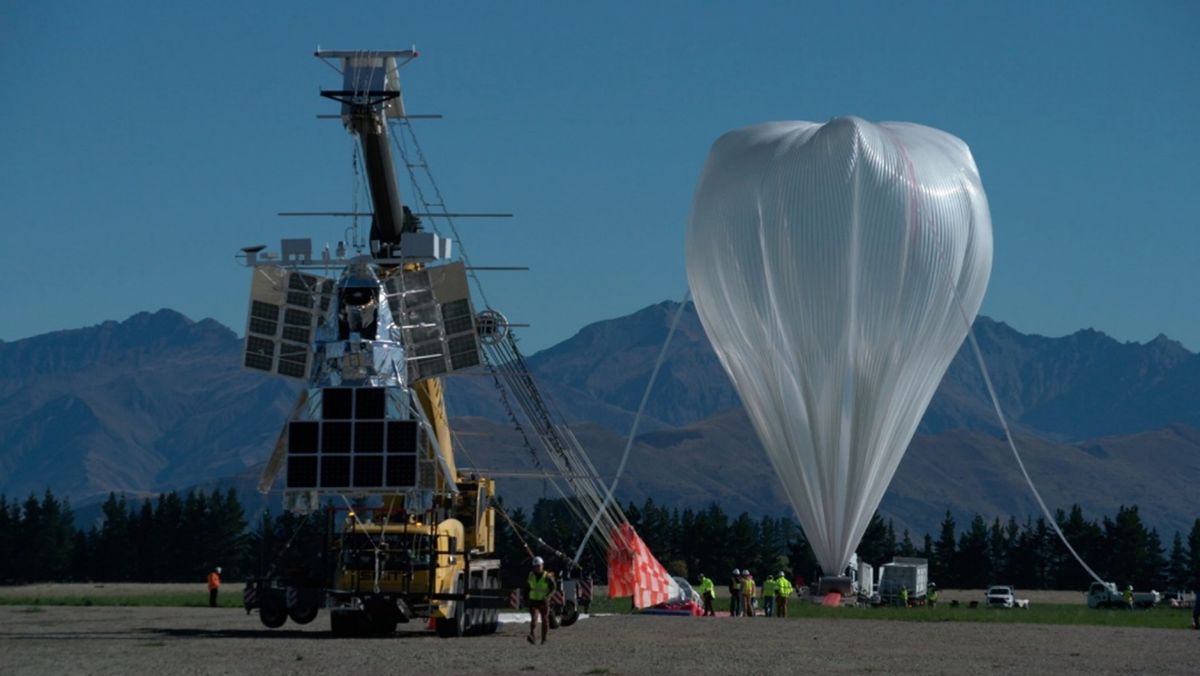
A NASA telescope called SuperBIT, which launched on a balloon earlier this year, lost communication and suffered damage upon landing in Argentina. However, the 200 gigabytes of data it had collected, including stunning images of galaxy clusters, were safely copied to SD drives and parachuted to the ground. The telescope's main goal was to map dark matter around galaxy clusters by measuring how celestial objects warp space and time. The successful recovery of the data demonstrates that valuable science data can be salvaged even in worst-case scenarios.