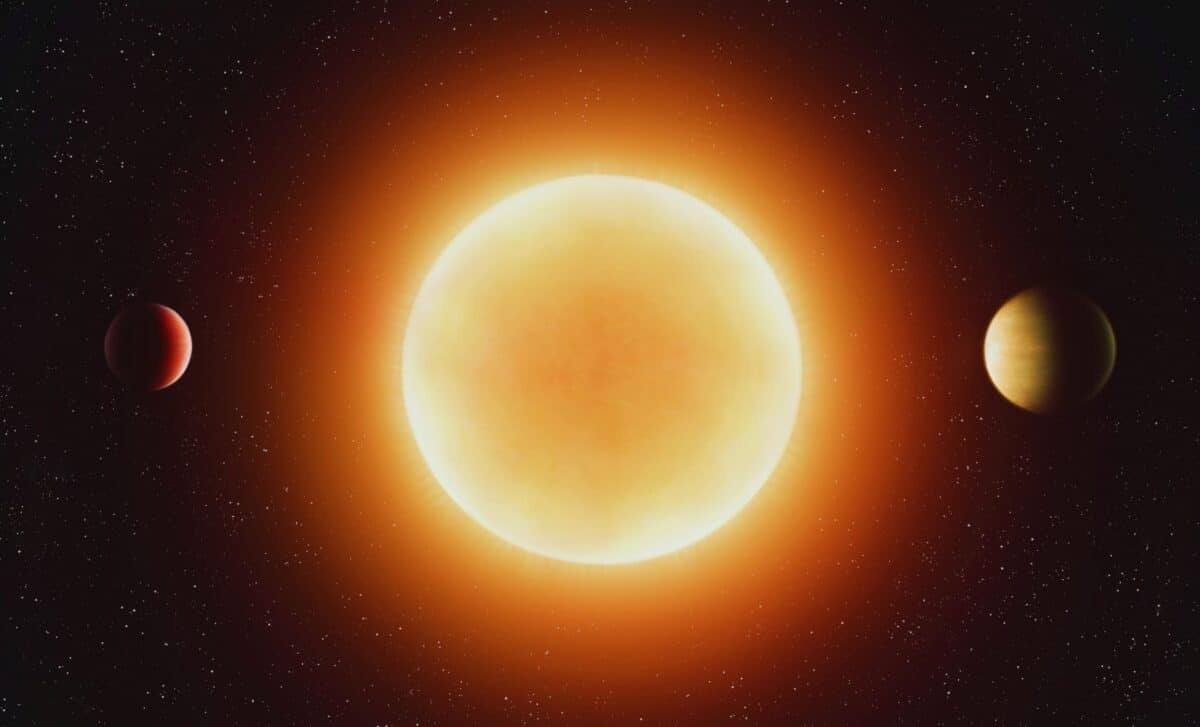
A rare planetary alignment involving two exoplanets crossing their star, known as an exosyzygy, is expected in 2026, but it may go unobserved due to scheduling conflicts with telescopes, highlighting challenges in astronomical observation infrastructure.
On December 3, 2025, a significant planetary alignment involving Jupiter and Saturn fosters romantic growth and reflection across all zodiac signs, encouraging love, healing, and relationship evolution, with each sign receiving tailored guidance to embrace love's possibilities.
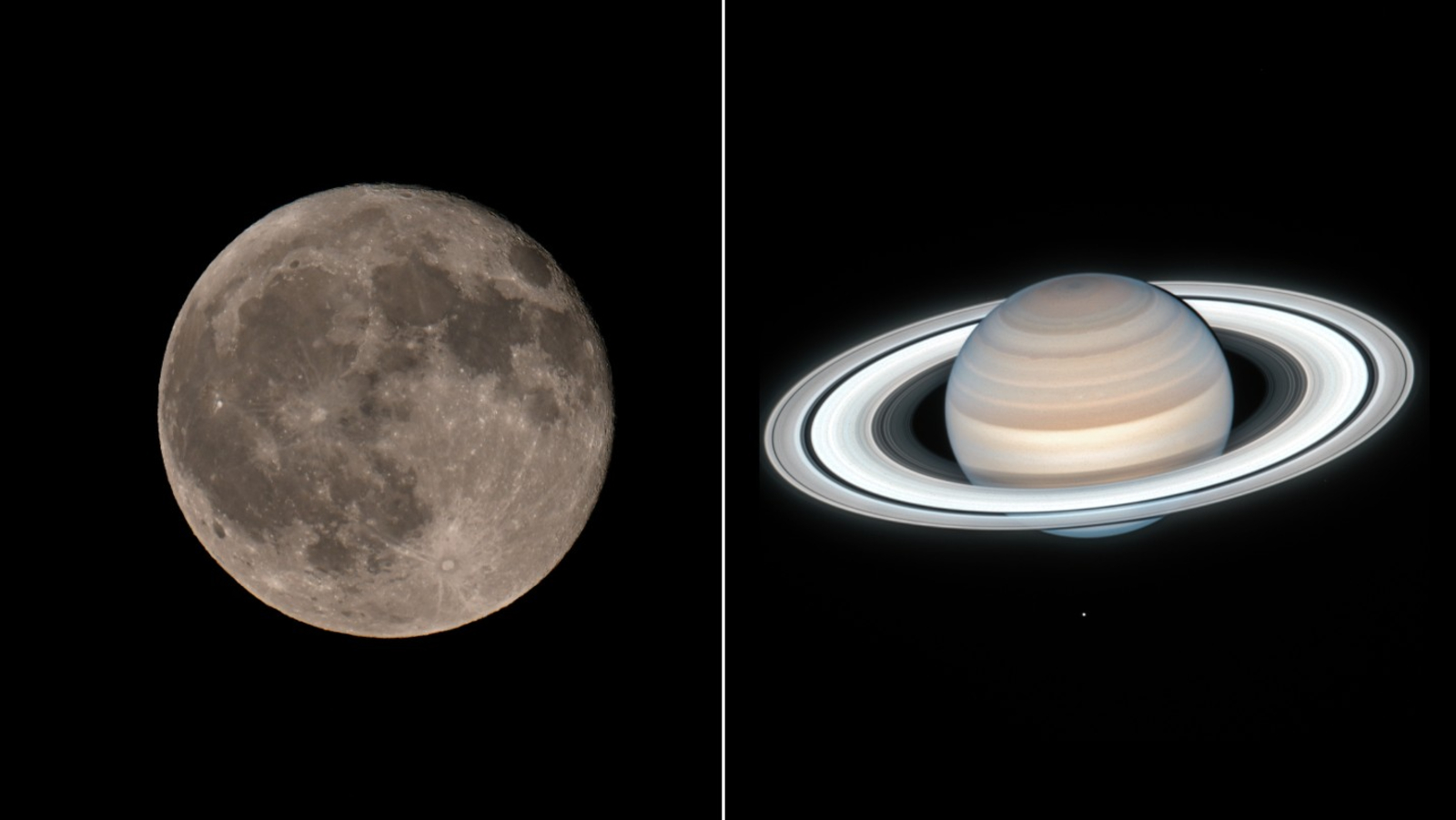
On September 8, viewers can observe Saturn and the waning moon close together at sunset, with Saturn rising near the bright lunar disk just after sunset, offering a spectacular skywatching event that includes the potential to see Saturn's rings and Neptune with a suitable telescope.
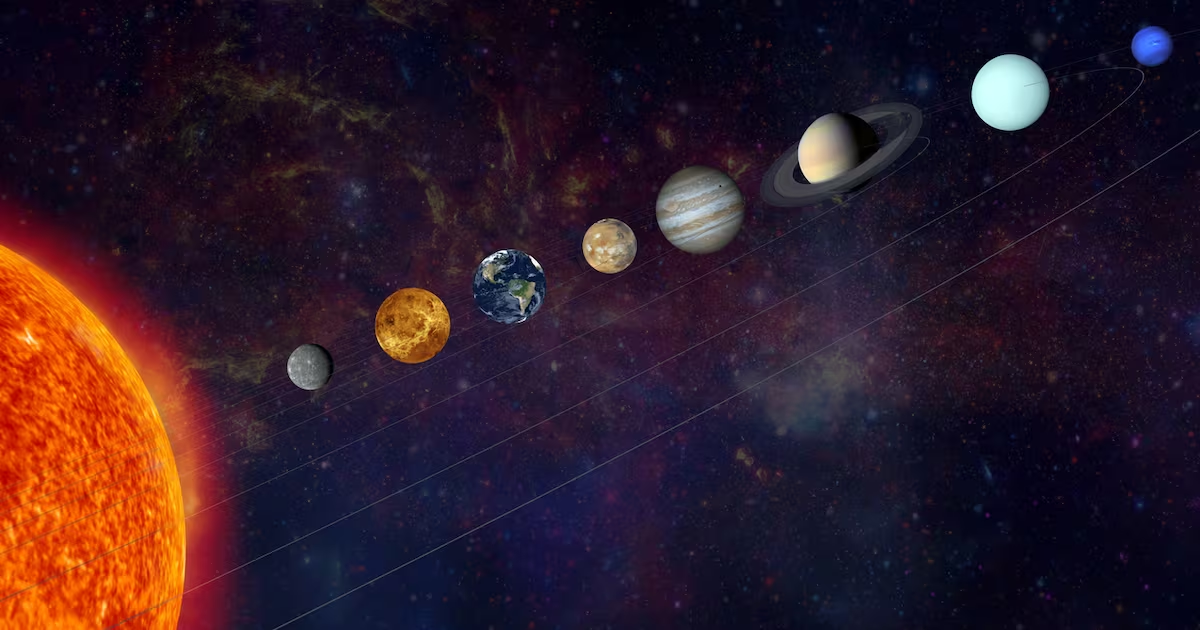
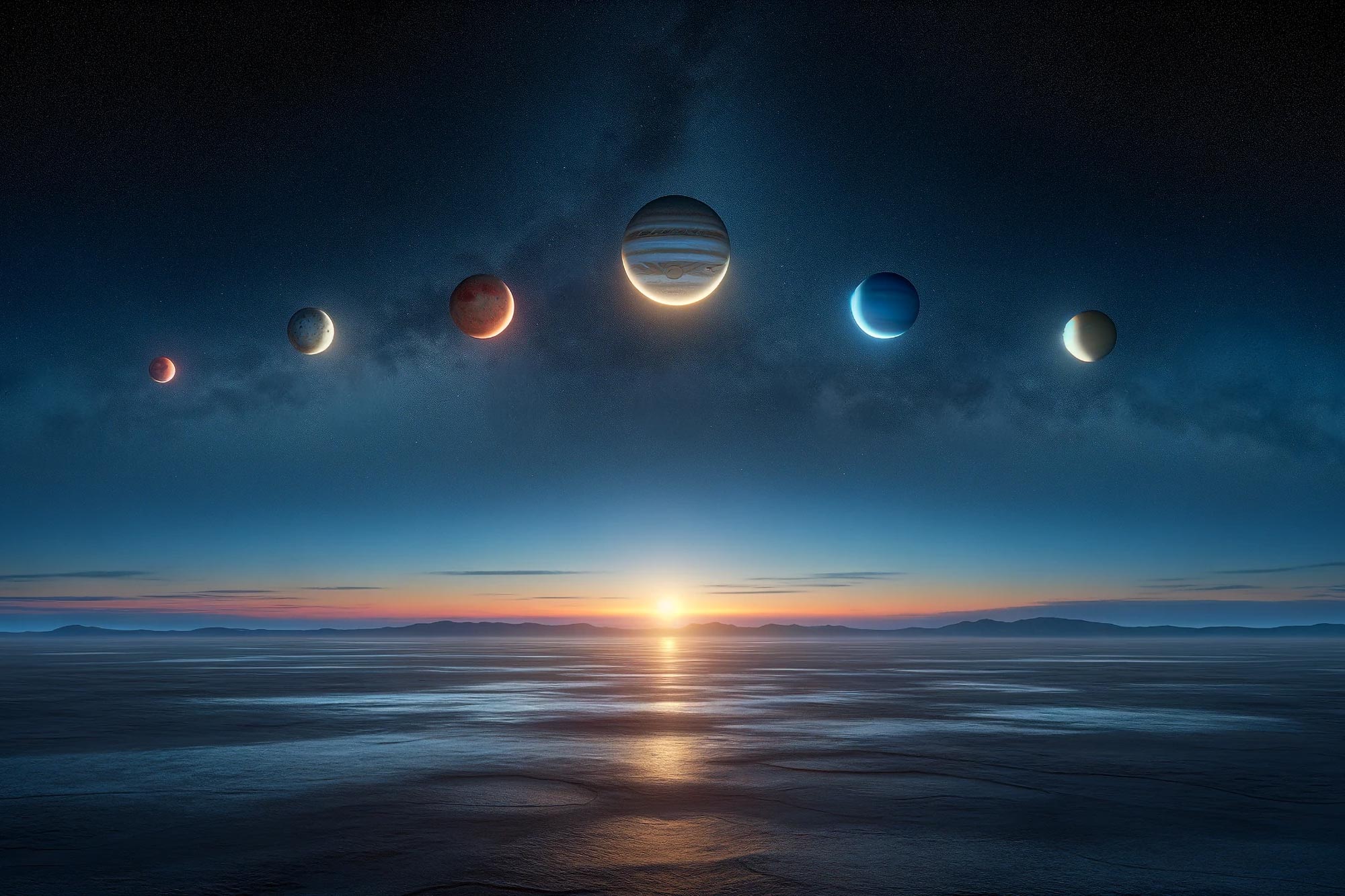
A rare six-planet parade will be visible before sunrise on August 22, featuring Mercury, Venus, Jupiter, Saturn, Uranus, and Neptune, with Mercury and the outer planets visible using binoculars or telescopes. The event offers a unique opportunity for skywatchers, especially in the early morning hours, to observe multiple planets aligned across the sky.
From August 12-31, residents of Miami Valley can observe several celestial events including the Perseid meteor shower, a conjunction of Jupiter and Venus, and a rare planetary alignment involving Mercury, Jupiter, Venus, Uranus, Neptune, and Saturn, best viewed from dark-sky locations early in the morning or before sunrise.
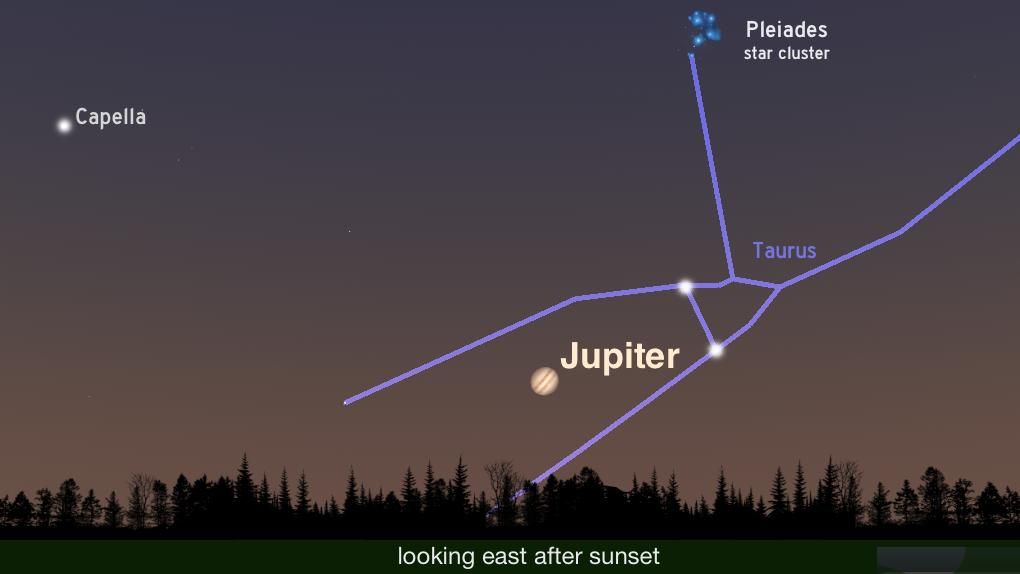
Jupiter is currently at opposition, making it the brightest and closest it will be until 2033, visible all night in the eastern sky. This astronomical event occurs every 13 months when Earth passes between Jupiter and the Sun, similar to a full moon. Jupiter will remain prominent in the night sky throughout the month, gradually moving higher above the horizon each evening. Clear skies this weekend offer an excellent opportunity for skywatchers to observe the planet.
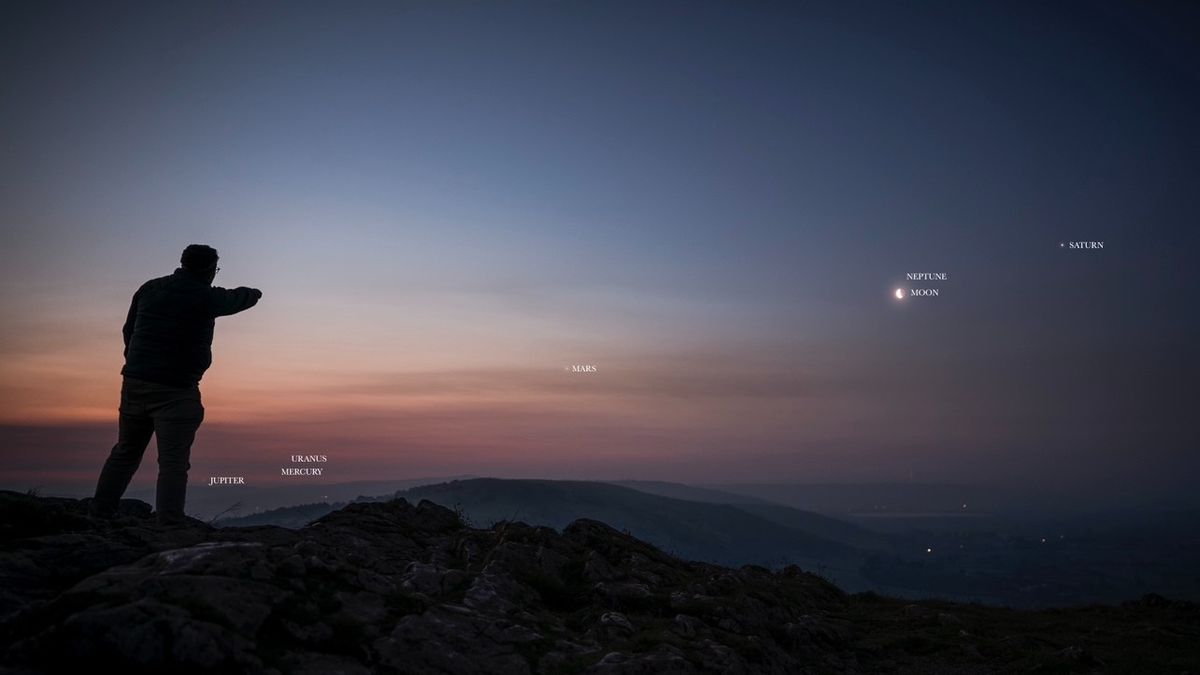
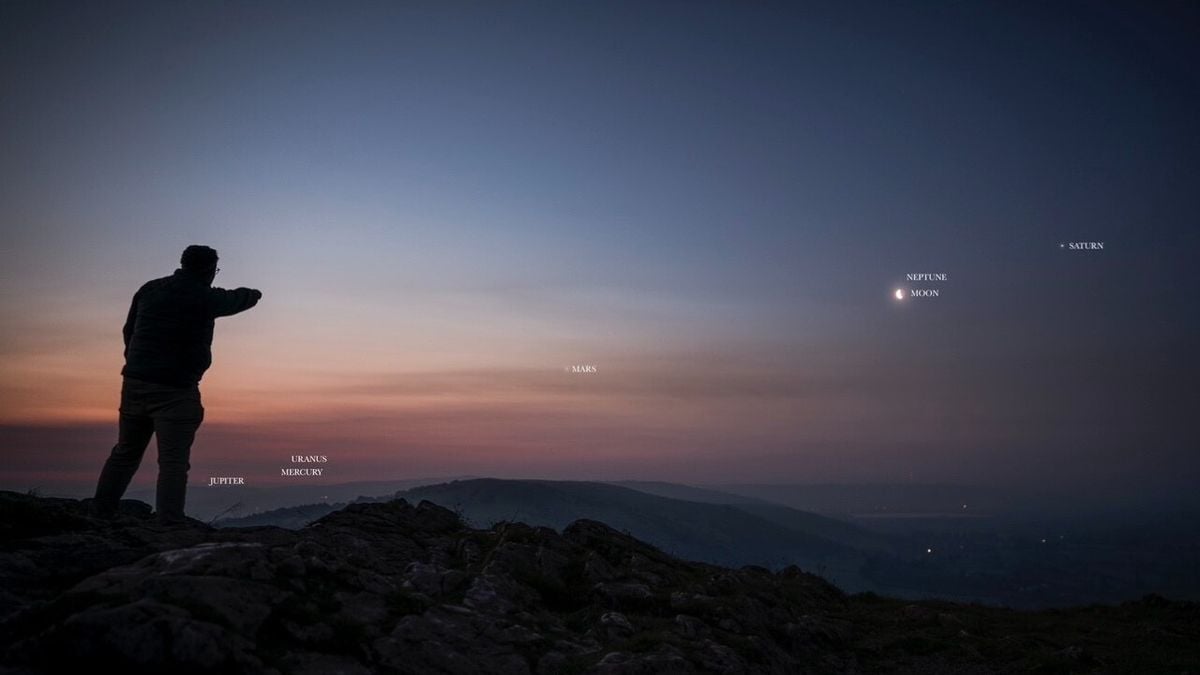
Astrophotographer Josh Dury captured a rare "parade of planets" on June 1, showing six planets—Mercury, Mars, Jupiter, Saturn, Uranus, and Neptune—aligned in the predawn sky over The Mendip Hills in the U.K. The stunning image, created using composite long exposures, also features a crescent moon and highlights the vast distances between the planets despite their apparent proximity from Earth's perspective.
Astrophotographer Josh Dury captured a stunning composite image of a planetary alignment featuring Jupiter, Uranus, Mercury, Mars, Neptune, Saturn, and a crescent moon from Crooks Peak in Somerset, England on June 1, 2024. Despite the alignment being overhyped for naked-eye viewing, Dury used multiple exposures to highlight the planets' positions, showcasing the beauty and scale of the cosmos.
On June 4, 2024, a rare celestial alignment brings significant opportunities for Gemini and Aquarius. Gemini will experience a boost in motivation and intellect, making it a perfect day for new ideas and socializing. Aquarius will benefit from a blend of productivity and creativity, with a focus on personal passions and deepening bonds with loved ones.
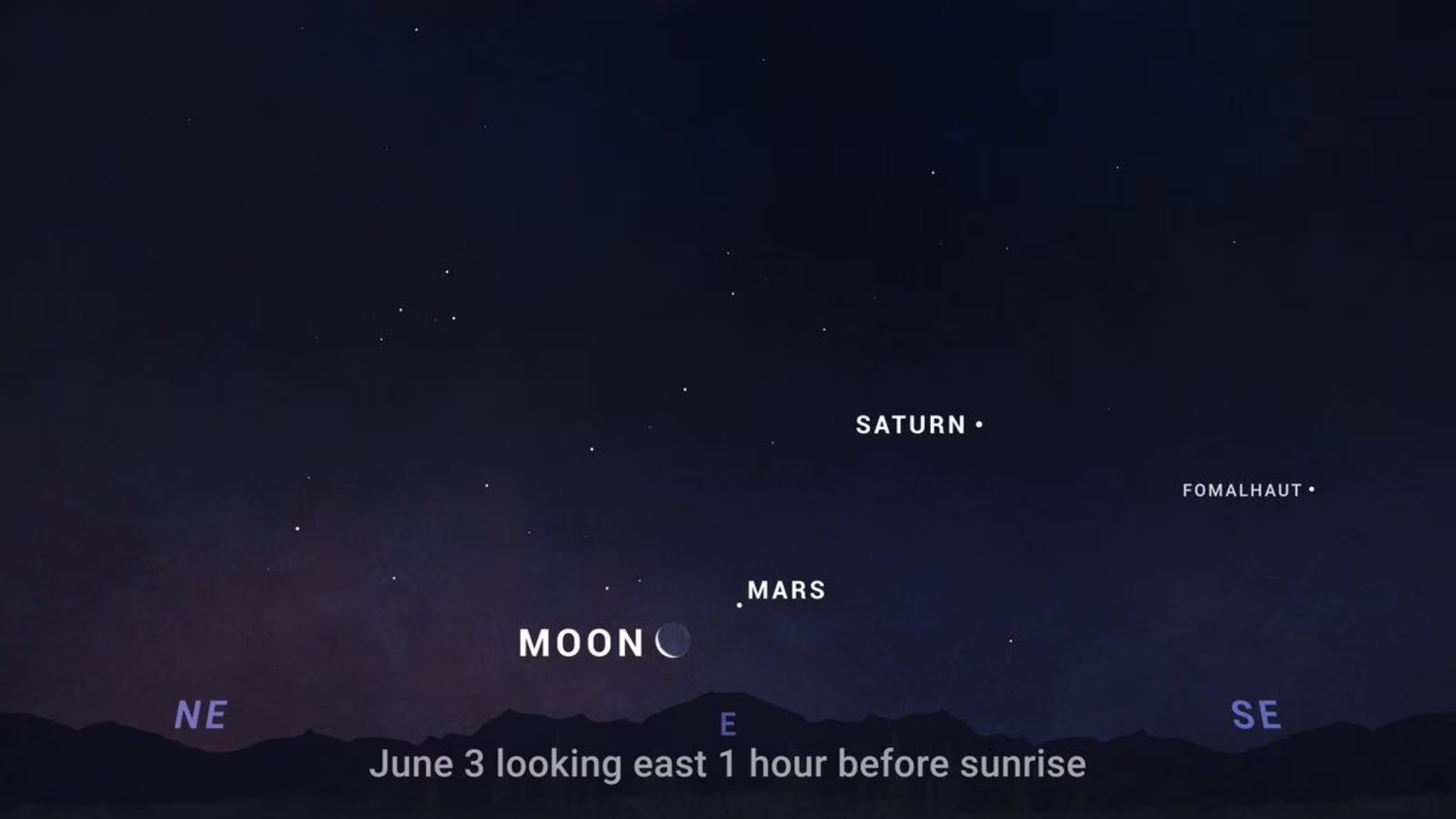
The much-anticipated "parade of planets" on June 3 was underwhelming, with only Saturn and Mars visible to the naked eye. NASA and experts clarified that the event was overhyped and that a more impressive planetary alignment will occur on June 29, featuring Saturn, the moon, Mars, and Jupiter. Another notable alignment is expected in early 2025.
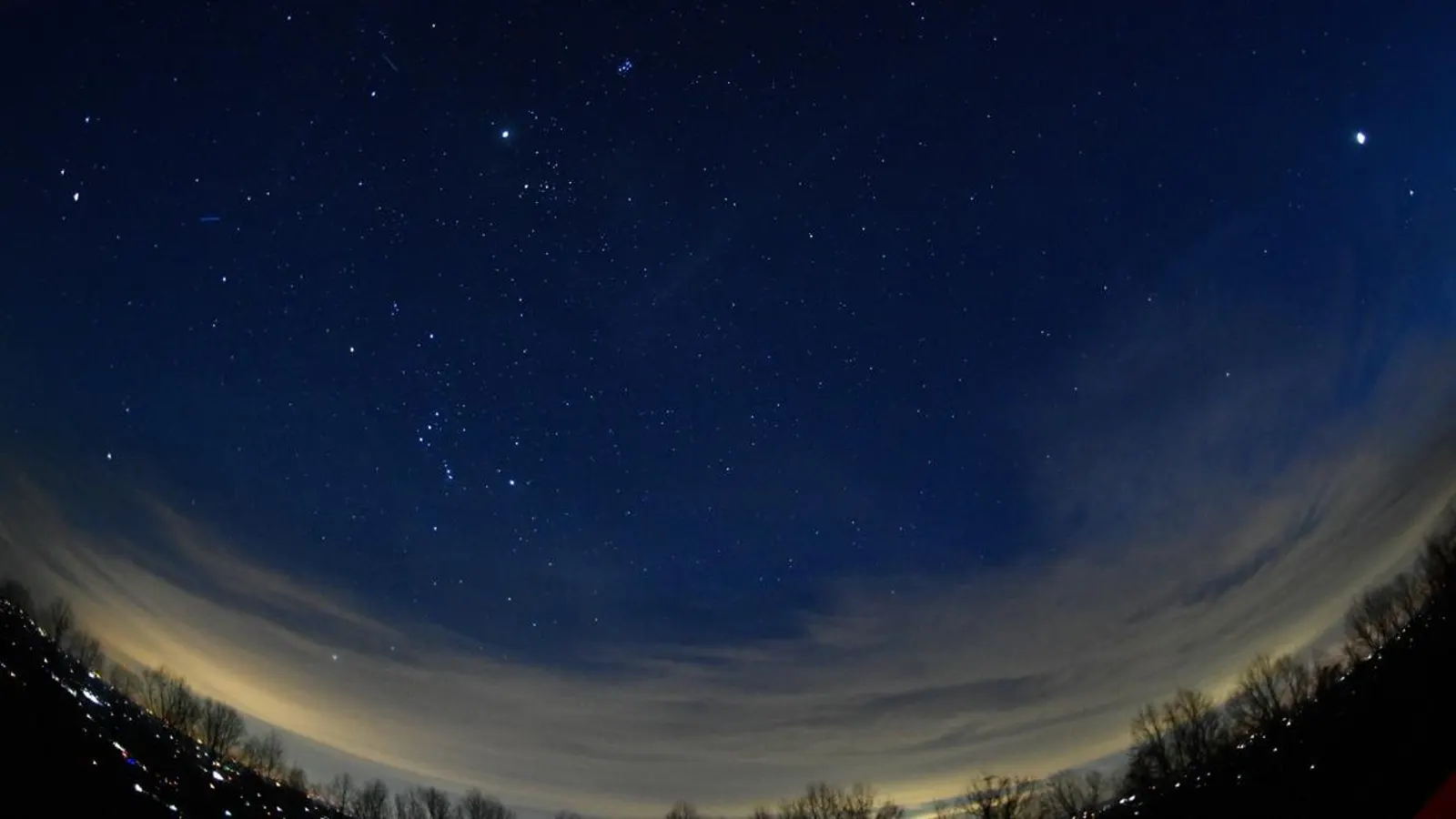
On June 3, a rare alignment of six planets—Mercury, Mars, Jupiter, Saturn, Uranus, and Neptune—will be visible shortly before sunrise from dark, elevated locations with minimal light pollution. While Mars and Saturn can be seen with the naked eye, optical aids like telescopes or high-powered binoculars are needed to view Uranus and Neptune. This uncommon event offers a captivating sight for stargazers, weather permitting.
On June 3, 2024, six planets—Jupiter, Mercury, Uranus, Mars, Neptune, and Saturn—will align in the morning sky, creating a rare planetary parade. While Mars and Saturn will be visible to the naked eye, the other planets will require a telescope due to their proximity to the horizon and the rising sun's light. Another similar event is expected on August 28, 2024.
A planetary alignment involving six planets will occur on June 3, 2024, but NASA states that only Mars and Saturn will be visible to the naked eye in the U.S. due to the positions of the other planets. Experts suggest waiting until June 29 for a better view of a similar alignment.
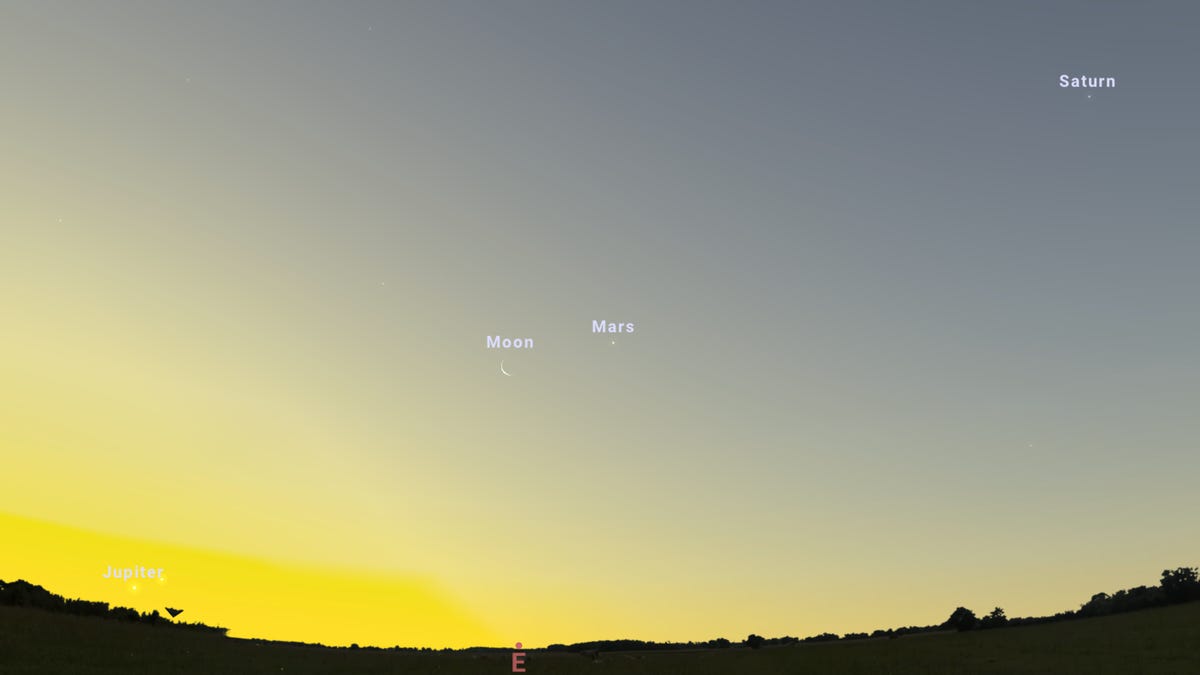
NASA has provided tips for observing the 'parade of planets' on June 3, 2024. Due to the rising Sun and the moon's presence, it will be challenging to see the complete alignment. Skygazers should look for reddish Mars between Saturn and the crescent Moon before sunrise. A telescope is recommended to spot other planets, as they will be faint or lost in the Sun's glare.
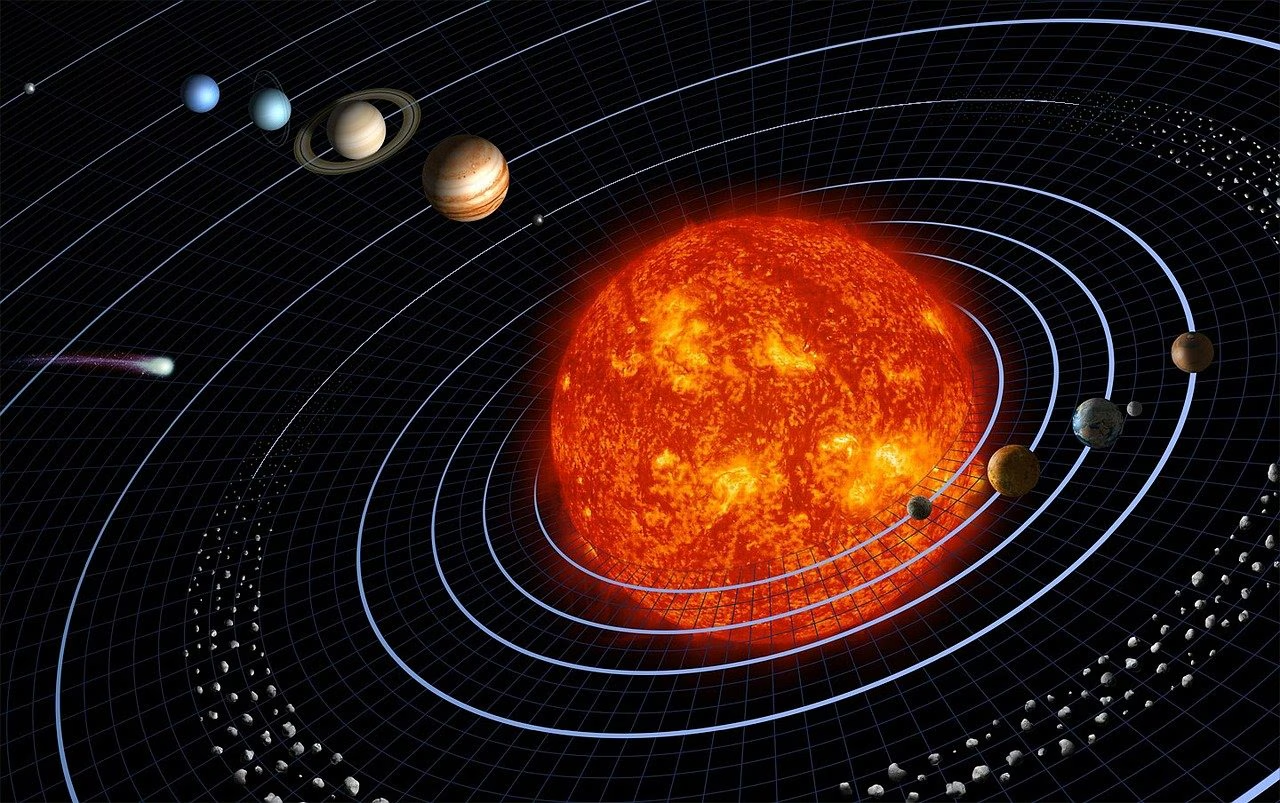
On June 3, six planets will align on the ecliptic path, but most won't be visible to the naked eye. Jupiter, Mercury, Uranus, Mars, Neptune, and Saturn will align, but only Mars will be easily seen without equipment. The alignment has gained social media attention, but experts caution that the planets' proximity to the sun and twilight will obscure most of them. Skywatchers may need telescopes or binoculars for a better view.