Researchers developed a photocatalytic method to replace oxygen in oxetanes with nitrogen, sulfur, or carbon, creating diverse cyclic compounds efficiently, which could simplify drug synthesis and modification.
The article reports a new method for the enantioselective synthesis of alkylidenecyclopropanes using bifunctional iminophosphorane catalysis, enabling the production of enantioenriched small ring carbocycles that are important in pharmaceuticals and agrochemicals, with applications demonstrated in the synthesis of insecticide cores like permethrin.
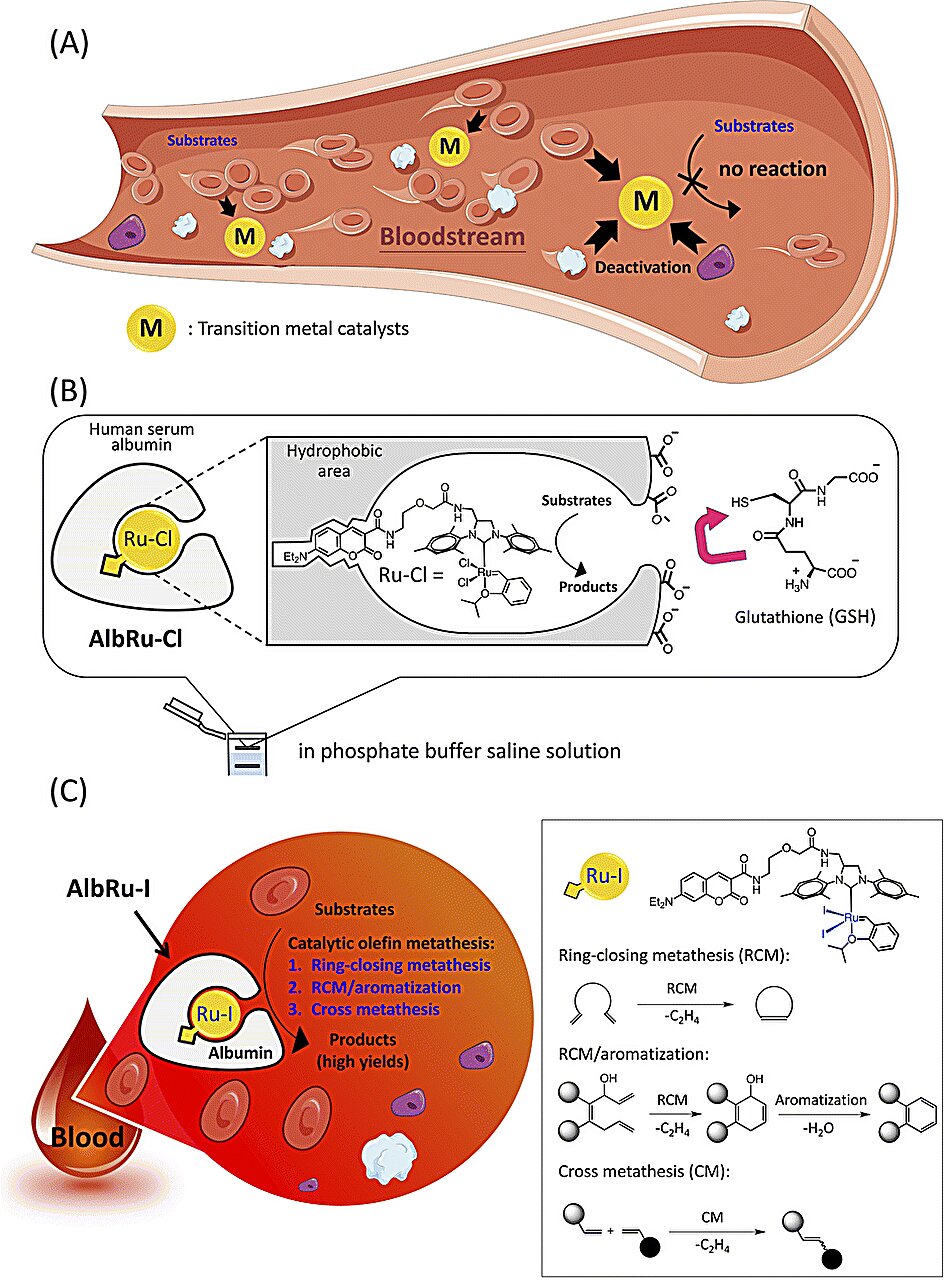
Chemists at RIKEN have developed a highly active catalyst that can synthesize drug molecules within the body, potentially minimizing side effects. By using a protective protein called human serum albumin to encase a ruthenium-based olefin metathesis catalyst, the team demonstrated the successful assembly of drugs near target sites in mice, leading to the suppression of tumor growth. The albumin-based catalyst showed stability in blood and the potential for synthesizing various bioactive molecules, offering a promising approach for treating diseases without causing side effects in healthy tissues.