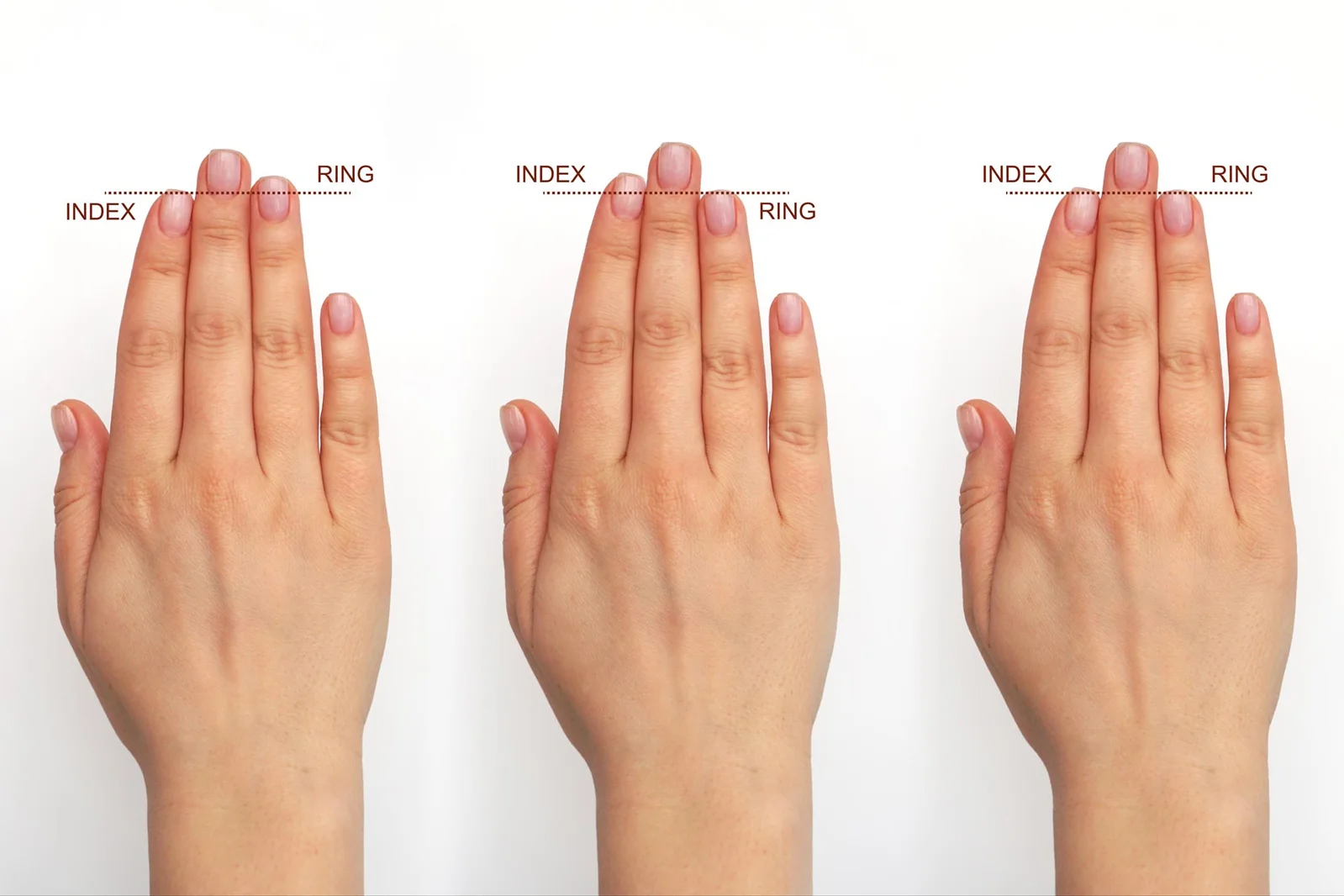
A study suggests that the length of a man's index finger relative to the ring finger (2D:4D ratio) can predict his sex drive and sexual preferences, with shorter index fingers indicating higher libido, based on research conducted on rats and implications for human behavior.
A study by Swansea University suggests that longer ring fingers relative to index fingers, indicative of higher prenatal testosterone exposure, are linked to increased alcohol consumption, particularly in men. This research highlights the potential influence of prenatal sex hormones on drinking habits, with implications for understanding individual differences in alcohol use. The findings, published in the American Journal of Human Biology, are part of ongoing research into the significance of digit ratios in various health outcomes.
Canadian researchers have found a potential link between finger length and psychiatric disorders, noting that individuals with a lower 2D:4D ratio (shorter index finger compared to ring finger) are more likely to exhibit Dark Triad traits and aggressive behavior associated with psychopathy, narcissism, and Machiavellianism. The study suggests that this finger length pattern could be influenced by prenatal exposure to higher testosterone and lower estrogen concentrations, but emphasizes that it is not an irrevocable fate.
A study in Canada found that individuals with clinically diagnosed psychiatric issues, particularly those with "Dark Triad" traits such as psychopathy, are more likely to have a shorter index finger and longer ring finger, indicating a lower 2D:4D ratio. This ratio is associated with prenatal exposure to higher testosterone and lower estrogen, but the lead author warns against interpreting finger length as a person's irrevocable fate.
Scientists have found a potential link between psychopathic tendencies and finger length, specifically a lower 2D:4D ratio (a longer ring finger than index finger), which is influenced by prenatal hormone exposure. A study of 80 participants revealed that those with a lower 2D:4D ratio exhibited higher levels of psychopathic and antisocial traits. However, it's important to note that this ratio is not a definitive indicator of psychopathy, and it's also associated with better sports performance.
Your hands can reveal important clues about your health. Changes in nail appearance, such as clubbing, Lindsay's nails, Terry's nails, and Muehrcke's nails, can indicate various diseases including kidney disease, cirrhosis of the liver, and thyroid conditions. Sweaty palms can be a sign of thyroid problems, while red or purple discoloration on the palms may indicate bacterial endocarditis. Pins and needles in the hand can be a symptom of carpal tunnel syndrome or diabetic neuropathy. Finger length, particularly the ratio between the index and ring finger, can be associated with the risk of developing certain diseases later in life.