Archaeologists have discovered a nearly complete skull of the extinct giant bird Genyornis newtoni in Australia, revealing it was more closely related to waterfowl than emus, with unique adaptations for wetland feeding and a likely extinction around 45,000 years ago due to environmental changes and human activity.
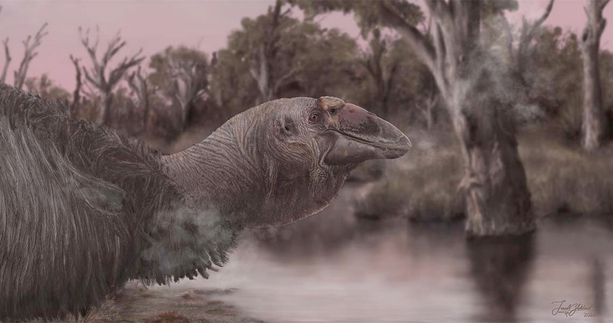
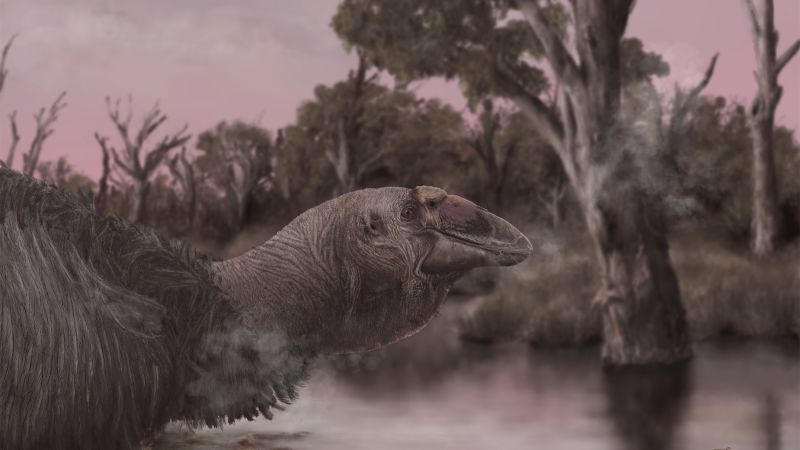
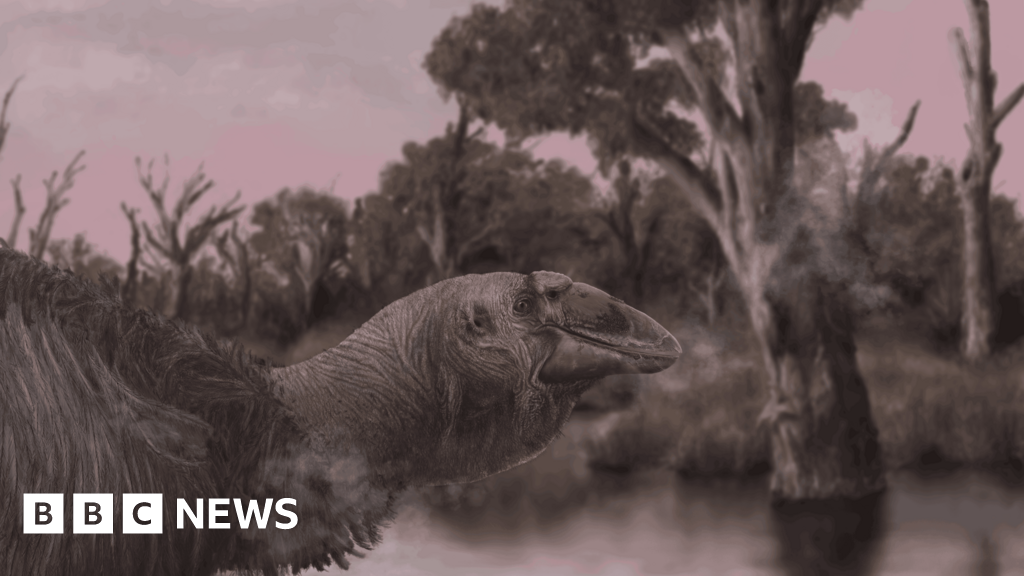
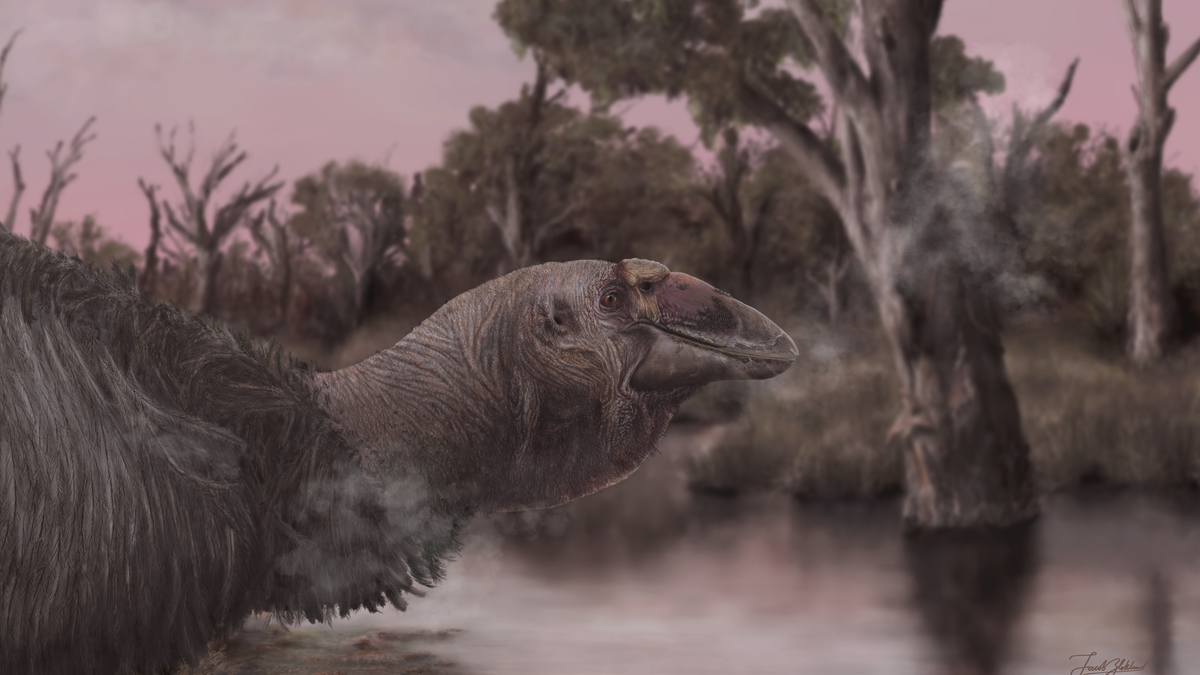
Researchers have discovered new fossilized skulls of the extinct bird Genyornis newtoni, also known as the "giga-goose," in Southern Australia. This enormous, flightless bird, which stood over six feet tall and weighed up to 530 pounds, terrorized early Australians before going extinct around 45,000 years ago. The new findings provide a clearer picture of the bird's appearance and behavior, revealing it had a goose-like face and powerful hind legs.
Scientists have discovered a complete skull of the extinct thunder bird species Genyornis newtoni in Australia, resolving a century-old mystery about the bird's appearance and habits. The skull, which resembles that of a strange goose, provides new insights into the bird's diet and evolutionary connections to modern waterfowl. This discovery sheds light on the biology and ecology of these massive, flightless birds that roamed Australia 50,000 years ago.
Scientists have discovered a complete skull of the extinct thunder bird species Genyornis newtoni in Australia, resolving a century-old mystery about its appearance and habits. The skull, found in Lake Callabonna, reveals that G. newtoni had a goose-like beak and likely fed on soft fruits and freshwater plants. This discovery provides new insights into the bird's biology and its relation to modern waterfowl, enhancing our understanding of the dromornithid group.
Researchers have discovered the most complete skull of the extinct giant flightless bird Genyornis newtoni in Australia, providing new insights into its appearance and ecological role. The 45,000- to 50,000-year-old fossil, found in Lake Callabonnam, reveals the bird's massive cranium, large jaws, and unique casque. This discovery helps piece together the evolutionary puzzle of this "giant goose" and its adaptations to aquatic habitats, which may have contributed to its extinction.
Researchers have studied fossils of Genyornis newtoni, a 500-pound Ice Age bird that went extinct around 45,000 years ago. New findings from South Australia's Lake Callabonna reveal that this bird, nicknamed the 'Giga-Goose,' had a goose-like bill and adaptations for foraging in water, suggesting it lived in semi-aquatic environments. The study, published in Historical Biology, provides new insights into the bird's morphology and ecological niche, although the exact cause of its extinction remains uncertain.