Tag

Wimps

All articles tagged with #wimps

Scientists Edge Closer to Unveiling Dark Matter's Secrets

Originally Published 5 days ago — by ScienceDaily

Featured image for Scientists Edge Closer to Unveiling Dark Matter's Secrets
Source: ScienceDaily

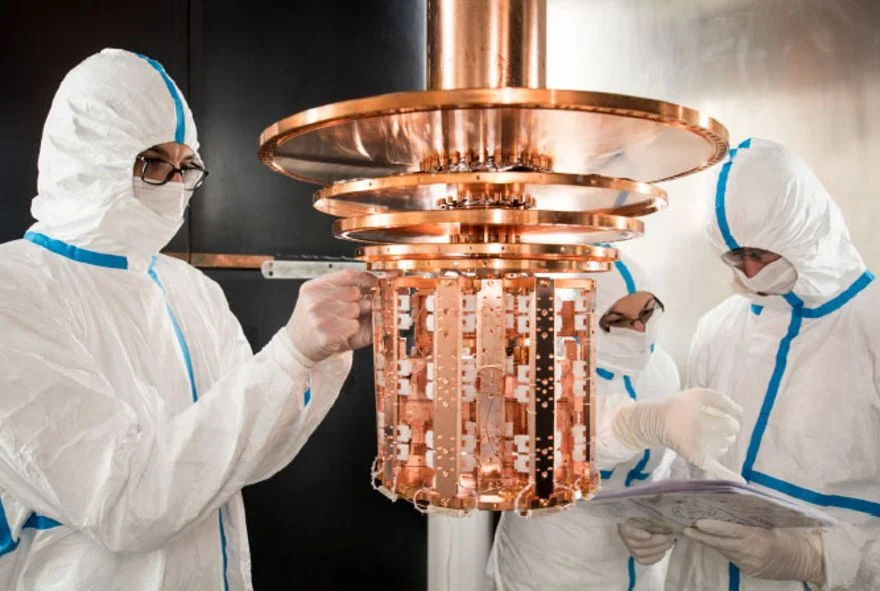
Scientists, including Dr. Rupak Mahapatra, are making progress in understanding dark matter and dark energy, which constitute about 95% of the universe. Using advanced cryogenic detectors like TESSERACT and building on decades of research, they aim to detect elusive particles such as WIMPs, potentially unlocking fundamental secrets of the cosmos and expanding our understanding of physics.

Scientists Claim First Direct Evidence of Dark Matter Detection

Originally Published 1 month ago — by ScienceDaily

Featured image for Scientists Claim First Direct Evidence of Dark Matter Detection
Source: ScienceDaily

Scientists may have found the first direct evidence of dark matter using gamma rays detected by NASA's Fermi Telescope, which could mark a major breakthrough in understanding this elusive substance, possibly confirming the existence of WIMPs and their annihilation in the Milky Way's center.

The Ongoing Quest to Detect Dark Matter

Originally Published 2 months ago — by Universe Today

Featured image for The Ongoing Quest to Detect Dark Matter
Source: Universe Today

The article discusses the ongoing search for dark matter, focusing on the CRESST experiment in Italy, which aims to detect dark matter particles by listening for vibrations caused by their interactions. Despite decades of efforts and various experiments, no definitive detection has been made, but researchers have been able to rule out certain properties of dark matter, especially in the WIMP mass range. The search continues across a broad spectrum of possible dark matter candidates, with no success so far.

Dark Matter's Glow: Rethinking Our Cosmic View

Originally Published 2 months ago — by Phys.org

Featured image for Dark Matter's Glow: Rethinking Our Cosmic View
Source: Phys.org

Recent research suggests that dark matter could influence the color of light from distant galaxies, either slightly blue-shifting or red-shifting it depending on its properties, which might help us better understand its nature. The study explores how dark matter interactions could subtly affect light, offering a new way to investigate this elusive component of the universe.

Scientists Develop Advanced Detectors to Uncover Elusive Dark Matter

Originally Published 4 months ago — by Space

Featured image for Scientists Develop Advanced Detectors to Uncover Elusive Dark Matter
Source: Space

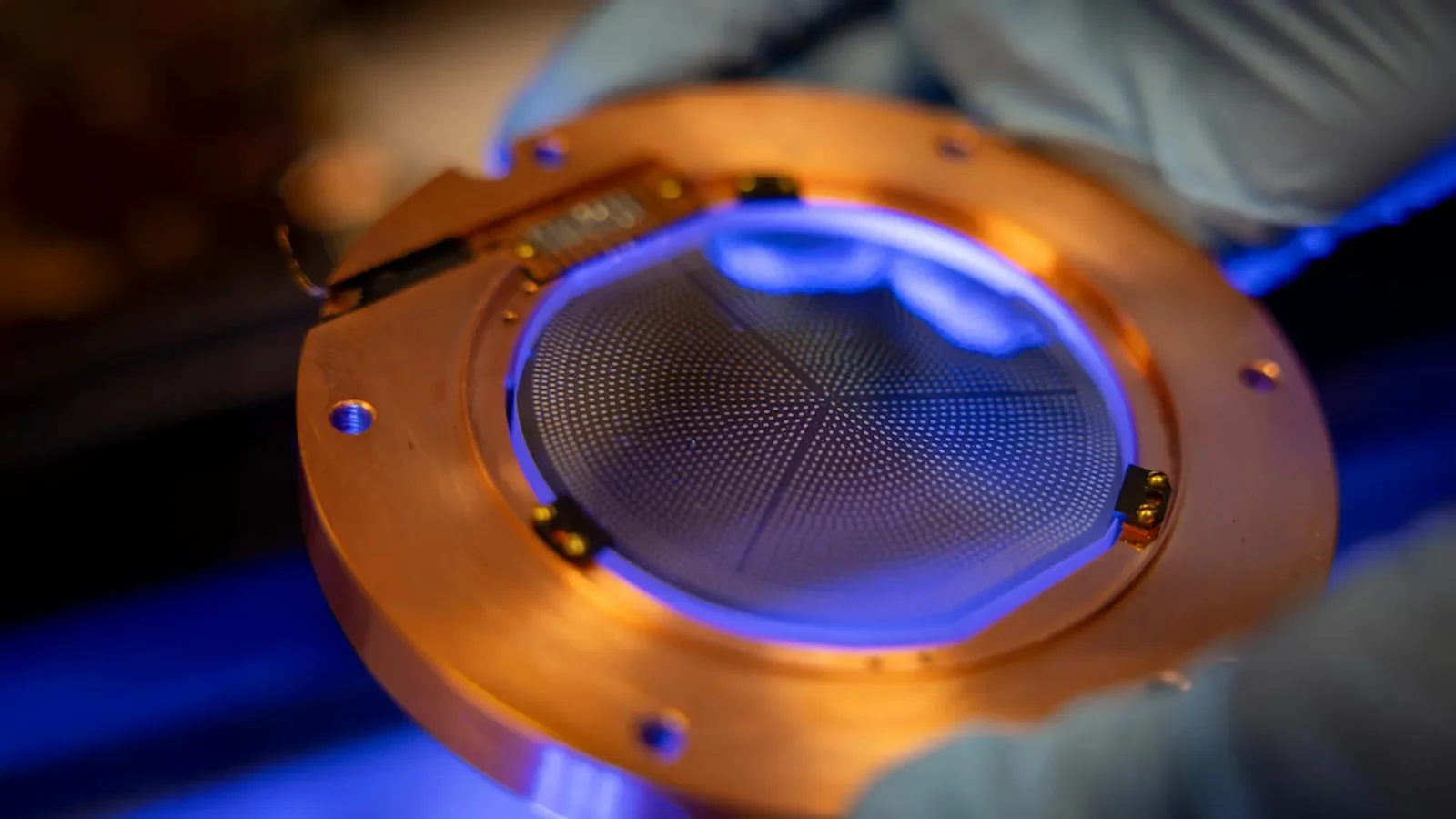
Scientists are deploying a new highly sensitive dark matter detector deep beneath the French Alps to expand the search for potential dark matter particles, especially lighter ones like electrons, using advanced silicon CCD technology to detect smaller energy signals and potentially uncover new particles beyond current theories.

Scientists Prepare to Expand Dark Matter Search with New Weapon

Originally Published 4 months ago — by yahoo.com

Featured image for Scientists Prepare to Expand Dark Matter Search with New Weapon
Source: yahoo.com

Scientists are deploying a new highly sensitive underground detector in the French Alps to expand the search for dark matter particles, especially lighter ones like electrons, which previous methods may have missed. This detector uses advanced silicon CCD technology to detect tiny energy signals from potential dark matter interactions, aiming to uncover or rule out certain dark matter candidates and deepen our understanding of this mysterious universe component.

Dark Matter's Role in Creating and Illuminating Mysterious Stars

Originally Published 6 months ago — by Phys.org

Featured image for Dark Matter's Role in Creating and Illuminating Mysterious Stars
Source: Phys.org

New research suggests that dark matter could lead to the formation of dark dwarfs—sub-stellar objects powered by dark matter annihilation—at the center of the Milky Way. These objects could be detected through their unique lithium-7 signatures, providing a potential method to identify dark matter particles like WIMPs and deepen our understanding of this mysterious component of the universe.

Dark Dwarfs Near the Galactic Center Could Unveil Dark Matter's Nature

Originally Published 6 months ago — by SciTechDaily

Featured image for Dark Dwarfs Near the Galactic Center Could Unveil Dark Matter's Nature
Source: SciTechDaily

Scientists propose that faint stars called dark dwarfs, powered by dark matter annihilation rather than nuclear fusion, could provide clues about dark matter's nature, especially if they contain lithium-7. Detecting these objects could support the hypothesis that dark matter consists of heavy, self-interacting particles like WIMPs, advancing our understanding of the universe's unseen mass.

Galactic Center Dwarfs Could Reveal Dark Matter Secrets

Originally Published 6 months ago — by Phys.org

Featured image for Galactic Center Dwarfs Could Reveal Dark Matter Secrets
Source: Phys.org

Researchers propose the existence of dark dwarfs—low-mass objects at the galaxy's center powered by dark matter interactions—as potential clues to the nature of dark matter, particularly supporting the hypothesis that dark matter consists of heavy, self-interacting particles like WIMPs. Detection methods include observing lithium-7 signatures with telescopes like James Webb, which could provide strong evidence for the properties of dark matter.

Neutrino Fog Challenges Dark Matter Detection

Originally Published 1 year ago — by Big Think

Featured image for Neutrino Fog Challenges Dark Matter Detection
Source: Big Think

Recent findings from two experimental groups suggest the emergence of a 'neutrino fog,' complicating the search for dark matter. As dark matter detectors become more sensitive, they also detect solar neutrinos, which can overwhelm potential dark matter signals. The XENONnT and PandaX-4T experiments have reported hints of detecting 8B neutrinos, but not at a statistically significant level. This development indicates that future dark matter searches, particularly for WIMPs, will require more sophisticated analysis to differentiate between neutrino and dark matter interactions.

"Revealing the Enigmatic Nature of Dark Stars and Dark Matter"

Originally Published 1 year ago — by SciTechDaily

Featured image for "Revealing the Enigmatic Nature of Dark Stars and Dark Matter"
Source: SciTechDaily

Dark matter, a mysterious substance with gravitational influence on the universe, may give rise to explosive "dark stars" composed of axions, a type of subatomic particle. These axion-formed stars could grow in size before becoming unstable and exploding, releasing energy comparable to a supernova. Observations with the Square Kilometre Array radio telescope may provide evidence of these explosions, potentially shedding light on the nature of dark matter. Theoretical efforts are also underway to distinguish between different types of dark matter, such as axions and WIMPs, through gravitational lensing and other observational methods.

"China's Massive Underground Lab Joins Quest for Dark Matter"

Originally Published 1 year ago — by Space.com

Featured image for "China's Massive Underground Lab Joins Quest for Dark Matter"
Source: Space.com

The China Jinping Underground Laboratory (CJPL) has become the world's largest and deepest underground facility, located beneath 2,400 meters of rock in Sichuan Province, and is now operational with upgraded dark matter detectors. Scientists at the lab are searching for dark matter particles, particularly WIMPS, using the Particle and Astrophysical Xenon Experiments (PandaX) and the China Dark Matter Experiment (CDEX). The facility's depth and access make it a promising location for detecting elusive dark matter particles and potentially answering fundamental questions about the nature of dark matter.

Unveiling Dark Matter's Elusive Presence in the Large Hadron Collider's Particle Jets

Originally Published 2 years ago — by Space.com

Featured image for Unveiling Dark Matter's Elusive Presence in the Large Hadron Collider's Particle Jets
Source: Space.com

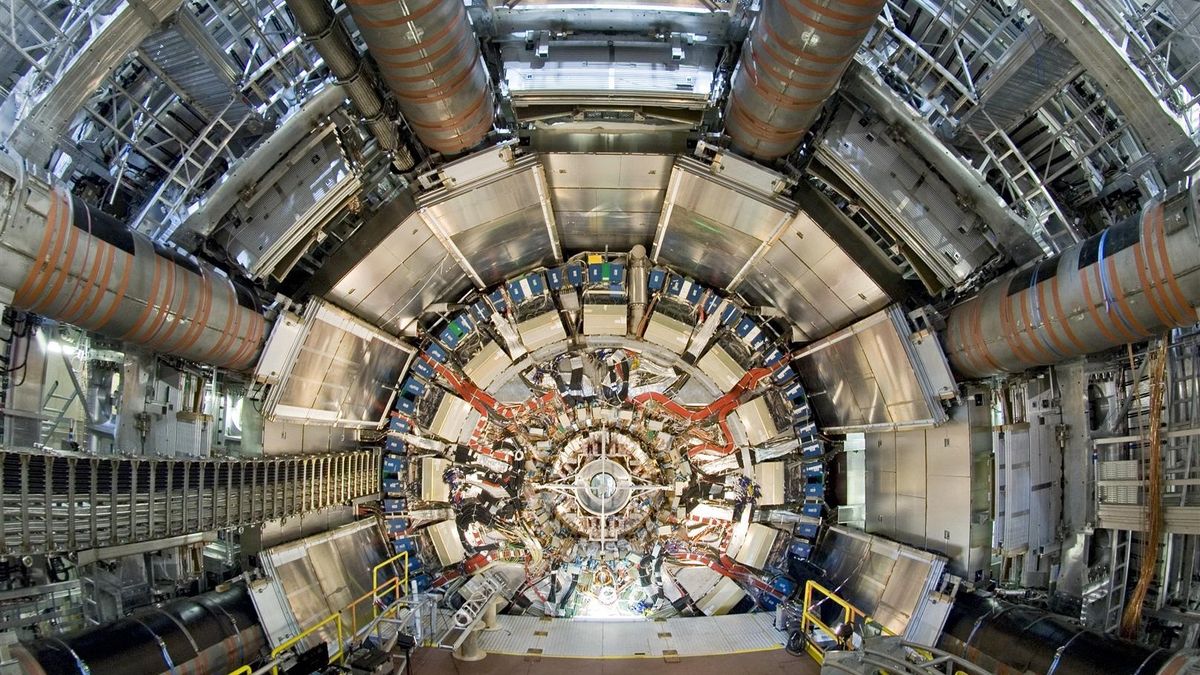
A new search for dark matter using the Large Hadron Collider (LHC) has not found evidence of Weakly Interacting Massive Particles (WIMPs), the previously favored candidate for dark matter. This has led researchers to explore alternative theories. One such theory suggests that dark matter could interact strongly with particles in the Standard Model. Researchers have developed a new method to search for these potential dark particles by analyzing energy imbalances in particle jets produced by high-energy collisions in the LHC. Although no evidence of these dark particles was found, the study provides upper limits for their properties, which will help fine-tune future experiments.

"Revolutionary Telescope Unveils Secrets of Decaying Dark Matter in Early Universe"

Originally Published 2 years ago — by Universe Today

Featured image for "Revolutionary Telescope Unveils Secrets of Decaying Dark Matter in Early Universe"
Source: Universe Today

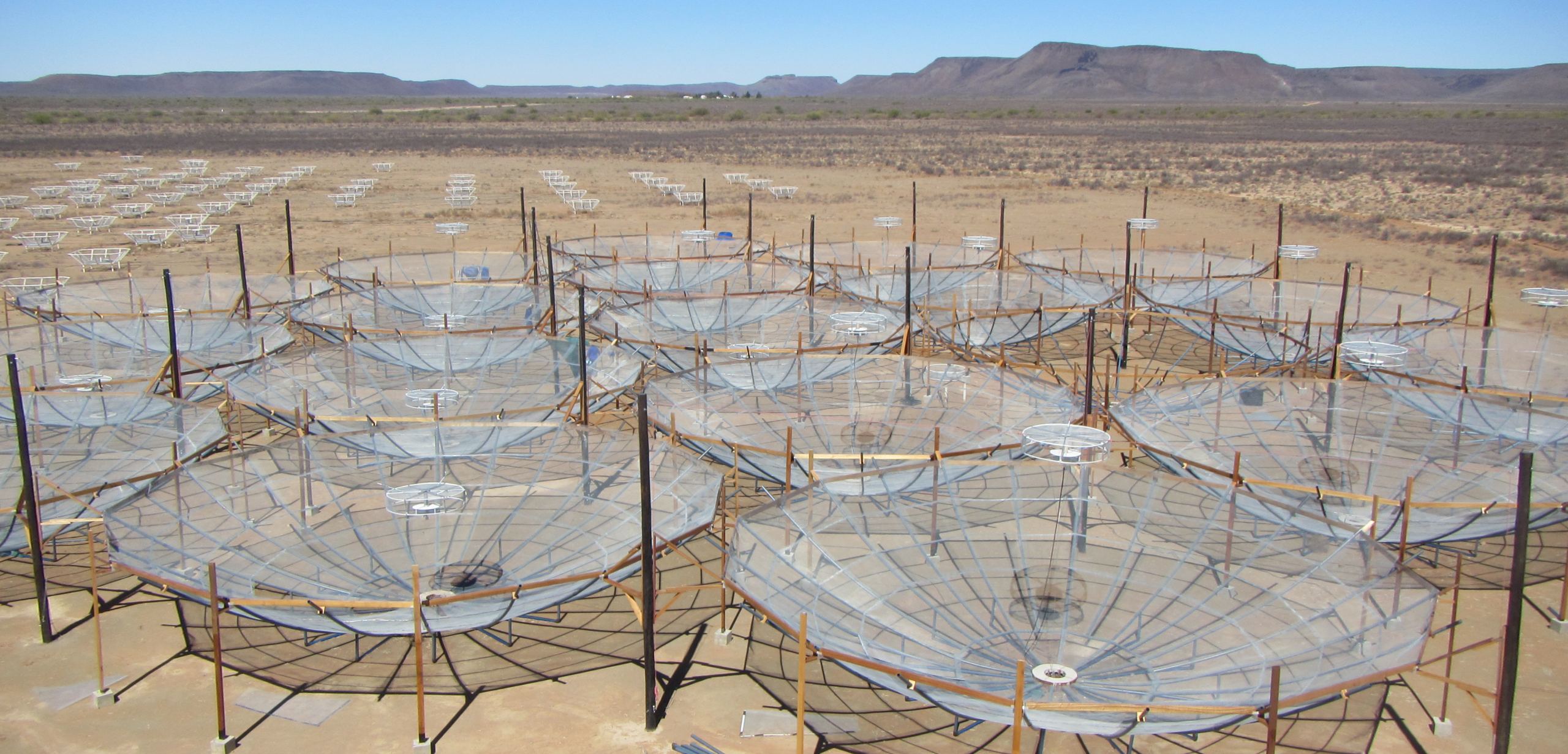
The Hydrogen Epoch of Reionization Array (HERA), a radio telescope in South Africa, could potentially detect decaying dark matter particles in the early Universe. By observing the 21-centimeter line emitted by neutral hydrogen, HERA may provide evidence of dark matter decay, which would interact with the emitted light. Even if no evidence is found, HERA's observations would still help constrain the half-life of dark matter and narrow down the range of possible models.

Unveiling the Hunt for Dark Matter Annihilation beneath Earth's Surface

Originally Published 2 years ago — by Universe Today

Featured image for Unveiling the Hunt for Dark Matter Annihilation beneath Earth's Surface
Source: Universe Today

The IceCube Neutrino Observatory has released a new result in the search for dark matter. While unable to directly detect dark matter, IceCube can detect local effects that produce neutrinos. The study analyzed a decade's worth of data and found no evidence of excess neutrinos, effectively ruling out high-mass WIMPs as dark matter candidates. However, plans to upgrade IceCube's sensitivity may allow for further tests on lower mass WIMPs. The search for dark matter continues, with alternative theories such as modified gravity being considered.