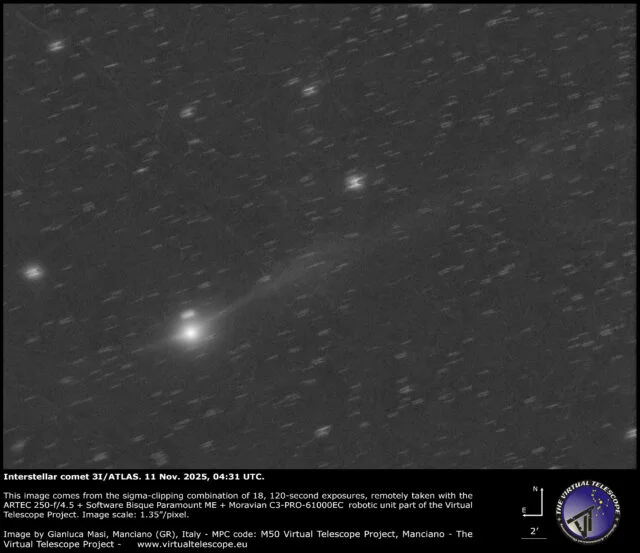
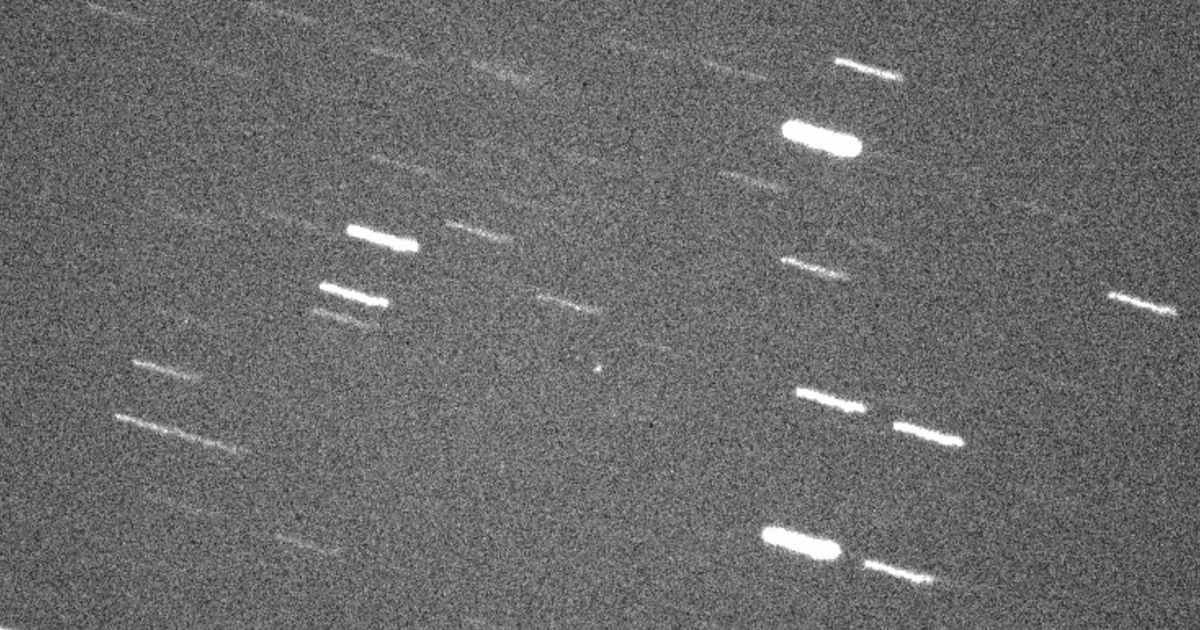
The interstellar comet 3I/ATLAS was observed on November 11, 2025, showing a significantly longer ion tail, which is being monitored for its development, with images captured remotely from Italy.
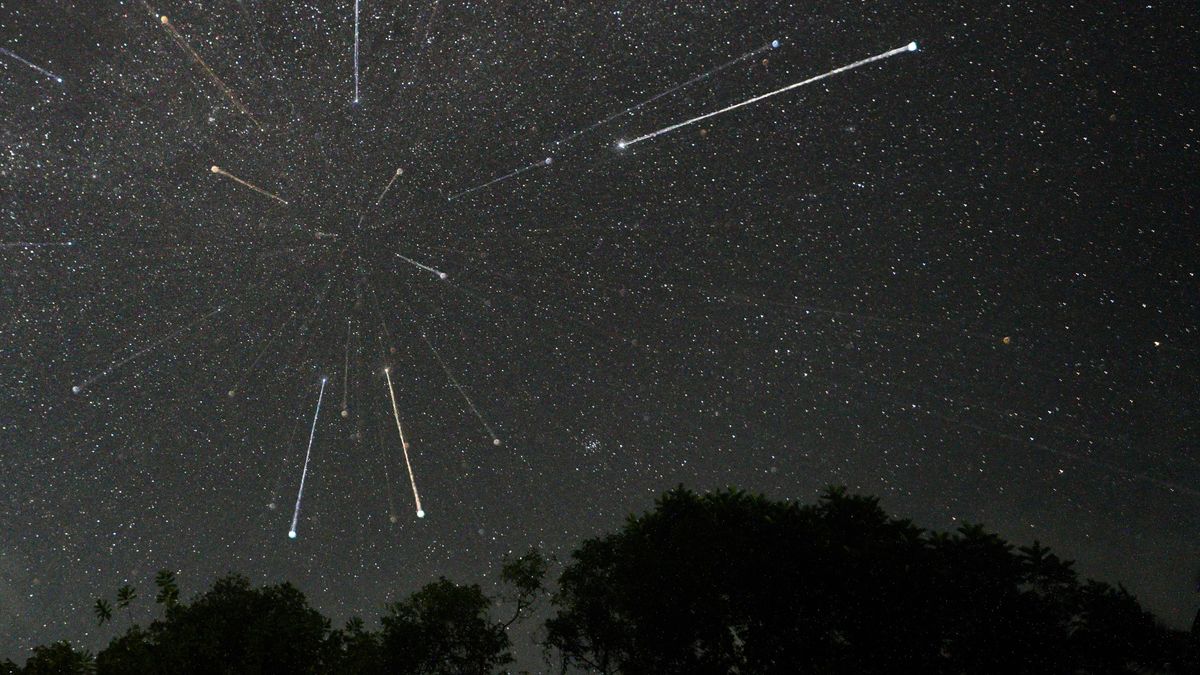
The Geminid meteor shower, one of the brightest and most reliable meteor showers, peaks on December 13, 2024. For those unable to view it in person, astronomer Gianluca Masi will host a free livestream via the Virtual Telescope Project, starting at 6:00 p.m. EST. Despite a near-full moon potentially obscuring fainter meteors, viewers can expect around 15 meteors per hour. The Geminids are unique as they originate from asteroid 3200 Phaethon, rather than a comet. The livestream will be available on Space.com and the Virtual Telescope Project's platforms.
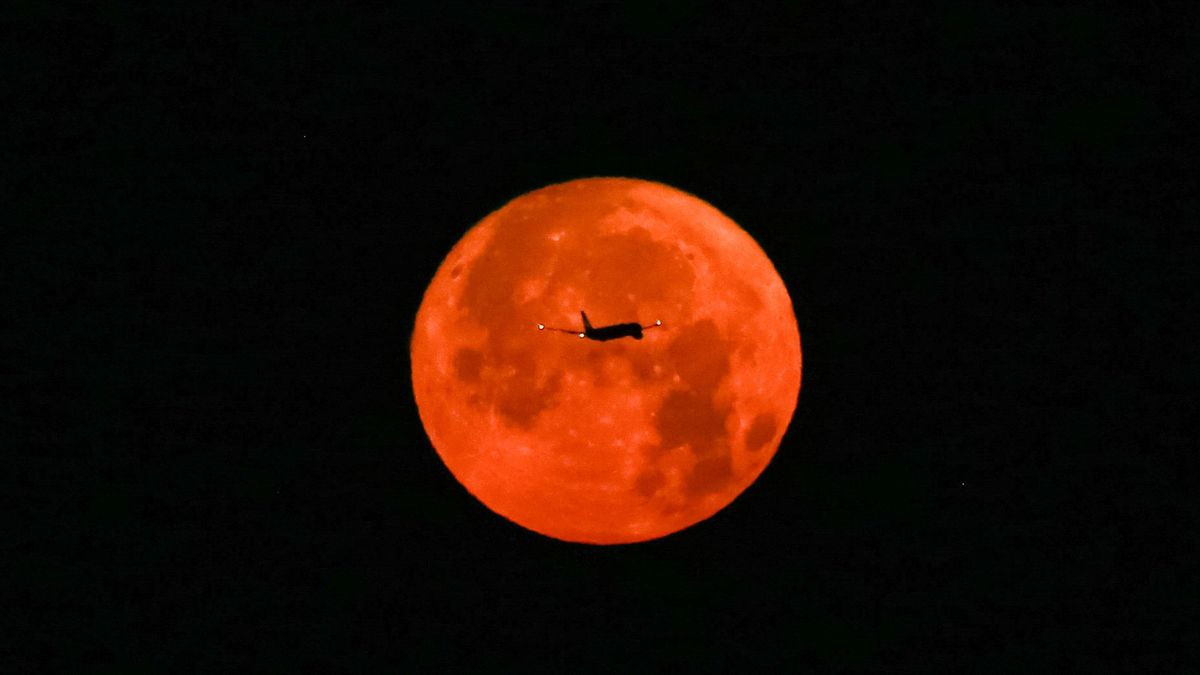
The last supermoon of 2024, known as the Beaver Moon, will rise today and can be viewed via a free livestream from Italy, hosted by the Virtual Telescope Project. This supermoon appears 30% brighter and 14% larger due to the moon's proximity to Earth. The livestream begins at 1:30 p.m. EST and can be accessed on Space.com or the Virtual Telescope Project's platforms.
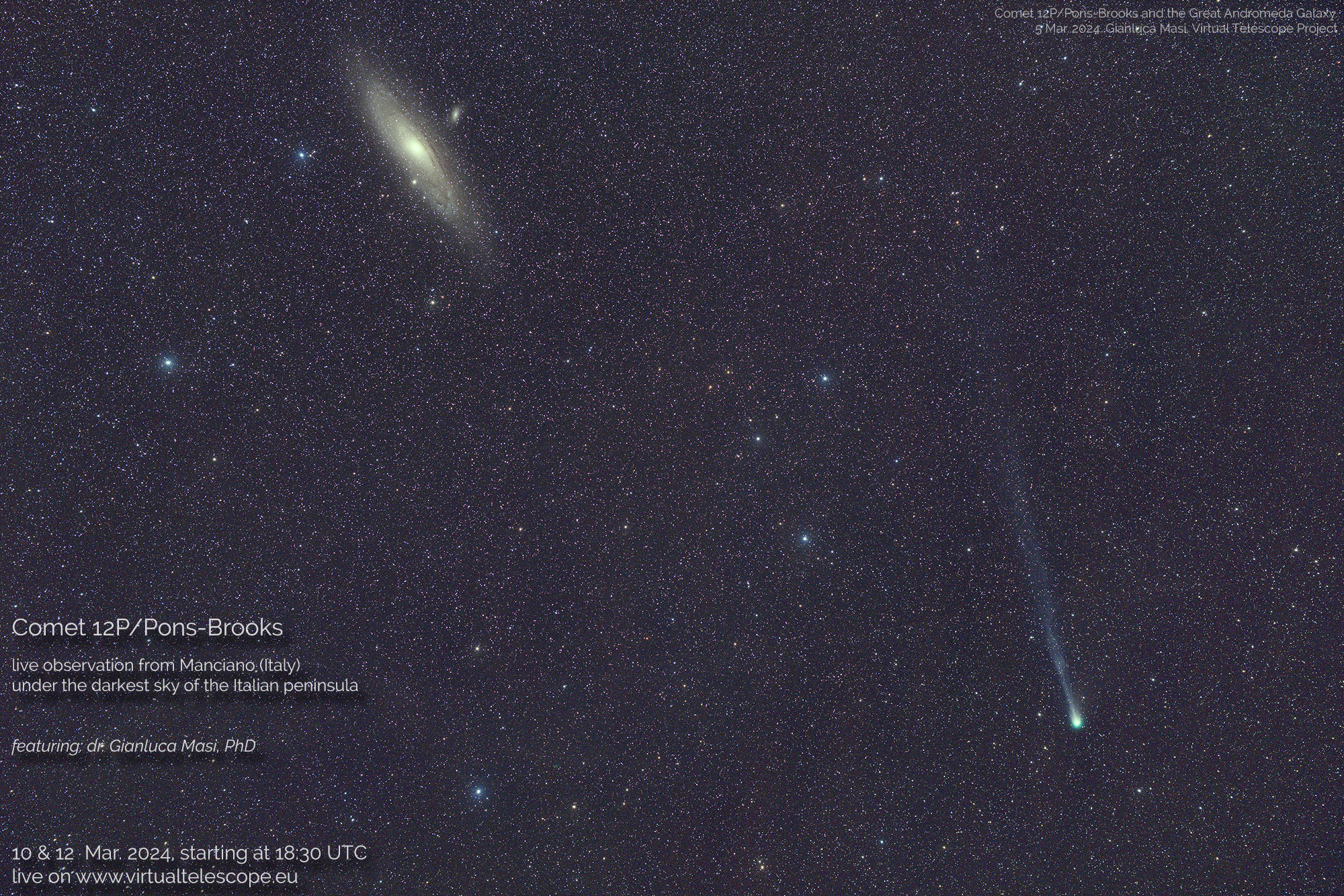
The Virtual Telescope Project 2.0 is offering live online sessions to observe Comet 12P/Pons-Brooks on March 10th and 12th at 18:30 UTC, using telescopes from their facility in Manciano, Italy, with the aim of sharing the celestial event with viewers worldwide.
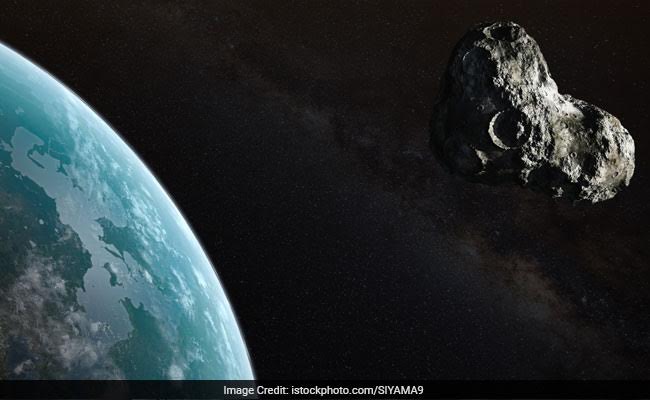
An asteroid the size of a skyscraper, designated as 2024 BR4, will pass within 4.6 million kilometers of Earth on Valentine's Day. Discovered just weeks ago, it belongs to the group of asteroids known as Apollos and was captured in a recent image by the Virtual Telescope Project. Despite its close approach, experts assure that there is no cause for alarm as NASA continues to track over 33,000 near-Earth objects, with the risk of impact remaining minimal for the foreseeable future.
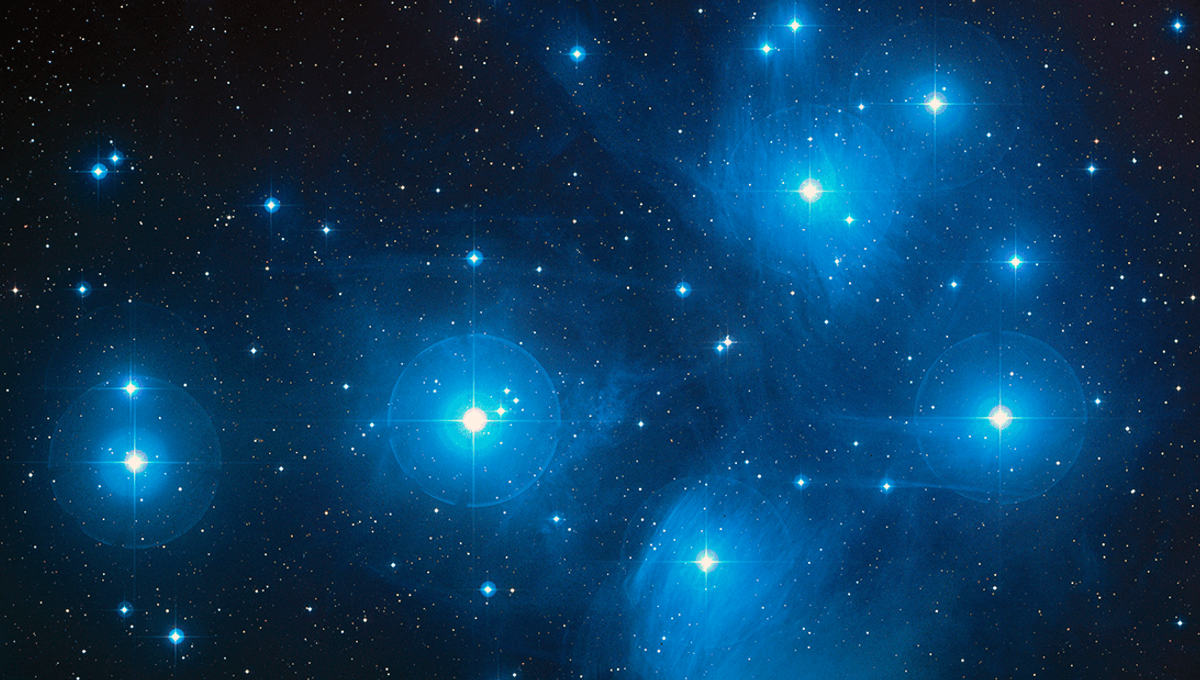
This week, the Virtual Telescope Project will be live streaming the Moon as it meets the Pleiades star cluster in the night sky, offering a spectacular celestial event. The Pleiades, also known as the Seven Sisters, is a star cluster in the constellation Taurus, and the live stream will capture the event on February 16 at 20:30 UTC. The star cluster's cultural significance and the intriguing explanation for the myth surrounding it add to the anticipation of this astronomical event.
An 890-foot asteroid named Asteroid 2008 OS7 will pass by Earth on Friday, coming within 1.7 million miles of the planet, and NASA is monitoring it as a "potentially hazardous object." Although not visible to the naked eye, NASA offers a virtual asteroid tracker to observe its path, and the Virtual Telescope Project will livestream the event. This asteroid is one of 18,232 Apollo-classed asteroids and is part of NASA's efforts to study and potentially deflect asteroids that could pose a threat to Earth.
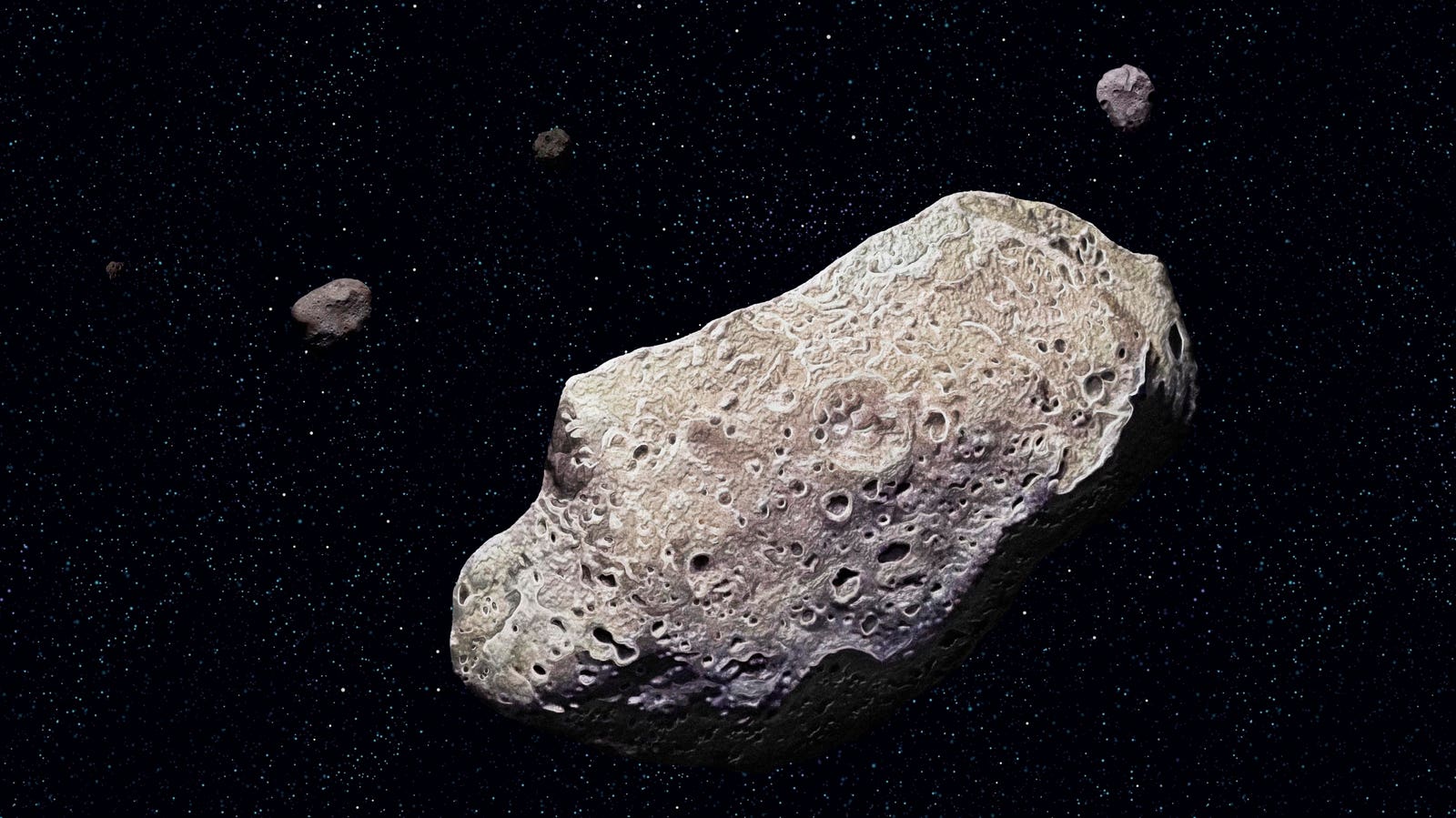
Astronomers at The Virtual Telescope Project captured incredible footage and images of asteroid 2024 BJ as it made a close encounter with Earth, whizzing past at a distance of 353,000 kilometers. The asteroid, discovered just 10 days prior, was live-streamed and photographed during its closest approach, offering a glimpse of the object, which is approximately five giraffes wide. The asteroid's name, 2024 BJ, reflects its discovery in January 2024, and its temporary name may change based on further observations.
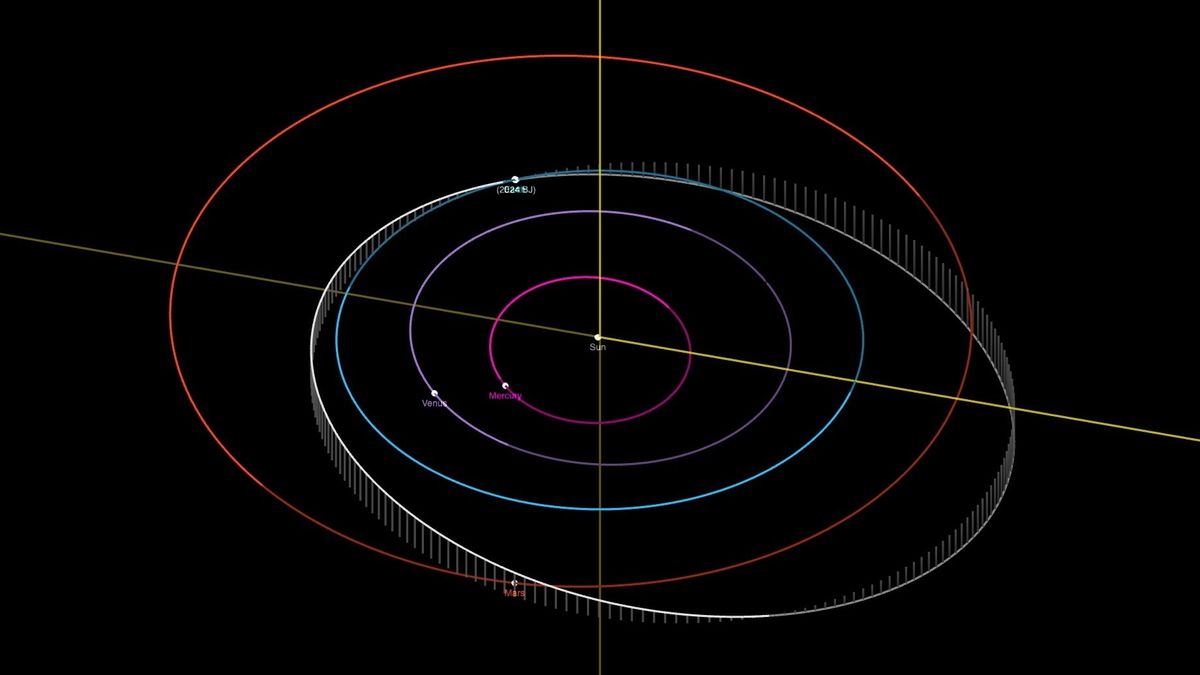
Astronomers discovered asteroid 2024 BJ earlier this month, and it will pass between Earth and the moon on January 27. The 121-foot-wide space rock will fly by Earth at a distance closer than the moon, reaching its closest point at 12:30 p.m. EST. The Virtual Telescope Project will livestream the event, and the asteroid is not considered hazardous. Scientists have plans in place to deal with potential Earth-threatening asteroids, but such a scenario is not expected in the next 1,000 years.
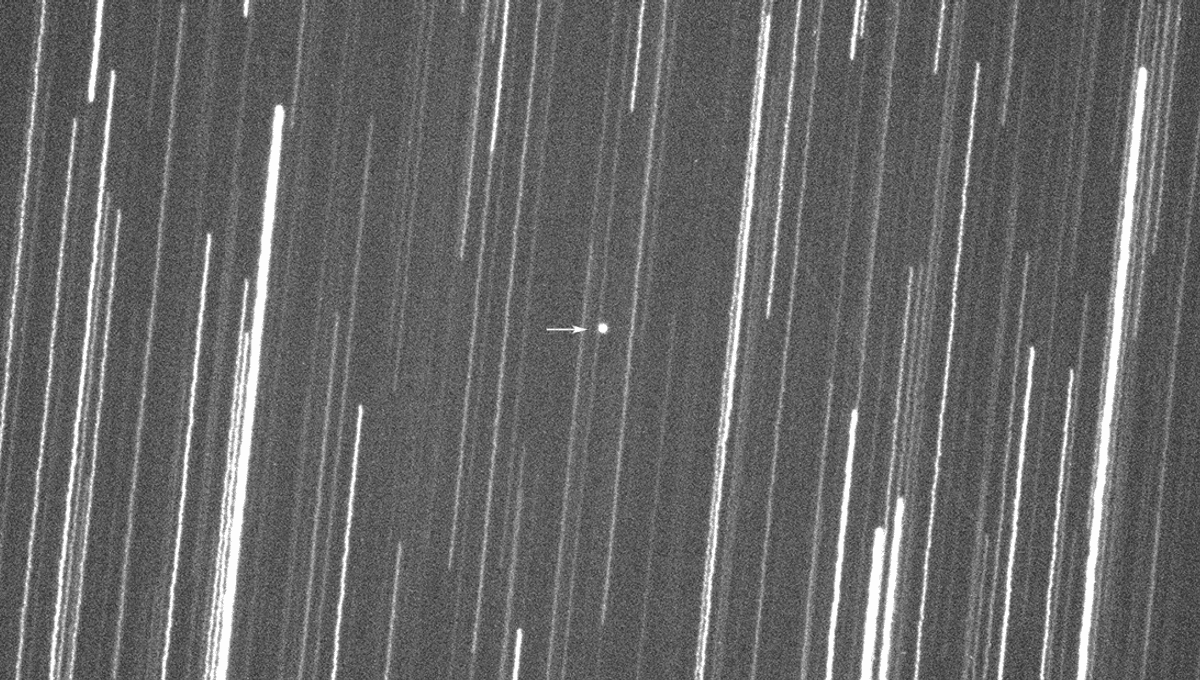
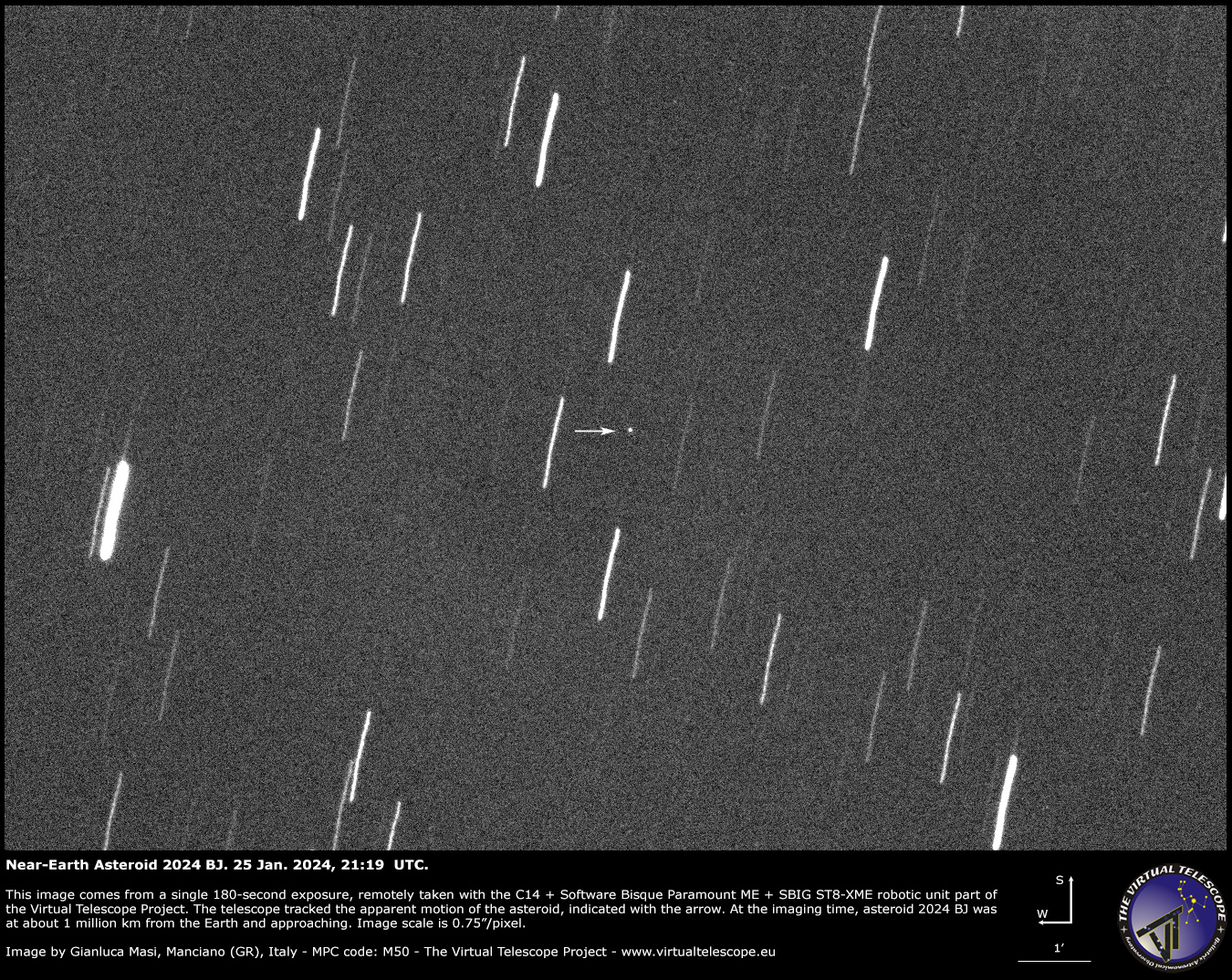
The near-Earth asteroid 2024 BJ will have a close encounter with Earth on January 27, 2024, coming within 354,000 km, about 92% of the average lunar distance. An image of the asteroid was captured using the Virtual Telescope Project's robotic unit, showing it as a sharp dot of light with stars leaving streaks in the background. Discovered on January 17, 2024, the 16m-37m asteroid poses no risk to our planet, and its closest approach will occur at 17:30 UTC.
The Geminid meteor shower of 2023 is set to peak on Thursday night, offering a spectacular celestial display with up to 100 meteors per hour. For those unable to view it in person, free online livestreams are available through the Slooh telescope network and the Virtual Telescope Project. The Geminids are unique as they are not caused by debris from a comet but by remnants of the Earth-crossing asteroid 3200 Phaëthon.
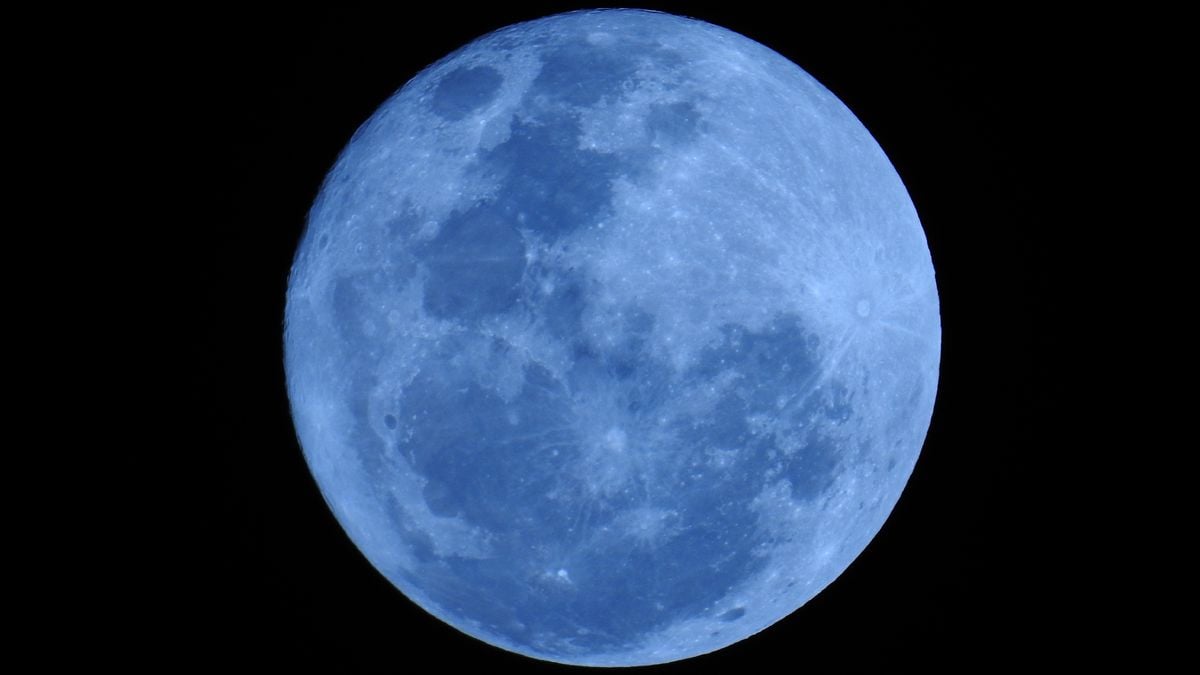
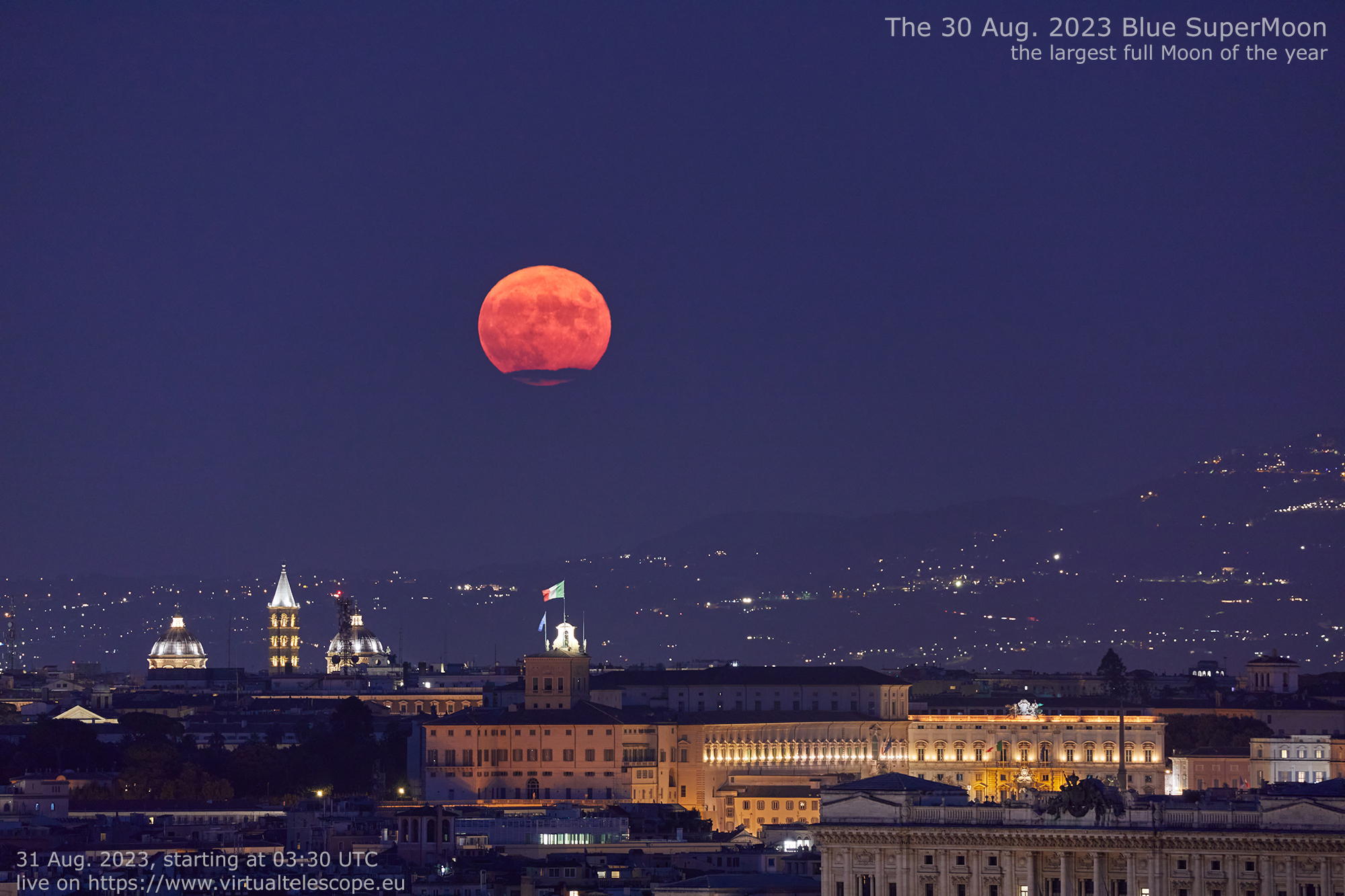
The rare Super Blue Moon, one of the biggest and brightest moons of the year, will rise on August 30. This Blue Moon, which is also a "supermoon," will be visible in the night sky. However, if conditions are poor for moonwatching in your area, you can watch a free livestream of the event hosted by the Virtual Telescope Project. The Super Blue Moon occurs when there are two full moons in a calendar month and the moon is closer to Earth, making it appear larger and brighter. The next Super Blue Moon won't occur until 2037.
On August 31, 2023, the largest full Moon of the year, known as a "Blue Moon," will be visible. The Virtual Telescope Project 2.0 will provide a live online observation of the event as the Moon sets over the skyline of Rome. The session is free and can be accessed through their webTV page.
The Full Buck Moon, the first of four consecutive supermoons, will rise tonight. To ensure that skywatchers don't miss out on this celestial event, astronomer Gianluca Masi and the Virtual Telescope Project will be livestreaming the Full Buck Moon. The livestream begins at 5 p.m. ET and can be watched on the Virtual Telescope Project's website or YouTube channel. Supermoons occur when the moon is closer to Earth than average, appearing slightly larger and brighter. While the differences may be difficult to discern with the naked eye, supermoons provide an opportunity to appreciate the beauty of the night sky and raise awareness about light pollution.
The Virtual Telescope Project captured time-lapse images of asteroid MU2 passing "very close" to Earth at over 2,000 miles per hour. The asteroid was estimated to be 13.5 - 30.1 feet in diameter and came as close as 134,000 miles to Earth. While there were no risks to the planet, an expert stressed the importance of monitoring comets and asteroids that could pose a threat to Earth. The project is operated by astrophysicist and astronomer Dr. Gianluca Masi and makes its images of the sky available for free around the world.